

You’re packed and already thinking about getting back to work when your flight on the departures board at Honolulu flips from “On Time” to “Delayed.” A few minutes later, the gate agent says, “We do not have a crew,” and the mood at the gate changes immediately as people pull out phones, dive into the airline app, and start lining up at the podium.
Within minutes, it becomes clear this is unlikely to be a short delay. The later mainland departures are filling, and the question is no longer what time you leave but where you are sleeping. In most mainland cities, you would start looking at rental cars or calling somebody nearby. In Hawaii, there is no fallback option once the flight is canceled.
A crew cancellation here doesn’t just move your schedule, but can strand you overnight on an island with a fixed number of departures and hotel rates that change rapidly when flights start dropping.
The crew domino effect.
A Japan Airlines incident in Honolulu last summer drew attention to crew fragility when a pilot failed an alcohol test the morning of departure and called in sick. The airline scrambled for a replacement captain, and multiple flights were delayed in the process.
The alcohol detail drew the headlines, but the operational issue is more straightforward. One crew member unavailable and no immediate replacement positioned on the island can disrupt multiple departures in a tightly scheduled system.
It does not take misconduct to produce the same outcome. Illness, duty-time limits, or crews knocked out of sequence by earlier delays can create the same dreaded announcement at the gate. In Hawaii, where long-haul departures dominate and reserve crews are limited, there is little slack in the system.
When the flight crew does not show up.
Airlines treat crew shortages differently from weather because crew availability falls under airline operations rather than outside forces. Refund rules are clearer than they once were, and if you decide not to travel after a significant delay or cancellation, you may be on your way to getting money back.
A refund is not what most people standing at the gate want. They want to get home at this point, and that usually means accepting the next available seat. Once you accept the rebooking, the problem shifts from the flight to the overnight cost.
If the next departure is the following day, you’ll need a hotel room for the night. Federal rules require the airline to refund or rebook you, but they do not require the airline to pay for your hotel, even when the cancellation is the airline’s fault.
Most major U.S. carriers say they will provide lodging for overnight delays caused by crew or mechanical issues. That promise comes from the airline’s own policy, not from federal law, and it often depends on availability at the time of disruption.
In real life, some passengers get hotel vouchers at the airport. Others are told to book a room and request reimbursement later. Some are rebooked and left to push for answers about lodging while rooms disappear.
In practical terms, you need a place to sleep, and you need it immediately. The hotel doesn’t care about your reimbursement. Your credit card comes out, rather than awaiting any policy clarification.
Hawaii has already shown how quickly this can unravel.
This is not speculation, and it is not rare. Last year, on a single day, nearly 400 flights were disrupted across the state. It was a windstorm that jammed terminals and forced travelers to scramble for rooms across multiple islands, as we wrote about in the windstorm meltdown that disrupted nearly 400 Hawaii flights.
Last summer, more than 110 flights at Honolulu alone were delayed or canceled during a tsunami alert. Travelers arrived at the airport and watched departures disappear as hotels tightened, which we covered in the tsunami alert that grounded Hawaii flights and left travelers stranded.
The following morning, more than 150 flights were still disrupted because aircraft and crews were suddenly out of position after the alert ended. That continuation was tracked in the day-after Hawaii flight disruptions when 150+ departures were still affected.
When FAA staffing slowdowns began affecting schedules, mainland routes were pulled overnight, and interisland service thinned quickly, intensifying the pressure statewide. That chain reaction was reported in the Hawaii flight cancellations that followed FAA staffing cuts.
Then, in November, there was the FAA flight chaos warning about being stranded. One person told us, “If it was a flight within the mainland we would take our chances. But with Hawaii you risk being stranded without a return flight home. There are no other options.”
Even disruptions outside the islands can trap Hawaii travelers because once you are committed to the Pacific crossing, alternatives are limited. When Oakland air traffic control failed, Hawaii-bound flights were left holding with few practical options, as covered in the sudden ATC failure that left Hawaii flights stuck mid-Pacific.
The triggers vary, but the pattern does not. When the air network slows here, there is nowhere else to go.
The airport reality after dark.
Honolulu, after the evening mainland departures, is not designed for overnight stays. Food options disappear, seating fills quickly once cancellations stack, and families begin reorganizing carry-ons into makeshift beds.
Lihue becomes quiet and constrained once evening flights leave. Kahului can feel cavernous late at night, and last-minute hotel availability can be problematic. Kona offers limited alternatives when rooms are already scarce.
Sleeping in the airport is possible, but it is bright, loud, and uncomfortable, especially for families traveling with kids. Meanwhile, hotel rates can move quickly when cancellations ripple. Add ground transportation, airport food, and another return trip in the morning, and the costs climb quickly.
Back on the mainland, your car remains in long-term parking, your pet care clock is ticking away, and your Monday commitments are not budging.
Have you been stranded overnight in Hawaii because of a crew issue or broader disruption? If so, what did the airline actually cover, and what did you end up paying yourself?
Get Breaking Hawaii Travel News

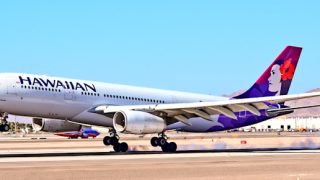
A lot of people were inconvenienced by this pilot and the airline not having a plan “B” is a little short sighted. On the other hand, these same passengers may have been better off not having someone who should be well aware of the law and disregards it as a pilot. Below are the rules.
FAA alcohol regulations (14 CFR § 91.17) strictly prohibit acting as a crewmember within 8 hours of consuming alcohol, having a Blood Alcohol Concentration (BAC) of 0.04% or higher, or being under the influence. These rules apply to pilots, attendants, and controllers, with a recommended 24-hour waiting period, particularly if intoxicated or flying IFR.
Got stranded overnite at Lihue due to a galley faucet on a new Hawaiian Airlines plane. I got us booked on the first Southwest plane next morning connecting in Vegas. Ours was the last scheduled evening flight and they closed the inside gates so we were in effect, inconveniently camping. It was cold out there at 3am! No rooms, no rental car places open. A very unpleasant experience. On a lighter note, it was easy to spot present and former military. Those people can sleep anywhere!
Yes, I was stranded when the flight from the mainland was delayed. We took off approximately two hours after the scheduled time. Over the Pacific, we were told that there was a “mechanical issue” and we had to return. In essence, we left HNL at 10:30PM HST, turned around at 12:30AM HST, hotels got booked before we landed for 30 people out of 160+. Then we all stood in line until 4:00AM HST to re-book for the next flight out. Alaska reimbursed me for the taxis (in Honolulu and to my car on the mainland), hotel and food. Got little sleep the next day and had to use a sick day for work, all because the flight crew had “timed out” and had to return to HNL, but they didn’t announce that, probably the cockpit would have gotten stormed by angry passengers
Taking the UA red eye from KOA to DEN, the 9 pm departure was delayed because of mechanical issues… finally at 11:30 or so, the gate agent announced that the flight was cancelled and everyone in a UA uniform headed for the doors so to speak, including the crew. It was a full flight and everyone just stood there trying to figure out what to do. The problem was all the hotels were already booked. Long story short, most everyone scattered looking for a bench to sleep on which we did (sort of). Fortunately, we were able to board the red eye the next night. No compensation, no vouchers, no nothing – it was not UA’s finest moment… and BTW, between my wife and I we have flown over 3 million miles on UA.
Most flight insurance would reimburse you for any extra expenses in these situations, correct?
Because I depend on connecting in Honolulu to Hilo from mainland trips, I try to avoid the last flight of the night arrival in HNL. The one time I did last year, a 4 hour delay in Los Angeles touched down Honolulu an hour after the last Hilo flight departed.
Before I arrived to collect luggage’s that would’ve transferred otherwise, my phone pinged with: vouchers for Uber or Lyft. voucher for a room of my choice of three premium hotels, dinner and breakfast vouchers along with a rebooking on the next morning’s Hilo run. This was a rare single itinerary via United.
I wound up not using the food vouchers, making it back to Hilo on a 9 AM flight. Either this was United’s policy, or Platinum status was enough to get this accomplished without effort on my part. No complaint, frustration or personal expense.
A few years ago (before the merger) our red eye flight from OGG to SEA was cancelled after several delays. During the delays complimentary snacks and meal vouchers were passed out by Hawaiian Airlines.
After the cancellation there were long lines for taxi and hotel vouchers because it was an Airbus 330 widebody.
Then long lines for a limited number of taxis. Then long lines at the hotel registration desk.
Then we discovered a bed bug, but no rooms left to change to. Next morning we met a lady with insect bites on her upper arms.
We flew home the next day.
No out of pocket expense, but plenty of inconvenience.
We lost our plan simply because the “video” (aka, on board movie) didn’t work!!! We waited 14 hours long into the night for a replacement plane and crew to arrive from Seattle! And Oh Boy, were The Daddies angry to the point where we thought it would get violent. As you mentioned, there is no food to be had and Finally at about 1:00am, Hawaiian procured cases of bottled water! We had to cancel our overnight mainland hotel (at a cost, of course) and reschedule our flight home from Phoenix ($$$) but at least we were safe and it was only us – not us and a few screaming toddlers!
A few years ago, our flight got canceled out of Lihue because the pilot did not get enough sleep. We actually had to have the flight moved to the next day with the same crew. The pilot came on the intercom to those remaining on the flight that didn’t rebook on another flight that morning and told everyone that the hotel he stayed at the day before, cleaning crew walked in on him while he was sleeping and he could not get back to sleep. He assured us that he was not going to fly us back across the Pacific on an hour sleep. He did make mention that that hotel employee cost the airline approximately $400,000. The airline did a great job put us up for the night and we got to spend one more night in Kauai. Not too bad!
That sounds fish. Didn’t he lock his hotel room before he went to bed. How could cleaning crew walked into locked hotel room?
Stuck twice in Kona – 1st time on a late afternoon flight to San Diego. Equipment problem. After a few hours we were directed to pick up our baggage and get in line for a hotel voucher. We were about last in line – jackpot – Waikoloa with transport + meals. All paid by Alaska – we booked with Alaska – others not so as in ‘contact Expedia’. our next day flight with same crew was almost empty as most were rerouted. We could have gone to Seattle + another flight getting home at the same time but with lots of hassles + exhaustion.
2nd time noon time flight Alaska – sick crew member -Waikoloa with meal vouchers (didn’t cover the cost) + transport.
Both times – only 1 CS agent processing everyone on the flight.
I think one Huge factor is whether you book direct with the airline vs some other booking engine. The 1st time a family of perhaps 6 had used a booking engine like Expedia + were told to deal with them
We know the feeling of being stranded at an airport. We were supposed to depart Charlotte NC to Sacramento CA and we were shuffled from one departing gate to another 3 times. Then everyone in the terminal left, restaurants closed and there was nowhere to go so we spent the night in the terminal with 2 other planes not leaving and one incoming they dumped passengers into the terminal. Many were trying to catch their departing flight to no avail. We were in the American Airlines terminal and obviously will never fly that airlines again. It was shocking that there was no personnel to let us know what was going on. I guess travel by car is our only way to travel anymore. At least we would have a vehicle to sleep in. We would like to go to Hawaii but fearful with all the horror stories being told.