
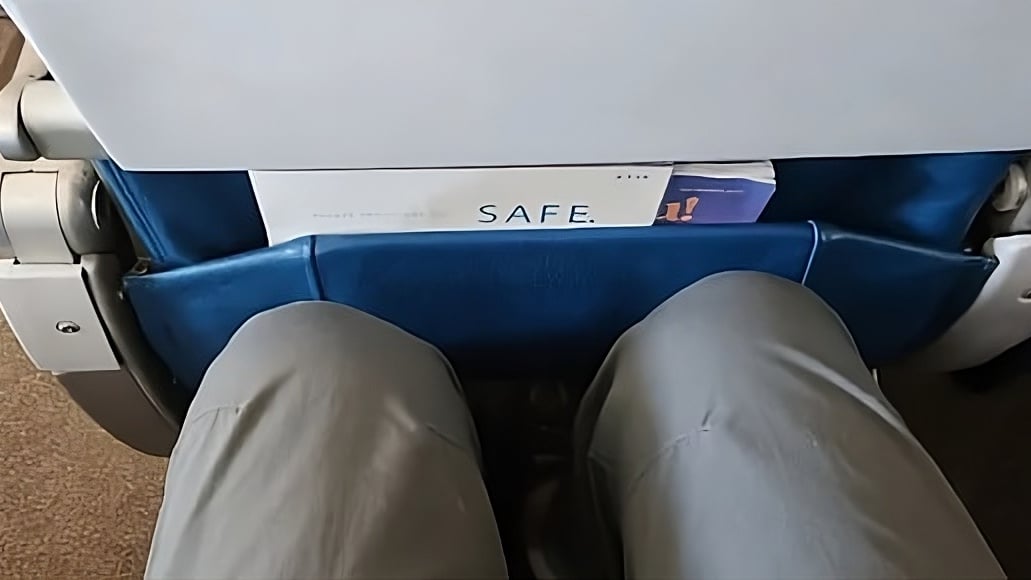
Basic economy to Hawaii is losing what little value it had left. Without warning, one major U.S. airline quietly changed its rules so that basic economy tickets now earn nothing at all. No credit. No progress. No acknowledgment that your flight to Hawaii even happened. On already lengthy and expensive island routes, that turns the cheapest fare into something far less forgiving than it looks. And this evolution isn’t even done.
For years, we have warned that basic economy is not what it appears to be. We have repeatedly called it a trap, shown how fees pile up, and explained why the cheapest fare is often the most expensive choice once complete reality sets in. This latest move does not create that trap. It just deepens it.
Not so subtle changes have outsized consequences for Hawaii.
As of December 17, 2025, basic economy tickets on American Airlines earn nothing toward the airline’s loyalty program. That means no redeemable miles, Loyalty Points, or progress toward elite status. Previously, those same tickets earned reduced credit. Now they earn none at all.
There was no press release. No email to customers. No warning during booking. The change appeared on the airline’s website and was first spotted by aviation watchers rather than announced by the airline itself. That silence matters because it suggests the airline understood exactly how unpopular this was going to be.
On short mainland hops, this is mildly irritating. On Hawaii routes, it is far more consequential.
Flights to and from Hawaii are among the longest routes in the country. They are also among the most expensive. For years, that combination at least came with the consolation that your flight still counted for something, albeit minimal. Now it does not.
What paying up actually restores.
Here is where the math and the reality intersect. On many Hawaii routes, the price difference between basic economy and regular economy is up to $60 each way. On longer routes from the East Coast, look for a difference of close to $100 each way. That $120-$200 roundtrip is now the cost to move you out of the most restrictive fare category and back into a standard economy ticket.
That upgrade does more than restore loyalty earnings. It also restores the ability to change or cancel a ticket for future credit, and on airlines like United, it restores eligibility for a full-size carry-on bag. In other words, it reopens doors that basic economy deliberately closes. But that does not make the upgrade cheap or eliminate other ancillary charges that sting.
Even after paying $120-$200 more per person round-trip for regular economy, travelers still face seat assignment charges, preferred seat fees, and checked bag fees, depending on the airline, route, and status. The upgrade improves the ticket, but it does not eliminate the broader fee stack that has become normal and needed for Hawaii. Instead, it is just the start of what “pay to escape basic economy” now looks like.
Why Hawaii travelers still lose more than others.
A typical basic economy round-trip fare to Hawaii might range from $300 to $600. Under the old rules, that flight earned modest, reduced credit. It was not generous, but it acknowledged the distance and the spend. Now that same round-trip earns nothing.
To regain earnings, flexibility, and fewer restrictions, a traveler might upgrade to a main cabin fare. That higher fare would earn miles or points, depending on the program’s math, with a realistic redemption value of perhaps $30 or $40 at best, in addition to the other benefits. In other words, travelers are paying significantly more up front to restore basic rights and earn back some of the value they give up.
This compounds an already broken airline product.
This is not happening in a vacuum. We have already documented how basic economy became a misleading fare that looks cheap but rarely is. In Finally, Its Easy To Avoid Hawaii’s Basic Economy Trap, we showed how airlines engineered these fares to surface first in searches while stripping away flexibility and value. And how you can now exclude those restrictive fares from your searches.
We went further in Exposed: The Hidden Airline Hoax Of Hawaii Basic Economy, where we laid out how fees, restrictions, and fine print turn cheap fares into costly mistakes, especially for Hawaii bound travelers who need flexibility and baggage more than most. This new change does not replace those problems. It stacks on top of them.
Basic economy already boards last. Seat selection doesn’t exist or costs extra. Changes are restricted or penalized. On some airlines, carry-on rules are tighter. Now, on top of all that, loyalty participation is going, going, gone.
How Hawaii serving airlines now compare.
This move aligns American Airlines with Delta, which already awards no loyalty credit on its basic economy fares. Delta made that shift earlier, and Hawaii travelers have already been living with that reality.
United Airlines takes a different approach. Basic economy flyers on United still earn some credit toward elite status, but face some of the most restrictive carry-on rules in the industry. On long Hawaii flights, that trade off matters.
Alaska Airlines stands apart, at least for now. Its Saver fares still include a carry-on, and earn at least partial mileage credit and offer some albeit reduced cancellation value. Given Alaska’s large role in Hawaii travel, that difference matters.
Hawaiian Airlines remains in a transitional gray zone. Its loyalty program has merged into Alaska’s Atmos Rewards, but fare rules have not fully aligned. Travelers are left navigating two similar but not identical versions of basic economy while broader system integration continues into 2026.
Hawaiian and Alaska share a new loyalty currency, but not a single set of fare rules yet. Until their reservation systems fully merge in 2026, Hawaii travelers are effectively navigating two similar but not identical versions of basic economy.
Southwest Airlines is no longer the outlier it once was. The airline introduced Basic fares in 2025, added checked bag fees, and significantly tightened travel credit rules. While Southwest still avoids some traditional basic economy restrictions, it no longer offers the clean simplicity Hawaii travelers once relied on.
The larger point is hard to miss. On Hawaii routes, there is no longer a version of basic economy that combines low price, flexibility, and participation. Every airline makes you give something up. Some now ask you to give up nearly everything. Are the rest about to join in that?
Why the silence matters.
Airlines announce good news loudly. They whisper bad news or avoid announcing it at all. This change landed the way it did for a reason. Stripping loyalty participation from basic economy changes the relationship between the airline and the traveler. It signals that the cheapest customers are no longer even worth engaging beyond filling the worst seats.
For Hawaii travelers, who already face higher fares, longer flights, and fewer alternatives, this feels like another invisible squeeze. You can still buy the ticket. You just give up more when you do.
What this means when you book your next Hawaii flight.
For many readers, the takeaway is not to chase loyalty harder. It is to recognize that basic economy now comes with deeper trade-offs than before.
If you are flying to Hawaii once every year or two, paying significantly more to regain flexibility, baggage rights, and modest loyalty value is a hard sell. If you are traveling with family, the math worsens quickly. If you need flexibility, basic economy remains the wrong product.
This latest change does not make basic economy unusable. It makes it clearer what you are giving up.
The fare still looks cheap. The fine print matters more than ever. At what point does basic economy stop being a deal and start being a warning label for Hawaii-bound travelers?
Get Breaking Hawaii Travel News



This is one example of not getting a deal even before your flight takes off. Airlines playing cut throat so when you get to Hawaii nothing will feel much different. Inconveniences, taxes, reservations everywhere so where does it stop? No deals in Hawaii so why should the airlines treat you any differently? Like I’ve said before think again before hitting the book, reserve, and the confirm reservation button. All and all nobody forced you to make your final decision.
Wait. Isn’t miles considered miles? It shouldn’t have to do with seat type. Everybody on the flight should accumulate the same amount of miles. Premium and first class has to do with comfort, legroom and service. IMO if the plane travels x amount of miles everybody with a ticket should get credit for the distance especially if the airlines have doubled the redemption points to even get a complimentary flight.
Real simple solution. Don’t purchase Basic Economy tickets. Otherwise, quit complaining about bottom dollar pricing.
You want service? Pay for service. Airfare is about the cheapest portion of an Hawaiian trip.
You want a car rental Basic Economy that provides you a car with three wheels?
Most people who buy basic economy are not collecting and using miles. And frankly, for the low cost of these fares compared to what you pay otherwise, you shouldn’t get any extras. That’s the whole point of having a bottom barrel service at a bottom barrel price. I always pay 2-5x the price of basic economy, and that should come with benefits that basic economy doesn’t.
It’s always amazed me how people will fly bottom barrel to save $50, then spend $100 for dinner the night they arrive without blinking. Isn’t your “comfort” worth anything? (I use the word lightly.)
For flyers to and from Hawaii, Airline Frequent Flyer plans are now more banking and credit card geared and not focused on travelers. The changes in required redemption rates have made the miles of little worth. Loyalty points to achieve elite levels are focused on premium travelers. So for a long time as someone semi retired, miles have little interest to me. Whilst you can lose the whole ticket if circumstances change basic Economy on American can represent good value if you have benefits from lifetime elite statuses. As a flyer on my own dime I look at value more than price. For many trips a basic economy ticket with an elite status is good value, however for some longer trips the premium cabins booked in advance deliver better value. I think that airline Frequent flyer plans will continue to focus away from travel. This is a short term view and when the next recession comes the Airlines will have lost a valuable tool and have created a less loyal customer base.
Yep. The great days of Hawaii getting on a plane to Hawaii and being excited about the flight itself are but a distant memory ! Some of that is pure airline greed. I stopped flying United and American two decades ago and never looked back. Delta? Maybe. (And I spent upwards of 25k per year on air tickets over the last 8 years.)
Good day~. Nothing to see here, this is just the continued decline of American Airlines. They once stood on top of the US airline market, now there are barely 3rd and all Southwest has to do is pick up their game and they will slip further. Does not surprise me. The core issue, through mergers they allowed the blood of the USAir operating playbook to seep in and spoil the once grand name of American Airlines. I was there when it started when USAir absorbed PSA. The rest is history. Also, that’s what competition is all about. There are other airlines that fly to Hawaii, so you can vote with your feet!