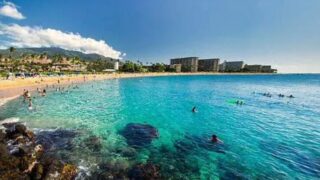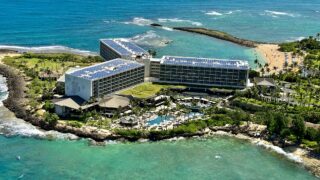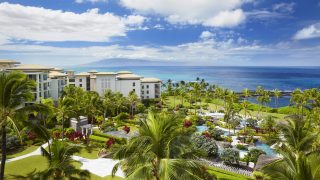

One of the resorts at Kapalua Bay just got a new manager, a new brand path, and a new reason for travelers to ask whether Maui luxury pricing has finally outrun the entire experience. Marriott took over management of The Resort at Kapalua Bay on March 14. The property is now part of Marriott Bonvoy. It will remain open during the renovation and is scheduled to become a St. Regis in 2027.
The property’s ownership is not changing. This is not a new resort, nor a new location. It is not even a completely fresh start in the traditional sense. It is an already expensive property on one of Maui’s most iconic bays, getting moved higher up the luxury brand ladder while charging $3,200 a night or more, even before the St. Regis name arrives.
Add in a $185 nightly resort fee and paid parking, and the pitch starts to look very familiar in Hawaii.
The property itself is not the issue. Kapalua Bay is renowned as one of the best settings on Maui. The resort has large residential-style accommodations, great views, pools, beach access, a spa, and it’s the kind of location that virtually sells itself. The question is about the pattern. Hawaii hotels keep moving upscale in brand language and nightly rates, while the real question for guests remains the same: Is the experience actually keeping pace with the dollar amount on the bill?
Travelers do not stay at a flag. They stay at a property, pay the rates, deal with the service, hear the construction drilling, look at the condition of the room, and decide later whether they would ever spend that much again. Kapalua Bay is becoming the latest test case for the premise.
How this property got here.
This property has already lived multiple lives. Longtime Hawaii travelers will remember it as the old Kapalua Bay Hotel. After that came redevelopment into high-end residential-style lodging. Then it became Montage Kapalua Bay, which gave it a luxury identity befitting the location and the large suite format. More recently, it has been operating as The Resort at Kapalua Bay. Now Marriott has stepped in, with the St. Regis plan set for 2027.
The site has been one of Maui’s most storied resort properties for nearly half a century. The original hotel opened on October 12, 1978, surrounded by pineapple fields at what locals then called the end of the road. It was demolished in 2006, and the current structure opened in 2009 as the Ritz-Carlton Residences Kapalua Bay before Montage took over operations. The ownership has changed hands more than once since then, and the brand name has changed with it every time.
Hawaii hotels do not move into St. Regis territory because they are trying to serve a broader market. They do it because the property can support a more elite persona and because the rate ceiling can be raised with the right branding. The Kapalua Bay location supports that logic. It sits on 25 oceanfront acres in one of the most desirable corners of Maui.
The resort has 146 multi-bedroom residences ranging from 1774 to over 4000 square feet. These are not standard hotel rooms. In addition, there’s a 40,000 square foot spa, golf nearby, and the Ritz-Carlton Kapalua is less than a mile away. Scarcity and amazing natural beauty do a lot of work in Hawaii, and both are well placed here.
But none of that means travelers get better value. It means the property becomes easier to market when seen as ultra-premium. That is not the same thing. The suite may be large. The bay is decidedly gorgeous. The location may still be one of the most desirable on Maui. Yet the central move here is still a brand escalation. Hawaii has seen enough of these by now to know how this works. The logo moves upscale first. Then the room rate follows. Then the traveler gets told that this is simply the level the market now demands.
Guests are the ones checking whether the room feels grand and fresh enough, whether the service is still good enough, whether construction is ruining the stay, and whether the total nightly bill makes any sense at all, given that so many other world-class options exist for the same money or less.
What guests are paying right now.
The number that should stop people cold is not some future St. Regis rate. It is the current one. Right now, this property is selling at roughly $3,200 a night at the entry level during an active renovation, before about $242 in daily resort and parking fees are added, and before roughly $494 in tax is applied to the room, the resort fee, and parking. Split that out, and the resort fee is about $185 a night, while parking adds another $57. By the time the full stack lands, travelers are well past the point where this becomes a normal decision for a Maui hotel.
Yes, these are multi-bedroom residences, and that does make a difference. This is not a standard hotel product. Someone traveling with family or another couple may look at the square footage, full kitchen, lanai, and residential setup and decide that the comparison should be to a luxury villa rather than a typical resort room. That is fair as far as it goes. But it does not erase the fact that travelers are still being asked to spend at a level where every weakness gets magnified.
At these prices, The Resort at Kapalua Bay is no longer competing with other Maui hotels. It is competing with global luxury travel destinations. including Bora Bora, top-tier Caribbean resorts, Europe, and other bucket-list stays that travelers start comparing the minute a Maui night pushes into the multi-thousands per night.
The nearby comparison tells its own story. The Ritz-Carlton Maui, Kapalua, less than a mile away and under a stable luxury identity for decades, was showing around $673 a night for low-season dates in 2026. The room types are different. The properties are different. But it does show how far Kapalua Bay has already moved into another pricing stratosphere before the St. Regis conversion is even done.
Once the rebranding arrives, nobody should expect moderation. St. Regis has never been about moderation. The whole purpose of the flag is to signal a higher level of luxury and capture the premium that comes with it. Travelers who treat this as just a name change are missing what actually follows. The already high number now has a stronger justification.
Not bad. But is it worth it at this price?
This is not a bad hotel story. The overall review picture is still strong. Google reviews are high. TripAdvisor ranks it near the top of Maui hotels. Guests praise the location, the bay, the large residences, the pools, and the general comfort of the property. If someone said they had a wonderful stay here, that would be completely believable, but the gap between good and worth it gets brutally revealed when rates hit this level.
A repeat guest on Google said the service used to be much better and that the property had lost its mojo compared with an earlier stay several years ago. Another guest complained of hammering, drilling, grinding, and sawing all day during a stay that still cost more than $1,400 per night, with no discount offered.
Booking complaints mention charges that did not feel transparent, including a resort fee added on top of what looked to them like an all-inclusive booking total. On TripAdvisor, one honeymoon guest called it the worst Montage property she had stayed at and described the grounds as outdated and dirty. Another complaint involved cleanliness in a suite priced at around $3,000 a night, with an issue so severe that management responded and apologized directly.
Those complaints would not automatically sink an ordinary hotel’s reviews. At $300 a night, even $500, some guests would grumble and move on. At $3,200 to $6,000 a night, it’s entirely different. Luxury pricing leaves little wiggle room for many excuses. Once the guest starts mentally editing the bill downward to what they believe the experience should have cost, the property has a problem, even if the setting is beautiful and the room is enormous.
We have experienced construction-during-operation problems ourselves in Hawaii. At Hilton Hawaiian Village, the jackhammering was so loud during our stay that we could not hear each other or speak with the front desk on the phone. So when travelers complain that renovation noise wrecked the value of a stay, that is not some abstract review-site whining. It is a real issue, and it becomes even more insulting when the property keeps charging top-end rates during the disruption.
That is where The Resort at Kapalua Bay sits right now. A genuinely attractive resort in a great setting, with plenty to like, but carrying a price that forces every shortcoming to be seen out in the open. Not bad is simply not enough at this level. It has to feel worth it, and that’s the challenge.
A pattern BOH has seen before.
We saw a version of this same climb in Princeville. The names changed, the price rose, and the branding grew more ambitious. Sheraton became Luxury Collection, then St. Regis Princeville, and now 1 Hotel Hanalei Bay. Each step came with a stronger luxury pitch. And each step helped justify a significantly bigger number.
When we published our review of 1 Hotel Hanalei Bay, one longtime reader, Alfred H, left a comment that could have been written for this article: It’s unfortunate that, as property taxes and other expenses increase, hotels have to keep increasing their rates and forcing them to rebrand to justify the rate. At some point, you won’t be able to go any more upscale, then what?
Alfred said that long before Kapalua Bay became this story. At some point, the branding ladder runs out of higher rungs. You can only elevate the language so far. You can only polish the luxury message so many times. Eventually, the traveler is still left with the same basic question. Am I getting an experience that matches this number, or am I paying extra for an explanation of it?
The Princeville and Kapalua stories are not one and the same. They are different islands, different physical products, and different histories. But the rhythm is familiar enough that readers will recognize it. Hawaii takes a limited, beautiful, emotionally loaded, and iconic location and puts it through another round of premium repositioning. The rates move higher. The promises get fancier. The doubts do not go away.
Where else that money buys includes Bora Bora.
At Kapalua Bay’s current entry level, travelers are already in Four Seasons Bora Bora territory. At the upper end, they are right there with some of the world’s most expensive overwater bungalow pricing. Bora Bora is not selling a future promise. It is selling the actual thing now: an overwater bungalow, a lagoon, breakfast included, and a private airport boat transfer.
We have been to Bora Bora and French Polynesia. Maui is different. Hawaii has its own unique emotional pull, convenience for U.S. travelers, familiar currency, domestic access, shorter distances, and a repeat-visitor culture that places like Bora Bora do not match in the same way. But at $3,200 a night during an active renovation, with fees stacked on top, the comparison becomes fair because the hotel itself has created that.
One option is a luxury residence on Maui, above one of the state’s most beautiful bays, still undergoing renovation and on its way to a St. Regis relaunch. The other option can be an overwater bungalow in French Polynesia with a plunge pool over a lagoon. Hawaii properties no longer get to pretend they are competing in some protected bubble when they set the numbers this high.
The place may still be excellent. The view may still be world-class. The stay may still make some guests very happy. But the question is no longer about whether Kapalua Bay is beautiful. Everyone already knows that it is. The question is whether another luxury rebrand in Hawaii is improving the actual guest experience or just giving its owners one more way to defend a bill that was already hard enough to swallow.
Have you stayed at Kapalua Bay while it was a Montage and what did you pay? Was it worth it? We want to know.
Get Breaking Hawaii Travel News