

This happened on our most recent interisland flight out of Honolulu, at the very end of boarding, when everyone was already seated and expecting the aircraft door to close. Instead, a Southwest gate agent stepped onto the aircraft holding a seating manifest and began walking the aisle row by row, checking who was sitting where against the list in hand. Boarding passes came out. Seat numbers were verified. People were told to move.
Rob and I had paid for Choice Preferred seats near the front, and even there, the check was the same. It did not matter what fare tier you were in. It did not matter that the flight was barely half-full. The manifest was treated as final, and enforcement began before pushback could commence.
One passenger argued the seat was empty and no one else needed it. Another said they were only a row off on a half-empty plane and could not see the harm. The agent remained calm but firm. Assigned meant assigned. It is the new Southwest rule.
We watched as multiple groups of travelers stood up, gathered their bags, and relocated while the rest of the cabin looked on. The sighs started. Then we overheard, “You’ve got to be kidding me.” It was not chaos, but it was unmistakably friction we’d never seen before. The agent told us he was paid well to do what he does, including being a jerk.
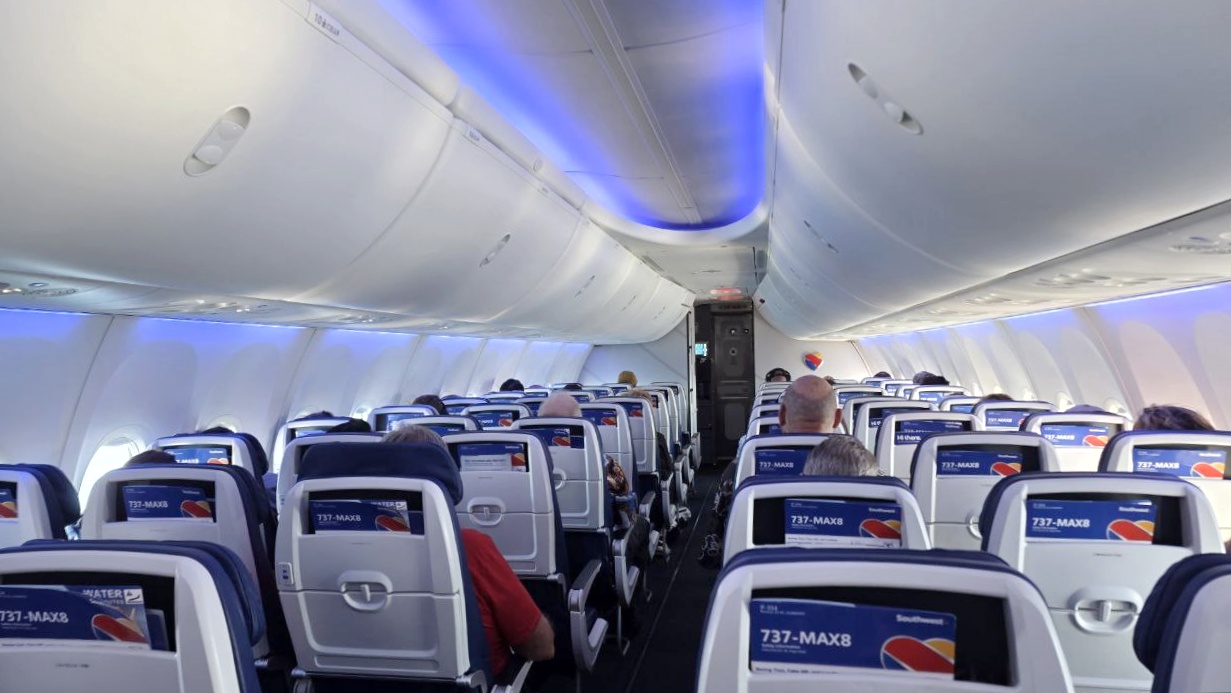
This is not the Southwest that Hawaii is used to.
Southwest built its entire brand on flexibility. Open seating was not just a boarding method. This was its personality. Sit where you want. Work it out with other passengers. Move if there is space.
That tone carried into Hawaii when the airline expanded here. It was new to most of us here. But it helped differentiate Southwest from legacy carriers that already operated on more rigid seat maps and hierarchy. Even after assigned seating was rolled out, there was still a sense that minor seat swaps within the same category on light flights would not trigger enforcement. What we saw in Honolulu clearly says that era is over.
The assignment is now the final word, and it is being verified in person before departure. This is not just one flight. On another Southwest flight this week, with only several dozen passengers on board the 175-seat plane, we saw a group of travelers who were told to remain in the same row despite wide swaths of empty seats. Multiple separate announcements reinforced the new rules. Middle-seat passengers who shifted to open adjacent window seats were asked to return, even when entire rows were empty.
For 50 years, Southwest was the most flexible airline in the industry.
Now, however, it is enforcing assigned seating in a way that feels more rigid than airlines that have always operated with assigned seating. That feels like something other than routine policy rollout friction. Rather, it looks like a deliberate overcorrection, a decision to shut down their old culture before it has any chance of reasserting itself under the new system.
The wheelchair numbers also collapsed.
In our piece “Misuse On Southwest Hawaii Flights Became Last Straw For Old Ways,” we documented what had become known as the “Jetway Jesus” problem on Hawaii routes. Wheelchair preboarding numbers had ballooned. On some flights, we counted 15 or more wheelchairs lined up at the gate. By the time the flights landed, most of the wheelchair passengers had been cured and no longer needed assistance.
Assigned seating removed any inappropriate incentive. On our two Southwest Hawaii flights this week, we have been counting again. The old 15-plus is now one or two. That too is not a subtle change.
We said in 2024 that once seat position was no longer determined by boarding order, the gaming would disappear. And it did. Passengers who genuinely need assistance now face less congestion and less suspicion.
Management says it is refining this.
Southwest executive vice president Tony Roach recently wrote to A-List members that the airline is “refining” boarding groups and adjusting processes to improve bin availability near assigned seats. This started when activist investor Elliott Management took a $1.9 billion position in Southwest and began pushing for sweeping changes. Assigned seating. Bag fees. More costs and fewer benefits, including Rapid Rewards devaluation, and the first-ever mass layoffs in the company’s history.
By the time a gate agent was walking down the aisle of our half-empty Honolulu flight with a seating manifest, the investor that engineered the transformation had already reduced its position and stepped back from the boardroom.
The crew revolt is not background noise.
At the same time, the product is tightening, Southwest’s flight attendant union, TWU 556, has been openly critical of management. Union leadership has accused the company of being out of touch and of rolling out operational changes without fully accounting for the real-world impact on crews.
Flight attendants are being asked to begin boarding earlier to maintain on-time performance under the new structure, but they are not paid for boarding time under their current contract, which trades boarding pay for higher flight-hour compensation. Union officials have said the changes reduce crew flexibility, increase conflict with passengers, and place frontline employees in the middle of frustration created by policy decisions.
When boarding time is tight, bins are contested, and seat assignments are rigidly enforced, pressure builds in the aisle. Passengers feel it when they are told to move. Crews feel it when they are the ones delivering that message. The entire Hawaii flight is clearly suffering.
Hawaii is where the shift feels the strangest.
Now it is the airline sending a gate agent down the aisle with a manifest before departure, correcting passengers on a half-empty flight, enforcing assignments even in Choice Preferred seats that were paid for.
Southwest faced real problems, from wheelchair abuse to boarding congestion to bin fights. The response went further than the fix. If this is the new Southwest culture in Hawaii, shaped in a fast-changing corporate boardroom, what exactly are Hawaii passengers supposed to feel when they step into that aisle?
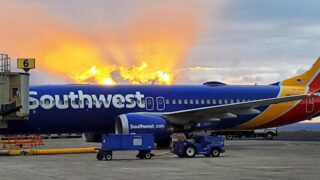
Photo Credits: © Beat of Hawaii. The lead photo shows the approach to Kauai on Southwest.
Get Breaking Hawaii Travel News


Looking out the window on your first photo, seems like United Airlines livery.
Did I the that right?
There can be a weight and balance issue. I’ve flown SWA probably close to 200 times, mostly for business before I retired. We prefer Alaska between the Bay Area and Kauai, but if there isn’t an Alaska non-stop but there is one on SWA, we’ll fly SWA and before the change, pay for Business Select to get the best seat selection. We did that a couple of years ago and our flight from Lihui to San Jose had 35 people on it. Of course, everyone was in the front half of the cabin, which put the center of gravity (CG) too far forward. The pilot woul not push back from the gate until enough passengers moved to the back part of the cabin. There is a specifc CG range allowable for every airplane that cannot be exceeded either forward or aft.
Apparently Hawaii travelers do not know what Assigned Seats means. Do they just go to any open seat at concerts or the U. of H. football games? And when passenger get on in HNL, stop in OGG and continue on to OAK? If those that get on in OGG to go to OAK and find people from HNL in their seat because they changed when boarding in HNL – isn’t that a problem? And trying to police people from unfairly switching from basic seat to preferred (without paying for preferred or even Extra Legroom) is a problem also.
The boldest thing Southwest has ever done is claim to be Hawaii’s airline. Their service has been in the gutter for a decade and their value proposition is nonexistent. Crews are surly, miles are useless, and for the price of a HA first class ticket, WN offers pistachios in three abreast seating. Only fly them if I have no other choice. Leading the race to the bottom
For the people talking about enforcement because of weight and balance you might tell me how that works. They don’t weigh you or ask a weight, you pick your seat so they have no idea. I have flown where weight made a difference and yes, they made us get on the scale and then assigned seating. It’s a real crackup to watch people as they get on the scale. If they were truely worried about weight and balance, the flight attendants would seat you as you boarded or move people around after boarding.
The rule of averages still works. They guesstimate how much an “average” person weighs and use that number. The errors average out. It works for a large airplane, where the individual differences don’t matter. But in congregation, they do. Side to side is quite tolerant, but not fore and aft.
T E ~ modern weight and balanced systems
calculate the exact position of every passenger with an average weight. The experience that you have had, most likely was on a smaller aircraft where the exact weight makes a difference. It mainly comes down to the performance of the aircraft as well as the gross takeoff weight. On an aircraft that is hundreds of thousands of pounds, the measurement is more about mass in any given section of the aircraft Not at maximum gross weight vs total weight in a smaller aircraft flight that is closer to its maximum takeoff weight. Cheers. PS… a lot more complicated than that but that’s just a brief sketch.
In the past, aircraft seats were sold as First Class or Coach. In coach, every seat was a coach fare. So you could move to any open seat in coach. Now, fares are, extra leg room seats fare, aisle seats fare, window seats fare, front part of the airplane seats fare, exit row seats fare, ALL are different. That’s the reason why airlines are asking you to sit in your “Paid” seat fare.
Exactly. Miss the “old” system.
For my millions of miles, I have never flown on Southwest. The thought of not knowing my seat with reasonable certainty is an absolute red line for me.
Hawaiian inter-island flights are like jumbled school buses of fliers on a field trip. I often observe medical passengers receiving care and attention with boarding, bags, and consideration. People move to help them. Perhaps the Southwest agents can explain seat assignments also account for safety, fuel load, avionics, and weight distribution.
Clearly, the shift and attitude was far too abrupt here giving me another reason not to fly with the carrier.
I didn’t know what it meant to book Southwest, and did one time. That was enough to decide their boarding madness was not for me.
I have flown SWA since 2000 mostly for work with weekly commutes. Had gone through the A-list, A-list preferred and Companion Pass tiers. It was easy to book, cancel or change and the planes were loaded quickly. We had a rapid rewards credit card that we used all the time for nearly everything. That fee increased last year, Strike 1. We were ecstatic when we were able to get a SWA nonstop from SAN to OGG. Then the nonstop ceased. Strike 2. This year we flew an Alaska nonstop from SAN to OGG. Now with the militant attitude of SWA, Strike 3, we are dumping SWA and going Alaska including their credit card. We are done with SWA as they are headed to the bottom of the heap joining Spirit and the other substandard airlines. Too bad. I really enjoyed their prior operation and the legacy that Herb Kelleher built. Not anymore. I predict Elliot will profit short term but fail long term.
Flew Southwest for years and loved it, even at times watching the clock to check-in as early as possible. Never really had any problems. Remember one flight arriving in Phoenix and we were serenaded with Happy Trails by the head stewardess for those deplaning. Another time, had a gentleman giving the “safety talk” and had us all going through the motions with him. He had Everyone’s attention and everyone knew where everything is in case of an emergency. Glad I got to fly then, happy crew happy customers.
Maybe the small passenger count was to be sure proper weight and balance was required. Or am I missing something? As a pilot on my own airplane it’s a must portion of my check list. I’m an A list member and have flown 4 times since the new system without any push back. John
Aloha~. As a former airline Passenger Service Agent/Supervisor/Manager (PSA), we had a very simple rule when it came to seating assignments. The Gate Agent controlled the boarding, the Flight Attendants controlled the seating. If they wished to allow passengers to occupy empty seats, it was their prerogative once the aircraft door closed. Only exception, if seating was based on aircraft weight & balance. Albeit, we were a single class airline (all coach), there would be squabbles about seating and we would solve them as best as possible. Never did I walk the aisle to make sure everyone was where they should be, unless the FA called us on board to settle a squabble. Those were civilized days! Cheers
Our seats were checked on Hawaiian a couple of years ago when there were very few passengers. We were told that since the flight had few passengers, the baggage had been stowed to balance the plane for takeoff and landing when we were required to be in our assigned seats, which made sense. For the rest of the flight we could sit where we wanted. The crew came around before landing to remind us to go back to our assigned seats.
I think this very strict rule going hurt Southwest.
Why make customers feel very uncomfortable when there’s empty seats available.
I fly a short regional mainland route routinely with Alaska (Horizon). Many times a gate agent boards to recheck a manifest when there seems to be inconsistencies between those ‘checked in’ and those who have boarded. Both numbers must agree before takeoff. Yes, it’s for safety should something happen.
In addition, on many smaller carriers on the mainland I’ve heard the crew announce during boarding for passengers to take and remain in their assigned seats for weight and balance issues.
Earlier this week, I flew on SWA from Denver to San Diego. I personally appreciated the new boarding process and assigned seating and felt it corrected many issues mentioned in this article (Jetway Jesus) that I have experienced on many flights to/from Hawaii under the previous open seating rules. I had stopped flying SWA for this reason.
It does seem a bit extreme to force someone to sit in their assigned middle seat if there are other empty seats in the same row, however it is important to remember how we got here with people abusing the system as mentioned in the article.
Additionally, I received an email asking for feedback, and the same email as BOH regarding adjusting processes. The only feedback I had to offer was to include one free checked bag. I really appreciate what SWA is doing to address the past abuses of passengers and proactively ensuring bin space is available, which used to be a big issue.
I’m in the process of booking flights to and from Hawaii. I live on Maui.
With the seat enforcement going on, I have canceled my SW flights and now flying United.
American has a bad habit of changing your paid for seat for the convenience of the airline or other passengers and they will not refund the seat cost.
So United is getting all my business.
Where’s EZJet when you need them!
The crew piece worries me more than the seat enforcement policy. If flight attendants and boarding agents for that matter are unhappy and feeling squeezed, passengers are going to feel it too. Not sure how they are going to unwind this one.
I’ve never flown Southwest since the open seating plan was off-putting to me.
Now that it has changed, I always check Southwest when planning travel. Unfortunately, they are either more expensive than competing flights or require stopovers. I am generally happy with Hawaiian/Alaska.
This regimented seating check is further reason not to fly with Southwest.
This isn’t about flexibility. It’s about monetization. Once they started selling seat categories, this was sadly going to be inevitable.
I’ve always thought that identifying a passenger with a seat was in case of a serious problem (aka, crash), the airlines could know who was in a seat with devastation. Obviously, SWA’s old policy made a lie out of that assumption but perhaps now that they do have that policy, they have to accomodate that assumption as well.
Southwest used to feel human. Now it feels like a corporate spreadsheet which coming from them, is just so bizarre.
Honestly this sounds like big overcorrection. You can enforce rules without acting poorly or like everyone is trying to cheat your new system.
This is Hawaii. It’s a 25 minute flight. If there are 40 or 80 empty seats, why does it matter if someone slides over one spot in their same category? It feels corporate and cold and is disappointing.
Good day~ There is one exception, if the seating arrangement is needed for aircraft weight & balance. Usually not an issue on a B737 and does not seem the case in this instance. Cheers
I was on a Southwest interisland flight last week which was the first time since the changes. I too noticed the same thing. It felt tense in a way it never used to. Not awful, just very different for them. Hoping it settles down.
Good. It was out of control before. If assigned seating means sit where you’re assigned, then sit there. I don’t see the problem really, other than their obvious insensitivity. But their employees have been through a lot.
I agree, it used to be frustrating to be in the A1 boarding position on a flight from Hawaii to the mainland and witness 15+ people claiming a disability and pre boarding, which resulted in the first several rows being full and overhead bin space monopolized.