
A Hawaii-bound Alaska Airlines returned to its departure airport after crew members and some passengers reported feeling unwell, turning a routine Kauai trip into a long and disruptive travel day just ahead of the Christmas rush.
Alaska Airlines Flight 217 departed San Diego for Lihue late Wednesday morning aboard a Boeing 737 MAX 8. About 90 minutes into the flight, crew members and some passengers began reporting feeling unwell. Out of an abundance of caution, the pilots decided to return to San Diego rather than continue west across the Pacific.
By the time the plane landed back at San Diego International Airport, passengers had spent more than four hours in the air, only to end up back where they started. EMTs met the aircraft at the gate and assessed several passengers. No one was transported to the hospital. The plane was then removed from service for inspection.
The incident was first reported by FOX 5 San Diego and KUSI, which at this point remain the only outlets to have confirmed details.
What happened on the Kauai-bound flight.
According to FOX 5/KUSI, reports of people feeling unwell began about one hour and 20 minutes after departure. FlightAware tracking shows the aircraft turned back well short of halfway to Hawaii, making this an early precautionary return rather than a near-arrival diversion.
For passengers, the result was a long on-board experience followed by uncertainty about rebooking and missed connections. It disrupted plans, particularly difficult for Kauai-bound travelers during a peak holiday travel period.
In a statement emailed to FOX 5/KUSI, Alaska Airlines said, “We are in the process of reaccommodating our guests, and we apologize for any inconvenience or concern this situation may have caused.”
No cause has been confirmed, and no specific onboard condition has been publicly identified.
Why this incident draws attention beyond a single flight.
This event stands out not because of its severity, but because it fits a broader category of incidents aviation watchers have increasingly noted: multiple people onboard reporting symptoms within a short window, followed by a precautionary return and aircraft inspection, often without a publicly confirmed explanation.
Recent reporting by The Wall Street Journal has documented thousands of FAA safety reports over the past decade in which pilots and flight attendants described symptoms such as nausea and dizziness during flight. In many cases, no definitive cause was identified, even after inspections were completed. The FAA has acknowledged that such reports occur regularly across the U.S. aviation system.
There is no confirmation that this flight was related to any specific mechanical or environmental issue. Still, the combination of onboard illness reports, a midair turnback, and the aircraft being pulled from service places this incident within a category of events that has drawn growing scrutiny.
Aircraft inspection and fleet context
After returning to San Diego, the Boeing 737 MAX 8 operating Flight 217 was removed from service for inspection, a standard step following a precautionary return involving unexplained onboard concerns.
The 737 MAX 8 is a workhorse aircraft on Hawaii routes and uses a bleed air system that draws compressed air from the engines to supply the cabin. Airlines and regulators have long emphasized that such systems are designed to be safe, and no determination has been made that they played any role in this incident.
At the time of publication, Alaska Airlines has not released additional details about the inspection or the specific trigger for the onboard reports.
Why this matters for Hawaii travelers
For Hawaii travelers, especially those headed to Kauai, a midair return carries outsized consequences. There are no simple alternatives once a long-haul flight is scrubbed partway into the journey. Hotel stays, rental cars, activities, and interisland connections can all be affected.
The disruption is magnified during the peak holiday season, when flights are full and rebooking options are limited, leaving travelers with few easy recovery paths.
This story is not about assigning cause. It is about how a Hawaii-bound flight can turn back as a precaution, and how quickly a planned island trip can unravel even when no emergency is declared, and no injuries are reported.
If you were on Alaska Airlines Flight 217, or have experienced a similar Hawaii-bound turnaround, we would like to hear what passengers were told onboard and how the situation was handled afterward.
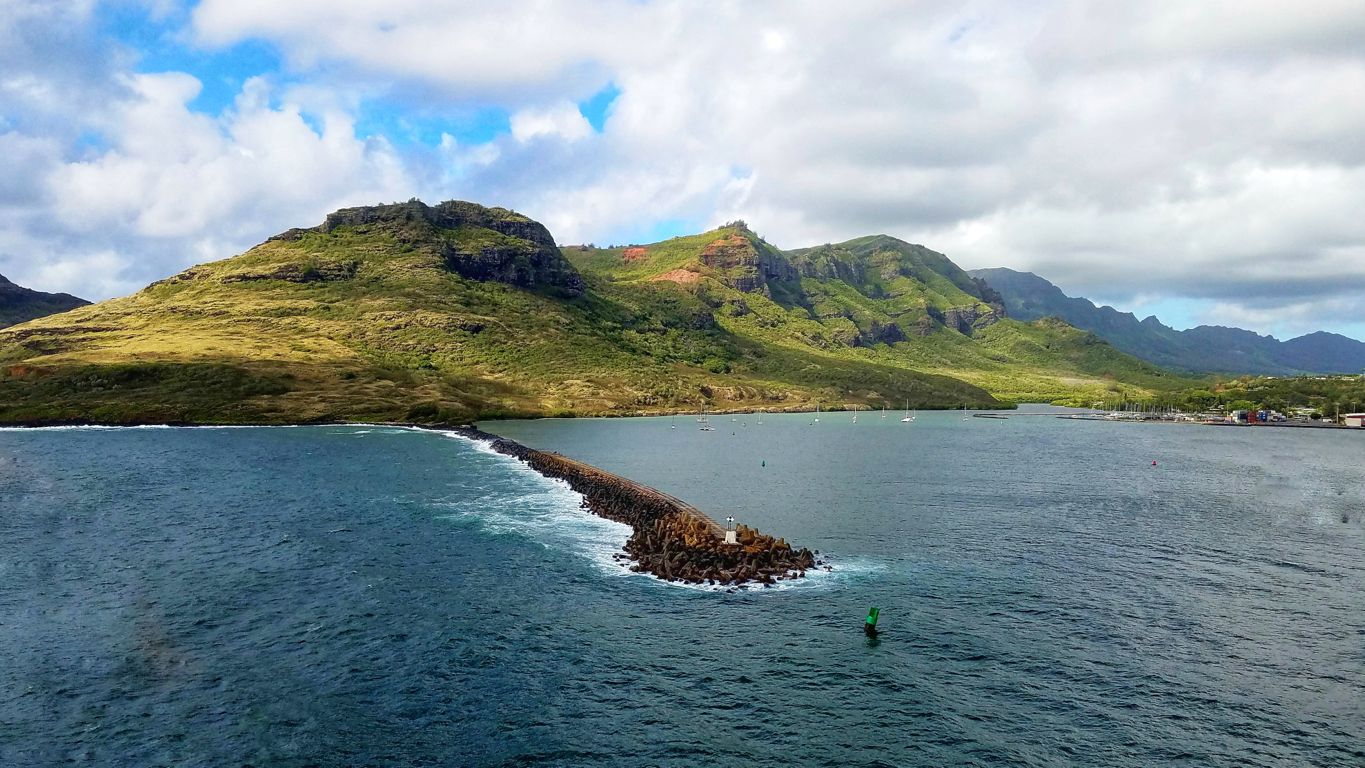
Lead Photo: Beat of Hawaii at Nawiliwili Harbor on Kauai near LIH.
Get Breaking Hawaii Travel News




We were on that flight and are having a terrible time getting customer service to return our calls or texts. I’m elderly, with a compromised immune system and need to know what I was exposed to. So far no reimbursement for hotel room or the flight we booked to get home the next day. Also, the article mentions people began feeling sick an hour and 20 minutes into the flight, but it had to be sooner, because they usually roll out the drinks cart as soon as they reach cruising altitude and they never did.
My friend received a text from her daughter who was on the flight saying that the airline said the “air was bad” and 2 stewardesses were sick.
We were on this flight. It was our 55 th anniversary thinking we were half way there. My husband got a little dizzy also.
Better to be safe than not. Had a similar experience in Oct returning to mainland from HNL, mechanical issue that was fixed, but out of caution the flight was cancelled.