
Hawaii’s hotel industry already charges the highest room rates in America, with luxury properties nearing $900 a night and a statewide average of $364. Now its national lobby is pushing to eliminate more than 30,000 vacation rentals statewide, backed by a funded study, an invitation-only ballroom event with the governor and mayors, and an enforcement agenda that is already becoming law on Maui. If that effort succeeds at scale, the primary alternative to high-priced hotel rooms begins to shrink, and the cost of Hawaii vacations moves higher still.
The pricing reality of Hawaii hotels.
Hawaii hotels’ statewide average of $364 a night already leads every hotel market in the country, including New York. Rates are at least 30% above 2019 levels, even though occupancy has never fully recovered.
Put that into practical terms. A $500 room for a week is $3,500 before tax. The tax alone adds roughly $665, and that still does not include resort or other daily fees. The rate visitors see is not the rate they ultimately pay. That is the pricing baseline before any reduction in vacation rental supply or other policy changes.
What just happened at an invitation-only event.
Last week, Oxford Economics released a study commissioned by the American Hotel and Lodging Association (AHLA) and the Hawaii Hotel Alliance that makes the economic case for Hawaii’s hotel sector. On the same day, hotel executives gathered with Governor Josh Green, island mayors, and state legislators at The Hospitality Show: Honolulu, following the study’s release. We covered the study and its claims separately.
The Honolulu Star-Advertiser was granted exclusive access to the gathering tied to the study’s rollout. It was a tightly focused meeting of industry leadership and policymakers.
The paper’s parent company, Oahu Publications, publishes custom in-room magazines for major Hawaii hotel chains, runs an events division that co-produces the Hawaii Hotel and Restaurant Show with the hotel lobby, and publishes HILuxury, a magazine targeting luxury hospitality advertising. That is the outlet providing the public account of what took place.
The Star-Advertiser’s coverage also included comments from vacation rental leaders and cited conflicting data as part of the debate.
The study measures what hotels contribute. It does not reflect what happens to visitor pricing or to the broader Hawaii accommodation market if 30,000 vacation rental units are removed from circulation. When industry groups fund research and release it at an industry-organized event attended by the same officials who shape accommodation policies, the details may become public, but what that means for Hawaii visitors remains unsaid.
Hawaii hotels estimate more than 30,000 illegal vacation rentals.
That number gets repeated in enforcement discussions, legislative testimony, and industry-funded research. UHERO’s Hawaii Housing Factbook puts the total number of Hawaii vacation rentals at roughly the same figure, about 5.5% of Hawaii’s 557,000 housing units. That count includes every vacation rental in the state, permitted and unpermitted. No comprehensive statewide audit has sorted legal from illegal. The state’s own vacation rental performance reports say explicitly that they do not differentiate between permitted and unpermitted units. The industry’s decision to label all 30,000 as illegal is their policy position, rather than any verified count.
Honolulu alone has 29,000 hotel rooms across 93 properties with another thousand in development. Put the vacation rental numbers next to that, and the ratio is hard to ignore, whether the real target is 30,000 units or something less. Take even a fraction of that supply out of a market where hotel rooms already cost more than anywhere else in the country, and the equation changes.
Governor Green underscored the volume when he said that if you could flip a switch and have short-term rentals go to the housing market, Hawaii would not really have a housing shortage. He was talking about housing, not tourism pricing, but the volume he described is the same volume the industry wants removed.
The vacation rental position.
Vacation rental advocates don’t accept that framing by the Hawaii hotel industry. The Hawaii Mid and Short-Term Rental Alliance says the vacation rental sector generates $4.8 billion annually in visitor spending, $2.4 billion in household income, and supports 49,000 jobs statewide. Executive director Caitlin Miller argues that most properties are owned by local families rather than institutional investors.
Miller has pointed to Hawaii Tourism Authority data indicating that roughly two-thirds of short-term rental owners rent part-time to offset household expenses. In her view, the narrative that vacation rentals are emptying local housing oversimplifies a much more complex situation. She and others argue that Hawaii’s housing shortage stems from decades of underbuilding, high construction costs, and land constraints, among other things.
UHERO’s modeling of Maui’s Bill 9 projected that implementation could lead to roughly $900 million in annual visitor spending losses and about $75 million in annual tax revenue losses on Maui. Supporters of the bill believe housing benefits will outweigh those losses. Critics question whether conversions will occur at the scale projected and whether units in resort-zoned areas will realistically ever shift to long-term housing.
The vacation rental sector also argues that rental income helps families cover mortgages in an already expensive state. They say vacation rentals distribute visitor spending to local restaurants, shops, and service providers that reach beyond resort walls.
This is clearly not a simple or one-sided story. It is a hotly contested disagreement between two Hawaii accommodation models that both claim to support local jobs and tax revenue.
Gibson and the hotel alliance agenda.
We have known Jerry Gibson since his days managing the Grand Hyatt Kauai nearly 25 years ago. He has been a consistent and disciplined advocate for the Hawaii hotel industry, from property-level leadership to corporate hotel management to his current role at the statewide alliance.
For 2026, the Hawaii Hotel Alliance has laid out priorities that include retaining transient accommodations tax revenue for destination marketing and expanded air service development, strengthening enforcement against illegal rentals, reinvesting visitor-generated taxes into beaches and parks, expanding anti-human trafficking training, and building a stronger workforce pipeline for hotel careers. Those goals are framed as stewardship and stability for an industry that employs tens of thousands.
Gibson has said that every unit lost to illegal vacation use is a unit taken from a local family. He has also argued that tourism supports more than 200,000 workers statewide and indirectly benefits more than 800,000 residents. In his words, tourism is Hawaii’s best and cleanest export.
On the national front, industry leaders have emphasized that their issue is not competition with Mom-and-Pop operators but tax parity and affordable housing. That argument now sits next to our statewide average hotel rates of $364, luxury rates approaching $900, and an enforcement push that could remove tens of thousands of competing units.
AHLA President Rosanna Maietta said they regularly share enforcement lessons from cities like New York, Los Angeles, Chicago, and Nashville with local governments. Hawaii is the latest market where their national playbook is being applied.
Readers can recognize both realities at once. The hotel sector is a major economic engine. It is also operating in a market where it already commands the highest room rates in the country. It supports enforcement that would significantly reduce competing inventory.
What Hawaii visitors should be watching.
Maui’s Bill 9 is already law and will eventually phase out thousands of grandfathered vacation rental units in South and West Maui. Even after that, Maui will still have more than 13,000 vacation rental units. Mayor Bissen has defended the move as the fastest way to add housing that Maui could never have built on its own.
At the state level, Representative Tam introduced HB 1590 to give counties new enforcement tools, including the use of screenshots from rental listing sites as evidence against illegal operators. The bill would also require the Hawaii Tourism Authority to actively promote legal accommodations. The enforcement side is moving fast.
In his 2025 State of the State address, Governor Green pledged to return more homes to local families, including short-term rentals that have taken too many units off the market. At last week’s hotel industry event, he said 47,000 housing units are now in motion statewide and that Hawaii ultimately needs about 60,000.
If enforcement and phaseouts proceed at the scale being advocated, Hawaii’s accommodation market will change shape. The primary alternative to hotel rooms shrinks. In a state where hotel pricing already leads the nation, that means consequences for what visitors pay.
Most travelers do not track these legislative hearings or industry conferences. They notice room rates, tax lines, and fees when they try to navigate a Hawaii vacation. Hawaii’s hotel industry is moving quickly on vacation rentals. If the balance tips the way industry leaders are advocating, the next time you price out a trip, you may find that the cheapest options are fewer, and that the baseline starts higher than it does today.
What does a Hawaii vacation cost when a $364 average room before taxes becomes the starting point instead of the midpoint?
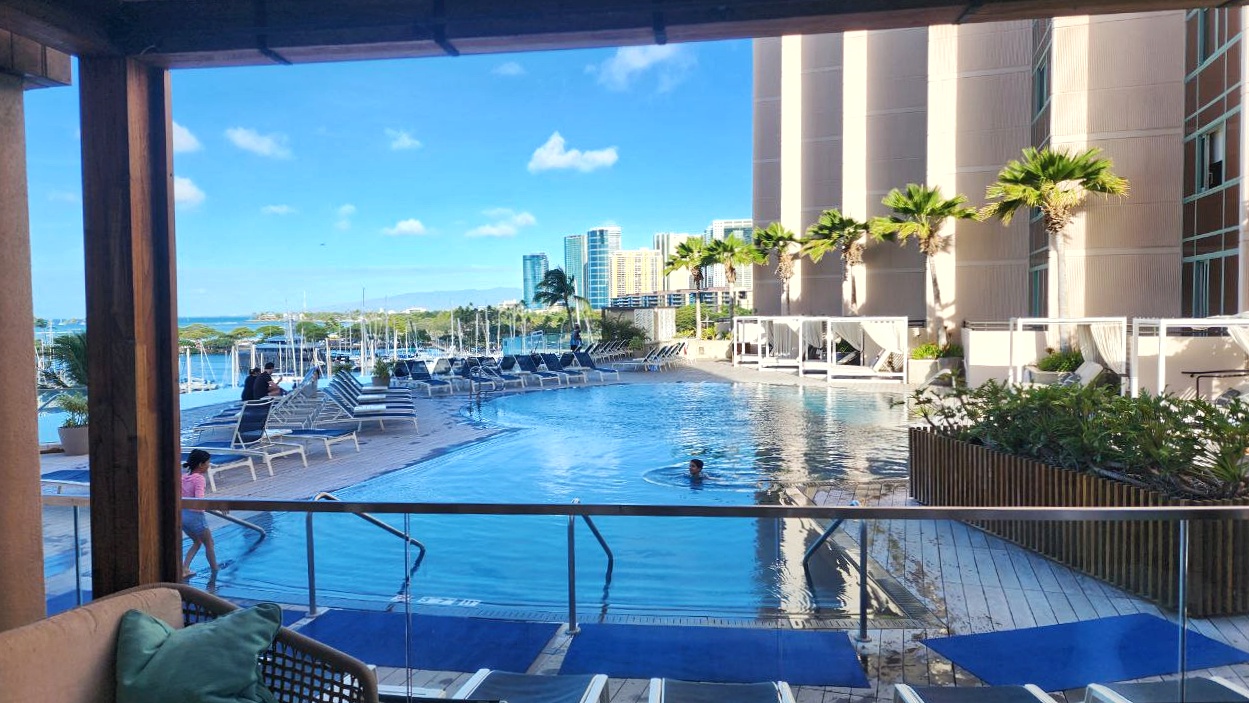
Photo Credit: © Beat of Hawaii at Prince Waikiki Hotel.
Get Breaking Hawaii Travel News




Local families are not buying currently available condos for local housing for two reasons: 1. They are not large enough to house families and all their belongings, vehicles, pets, etc. and 2. they come with not only mortgages, but also HOA fees that cover regular maintenance and upkeep plus special assessments to pay for repairs and replacement of aging plumbing and electrical systems and other huge projects. These units don’t magically expand in size and those costs do not magically disappear to make the units affordable family housing. What does disappear when you eliminate the option of short-term vacation rental of these small units is a lot of tax dollars and visitor spending that stays in the community, as well as affordable options for those who travel to the islands to visit family. When sold, the condos are bought by people who can afford to use them as second homes left vacant for much of the year. No benefit to the state or to local residents in that scenario.
This just shows everyone how corrupt Hawaii government is. Look at who donates to their campaigns….hotel lobby. This has Zero to do with providing housing for Hawaiian’s. It’s all a power and money grab by the hotel lobby to get rid of STVR’s. Anyone who can’t see this is a fool. Good luck in court. It’s called private property for a reason. Thousands of Hawaiian families rely on STVR’s to make payments, etc. It’s a great alternative to crappy hotels and their outrageous prices. There will never be affordable housing ever again in Hawaii. Regulation (3-5 years to break ground), high cost of materials and land, etc. mean that you can’t build anything that the average Hawaiian can afford, period. Meanwhile the taxes collected just get shuffled to some Uncle who runs the union…..ridiculous. But you get what you get when you keep voting for these idiots. You can’t eat the scenery….and people are not coming to Hawaii anymore.
Well the big hotel interests are still buying our politicians.
A budget friendly vacation should not come at the expense of local populations and the integrity of neighborhoods. STR’s have become a worldwide problem. I applaud the effort. Travel less often or go camping.
We should all just boycott the hotels and try to tell others to do the same!
I own a house rental on Lake Almanor in Northern California and there have similar efforts but not enough hotel type properties to do it all. I wonder if enough other rentals would all lower their prices that would force the hotel people to do the same and forget trying to drive the others out of the market. I for one would always prefer a condo or house over a hotel room any day of the week. You dont have the room, usually eat at their higher price food places, not to mention the RESORT FEES, forget it, give me a condo every time and I came there to vacation not to mingle. Just me!
Imagine how many “brown paper bags” were passed around.
Well we k ow who is paying for the govoner to run again. Do you know these same hotels tool advantage of our federal government and state after the fire in Lahaina charging $1000 a day for fire surviors to stay there for up to 9 months. That is 30,000 a month per fire survior? These hotels are not friends of the people. Lots of locals own vacation rentals to subsidize there income and keep there families in there homes. Do you know cleaners get paid $120 plus to clean one condo but the hotels pay them $20 and hour? And yet the hotels charge way more than the strs. The hotel lobby is greedy and our Governor is being bought out by them. Vite no for Josh Green . He should go back to practicing medicine and not pretending to know how to run a state. Lahaina has barely begun to rebuild because of permits and red tape. This Gov should have tried to fix that. And wht try and put locals in 50 year old buildings? Build new that fit families and are bigger than 500sq feet.
“ Lots of locals own vacation rentals…”
Only 6% of the affected vacation rentals are owned by local residents. The rest of the owners can’t vote here.
Exactly!
Interesting that you feel that removing the livelihoods and bankrupting 420 families on Maui is OK.
It would be great if the hotels built affordable housing for their staff….just sayin!
The Ritz Carlton in Kapalua did just that and the Hyatt Regency and Westin were housing fire victims with the help of FEMA.
The hotels get plenty of compensation to house the fire victims. Have you seen the figures for each room?? Mind-blowing.
Also, it’s not the same discussion as hotels building workforce housing, unless you are merely trying to point out that hotels are saints.
There’s a certain irony here where there are complaints that there is not enough housing and yet they continue to build new hotels.
I am not aware of any new hotels that are being built here on Maui.
Well then you need to do more research.
Now that’s the real spirit of “Aloha” that we seem to be losing!!
You jump on a jet plane and get taken to the proverbial cleaners.
You land in Hawaii, rent a car, and again you’re taken to the cleaners.
You make it to your Hotel and what’s waiting for you, a double dose of the cleaners.
You’d like to eat, but the cleaners done cleaned you out.
Wow, what a wonderful way to enjoy a vacation.
Our Aloha State now means “The Goose That Laid The Golden Eggs”.
Aloha Oe oh goosy, goosy.
Just as there has been no survey of illegal versus legal STR properties, there has been no surveys as to whether the owners of STR properties would sell to locals or rent long term to locals. No surveys as has been conducted on how much the average or median rental monthly cost would be to locals, nor what the median sales price to locals would be. Our own opinion is that the rents would be cost prohibitive as would the sale prices. We have the wherewithal to leave the STR market if forced to, but not rent out nor sell our unit. We won’t be dictated to by the county or state. If other owners such as ourselves don’t place the units on the market, how does Maui county address their current housing situation?
Our Governor, like all doctors are not businessmen. They have studied science and medicine until they are in their thirties then they start a practice. It shows in their poor decision making.
He’s not even a good doctor that’s why he jumped into politics.
After a weekend in Kailua Kona to get some sun, we found the prices and taxes absorbent. No wonder we are losing tourists. The illustrious Governor is so out of touch with the Big Island, he’s so deep in the pockets of Honolulu and the hotel owners it is pathetic. Will make sure to not vote for him again. Very disappointed.
Finally, our leaders are implementing what reaidents have been asking for … for decades. Hawaii now has a chance to avoid the fate of cheap, overtouristed destinations. You want to come here? Be ready to pay. Don’t want to pay? Go somewhere else, or better yet, stay home.
do you have any information on Hawaii Beach Rentals group? They do not appear to be BB accredited.
Don’t go anywhere else and better yet, stay home? Why the mean attitude?
And Bob, can you please tell me where you were born?
It seems like you and your readers – judging from the comments – missed the part about “illegal” vacation rentals. I make my living via legal vacation rentals. “Legal” means TAT and GET taxes get paid on rentals, property taxes are based on the proper property classification, and services are rendered by companies legally in business to do so.
Conversely, “illegal” rentals do little to contribute to the financial wellbeing of the community while disrupting the tranquility of neighborhoods like Kailua. The comments about consumer preference for vacation rentals are absolutely valid. There is certainly a place for them. As long as they are legal.
Every STVR contributes to “financial wellbeing of the community,” unless it’s run by the hotel industry.
Think: housecleaning, food, handymen/women, landscapers—basically anything it takes to run a household.
Ah, but this effort is not discriminating between tax-paying rental properties that have long been operating as legal vacation rentals and fly-under-the-radar non-tax paying illegal operations; the plan in Maui County is seeking to eliminate pretty much all str units except for those time-share properties, which, (gasp in shock here) are often associated with major hotel chains. Minatoya List properties have been operating legally, and following the rules paying taxes for decades, and many , when first built, were marketed as ‘your home away from home’ for relaxing vacations, not as family housing.
Yikes. Really ? Average room rate is $364 ? plus all the taxes & fees?for a room you only really use to sleep & shower in. Because everyone I know that vacations in Hawaii is busy most of the day & night enjoying activities & spending money. Geez this is sure to put the brakes on Hawaii trips for many families. That’s a shame.
What I have never understood in all this pushing hotels to “increase housing availability”, is that the prices owners of said STR’s would have to charge to just break even after paying their Condo fees, & all the taxes (as well as their mortgage or loan payment if not paid off), would be ridiculously pricey.
As a family of 5, we never really fit into most regular hotel rooms, so 30 years ago, I bought DVC, & promptly got spoiled to actually having very enjoyable and more affordable vacations for our brood in having a kitchen, in Villa laundry, and lots of room for all! All that said, I don’t really enjoy staying in a traditional hotel room anymore. Just not comfy for more than just sleeping.
In short, having to stay in a hotel room has little to no appeal for many of us. Or, our family simply won’t fit.
Hana
That is exactly why the Hotel industry launched its campaign to defame STRs in condos and homes.
Imagine the audacity of a local family renting out it’s “ohana” and making money directly from tourists without having to commute an hour or two to a hotel, punch a clock, and live on starvation wages.
Hana-Well said-and that’s why single owners, if they so desire, should be *allowed* to live in their own hotel rooms if in fact it keeps them housed!
There’s currently a case where a retired senior has their home exemption taken away ($600./yr.), and is now denied home exemption because the *classification * suddenly changed. The senior is now charged over $5,000/yr. for property taxes for a 260 sq. ft. unit! The senior has lived in their 260 sq.ft unit for over 18 yrs.!
They have never(since purchase) rented out the hotel room…not even for one day, ever.
This is extortion by the property tax office.
My family of five can’t afford two hotel rooms at $500 or more a night. We book condos with kitchens. If those go away, we go somewhere else that has those.
I didn’t realize the Star-Advertiser’s parent company had those business ties. But really no surprise. That’s how everything works in Hawaii’s good old boys network.
The $665 tax example hits. That’s really a lot of money. People don’t think about the total until they checkout.
I stay in hotels when I travel to Hawaii. I don’t like neighborhoods turning into mini-resorts where I live either. Maybe stricter enforcement really is overdue.
Tom
A local advocate of ‘hosted’ STRs ran for County Council last cycle. He did his own study by asking the Planning Dept how many STRs existed on the Big Island and multiplied that number by 365 to arrive at a fairly accurate number of about 1.5 million available room nights which he scaled down to 1.2m to reflect a 20% vacancy factor to arrive at the number of occupied STR nights per year that are occupied. He then asked the Planning Dept how many complaints it had received in 2024. The answer was 3.
IMO, the answer is hosted rentals owned by local families.
“I don’t like neighborhoods turning into mini-resorts where I live either.”
As someone who owns a small vacation rental on Kauai, I can tell you this is not some corporate operation. It helps us pay the mortgage. Taking that away won’t magically fix housing here.
Just curious. Is your rental property an investment? Do the fees cover that mortgage or your primary home? You could be part of the housing problem.
Housing problems come from supply and demand and being able to get a permit in a timely manner to build.
Most of the US has a housing shortage because not enough houses are being built and the permitting process is archaic in many areas.
Most STVRs are owned by families who are trying to make ends meet. The corporate ones are owned by hotels, hence, they’re allowed in the “resort zones” where the uber-wealthy live and where the hotels are located.
If hotels already charge the highest rates in the country, removing vacation rentals sounds like the last thing visitors need. This feels like basic supply and demand to me.
I would like to have a variety of places to stay since our hotels in Hawaii are over priced. Not everyone stays in Waikiki. The Northshore on Oahu seems to be the go to place for an old Hawaii experience. Beautiful beaches, wonderful local businesses, no high rise hotels, & happy people with true aloha spirit. B & B is always a great option. Regulating hotels only in Hawaii confirms strong union hold in Hawaii.
I don’t know much about the North Shore of Oahu, but here on Maui we have plenty of “hotel zoned apartments” that are not part of the 7000 short term rental units that were affected by bill 9. There seems to be a misunderstanding that all vacation rentals will be gone when in fact there are still 12,500 rental units that will continue to operate (hopefully legally).
If you are going to take the time to comment, please do not inflate the numbers to make your point sound better.
There are 13000 legal STR condos on Maui.
There are 3000 legal STR houses on Maui.
7000 of the condos are slated to be phased out in 3-5 years.
That leaves 9000 available to rent by 2031, not 12,500.
Also keep in mind that many of these properties are being taxed as STRs, but are not being used as STRs, which makes the total available even less.
The phase-out will have a severe impact on STR availability, and you will be able to feel it when you can no longer rent an STR at a reasonable rate, assuming you can find one at all.
Maui Planning Commission denied the proposed exemption to reduce the number of affected STRs yesterday. The lawsuits will b e huge and costly. Ironically, the taxpayers will be funding both sides while the Hoteliers relax and golf at the Four Seasons.
There seems to be two explanations for this dilemma. First, Bill 6 was implemented due to native Hawaiians complaining about the over-tourist situation causing lack of housing. Now, this political situation caused by the hotel chains. Two observations: 1. If you look at the map of proposed closed condo rentals, most appear to be in high economic areas (near the hotels). As a yearly visitor to Hawaii, they condos would be out of the price range for most Hawaiian. Second, the hotels seem to be pushing out the middle income vacations to cater to the rich and famous. Bill 6 was a poor idea that will effect the economy, small businesses, and rental unit owners.
This is great news and I hope they stick with it. STR’s are the scourge of communities across the country. Saratoga just joined Sausalito in Santa Clara County to prohibit any kind of short-term-rental and making advertising any such property as a punishable crime. $1500 for first time offense and up to $5000 for a third violation.
“…if you could flip a switch then there wouldn’t be a housing shortage…”
Hmmm… and all those magically appearing units would somehow become afforadble to all?
Key words here, “Hawaii Hotels Want 30,000 Vacation Rentals Gone.”
The hotel lobby has deep-deep pockets, enough to influence lawmakers.
Understandably, owners of short term rentals are upset with Maui’s Bill 9. However, some of them have not even been to Maui and have owned multiple units for investment purposes only while locals could not find a place to live, especially after the fire in Lahaina. I bought a small 2BR (750 sqf.) condo on Maui in December of 2023 and received 10 prospects within minutes of my ad before removing it. FEMA also showed up offering 40% more than what I was asking (I rented it at the advertised price to a local couple instead). Since Maui will still have more than 13,000 vacation rental units, we should have some restrictions …and the only people who could be against HB 1590, would be owners who operated illegal vacation rentals.
Don’t limit blame only the Gov. The other perp in charge is Mayor Bissen. The Mayor is a puppet of the Union, and the Union controls the hotels, or is it vice versa? Public policy on Maui, for example, is as if the non union residents, businesses and workers are scabs. I don’t have any stake in rentals, housing or hotels, but this disgruntled resident sees the damage the union tactics does to the community. I look forward to a robust primary election process to shine light into the politics.
What Maui wants to do is eliminate 6500 Legal short term rentals. Rentals that pay hefty GET and TAT taxes. If those taxes go away, how do you fund the country and state? Those same units pay the highest property taxes. If those taxes are cut by half or more, how does the country and state make up for the loss of revenue? By increasing property assessments or raising rates on locals? Can you afford those scenarios?
What a croc!! The hotel industry pays for a study and “surprisingly” the results turn out in their favor. Gee, what are the chances of that I wonder? Short-term rentals were another option, mostly for families, to afford to come to Hawaii at a reasonable price. They offered family space, kitchens to avoid the now expensive restaurants in Hawaii, and the ability to house families or groups together. This STR ban is no different than when Uber and Lyft first appeared on scene. The taxi industry was against Uber/Lyft and they were originally banned from the airports until people realized Uber/Lyft was a better and more reliable platform to get around. Now, nobody hardly uses a taxi because the other platform is a better model. It’s the same with STR’s, people get a better stay that fits their needs at a better price. By eliminating all these STR’s the hotel industry raises their rates and in my opinion it’s a total scam between the hotels and politicians. I hope this changes soon!!
Thank you for the sanity. You are right on all points.
How are they identifying the so-called 30,000 illegal STRs when they have never really enforced the crack-down of unpermitted STRs. Are they just saying hey, 30,000 is what we need and therefore we’re going to deem them illegal? Why isn’t the press pushing back on this? Wish there was better investigative reporting on this, if any. It all seems to be one-sided against STRs – both here and nationwide – and clearly corporate America is controlling all of it.
Green is just another in a long line of shills for the hotel lobby. My kids (two familes) used to visit and rent a large house for a few weeks. That option is off the table thanks to the Concierge-In-Chief. And no distressed local family is going to buy that $3.5 million house. So it’s Lose-Lose all around. Meanwhile, up north, Turtle Bay is charging $2000 per night! Nice job Guv.
Well Hawaii, you are pricing yourself out of the vacation market. We’re going to Tahiti in May instead of Hawaii…they welcome us there!
See ya!
IMO it’s also about controlling tourists to the hotel sector. Crowd tourists to the hotel properties so adjacent neighborhoods will be less populated. Pay the minimum $300 plus per night and the hotel industry holds all the aces in the deck. No choice for the tourist and less freedom. Restaurants around hotel locations mean higher property leases and higher priced meals. The state does have an interest in this because all in all they still collect state excise tax off all total sales. Populated areas also bring in inflated prices no matter Hawaii or not.