
Julie M. has visited Maui every February for 36 years. Same condo. Same two weeks. This year, for the first time since 1990, she did not book.
After decades of planning around the same routine, the rules shifted just enough that she stopped. She told us she was sad and frustrated at the loss of what had become a very long-term relationship with Hawaii. Nothing dramatic happened. Nothing exploded. It simply became harder to feel confident that everything would still work the way it always had.
She is not alone. We hear versions of this frequently.
Something has shifted in how people move through Hawaii, and it isn’t one big change. It’s the accumulation of small ones. The sense that every part of a trip now comes with an extra step, albeit small, an extra rule, or an added chance for something to change after plans are already made.
You don’t notice one thing going wrong. You notice everything is getting a bit more challenging at the same time.
When plans are made under assumptions that later change.
A recent example made that pattern hard to miss. Cruise passengers were told to expect a new tax. It was announced, and the state boasted about it. It was assumed, so passengers planned around it. Then, right before it was supposed to begin, it didn’t. The tax was blocked after bookings were already made under one assumption.
At the same time, other changes moved forward anyway. The state’s Green Fee survived in part, even as pieces were challenged in court. Maui County recently expanded beach parking fees across more Maui locations, confirming pass options including weekly and signaling that additional paid parking sites are coming. The state also pushed ahead with expanded visitor fees at several major Hawaii state parks, adding new charges at places many travelers had assumed were simply part of the experience.
The result wasn’t any big price shock. There was uncertainty about what applied where, which fees stacked, and whether rules announced for one island or park carried over to the next. At Waimea and Kokee on Kauai, for example, visitors pay a single fee that covers both entrance and parking at all overlooks, yet we regularly hear from people who assumed each stop required something separate because that’s how it works elsewhere.
Parking used to be easy. Not anymore.
Parking is where this often becomes personal. What used to be a minor part of getting around has turned into something people worry about well before they land. Issues like where and when they can park, and which app they need. Whether the rule they read online will actually be enforced that day. Honestly, we can get confused about it ourselves. It gets to the point where many visitors become frustrated with parking, especially at Hawaii beaches, period.
Reservations add another layer. Want to hike? Reserve first at some state parks. Want to park near it? That may be a separate fee. Want to enter a popular site? That could involve timing and a reservation that’s tricky to get. Each step works okay on its own. Together, they start to feel like added work.
None of this is impossible. The beaches are still here. People are still having great trips. But in 2026, it takes more effort to get there than it used to.
Hawaii travel is no longer just expensive. It’s work.
At some point, it became clear the issue wasn’t only cost anymore. It was the processes involved. There are more steps before you do the thing you came to do. More chances to miss something because you didn’t know or forgot that advance reservations were needed. More moments where visitors stop and wonder whether they’re about to make a mistake. That all changes how trips feel, even when everything technically goes right.
Peak seasons and quiet seasons now fail in different ways.
You feel this most during peak periods like the holidays that just went by or this coming summer. Residents do too. High season now feels tight and less forgiving. Everything is booked, timed, and spoken for, even more than it once was. One missed reservation or misunderstood rule can derail an entire day. Plus, you can spend hours trying to get to places that many assume are still easy access. Even visitors who love Hawaii tell us the experience feels challenging in ways it didn’t used to.
Hawaii in the shoulder seasons brings a different kind of strain. There is far more breathing room, but still less margin. Some services may now scale back. Some businesses are operating more cautiously. Visitors tell us it feels calmer, but also easier to get stuck when something unexpected comes up.
In both cases, travelers stay alert and may not relax into the trip in quite the same way as Hawaii visitors used to.
We hear this repeatedly and often find it ourselves. Parking was harder than expected. Reservations were impossible to adjust. A rule that looked clear online turned out to be fuzzy in person. We tried to park at a Honolulu meter and couldn’t find any indication of when paid parking started and ended. And what about on Sundays? People tell us they did their homework and still felt surprised. That wears on everyone, yet seems unavoidable now.
First-time visitors feel it most because they don’t even know what normal is or was. Families feel it because there’s less room for error in groups. Some older travelers feel it because so much now resides behind a QR code, an app, or an account. Visitors on a budget feel it because time and flexibility have become a bigger part of the cost.
At the higher end, much of this friction disappears. Someone else handles the steps. Mistakes can be managed. That gap is widening between visitor groups, and everyone notices.
Nobody planned this. It just piled up.
This didn’t happen as the result of any master plan. It’s what happened because courts, the state, counties, agencies, and systems all move on different timelines, each solving one small problem in front of them.
From the visitor’s side, it still all blurs together. There’s no single place to check, which is one source of real frustration. No clear moment when everything feels settled enough. Just a growing sense that the rules are provisional and fast-changing.
So people adapt, both visitors and residents. They tend to over-plan and double-check. They may hesitate before booking Hawaii at all. They build in buffers, create backup plans, and still feel uneasy. We get it.
That’s the Hawaii vacation fatigue we hear about most. Not anger. Not outrage. Just fatigue.
Hawaii didn’t change. The path to vacation did.
There was a time when coming to Hawaii felt far simpler. Visitors booked a trip, showed up, and figured the rest out along the way. But now the figuring needs to happen weeks or months in advance, and even then, nothing feels fully settled.
What people love about Hawaii hasn’t changed. Getting to it has. Not one big thing. Just a lot of smaller ones arriving all at once, affecting everyone, residents included.
Have you already changed how you plan trips to Hawaii, when you come, or what you choose to do once you’re here because the process itself feels harder than it used to?
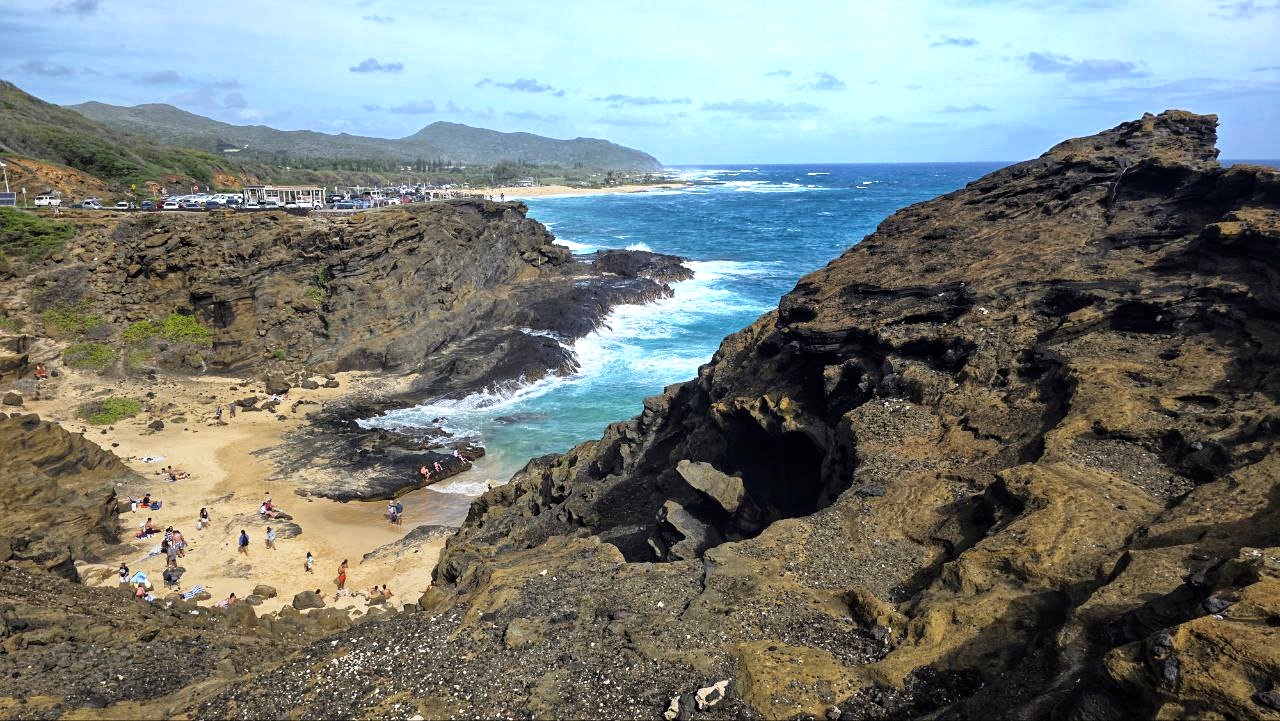
Lead Photo Credit: Beat of Hawaii at Halona Beach Cove, Oahu, the famous “From Here to Eternity Beach.”
Get Breaking Hawaii Travel News





Reservations are necessary for Ha’ ena Park, Ke’e Beach or Kalalau Trail, which are made available 30 days prior to any date. All available times for an entry pass, pass & parking are gone immediately! Shuttle & Entry Pass have more available, not always the desired dates. Makes it very difficult for visitors whose main purpose on island is to enjoy these activities. They likely have lodging cancellation penalties effective before arrival on island!
I assist clients, having written computer code which hammers the gohaena reservations page every 60 seconds, inspecting for a change in the previous minute. A change indicates a reservation availability. My code interrogates to determine if it is an availability which meets my client’s criteria & auto-completes the reservation for my guest.
Not everyone can do what I do. It beats the system & pleases my guest(s).
The county needs a better way to accommodate off-island visitors who come for this wilderness experience in Kaua’i.
Lol if I had to find out that I was paying less because the state couldn’t get their stuff straight, awesome! Come with the assumption that anything and everything may be more and be surprised/relieved when it’s not. Pretty simple.
Now imagine all this from a full time resident standpoint. We get it 10x worse 365 days a year.
I was a Hyatt Vacation travel planner back in the 90s and booked travel for the Hyatt hotels, airfare, car rental, plus helped educate people on what there was to do and see on each island. Back then people relied on travel professionals or the help from guide books, travel tapes or just the travel desk in the lobby in each hotel. Today, I personally don’t find the planning process any harder if you’re willing to take the time and do a little research. I find using the internet and social media easier and more reliable when researching a travel destination. I’m returning to Oahu again this year for a 12-night stay, and I’ve already started following on Facebook all travel advice pages, and every hotel, restaurant, and place I intend to visit. Then after I return, I unfollow them all. Case in point: Ho’omaluhia Botanical Garden posted they’re closed on Thursdays now. Good to know in advance, so I don’t show up on Thursday! (✿◠‿◠)
This is how modern travel to any popular destination works.
I remember pulling up to Disneyland parking for free, buying a ticket and walking into the park. Now you have to plan months in advance, no free parking, diner and park reservations.
Look at Balboa park in San Diego went paid parking this month it’s now a ghost town.
Don’t get me started on Las Vegas it’s a no fun S… show now with all their fees, so deal with it or not this is how travel works these days.
“There was a time when coming to Hawaii felt far simpler.” Boy, is that a true statement! For those of us who have been coming to HI for decades, the easy-going, no sweat vacationing has gone by the way of the “do-do”. More people, more cars, more traffic, more crowds, fees, expensive flights in sardine cans, the whole process has changed, and not for the better. It Does take away from the former layed-back experience that going to HI used to be. For those that are fairly new to the HI experience, they accept it as ‘normal’, but for those of us who ‘knew it when . . .’, its not the same, and not likely to ever be that way again. Very sad. Still love the islands, still go, but ‘it just ain’t the same.’
To everyone complaining about how its “so hard” to visit Hawaii now:
Yeah, it’s a total crap show. It always has been. Our government has to be the most inept and incompetent in the US. Not to even mention the most corrupt. These guys are bought and paid for.
I live on O’ahu. I see it. We all see it. It feels like it will never change. We vote them out and the new ones are even worse.
They like to blame visitors. But it’s they who are the problem.
What do you mean Hawaii didn’t change? When did all the resort fee’s start? My best guess is 2009. If you visited prior to that most places didn’t adopt a resort fee. You just were charged the Hawaii excise tax and not even the ridiculous Tourist Accomodations Tax. What do you imply that Hawaii didn’t change but the greed level did? IMO Hawaii has changed because it just got a whole lot more expensive in more ways than one.
I probably have started to prioritize what specific things I will do on a given trip and plan accordingly.
It’s mentioned in this article, and it’s been mentioned before, that if the state mandated that each government entity were required to link all their various requirements, rules, fees, etc. on one searchable website by island, it wouldn’t necessarily end the confusion, but it would make life a little simpler. A one stop shop. There must be at least one person on the islands that could do this.
I and my husband have visited Hawaii once or twice sometimes three times a year since 1990. I made reservations, last fall, to visit Hawaii in March of this year and I had some questions about what was still viable as Hawaiian Airlines moved into Alaska airlines. I was on hold for two and a half hours for one simple question that couldn’t be answered anywhere else. And I’m not really sure the answer I got is dependable. You are so right it’s way too hard to get anywhere especially to Hawaii. The airports are so automated that one doesn’t even know from year to year how to get to the airplane or get to a destination.
Hawaii is supposed to be a relaxing vacation (it used to be). I want to be spontaneous. I don’t want to have to plan a Hawaiian trip like a trip to Disneyworld. We often don’s decide what we want to do until we get up in the morning. Now reservations compel a visitor to plan everything out.
The locals don’t feel this as they are conveniently exempted from all this nonsense. If Hawaii continues to make it a hassle to visit, people are going to stop coming (as demonstrated by the comment you overheard on the plane.
We may be exempted, but that doesn’t necessarily mean it is carefree. Soon after Maui instituted paid parking (I think), I went to Nakalele blowhole. I parked and saw a sign about getting an app (I think) and scanning a QR code (I think) to prove I’m a resident (somehow) so I wouldn’t have to pay. It was far too cumbersome and confusing to be worth it if it had been busy at all (only 2 other cars), or if I thought they might actually ticket my 20-year old Tacoma beater as a non-paying non-resident. It used to be that part of good hospitality was to make everything as easy as possible. Not anymore.