
A single line, buried near the end of an internal Hawaiian Airlines memo, did more damage than pages of follow-up clarification could ever achieve. It landed harder than expected, even for people who thought they were already braced for what integration would bring next. The memo announced routine updates to the airline’s “People Policies,” its employee handbook.
The final key point stated that Hawaiian words had been removed in order to make the language “inclusive for our entire employee population across the entire U.S.”
While the memo was generated by Hawaiian Airlines, the decision came from Alaska Airlines, the new owners. That’s important, even if the coverage missed it.
For many who read it, the meaning of that was unmistakable. Something fundamental had shifted, whether the company intended it or not. The reaction came fast. Employees, longtime observers, and Hawaii residents read the line less as HR cleanup and more as a signal about direction and priorities.
Within hours, the memo was circulating well beyond the company, along with anger and disbelief. Not long after, Hawaiian Airlines issued a clarification saying the memo was poorly worded and that Hawaiian language remains part of the airline’s brand promise.
Officially, nothing changed. But the unease wouldn’t go away. The problem wasn’t just the memo itself. It was the walk-back that followed, and what that walk-back seemed to confirm.
One sentence struck a nerve.
To understand why this one sentence in an employee handbook was upsetting, you have to understand Hawaii’s history with its own language. Hawaiian was banned in schools in 1896 following the overthrow of the Hawaiian monarchy, and that ban remained in place for nearly a century, until 1987.
The revival of “Olelo Hawaii” since then has been hard-won and deliberate. Hawaiian is one of the state’s two official languages, yet its place in daily life is still fragile.
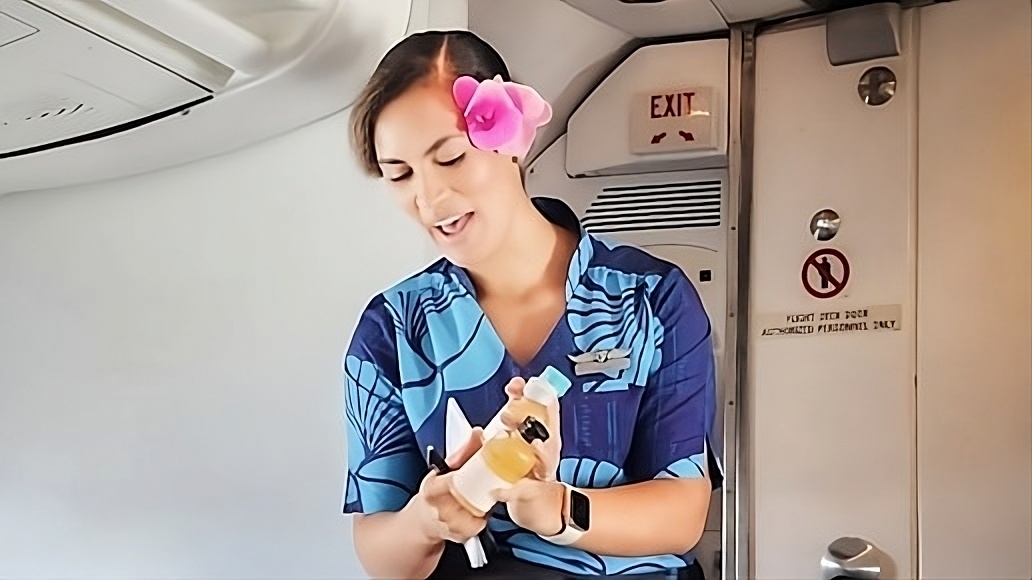
For decades, Hawaiian Airlines stood out as one of the few large employers that didn’t treat Hawaiian language as ceremonial or decorative. It was normalized and showed up in communications, values statements, and everyday usage, not as branding flair but as a working language within the company. Not only that, but the passenger greetings on Hawaiian Airlines flights are both in Hawaiian and in English.
For many employees, that has been important. It was part of the airline’s core internal identity, not just something rolled out for passengers or marketing.
That helps explain why the memo hit so hard. Language in policy documents defines what’s official, what’s optional, and how it all fits together. When a company says it has been removed in the name of inclusivity, people ask who is being included and who is being asked to step aside.
The correction simply didn’t settle things.
After the backlash, Hawaiian Airlines said the memo was incorrectly worded. The company emphasized that the Hawaiian language remains part of its brand through values such as Malama, Hookipa, and Po`okela. In short, Hawaiian words were not being removed after all.
On paper, even we thought that would have ended it. In the online reality, however, it didn’t. The clarification addressed phrasing, but it never answered the deeper questions the memo raised.
If nothing changed, why did the memo say what it did? If the Hawaiian language remains fully embedded, what exactly was meant to be removed? And why was inclusivity framed in a way that positioned Hawaiian language as something that needed to be stripped out in order to achieve it.
The gap is where commenters’ discomfort continued, even after the wording in the handbook got fixed.
This was not just an HR misstep.
Some argued that employee handbooks are just legal documents and that this episode has little to do with the airline customer experience. That framing misses the point. The handbook change itself wasn’t the story.
By the time the memo appeared, readers and employees already sensed Hawaiian Airlines was being pulled toward systemwide uniformity. But the language change didn’t help.
The episode seemed to many to imply that Hawaiian’s identity was no longer a given. Instead, it had to be justified, negotiated, and potentially even set aside, which isn’t how the partnership was first described.
That is why this didn’t get brushed off as a wording error by Hawaiian employees and others. It brought something into the open that had stayed unspoken since the Alaska acquisition.
Where decisions are made.
While the memo carried Hawaiian branding, the decisions come from Alaska Airlines, which now controls policy, systems, and messaging.
CEO Diana Birkett Rakow joined from Alaska’s corporate affairs team just months ago and has repeatedly said Hawaiian’s identity is secure. “Hawaiian Airlines is here to stay. Pualani is here to stay,” she said recently.
But her predecessor, Joe Sprague, told Beat of Hawaii directly that the Hawaiian Airlines CEO role was interim by design—never intended to be permanent and always meant to end once full integration into Alaska Air Group was complete. Whether that structure has since changed hasn’t been addressed publicly.
Reassurances are coming from a role originally described as transitional, not from a long-term steward of a distinct airline identity. Readers appear to be picking up on the difference.
Hawaiian Air loyalists felt a disconnect.
What made Hawaiian Airlines feel different was never just the logo on the tail or the word aloha in a safety video. For employees, it was the ability to show up without cultural translation. For travelers, it was an experience that didn’t quite feel like any other U.S. airline.
The memo cut against that understanding. It didn’t erase it outright, while it made it feel less settled. Less of an assumption. And for many, that was the uncomfortable part.
This didn’t have to happen.
Other airlines with strong regional or indigenous identities have also made cultural choices. Airlines such as Air New Zealand and Air Canada include native and regional languages in their official documents and internal communications, even while they operate large multinational workforces.
Why the walk-back couldn’t undo the damage.
The company says the Hawaiian language remains part of the brand. That may be true in marketing materials and values statements. But trust doesn’t come from polished statements as much as it does from unguarded moments. The original memo was just that.
It showed how someone, somewhere in the organization, framed the Hawaiian language as something that should be removed to make everyone comfortable. That didn’t come out of thin air. And, once it was out there, a correction was never going to be enough. It was too late.
This episode will fade from the many headlines, but it won’t fade from memory. Future integration moves will now be read through this lens, with less attention on policy specifics and more on what they reveal.
Hawaiian Airlines says nothing fundamental has changed. Many people don’t quite believe that is true, given the huge response online.
Does this feel like another step away from what made Hawaiian Airlines unique? Or is this just being overblown? What would it take for you to feel confident that the airline’s identity is truly being preserved, or do you even care anymore?
Get Breaking Hawaii Travel News




Has there been any talk about resurrecting Aloha airlines and making it a national airline like Air Tahiti , Air New Zealand, etc.? I realize that the state is deeply in debt….but are there not enough fans of Hawaii, its people and culture, that could be lured into investing in a reborn Aloha?
Publish the idea and measure the interest in such a venture. It is difficult for me to believe that the idea would not have enough support now that Hawaiian Airlines has been effectively killed by its new owners.
Mahalo again for your excellent coverage of news from the Paradise of the Pacific.
What did the employee handbook say prior and after the words “People Policies” was used?
As a former flight attendant for Western Airlines from 1970 to 1985 I feel compelled to comment. I flew many Honolulu layovers during my career with Western Airlines, which then became Delta. I live in Hawaii now and I’m married to a Hawaiian native. And it’s very. disturbing that the Hawaiian language is now trying to be erased by the merger. I would like to see on any flights to and from Hawaii that a flight attendant who can make the Hawaiian language announcements be part of the crew!. kind of like any other international flight where a native is on board . There are already hard feelings about this merger and Alaska is not doing itself any favors by introducing this protocol. Mahalo and Aloha.
Why is everyone so surprised? We flew Hawaiian from the Bay Area to Maui in November and it was the least “Hawaiian” Hawaiian Airlines flight we’ve ever taken. Old rickety plane, poor food, no welcome mai-tai, grumpy FA’s. Get on with the makeover, already. No will will care about a few missing words when the service is so…un-Hawaiian. Only those of us who flew the classic Hawaiian Airlines will notice. But we are literally a disappearing cohort of consumer.
I didn’t hear any announcements in Hawaiian on our recent flight.
**Shaking my head.**
While not exactly related to the ‘Ōlelo Hawai‘i issue, I have meaning to bring this up: If you look ahead in the schedules, you will see that after April 21, the HA airline code before the flight numbers disappears entirely. If you book a flight from April 22 and onward, all “Hawaiian” flights, including interisland ones, bear the AS code (and not the HA code). I realize that this is due to it being the date when Hawaiian converts back over to Sabre (from Amadeus), but this changeover, besides feeling outright strange, is going to be the biggest “kick in the teeth” for everyone, sadly.
This memo fiasco is such a shame. Non-Hawaiians love hearing the Hawaiian language spoken. Anytime, anyplace. It’s one of the loveliest parts of coming to Hawaii.
That was a real knucklehead move, to say the least.
1) Bring back the previous brand mai tai’s and get rid of the current gym socks version.
2) I’ve forever be angry about what Alaska Airlines did to Virgin America. Ruined the brand, ruined the experience, ruined the loyalty – even to the point where I had paid more for the same route, because of VA.
3) The complete audacity of AA to overlook something so important and critical to HA’s identity. Hate to say it, but total “mainland corporate” move and fail.
Massive own goal by Alaska…
Why am I not shocked? When are people going to get it through their heads Alaska has no love for Hawaiian they only bought them for the Dreamliners by 2030, if the Hawaiian brand is even still around, all it will be is inter island flights.
That doesn’t seem likely. AAG has said repeatedly that when all the dust settles, all flying to Hawaii will be on Hawaiian Airlines branded service., which actually makes more sense than trying to get people to fly from Chicago to Honolulu on Alaska Airlines.
It also makes no sense to throw in random words and terms that nobody outside of Hawaii understands when you’re trying to get people to fly from Chicago, or London, to Honolulu.
It’s not about what people living in Hawaii think. It’s about what increasingly global customers, and employees, think. Many more people fly from outside of Hawaii TO Hawaii than the other way around, and AAG intends to increase that number. Making as much accessible as possible to as many customers and potential customers is a sound business decision…and business decisions are all that matter. Airlines are not cultural repositories. They are publicly traded, for-profit organizations.
Goforride. I fly from London to Hawaii regularly and appreciate the Hawaiian announcements. Particularly the full announcements in Hawaiian. Words are easy but Hawaiian grammar is an interesting Challenge.
I agree with this article about the Alaska/Hawaiian Airlines Employee Handbook remarks. Just terrible.
Get used to that new Alaska dreamliner livery. My bet is, with possible exception of a dedicated interisland fleet (if that will even exist), the remaining Hawaiian aircraft as well as the Alaska 737’s will all be wearing it. Soon.
Fly inter island yesterday on Hawaiian Airlines. Long time Maui resident. Something has changed. Lacking was there was no Aloha spirit. Sad.
Unfortunately, Hawaiian Airlines will also lose its “Hawaiian Uniforms” as well. It’s a business to make money and marketing is important. Once a combine contract and one seniority list is in place, F/A will be able to fly both domestic and international flights. If a crew goes illegal to fly from SEA to FCO and the only crew available is a Hawaiian uniform crew to fly to FCO, passengers are going to think, what kind of operation is this, going from Seattle TO Rome with Hawaiian outfits. We will probably see a Hawaiian “apron” to be used for Hawaii flights, with Alaska Airlines uniform to be worn for everyone.
Language and Uniforms “inclusive for our entire employee population across the entire U.S.” “Systemwide uniformity”
“you will be assimilated.”
“resisitance is futile.”
Ha => as => borg
This is a perfect example of an unforced error made by management too disconnected from its own workforce. Whether externally or internally, ʻōlelo Hawaiʻi is a part of the HA workforce and needs to remain so. I’m sure it’s offensive to kānaka maoli employees, as it minimalizes their cultural values. AS needs to do a better job and stop foolish errors like this.
Maybe Alaska Air should wake up and honor what their own name stands for, Alaska. Maybe include same Inuit-Aleut words to remind folks that there is more to the world than just English.
like tusaatsiarunnanngittualuujunga, that would be one word to use on an airplane “I can’t hear very well”. Goes well with humuhumunukunukuapua’a.
I feel that Hawaiian Airlines and its employees have created an exceptional and unique flying experience. They do this with ease, playing off their customers’ already eager, vacation-ready attitude. The Hawaiian language, ʻŌlelo Hawaiʻi, adds a wonderful, gentle reminder that we are traveling to a different place with a unique culture. I hope that some of that wonder can be retained while Alaska Air assimilates the airline to fit into the monotonous, nickel-and-dimed mold that seems to define much of the United States–based airline industry.
Absolutely not overblown. I think they removed inclusivity when they decided to remove ‘Ōlelo Hawai’i. It seems more like they want to delete what made Hawaiian so endearing to most of us… the feeling that you were embraced by the culture as soon as you stepped on their planes. I do hope this ill-conceived plan doesn’t dampen the spirit of their employees – how sad they all must feel!
Presumably they do not make announcements in languages other than English on international flights. It is a disgrace that this racism was a policy from Alaska.
I still remember my first trip to Hawaii in the early 80’s. The ambiance of the interior of the plane led to the excitement of traveling to Hawaii. I traveled to Hawaii last year & the aloha spirit was definitely missing even though we had the luxury of the Dreamliner. . it also showed up on the islands. Ssad. Not sure we will return.
Your comments are equally applicable to commercial flying in general.
I still remember my first trip to Hawaii in the early 80’s. The ambiance of the interior of the plane led to the excitement of traveling to Hawaii. I traveled to Hawaii last year & the aloha spirit was definitely missing even though we had the luxury of the Dreamliner. . it also showed up on the islands. Ssad. Not sure we will return.