

$600 million sounds like a lot until you slow it down and do the math. Spread out over five years, this works out to roughly $120 million a year, and that money is intended to cover upgrades to five Hawaii airports, a massive new premium lounge at Honolulu, 24 Airbus 330 widebody aircraft retrofits, new digital tools, and improved employee spaces. In airline terms, that’s simply not transformation money.
Most early coverage treated this announcement as a major turning point for Hawaiian Airlines under Alaska ownership, but, upon closer inspection, it is something more modest. It signals commitment, but not a reset, and the difference is significant for Hawaii travelers who lived through the past year of integration pain and ongoing system friction that we detailed yesterday in Hawaiian-Alaska year one: what the victory lap left out.
What $600M looks like in real airline terms.
Putting this number in context is harder with U.S. airlines than you might expect, because carriers like Delta and United rarely publish clean dollar figures for cabin retrofit programs. Those costs are typically rolled into broader, multi-year fleet modernization plans that span hundreds of aircraft and multiple simultaneous initiatives. Delta is in the middle of a fleet-wide overhaul of its premium cabins, affecting three fleets. United retrofitted its entire mainline narrowbody fleet as part of United Next, another effort that sits inside a much larger, multi-billion-dollar push.
Where foreign airlines become useful is in their transparency. Carriers like Air India and Emirates publish retrofit budgets that show what comprehensive widebody interior upgrades actually cost, with the numbers visible. Air India committed roughly $400 million to refresh 43 widebody aircraft. Emirates has invested about $2 billion in a multi-year retrofit covering 120 aircraft. Those figures consistently land in the same range of roughly $10–15 million per widebody.
That context is significant for Hawaiian because it still operates 24 A330s, and those aircraft are about to matter more, not less, for Hawaii flights. Once the Boeing 787s exit to Alaska’s fleet, the A330s become the backbone of Hawaiian-branded long-haul flying. At typical industry costs, fully refreshing that fleet alone could run at least $240 million, before a dollar is spent on five Hawaii airports, a premium lounge, digital tools, or employee spaces.
Seen in that way, Hawaiian/Alaska’s $600 million plan starts to look tight. The projects are real, but the budget leaves little room for anything unexpected. This is a plan built around trade-offs and long-term sequencing, not one designed to impress Hawaii travelers with much-needed visible change all at once.
Start with the math, not the announcement.
The press release leans heavily on words like investment, modernization, and upgraded experience, but what it avoids is a clear context for where the dollars will actually be spent. $120 million a year is not a large capital budget for an airline flying widebody international routes, operating one of the most heavily cycled interisland fleets in the country, and touching every major airport in Hawaii. Once that money is divided across projects and years, expectations come back down to earth because this plan reads less like a reinvention and more like necessary stabilization.
The Honolulu lounge is real, and it can eat the budget very fast.
Another of the most concrete pieces of the plan is the new premium lounge at Honolulu, which has a stated size, a defined location that we keep watching, and a rough opening target toward the end of 2027. That also means a meaningful slice of this five-year budget is tied up in a single facility at a single airport, and premium lounges are expensive once construction, staffing, utilities, and long-term operating costs are factored in. And that’s even more true in Hawaii, where everything tends to cost more and take longer than on the mainland.
For travelers who mostly fly interisland or depart from neighbor islands, one premium lounge does little to change the daily experience at Lihue, Kahului, Kona, or Hilo, where most of the real friction still lives. What happens to the neighbor island lounges hasn’t been addressed. See Worst Airline Lounges In The World Include Lihue.
Recent U.S. lounge projects help put that cost in perspective. Delta spent well north of $125 million on its new lounge complex in Seattle, covering roughly 24,000 square feet. Industry estimates commonly place premium U.S. lounge construction in the $1,400 to $1,800 per square foot range once design, utilities, staffing infrastructure, and long-term operating needs are factored in.
Hawaiian’s planned 10,600-square-foot premium lounge at Honolulu could easily consume $20 million or more of the five-year budget before it even opens. That makes the lounge a big commitment, while also underscoring how quickly this $600 million plan gets spoken for once individual projects move from announcement to fruition.
A330 upgrades are coming, but not soon.
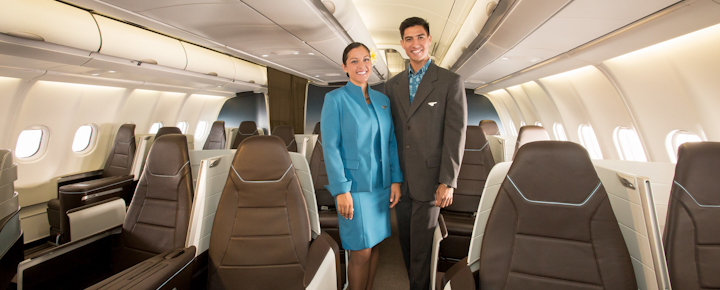
The plan confirms that Hawaiian’s A330 interiors will be refreshed, with work starting in 2028, and the word starting does a lot of work here. Widebody cabin retrofits are slow, costly, and disruptive to schedules, and Hawaiian still has roughly two dozen A330s doing most of its long-haul flying.
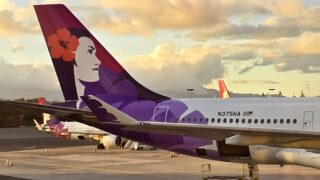
That timing matters even more given that Hawaiian’s Boeing 787 Dreamliners are set to transfer to Alaska’s fleet by spring 2026, a shift we explored in The Dreamliner was Hawaiian’s future. Now it’s gone. Once that happens, the A330s become pivotal to Hawaiian-branded widebody service, yet those aircraft will not see meaningful interior changes “start” for at least two more years.
Airport renovations may sound nicer than they feel.
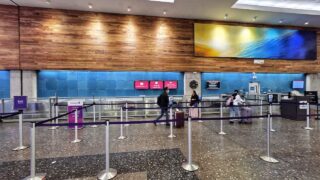
Upgrades are promised across Honolulu, Lihue, Kahului, Kona, and Hilo, with the PR language focusing on brighter spaces, better seating, and more charging. The description lacks any discussion of passenger flow, congestion, structural constraints, or lounges.
Anyone who uses these airports regularly knows that the biggest frustrations are not cosmetic. They are about choke points, timing, capacity, and how people actually move through these spaces. Without dollar breakdowns by location or sequencing by airport, it is impossible to know where this money meaningfully improves the traveler experience versus where it simply freshens surfaces that were long tired.
The missing pieces tell a lot about priorities.
An important part of reading this plan is understanding what it does not address, because those omissions are telling. There is no mention of the interisland fleet, even as the Boeing 717s continue flying extremely high daily cycles, often up to 14 segments a day, under existing FAA airworthiness directives that we have flagged previously.
Beyond that, the PR plan offered no new direction on branding beyond what has already been discussed elsewhere about how Hawaiian fits inside Alaska Air Group long term, an uncertainty we laid out in How long will Hawaiian-Alaska dual branding really last.
The plan also says nothing about in-flight service, including food, even as longtime flyers repeatedly point to declining meals and a buy-on-board focus as among the most visible ways the Hawaiian experience has changed.
A smoother future is promised, but not fully funded.
The airline’s leadership has acknowledged that the past year brought real friction from loyalty changes, system transitions, and everyday operational headaches that frustrated Hawaii travelers.
Even Hawaiian’s CEO has described that period as painful, with too many changes landing at once and too much strain falling on customers.
What travelers are asking to be fixed first.
Hawaiian’s own Facebook post announcing the plan drew a flood of responses that closely mirrored gaps in the announcement itself. Few page fans focused on lounge size or terminal renderings. Most went straight to the basics that still feel broken, including booking and check-in confusion between Hawaiian and Alaska, seat assignments that do not carry over, long waits for simple changes, and systems that still do not talk to each other cleanly.
Others focused on something that’s harder to measure but just as persistent. They said Hawaiian no longer feels the way it once did, describing recent trips as “just another airline” experiences and questioning whether investing in facilities will restore what was lost. Mixed in were familiar requests that have lingered for years, including calls for more widebody service, restored nonstop routes, and interisland flying that feels less fragile.
Taken together, the reaction does not contradict the $600 million plan. But it does explain why the announcement has landed with a muted reception. Travelers are still asking for reliability, clarity, and consistency first, and those are not problems that new lounges or five-year timelines easily solve.
What this plan really is.
The investment is real, and projects will happen, which matters to anyone who has watched airline promises go unfulfilled before. But $120 million a year spread across this many needs is not a reset. It is designed to signal progress without committing capital at a scale that would significantly reshape the Hawaii travel experience.
For travelers who endured the past year, the real test will be whether flying in and around Hawaii actually becomes simpler, more predictable, and better, rather than just looking that way on paper.
Get Breaking Hawaii Travel News


As long as they keep widebodies from the West Coast I’ll probably stay loyal. The minute everything turns into narrowbody 737 Max tubes, I’m shopping elsewhere.
We tried to use our miles and it was crazy navigating the different websites. I don’t need a new lounge as much as I need one login that works and actually shows me where I’m sitting.
I actually think Alaska might steady the ship long term. But they have to stop stripping things down and acting surprised when people notice. Loyalty goes both ways and the verdict is out on Alaska.
Please don’t turn my A330 refresh into more profit via seat densification. Every time I hear retrofit I brace myself for more discomfort and less legroom. I’d rather keep the old interior than lose space.
I don’t buy the this is huge investment.. Airlines spend billions like it’s nothing. Six hundred million over five years is not big money, no reinvention. Hopefully we’ll see something more soon.
We flew last month and honestly the crew was lovely. The systems were a mess though. That’s the weird part. The people are still Hawaiian. The structure around them feels broken and mainland.
I don’t care how big the number is. If I can’t check in without dealing with two airlines and waiting 45 minutes, none of this even matters. Fix the systems first. Everything else is just window dressing.