
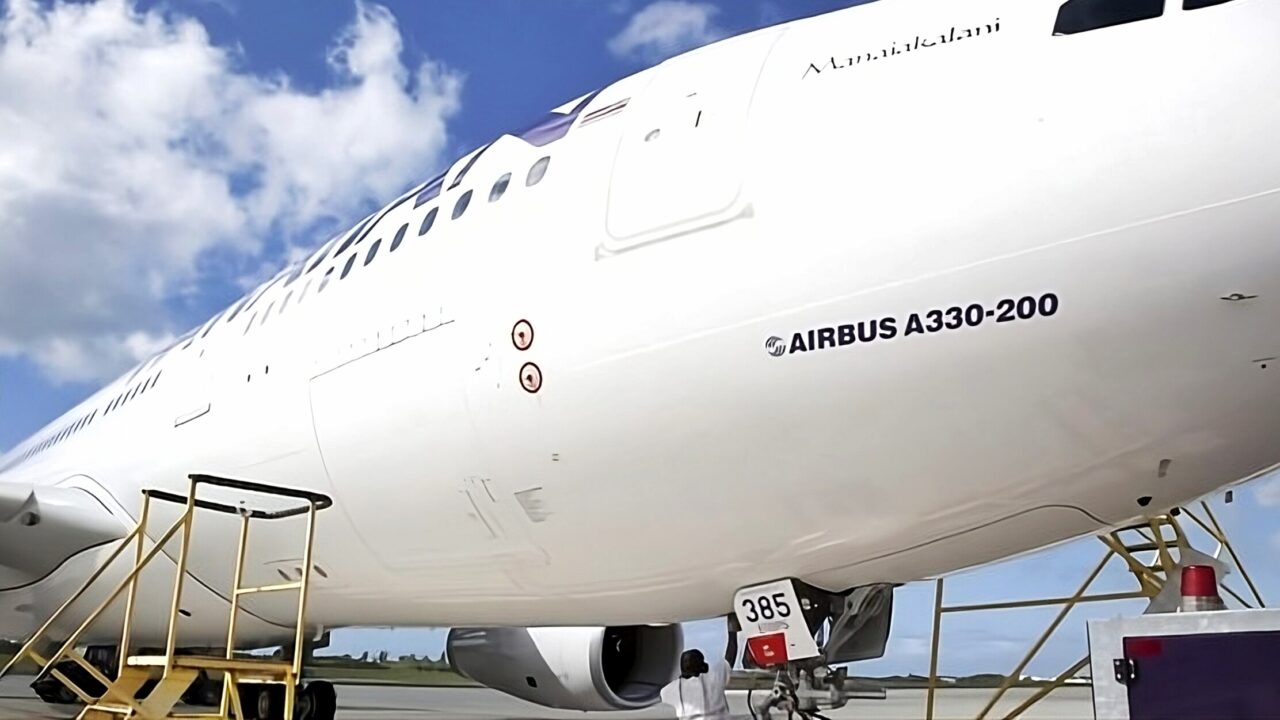
When Hawaiian Airlines signed signed this deal in 2022, it wasn’t thinking about fleet strategy or long-term options. It was simply working to stay alive. Covid had crushed Hawaii travel demand, airplanes were either sitting parked or flying empty, and the airline was heading towards a nearly $1 billion loss over three years. That context explains everything that followed.
This is much the same dynamic we wrote about in Will Hawaiian’s Planes Leave Hawaii?. In both cases, Alaska inherited important airline decisions that made sense for Hawaiian in a very different time that no longer line up with Alaska’s financial reality.
Behemoth Amazon offered stable revenue when Hawaiian Airlines desperately needed it. Hawaiian accepted terms that, in hindsight, heavily favored Amazon because there was no real alternative. As we laid out at the time in Amazon And Hawaiian Airlines: New Planes, Flights And Ownership, this was a survival move rather than a growth strategy. It bought time. It also locked in commitments that now sit squarely at Alaska Airlines.
The deal Hawaiian felt forced to sign.
Amazon did not come to Hawaiian for its brand or any passenger network. It came for Hawaiian’s ability to operate and maintain Airbus A330s at scale.. Hawaiian was one of only two major U.S. airlines operating the Airbus A330 in significant numbers. That left Amazon with very few options for the widebody cargo lift it needed to move dense loads overnight between major logistics hubs. Hawaiian fit the bill, and Hawaiian needed the money badly enough to say yes. Deal done.
The agreement committed Hawaiian to operating ten A330-300 converted freighters under a largely fixed-fee structure. Amazon supplies the aircraft through leasing arrangements. Hawaiian supplies the crews, maintenance, and daily operation. From the start, this was a low-margin business. Amazon negotiates a hard bargain with every vendor, and Hawaiian was no exception. The fixed-fee structure meant Hawaiian absorbed rising labor and maintenance costs while the payment remained largely flat. That math gets worse every year, never better.
This became clear when the aircraft actually started arriving. When we first spotted the Amazon A330 in Honolulu and asked what it meant for pilots and staffing, it was already obvious this operation would never slot neatly within Hawaiian’s passenger flying.
To make the deal work, Hawaiian hired more than 160 additional pilots and opened a crew base in distant Cincinnati, built around Amazon’s massive CVG hub. The flying, the staffing, and the location were all designed around Amazon’s schedule, not Hawaiian’s network.
At the time, the logic was clear. Hawaiian stayed alive. Everything else came second. This was classic ex-CEO Peter Ingram-era thinking: accept unfavorable terms now, worry about the consequences later. Hawaiian survived (albeit briefly before acquisition), but the bills keep coming due.
Alaska inherits a problem it did not buy.
When Alaska Air Group completed its $1.9 billion acquisition of Hawaiian Airlines in September 2024, it bought an airline with aspects it truly wanted and others it tolerated. The Amazon cargo operation, however, is just inherited baggage.
Alaska did not buy Hawaiian for its A330 freighter business. The acquisition was about Pacific and international routes, Hawaii market share, and the long-term value of Hawaiian’s Boeing 787 Dreamliner order book. The A330s came along because they had to, not because Alaska wanted them.
Sixteen months later, Alaska’s leadership is no longer pretending this fits cleanly. Speaking at a Goldman Sachs conference last month, Alaska Air Group CFO Shane Tackett called the Amazon charter operation “a tough business” and said there is “optimization that has to happen” for it to work long term. That is not expansion language. That’s “let’s clean it up” language.
Why this deal works against Alaska’s priorities.
The economics are only one part of the problem. Fixed-fee cargo flying offers little upside, especially as Alaska’s labor and maintenance costs rise. This was never designed to be a profit engine. It was designed to be a monthly cash infusion when Hawaiian was independent.
The bigger issue is operational. The 160-plus pilots hired for Amazon cargo are based in Cincinnati, far from the Hawaii, trans-Pacific, and international routes that Alaska actually cares about. Those pilots cannot easily rotate into routine passenger flying without disruption.
Alaska’s growth story is not about cargo hubs in distant Ohio. It is about medium-haul flying from Hawaii and long-haul from the Pacific Northwest to places like Tokyo, Seoul, Rome, and London. The Amazon operation ties A330 pilots to a corner of a system that does not support that plan.
A familiar problem, now showing up across the fleet.
On the widebody side, the Boeing 787 Dreamliner is the future for Alaska. The A330s will serve as a bridge until more Dreamliners arrive. On the interisland side, the 717s are another bridge that Alaska will not maintain indefinitely.
Regarding the A330 fleet, as long as the Amazon contract anchors A330s in cargo service, Alaska cannot unwind that part entirely on its own schedule. The aircraft, the crews, and the maintenance commitments move together. You cannot easily peel off one piece.
Amazon still holds the leverage.
Amazon’s influence did not end when the contract was signed. As part of the original deal, Amazon received warrants that could allow it to acquire up to 15% of Hawaiian shares over several years, a point we mentioned early in our reporting.
Whether those warrants are ever exercised is almost beside the point. Their existence signals who held the leverage then and who probably still does now. Alaska has not said what it wants from Amazon, whether that means better terms, fewer aircraft, or a complete exit.
It’s interesting to note that the contract length itself has never been publicly disclosed. That silence is striking. Alaska is managing a deal whose end date and escape clauses were never clearly laid out, even as it moves to reshape Hawaiian around a new future.
What this really says about the merger.
The Amazon cargo deal is another part of a broader pattern emerging as Alaska works through the Hawaiian acquisition. Hawaiian made hard decisions to survive a crisis. Those decisions made sense at the time. They also came with enduring consequences.
Alaska inherited those deals yet has its own set of priorities. It now owns aircraft, crews, and commitments that do not fit cleanly where it wants to go, even as it tries to remake Hawaiian into something new and financially viable.
From here in Hawaii, the takeaway is simple. The merger did not fully reset Hawaiian’s past. Some of the legacy choices are still very much alive and now constrain what comes next.
The question is not why Hawaiian signed the Amazon deal. The question is how long Alaska will be stuck living with it, and what that means for the airline that Hawaii travelers actually fly.
Get Breaking Hawaii Travel News






Seems like what may happy both is if Alaska and Amazon renegotiate with the understanding that some low risk type belly cargo become part of the mainstay cargo business exclusively aboard Alaska’s flights of Amazon for the remainder of the contract at a price Alaska is able to regroup from some of the shortcoming of the existing cargo agreement Hawaiian made with Amazon. Or this unhappiness of Alaska signals the future direction of where the Amazon Cargo business is going and thus Amazon may want to start shopping around, as other may not be so desperate in need of short term revenue Hawaiian was at the time in order to get to the point of a merger so as to survive. The devil is in the details they say.
Didn’t the State Of Hawaii government bail out or in someway help with landing fees for Hawaiian Airlines , to help with bankruptcy chances 🤔