
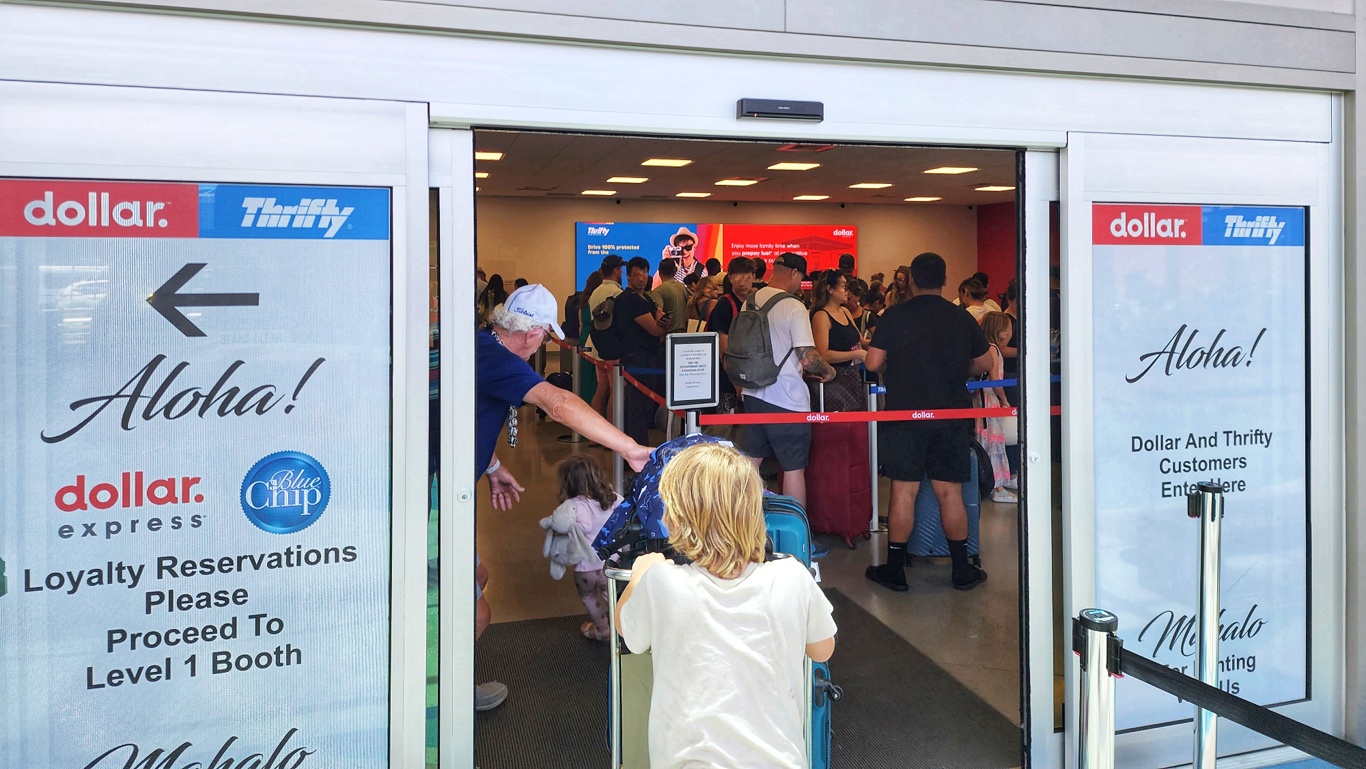
For all that money, too many visitors still end up with worn-out vehicles that feel more like a fleet leftover than the start of a trip that cost them big money. You land in Hawaii, head to the rental car lot, and pay a bill loaded with taxes and fees that can add more than a third to the base rate.
After months of looking to squeeze tens of millions more from the industry, the state failed. Lawmakers and rental car companies fought over who should get a bigger piece, and visitors were left exactly where they started: paying premium prices, absorbing heavy surcharges, and often getting disappointing cars with no accountability.
What Hawaii was actually trying to do.
Six bills introduced this year sought to raise the general excise tax on wholesale fleet vehicle purchases by rental car companies from 0.5% to 4.5%, a ninefold rate increase. Supporters claimed the change could bring in about $80 million in new revenue.
The proposed uses varied by bill: money would have gone to the general fund, Hawaiian Home Lands development, or retroactive hazard pay for public school teachers who worked during the pandemic. Lawmakers also floated additional island-specific daily surcharges of $3 to $5 tied to highway projects, on top of the state’s existing rental car fee structure.
Why the bills died.
Opponents have said that Hawaii was trying to redefine a long-standing tax structure as a loophole. It has actually been in existence since 1971, and also covers other leasing sectors outside tourism, including construction equipment and farm machinery.
Representatives for Enterprise, Alamo, and National told lawmakers that instead of producing $80 million in new tax revenue, the change could lead rental companies to buy fewer vehicles and trigger a $162 million decline in overall tax collections. Servco Pacific, Hawaii’s Toyota distributor, said the state already collects thousands of dollars over the life of each rental vehicle through taxes on rental transactions, the daily surcharge, and taxes on fleet vehicle sales.
Supporters included the Hawaii State Teachers Association and Chamber of Progress, a coalition backed by Uber, Lyft, and Turo, all direct competitors to traditional rental car companies. At the Senate hearing, Sen. Glenn Wakai pressed on the connection between HSTA and Turo before Senate rules cut off that line of questioning. Sen. Lynn DeCoite then recommended deferral, saying lawmakers needed to go back to the drawing board, ending HB 2575, the last of six related bills still alive this session.
What visitors are already paying.
As BOH reported in Visitors On The Hook For Hawaii’s New $100 Million Rental Car Tax, the tax and fee load runs about 35% on top of the advertised base rate. Hawaii’s current state rental car surcharge is $7.50 per day, rising to $8 per day in 2027.
The cars visitors actually get.
For families visiting Maui, Kauai, or the Big Island, a rental car is not an optional add-on. It is the only practical way to reach beaches, resorts, restaurants, and trailheads, and the vast majority of visitors on those islands rent one.
As BOH reported in Hawaii Car Rentals Leave Visitors Stuck With Junk Cars, complaints have included dented vehicles, worn interiors, poor counter service, and little connection between the premium price paid and the quality delivered, leaving visitors with cars that feel tired, overused, and well below what they paid for.
What happens next without a visitor advocate?
Lawmakers will revisit the idea of extracting more money from rental cars during the next session, with visitors still having no real advocate in that fight. The 2027 surcharge increase is already locked in, and without any push for better fleet quality, clearer pricing, or stronger accountability, everything else will still be up for grabs.
What has your Hawaii rental car experience been like lately: fair value, or too much money for too little car?
Photo Credit: © Beat of Hawaii.
Get Breaking Hawaii Travel News






We have been going to Kauai 3-4 times a year for over the past 10+ years. The rental car situation has gotten worse and worse over the years. The ages and mileage of the vehicles are getting worse. With the overall lack of staffing there is a general degradation of service and morale level of all car rental company associates. There seems to be no difference whether the rental car company is a legacy one or not. Service levels and actual rental product have definitely gotten worse since Covid while prices do seem to go up. Vehicles are minimally cleaned and quickly turned, if not ready as requested. Elite level status does not guarantee any better service or less wait time at the counter. As mentioned, there seems not to be any advocacy for the Hawaiian rental car consumer. While rental car companies may believe they have a monopoly, agencies such as Turo have grown in popularity.
Another example of lunacy? A Bill to raise fees to pay retro back pay for hazard pay for teachers during COVID? Are you kidding me? Kauai shut down visitor traffic completely for much of COVID. Being a teacher on Kauai was no more a hazard then, as it is now. It’s not!
I recently rented a minivan on Kauai for 41 days. I should have requested a handicap version, since after paying all the fees and taxes, I was only left with one arm and leg! Besides the usual dents and scratches though, the rear carpet had come unglued and had been “fixed” with duct tape. Unfortunately, the tape had long ago become loose too. Net result, when the back seats went from folded down position to upright, the carpet got in the way on the floor and they never latched. First acceleration, and the seat with passenger, flip backwards! Something easy enough to fix that Avis didn’t make the time to do. Please, HI, quit thinking that you are entitled to keep raising taxes and fees on visitors!
Not surprised by the tax and spend politicians. No accountability whatsoever.
It’s incredible how Hawaii’s appetite for new taxes continues unabated.
Visitors can’t vote for elected officials, but they can’t vote with their pocketbooks by saying enough is enough.