

After we published our visitors’ guide to medical care on Kauai, readers asked us to do the same for Maui and the Big Island. Most visitors assume a Hawaii vacation comes with some degree of medical backup similar to what they would expect anywhere else in the U.S.
On the outer islands, that assumption can be quickly upended if anything happens beyond routine urgent care. The state’s latest physician workforce report shows Hawaii is short 833 full-time-equivalent physicians statewide when neighbor-island geography and specialty coverage are factored in.
Hawaii County is short 43% of the doctors it needs. Maui County is short 41%. Those are not abstract numbers; they show up as long waits, missing specialists, fewer choices, and more cases that end up on Oahu. Most trips, thankfully, go fine, but if yours does not, the gap between the Hawaii you imagine and the Hawaii that exists during a medical emergency can get real very quickly. Visitors can spend thousands on flights, hotels, and rental cars and still land on an island where the medical system is already stretched thin before anything ever goes wrong.
Maui has one hospital carrying the load.
On Maui, the picture is this. Maui Memorial Medical Center in Wailuku is the island’s only acute care hospital. There is no second full-service hospital nearby to absorb overflow when something serious happens. Hospital leadership said in April 2025 that Maui Memorial’s emergency room is one of the busiest in the state and is frequently filled to capacity. The hospital says it sees more than 50,000 ER visits a year. That is not some quiet, lightly used rural facility with spare capacity waiting around for worst-case scenarios.
Maui workforce issues only add to that problem. The island remains one of the most physician-short areas in the state, and the shortages are not limited to some future planning issues. They affect how long people wait, how easily they can get a referral, and what happens once a case moves beyond something simple.
For visitors, the vulnerability is not limited to a single crowded emergency room. It is about a far less robust system. If you need care beyond urgent care, there is little room to manage.
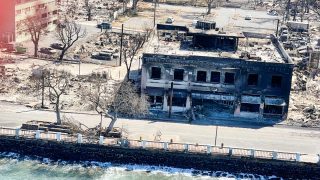
Maui is also still dealing with the long-term effects of the Lahaina fire. That disaster not only destroyed homes and businesses but also disrupted healthcare access and staffing on Maui, which already had very little margin of error, and the Hawaii physician workforce report noted that the fire exacerbated an already significant provider shortage. So even when visitor experiences in Wailea or West Maui feel polished and expensive, the medical infrastructure supporting the resort corridor is much less robust than many visitors assume.
Maui Health says the new clinical decision unit will include 12 observation beds and a dedicated area for chest pain patients, which should help with patient flow. But it does not change the underlying reality that Maui still has one acute-care hospital serving the entire island, one emergency department handling over 50k visits a year, and nowhere other than Honolulu to absorb the overflow when things get bad.
Maui has good urgent care until problems get bigger.
For non-hospital issues, Maui does have options. Minor injuries, infections, prescriptions, and routine travel problems can often be handled without needing to head to Maui Memorial. That takes pressure off the emergency room and gives visitors a less chaotic path for handling manageable problems.
Doctors on Call operates walk-in clinics in West Maui and at the Shops at Wailea, accepts some insurance plans, and requires no appointment. Minit Medical Urgent Care has three locations in Kahului, Kihei, and Lahaina, with on-site X-ray and lab services.
For visitors who want to skip the waiting entirely, MODO MD in Wailea is a concierge urgent care run by a board-certified emergency doctor who also does house calls. Payment is out-of-pocket, but with documentation, for potential insurance reimbursement.
But the line lands here: once the issue requires hospital-level care, admission, advanced imaging, or any specialist backup, the list of options quickly gets very short. People hear Maui and picture a major destination with strong infrastructure. In medicine, that is not always what they get. On Maui, one hospital is the only backstop.
The Big Island has more geography and even fewer easy answers.
The Big Island looks better in theory because it has three hospitals: Hilo Benioff Medical Center on the east side, Kona Community Hospital on the west side, and North Hawaii Community Hospital in Waimea. But the island’s sheer size changes everything. This is not a small island destination where the next hospital is fifteen or even thirty minutes away. Depending on where you are staying, the nearest hospital can be a long drive on roads where traffic doesn’t always make urgent easy. On the Big Island, geography is another part of the healthcare story.
Then there are the specialist shortages. Reporting last year described the Big Island as having one permanent oncologist, cardiology waits averaging 65 days, and only part-time urologists serving the Kona area. These depict how thin the system is if anything goes beyond routine care. They also describe why visitors with chronic conditions, older travelers, or families managing ongoing medical issues shouldn’t just assume every island has the same depth of specialists they might find on the mainland.
Kona Community Hospital announced expanded oncology services with a full-time radiation oncologist in late 2025, which is a real improvement, but it does not change the bigger issue, which is that Big Island’s specialists have been very limited for a long time, and one improvement in one specialty is very different than broad improvements across the spectrum of care.
Urgent care on the Big Island.
The urgent care situation on the Big Island is better than with specialists. On the west side, Kaloko Urgent Care in Kona is the only urgent care facility on the Kona side with in-house X-ray and accepts many insurance plans. Aloha Kona Health Care is a nonprofit that has served the community for more than a decade. On the Big Island’s east side, Hilo and Keaau Urgent Care Center has served the area since 2003, with both walk-in care and on-site X-ray. Visitors staying up on the Kohala Coast will find the Kohala Coast Urgent Care at the Westin Hapuna Beach Resort with limited hours, weekdays 9 to 5 and Saturday 9 to 2. It is out-of-network for most travelers, with itemized receipts provided.
New investment shows how serious the shortage is.
There are real efforts underway to improve care on the Big Island. A major Benioff donation helped launch a UCSF-linked expansion effort in Hilo. In December 2025, Queen’s Health Systems and Hawaii Health Systems Corporation announced plans for a new outpatient care center in Kona, near Queen’s planned new hospital. That would expand access to primary and specialty care while reducing travel and wait times. That is good news and is indicative of just how acute the need is. But improvements will take time, and visitors are traveling into what exists now rather than what might be a few years from now, in spite of the momentum.
If it is serious, Oahu is still the Hawaii medical backstop.
On the Big Island, serious cases can require transfer to Honolulu, where specialist depth is much better. Maui Memorial does have clinical capabilities that most visitors may not realize, including trauma, cardiology, critical care, and obstetrics, but it remains a single facility dealing with enormous demand, and pediatric cases, too, may still require inter-island transfer.
That does not imply that every serious case in Hawaii ends in an airlift. It does mean the possibility is much more real on Maui, Kauai, and the Big Island than many travelers understand when they book a Hawaii vacation. If something complicated should happen, the care path may not end on the same island where the vacation began. It is worth knowing this before departure rather than in the middle of a crisis.
None of this means cancel your Hawaii trip. It does mean going in with appropriate expectations. Hawaii still sells paradise very well. But paradise has some rough edges, and this is clearly one of them. Most visitors will never need to think about any of this. But if you do, you are going to care a lot less about the ocean view and a lot more about how fast real care is available, and whether it is even on the island at all.
What has your experience been with medical care on Maui, Kauai, or the Big Island, whether as a resident or a visitor?
Get Breaking Hawaii Travel News




I may have touched on this before. In short….procedures that are ‘easy’ to arrange in a suburb of Chicago are major undertakings on the Big Island.. or better said, not possible. Even getting ordinary GP/Internist appointments are incredibly difficult. People who buy houses here need to be really conscious of this before they buy. If they are in their late 50s or older…it won’t be long statistically before the needs become crucial. We were utterly forced to go back to the ‘continent’ because of this… Flying to Oahu for what are ‘normal’ issues…wow. Not good. “Aloha’ and “Paradise” …notwithstanding.
Don’t forget Kohala Hospital! It is small but an important part of health care in North Kohala.
As the saying goes, “Got pain, get a plane”. Anyone else not surprised that the state has figured out a way to influence a way to make its healthcare system completely incapable of performing their Hippocratic Oath duties due to costs and lack of planning? Neither am I.
I am a full-time Maui resident. Several years ago, I developed hives and tried to get an appointment with a dermatologist. I called and was offered an appointment nearly 1 year in the future!!! Eventually I figured out the cause.
After several years with various health issues and a lack of doctors, I tried Kaiser Permanente. One of my best decisions ever! While they too, have a physician shortage, they still offer same-day doctor appointments.
Kaiser is awesome!
I am a visitor with Kaiser insurance. I have gotten care on Maui and Hawaii with same day appointments. I feel comfortable traveling to these islands knowing care is available if needed.
We live on Maui part-time, and our experience has been that it is far easier to get an appointment with certain specialists on Maui than back home, where in our locality either there is a one-year wait for appointments or they are not taking new patients at all. I’m referring to these three specialties: dermatology, specialized eye care and specialized physical therapy. I realize that none of these apply to emergency care, which was the main thrust of this article, but I’m saying that the overall picture is not as bleak as it seems from the article.