
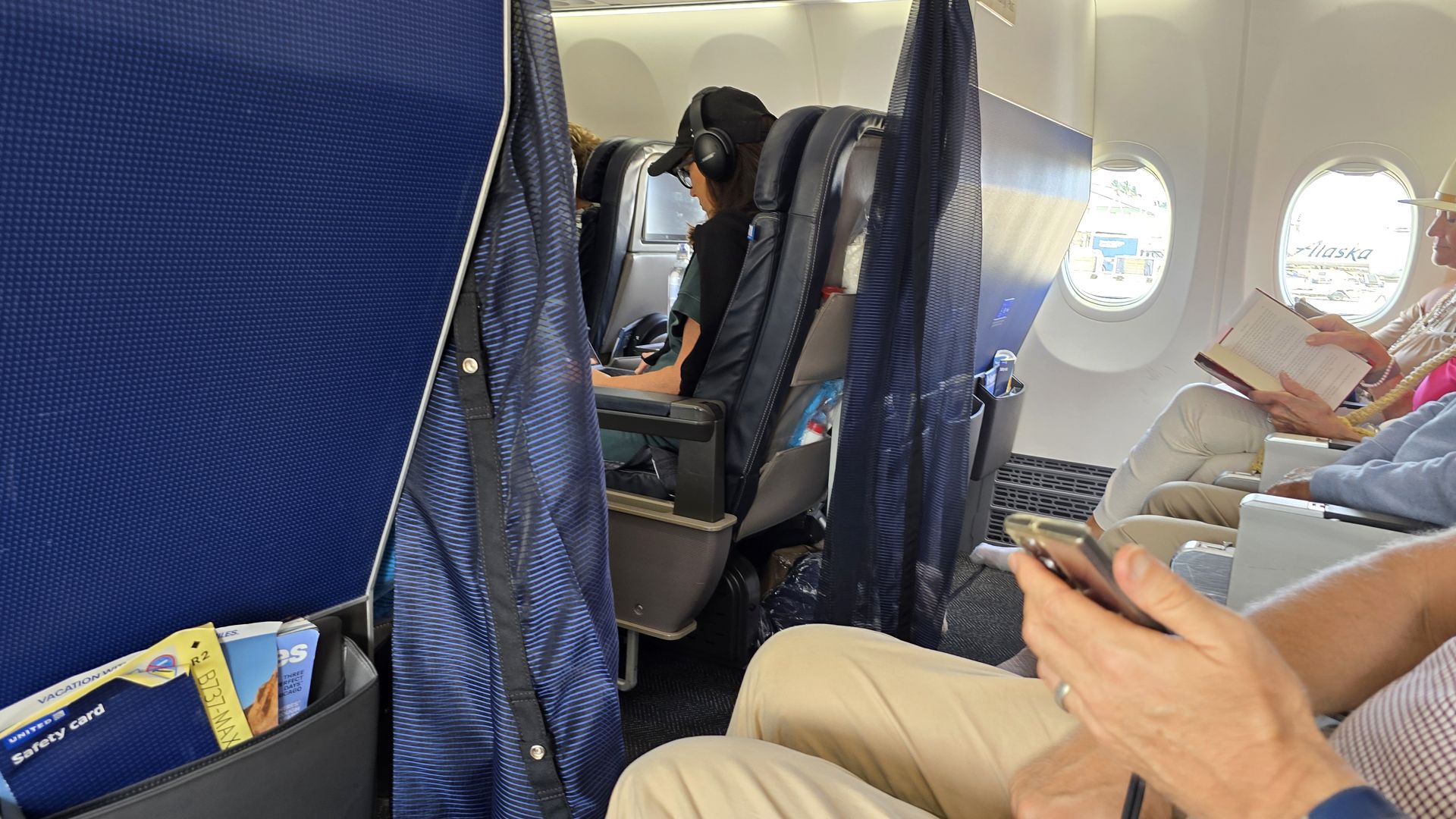
Airlines carved the premium economy out of coach and now charge a whole lot to sell some of that space back. Instead, we buy three economy seats for two people, and we have done so for years on Alaska, American, United, Hawaiian, and Delta.
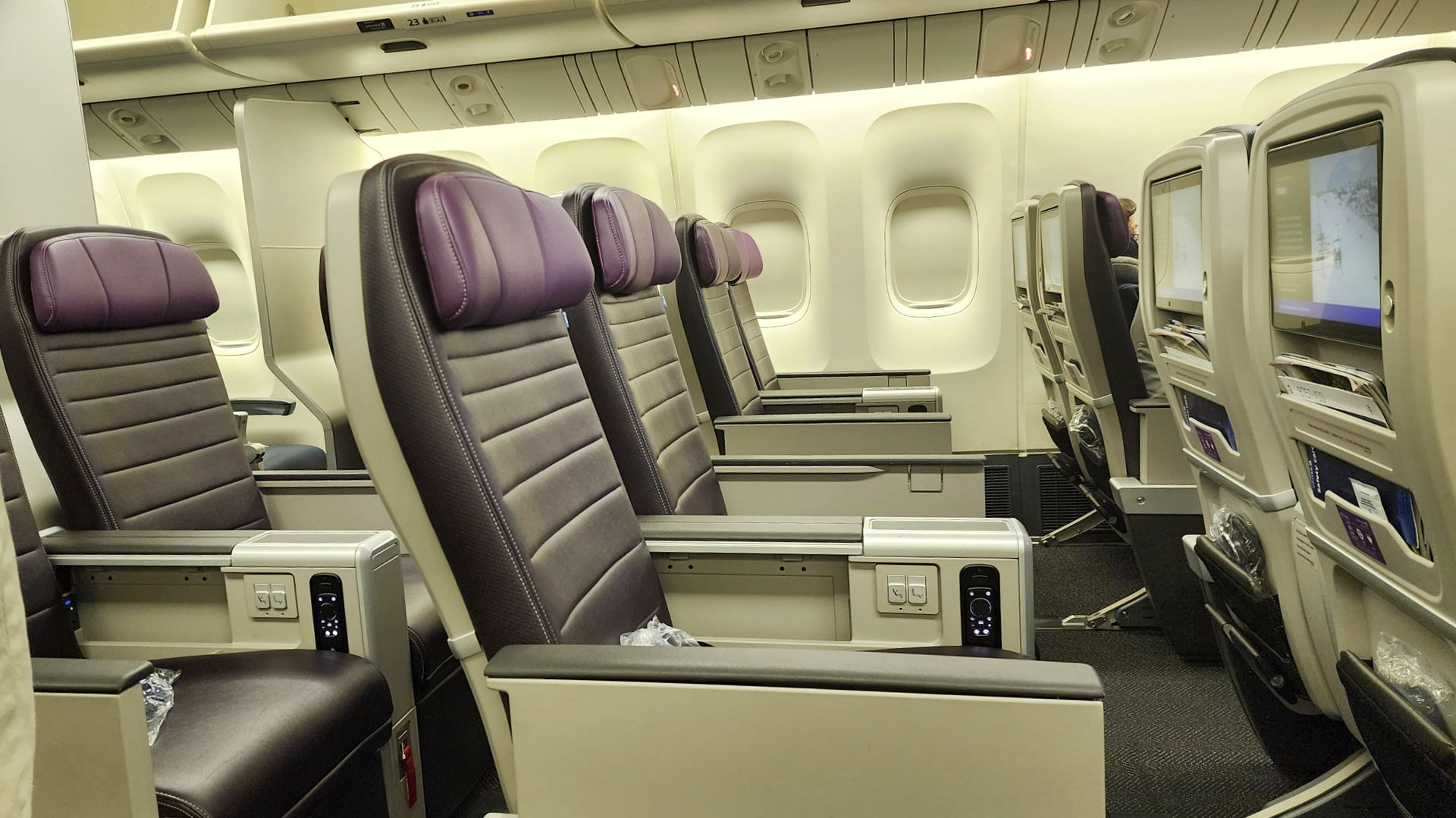
If two of you are flying to Hawaii and the numbers line up, we still prefer to have a row of three in economy than pay many times more for current premium economy fares. The reason is simple. While premium economy gives you two larger seats, three economy seats can give you real space as well, albeit in different ways. Not only that, but this is available on every flight on all these airlines, and doesn’t depend on airlines offering widebody premium economy.
For us, if you’re going five or six hours from or to the West Coast, or much longer on an East Coast flight, the empty middle seat changes the whole experience. You are not sharing a row with a stranger. You are not fighting over armrests. You have room for your things, room to shift around, and room to breathe. For many travelers, that feels more useful than the premium economy product that airlines are currently charging a premium for.
Why do the three-seat trick.
The cost of premium economy to Hawaii can now be so high that it no longer feels like a reasonable middle-step option, which is why the three-seat trick keeps ringing true for us. Instead of paying sharply more for two somewhat better seats, we would rather buy a third economy seat and turn the row into real space.
This is not about pretending the economy is wonderful, not even with three seats. We won’t go there. Airlines made coach tighter, then built a new cabin out of some of the space they took away. Travelers are no longer looking for luxury. They are looking for a Hawaii flight that does not leave them sore, crowded, and annoyed before the trip even starts.
This works on narrowbody and widebody alike.
The aircraft type does not matter. We rarely fly to or from Hawaii without doing it. On an upcoming flight from Seattle, Delta’s first-class pricing is unusually close to three economy seats, which almost never happens. We may go first class on that one, but that would be the exception.
This approach is not glamorous, but it is honest. You know exactly what you are buying. You are buying more room. Not a promise of nicer service. Not an improved airline meal. Not a seat that sounds better on paper than it feels once you are actually sitting in it.
How the three-seat trick works.
Two people buy three seats in the same row. The extra seat must be purchased correctly, because it is not a fake passenger and is not supposed to disappear from the reservation later. You are paying for that seat, and you want the airline to recognize that it belongs to your party and not be taken away.
Each airline handles this differently. Some still make the process clumsy. United Airlines is still by far the best when it comes to this. The extra seat is reserved just like another passenger. When United asks for the name, there will be a drop-down to select extra seat instead. Done.
Others allow it online if you know the exact format. Alaska is one easy example of that. You can do it yourself, but note that they do not make it obvious. You book the extra seat under the same last name as the passenger, use EXST as the first name, and it works consistently. You can still call Alaska afterward for confirmation (which we suggest), but the important point is that this is not a hidden or difficult trick.
One reader asked about the TSA requirement. Alaska asks for gender and date of birth for the EXST passenger. Use the same information as the actual traveler. The extra seat boarding pass is not used at security, only at the boarding door.
And starting April 22, when Alaska and Hawaiian complete their operational integration onto a single reservation system, what works on Alaska should work on Hawaiian exactly the same way. That makes this even more useful for travelers who prefer flying Hawaiian to the islands.
On some airlines, the booking path can be less clear. That is why it still makes sense to verify the extra seat after purchase, or call the airline and have them help make the booking to ensure the assignment is protected. The extra seat should not be treated casually, and assuming the system will sort it out later is not enough. This works best when it is set up cleanly from the start.
Since airline tickets have a 24-hour cancellation rule, it’s easy to buy the two seats that you and your travel companion will occupy, then call the airline about the extra seat.
At the airport, the practical part is straightforward. The extra seat is on the same reservation, with its own boarding pass that must be scanned as you board the plane. This is not about bringing a third person through security, so don’t show it there. It is about making sure the airline treats that seat as sold and assigned. We recommend that you have a paper boarding pass for that seat in case anyone questions it. This proved valuable on American Airlines when our seat was the only empty one on the plane and the flight attendant was going to give it to a non-rev employee.
Reader Diana B flew home from Lihue using a companion fare for the first two seats and miles for the middle seat. She said it was very comfortable and had done it twice. Reader Maleko put it plainly after reading our premium economy comparison: his best flights are when he and his wife buy the whole row themselves.
The extra seat can beat premium economy.
For two travelers, the comfort can be great because the space is flexible. Premium economy still locks each person into a single large, bulky seat. Three economy seats give you options. One traveler can shift toward the window, the other can shift toward the aisle, and the middle remains yours. That is a very different experience from being packed into a standard two-seat setup with two strangers, or even two partners, for hours.
The benefit here is especially true when premium economy pricing starts getting as aggressive as it has. At that point, the comparison stops being abstract. Travelers are asking which one actually gives them more comfort for the money, and that is where the row of three wins.
Buying the extra economy seat can still cost less than paying for premium economy while delivering the one thing many people actually want most: more usable room.
Where people can get this wrong.
The first mistake is treating it as a hack rather than a purchase. If you do it, do it correctly. Make sure the extra seat is documented properly and confirmed by the airline. Make sure the seat assignment is actually there. Make sure you know how that airline labels the extra seat.
The second mistake is waiting. This works best when economy is still reasonably priced, and the cabin map still gives you some control with three seats in a row. If you wait and coach is already filling in, you miss the chance.
The third mistake is assuming this is always better than premium economy. It is not. Sometimes, premium economy pricing softens enough that it makes more sense. Sometimes, first class gets oddly close in price, as is the case with our Seattle-to-Lihue flight. Sometimes the route is short enough that none of this really matters, and two adjoining aisle seats will do. But for Hawaii, where the flight is long enough for space to really matter and premium economy can be priced too high, this still has real value.
Southwest is its own separate case. That airline has long required a medical reason to purchase an extra seat for comfort, and readers should not assume the same playbook applies with them.
Why this works right now.
Travelers are already irritated. They can see that premium economy often does not deliver enough for what it costs, and that economy only gets worse while the supposed fix gets more expensive. If airlines are charging you more to get some of your space back, this is one way to take some of it back for yourself.
The bottom line on comfort versus cost.
This does not mean premium economy is always a bad value. It means, however, it can be unworkable, and when it is, this is still one of the better answers for people who care more about real comfort on Hawaii flights than cabin branding and limited perks. The biggest advantage is that the product is clear: you are buying space, and on a Hawaii flight, that still counts for a lot.
Have you used the three-seat trick on a Hawaii flight, and which airline made it easiest or hardest?
Photo Credit: © Beat of Hawaii.
Get Breaking Hawaii Travel News


I love Premium Economy…. The service, food and amenities are clearly better and I prefer it even to having a whole row to myself in normal economy. That said, the prices are often ridiculous. I was recently looking at flights to Europe and a PE seat was a mere $100 cheaper than a full lie-flat Business class seat! That’s just makes no sense. Sometimes really tired of the entire pricing game. But these are First World problems. To be able to travel at all is a privilege. And as long as I arrive safely I can accept some discomfort.
When we first used Hawaiian from LAX-OGG in 2018, the “Extra Comfort” seats, Hawaiian Airlines version of premium economy, included a few other perks beyond the extra 5 inches of legroom. If I recall correctly, the IFE was still purchase in regular economy but included with the Extra Comfort. There was some other minor things, but I do not recall now what they were. Now it is simply the 5 inches of legroom. I figure that amounts to about $26 per inch.
Is it possible for one person to buy three seats in a single row?
Lie flat flying for half the price if allowed by the airline.
Under SWA now trying to enforce passengers of size being forced to buy a second seat …. I called SWA reservations in advance for Hawai’i, , and asked if I should proactively purchase a second sest….the agent”suggested” that I should to avoid not being able to do so at the gate on a full flight! She said, I could request a refund if the flight wasn’t full. So I bought a second seat. When I boarded, the lead flight attendant said “you aren’t oversized…!”… “make sure to get a refund…”. However on the return flight, due to the flooding and rain , and cancellations, our flight was sold out… but thanks to the second seat,,, my wife and I had plenty of room… for less $$$ than 1st class on other carriers!! So…. Your advice is sound!! And…. The SWA staff were very polite and familiar with “XS” seating!
We also have been doing this and love it.
Southwests policy says you can’t but an extra seat for “comfort”, only if you are too big to sit in a single seat. Makes no sense to me. Does this make sense to anyone else?
Makes no sense at all! Given the price of aviation fuel you would think airlines would be encouraging passengers to buy seats that would fly empty!
I did this on your advice for our flights to Maui and back in January on Hawaiian Air. While the extra space was great, there were come complications which makes me wonder if I’d do it again (it may be better under Alaska Airlines’ management). Firstly, it took me over Two Hours to purchase the third seat for two passengers with Hawaiian Air’s customer service. They were very nice and extremely apologetic for the amount of time it took, but honestly; it shouldn’t be this hard! Secondly, when you do this, the passenger who buys the additional seat will not be able to check in online; it took and extra 30 minutes on both the outbound flight and the inbound flight at the airport with a ticketing agent to get me checked in to both seats. Again, it shouldn’t be this hard. And here’s a pro tip: on the Hawaiian Air a321 neo, if you book an exit row for these seats, the armrests do not raise.