

Economy seats on Hawaii flights are getting harder to find, and it is not because demand suddenly changed. Airlines are rebuilding their planes, so there are fewer of these seats to sell. This is no pricing trick nor a temporary shift. It is a structural one, already underway at every airline serving the islands. Economy is no longer the backbone of the aircraft. It is what remains after everything else has been prioritized and sold.
New United widebody jet epitomizes the future of Hawaii air travel.
Look at the seat map below and the message is unmistakable. Out of 222 total seats, just 84 are standard economy. That is barely more than one-third of the aircraft. Everything else is premium in one form or another, stretching from the nose all the way back past the second set of doors.
There are 64 business class suites, including eight new oversized ones that are roughly 25% larger than the airline’s standard business product and positioned as a tier above what business class used to be. Behind that sits a full 5-row premium economy cabin with 35 seats. Then come 39 extra legroom economy seats.
Only after all of that do you arrive at regular economy, compressed into the plane’s tail in a dense 3-3-3 layout. Premium seating runs from the nose back to roughly row 24. And it shows where airlines now believe the money is and who is being squeezed to make room for it.
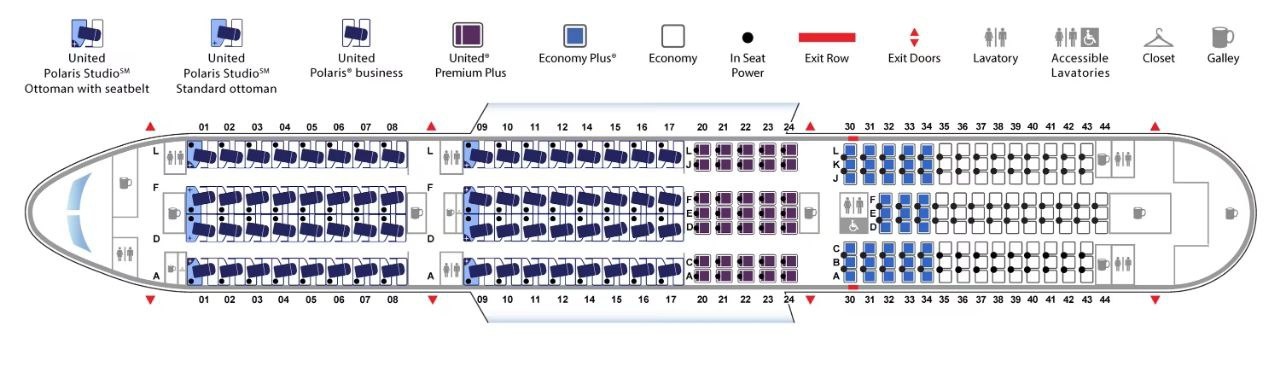
This plane is not flying to Hawaii yet, but the idea is.
The first routes for this aircraft are long-haul international flights. So while Hawaii is not on any initial list, that detail misses the bigger point. This layout is not a one-off experiment. The strategy includes plans for roughly 30 of these aircraft in service by the end of 2027.
West Coast to Hawaii flights will fit this model perfectly. They are already long enough for premium upsells to be important. They attract leisure travelers who are willing to pay more for comfort. What this seat map shows isn’t about one route or one airline. It is about how airlines expect to make money going forward, including on Hawaii flights that were once built around volume and economy seating.
What this means when you try to book a Hawaii flight.
This is not theoretical for Hawaii travelers. We reported last summer in Hawaiian’s A330 overhaul could drop 60 economy seats, that its upcoming widebody retrofit could eliminate a huge number of standard economy seats per aircraft to make room for new lie-flat suites and a premium economy cabin that never existed before. That estimate was based on direct comparisons with Delta’s A330 updated configuration and showed exactly where the space has to come from.
That is the same thing that’s playing out here, only taken further. The new widebody seat map shows the endpoint of a process that all airlines flying to Hawaii are already in the middle of.
Fewer economy seats on any given flight means fewer chances to grab lower fares when demand rises. When those newly limited seats sell out, prices can jump faster and harder. Families feel it first. Hawaii residents feel it constantly.
Premium economy has been sold as a new middle ground.
For some travelers, it serves another purpose. It both creates a costly new rung on the Hawaii flight pricing ladder and takes physical space away from the traditional economy.
On this Dreamliner plane alone, segmentation by class will be four layers deep. There is regular economy. There is extra legroom economy. There is premium economy. There is a business class. And within business class, there is now a super-premium layer on top with larger suites and upgraded service and food. The aircraft is not getting bigger. The economy slice is getting significantly smaller.
This is not about one carrier copying another. It is an industry-wide decision to trade economy capacity for higher-yield cabins on long routes, including Hawaii.
This is the physical proof of what we warned about last year.
Back in November, we wrote about premium economy to Hawaii and where it was headed. The conclusion then was clear. Airlines were slicing and dicing the cabin more strategically and charging more people more money for these incremental upgrades.
What has already changed since then is that segmentation is no longer just a pricing theory. It is a physical fact built into the aircraft itself, as the seat map depicts. When Hawaiian’s A330 refurb is announced, you will see it once again. When planes are configured this way, the decision has been made. There is no way to add economy seats later without tearing the interior apart.
We hear the consequences constantly from readers, and we experience them ourselves. The economy feels tighter. Fewer seats are available at reasonable prices. Premium economy sells out earlier. Business class takes up more of the cabin than it used to.
For travelers who remember when flying to Hawaii in economy was tolerable, the shift feels intentional. For those booking going forward, it’s simply becoming the new normal. We invite your comments.
Get Breaking Hawaii Travel News


Like you said, United has no intention of using the new 787-9s with the premium heavy config on domestic or Hawaii fights, they are purpose built for ultra long haul operations where 2/3 of the demand is for premium hard product. Hawaii fights aren’t anywhere near that yet, most flights are still less than 1/4 premium and most less than that in narrowbody configuration. I do agree that Premium cabins are creeping into economy territory but it isn’t Only to make money, it is to make money because they can sell those seats and there is demand. If there wasn’t demand for that number of premium seats, airlines would be flying with empty premium seats, and they aren’t, it isn’t all just “lets get rid of economy to make more money”. For these comparisons I am not counting extra legroom as any kind of premium product because it isn’t. When you subtract extra legroom seats out of the premium numbers the situation looks less dire.
We waited so long for the Hawaiian airlines 787 dream liners. Then Alaska Airlines move them out of Hawaii and onto Europe.
I am so glad to see United Airlines future is to have the dream liners fly from the West Coast to Hawaii.
We want Luxury we do not want economy seats for five hour flights. It looks like United Airlines is the only one listening to us.
Beats Hawaii should be at United in Chicago asking when can the airplane start flying to Hawaii?
Feel double crossed by Alaska.
Last time I checked, the US is still a democracy, where businesses compete for customers, are allowed to make a profit.
Another perspective: Airlines know their customers, adapt to meet their demands. Spirit is going away because airline customers are prioritizing comfort over price, Southwest was forced to drop open seating, add extra legroom. Airlines will continue to offer saver fares with limited amenities when needed to fill planes, which will be more widely available during off peak travel days, redeyes. When adjusted for inflation, airfares are still at or close to historic lows.
They have done the numbers and the demographics, The majority of Americans dont venture out more than 3-5 hours flight MAX, there are limited options for airlines whithin the country and here is a customer base that will pay the new pricing. business 101. Unfortunately, world wide, Airlines copy the American Model, and they will and whithin the US the same is happening with horrendous prices for hotels that are grimi, old, and outdated.
Ten years from now those premium seats will be gone and the old economy seats will be back. Except at the premium price.
Have not flown economy since Aloha airlines !!! 20 years !!! Once started flying United went Economy plus when the fee was $299 ( for two) for a year . When prices changed for seat preference ( aisle , window , middle ) NOPE ; then started first class . Only fly once or twice a year to Hawaii ( Maui, Kona ) want to be comfortable and relaxed starting vacation , want to come home that way too!
Been on airplanes for 60 years and can see how air travel has changed dramatically ( to having empty seats to stretch out with meals ; to being squashed on top of one another and having peanuts thrown at you ;to having bleacher/ bench like seats ; and restrooms that your shoulders touch both interior walls !)
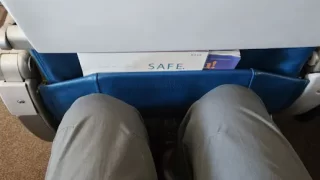
Very tight seats on what is supposed to be a “safe” product. If you get a blood clot, you know who to sue.
Pay more, get less. As American as apple pie.
This makes the upcoming Hawaiian A330 changes a lot more concerning in hindsight. Once the cabins are redone, that’s it. There will be no going back, no matter how much people complain. This isn’t going to be a good thing for my family, that’s for sure.
Airlines keep saying that this is what customers want, but I don’t remember ever being asked if I wanted fewer economy seats. What customers want is a tolerable seat at a fair price. Everything beyond that is just revenue optimization and that is the industry’s expertise.
I’m a Hawaii resident and this hurts us far more than visitors. We don’t always have flexibility on dates, and we may not always have the option to wait for non-existent sales. When economy shrinks, residents get hit immediately.
What bothers me is that airlines frame this as “more choice.” It’s not more choice in any way when the affordable option keeps shrinking. It’s just more pressure to spend more money just to be comfortable enough to get through the flight. People say that the airlines just responded to demand for the lowest prices possible, and maybe that’s true. What we created, however, is a monster.
Okay glad I’m not imagining it. There really are fewer economy seats now, and a lot fewer in the future. If it isn’t the hotel prices that get you, then it’s the airlines.
We used to fly to Hawaii every year, always economy, always fine. The last few trips felt noticeably tighter and more stressful, and we’re now seriously considering other destinations and those not requiring flying. If airlines think squeezing economy won’t change travel behavior, they’re completely wrong. On the other hand, they don’t care.
People keep saying “just pay for premium economy” like that’s some small step up. On my last widebody flight to Hawaii it was nearly triple the price of economy. That’s not an upgrade, that’s a completely different product aimed at a different customer. And not me.
It feels harder every year to find a normal-priced seat that doesn’t come with strings attached. It’s not just fares going up, it’s the fact that there are fewer seats available at all unless you pay extra. And then they are intentionally undesirable. Families are going to be priced out first, no question.
I’ve been flying to Hawaii for more than 30 years, mostly in economy, and it never felt great but it was manageable. What’s changed is that economy now feels like it’s intentionally miserable, almost as a sales tactic. At some point it stops being travel and starts feeling like something much worse.
Families will need to get into the credit card points game, particularly cards with companion certificates. Cash back on CC won’t begin to cover flights for a family.
Or families may revert to the old line camping + national parks vacations that they can drive to.
Good luck with the miles.
I did Portland – Maui – Kauai – Oahu then Maui – Portland on Alaska for summer 2025. We visited Molokai too, so that got us from Oahu to Maui on Mokulele. We did Portland – Maui round trip, with one bought and one on Alaska’s bonus $100 fair, and miles for the 3rd for 45K miles. We then booked Maui – Kauai – Oahu, all 3 fares for 55K total. All in on Alaska and Hawaiian it was 100K miles and $1900. With bags Mokulele was almost another $1K.
I’m shocked at the new prices when I’m kicking the tires. We’re not going until summer 2027. But it’s looking like Portland – Oahu – Kauai – Portland as we’re planning is going to be Much more dollars and Much more miles.
What does the cabin pictured have, 5 levels? With a couple of more fancy titles the airlines will slice it even more thinly. At some point they will just have to admit reality and call the last couple of rows steerage.
I’ve been calling it steerage for over 30 years. That’s how long United has been squeezing regular economy to make more room up front. I’m 6 foot 1 inch. I can ride in American or Hawaiian in the back and my knees are in front of me. Not so on United, Delta or Alaska. I simply don’t fit. I need to either have my legs under the seat in front of me with my knees below the seat or I need to have my feet off the floor and my knees raised against the seat back.
This would comport with Hawaii getting more and more expensive to visit once here. Since we are residents we get a bit out of touch, but it does seem the “Air, room, car” packages, if they still exist, are no longer the budget things they used to be.
I don’t see a problem here. Supply and demand, it’s a business you know.
We’ve been flying to Hawaiʻi multiple times a year for the last 15 years. I don’t ever remember Economy seats being “tolerable”. It only took 2 round trips to convince us that the extra cost for Premium Economy and First / Business Class is well worth it. The fact that premium seating sells out fast tells you all you need to know. The airlines are responding to customer demand.
Airlines are in the business of making the highest profit possible for their shareholders. Simple fact.
I agree on your point. Premium sells out before any other class in my experience. They need more.
I could tolerate it on American, but there are not Pacific Northwest flights to Hawaii. So up in Premium Economy I ride, that’s the only place I don’t have to hug my knees or put them under the seat in front of me.
It is market economics pure and simple. The majority of flyers want the cheapest ticket possible and they will choose airline by price alone. So the airlines put in more seats, move more to passengers out of the basic coach by offering better travel experience. Additionally if you reduce the space for basic coach you will drive up demand which exceeds supply which means higher price. The same is true of the Coach plus products which do not offer flat beds or a real premium experience but still make more money. The last way is to offer basic coach with everything extra. Pay to reserve seat, Pay more for Preferred seats and even more for extra legroom and Exit Rows. Pay to board early, pay to take bags, pay for food, pay for drinks, pay for internet… etc. So the sensible traveler looks for value not price.
Americans wanted cheap fares, so they got squeezed, literally + figuratively. Seats are smaller + space in general. Add-ons now cost $$ – checked luggage , seat selection, preferred locations, purchase food.
People got what they asked for – in a penny wise, pound foolish way.
I just wish even the extra leg room was all in. People are much less price picky once they start paying more. All of the extras are a PITA.