
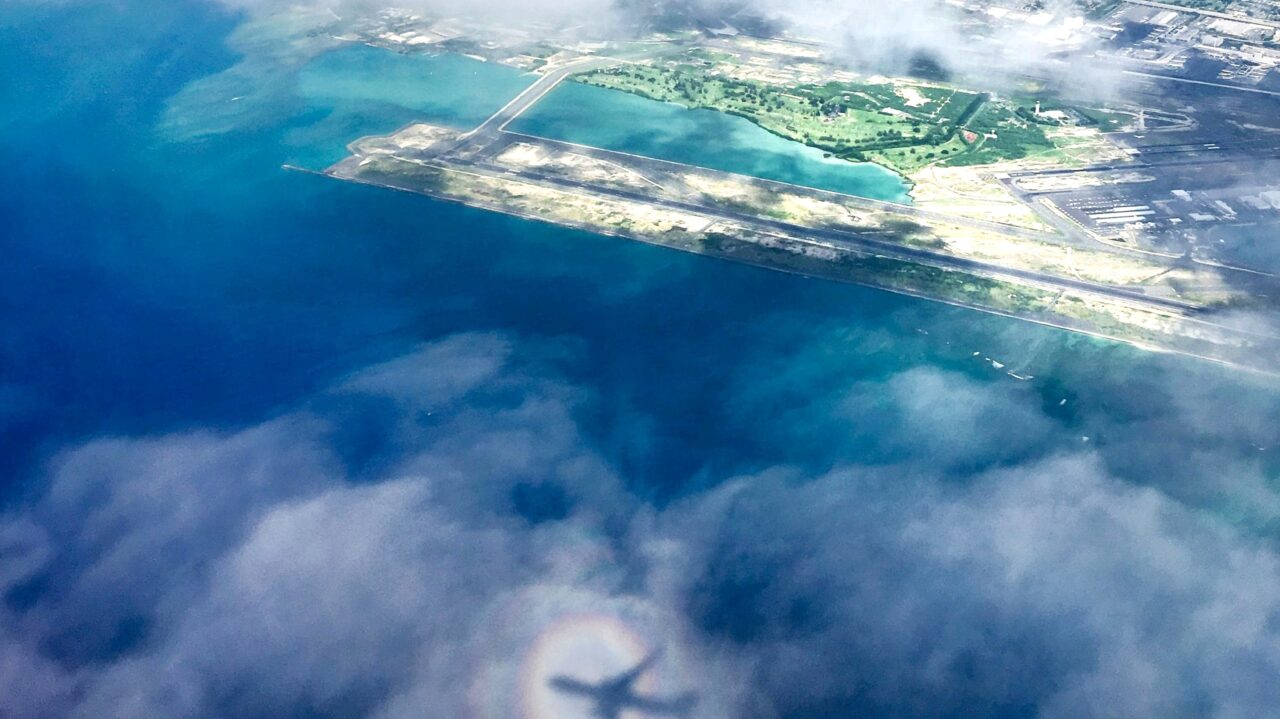
Passengers on two Hawaii-related flights experienced abrupt changes in plans after mechanical issues forced both aircraft to turn back mid-journey. One flight departed Honolulu, the other was headed to Hawaii from the mainland. In both cases, crews made the call after problems surfaced in the air, and both flights returned safely. The disruption came late enough to be troubling for travelers and to point out just how quickly a long trip can unravel.
A Hawaiian A330 engine shuts down after takeoff.
Hawaiian Airlines Flight HA865 departed Honolulu for Pago Pago, American Samoa, on an Airbus A330-200 late on January 13. Shortly after takeoff, ATC audio reviewed by Beat of Hawaii confirms the crew received an engine control system overheat warning and shut down engine number one.
Air traffic control kept the aircraft close to Honolulu as the pilots leveled off at 5,000 feet and worked through checklists, something passengers would have noticed immediately from the reduced engine noise and the changed flight path. The crew declared an emergency and requested vectors back to Honolulu.
The aircraft returned to Honolulu Airport and stopped on the runway so fire crews could inspect the engine. They found nothing visible, confirmed brake temperatures were elevated but within limits, and cleared the aircraft to taxi to the gate. All 173 on board deplaned normally and without incident. The aircraft was removed from service for inspection, and the flight did not continue that night.
A United 767 dumps fuel and turns back to Newark.
Early Saturday morning on the mainland, United Airlines Flight UA363 experienced its own aborted departure. The Newark to Honolulu flight encountered what United later described only as a “safety-related issue” shortly after takeoff.
The Boeing 767-400ER climbed to 28,000 feet, then descended to dump fuel before turning back toward Newark. For passengers watching fuel stream from the wings, the meaning was clear. Fuel dumping signalled that the long-haul flight was preparing to return rather than continue.
The aircraft landed back at Newark Liberty about 90 minutes after departure. Passengers were delayed just under nine hours while United arranged a replacement aircraft, turning an expected 11-hour crossing into a long day of waiting before the trip resumed. The aircraft involved was approximately 24 years old.
What this says about Hawaii’s long routes.
The aircraft involved in both incidents were older widebodies still heavily relied on for Hawaii service. The Hawaiian A330 fleet had an average age of about 13 years, while United’s 767-400ER fleet is far older still but continues flying long-haul routes where new aircraft availability is tight and substitutions are limited.
Hawaii routes leave little margin once flights are airborne, especially over open ocean. When warning systems sound, crews turn back early, and that is exactly what happened in both cases.
The lasting impression is not about systems or procedures but about sitting back down at the airport they just departed from. Two Hawaii flights turning back on opposite sides of the country is hard for passengers to overlook.
Get Breaking Hawaii Travel News





I do not like Airbus equipment but that is purely emotional. American reliability has improved with replacement of old 757’s and 767’s with the new A321’s and the occasional 787 in busy period. That said I had a 3.5 hour delay to Lih in December but that was apparently due to maintenance not doing the over water tests at LAX. Let us hope Alaska change course and schedule some 787’s to HNL. Delta and United seem to put their oldest planes on the Hawaii route.