
The historical drama, Chief of War, did something Hawaii tourism campaigns have never managed to do. It made millions of people want to understand Hawaiian culture, but not just to vacation in Hawaii. Viewers finished the series asking about aliʻi, unification, sovereignty, and everything that existed here long before statehood happened.
That curiosity is now showing up on a global stage far beyond the islands. In London, the British Museum has just opened a major exhibition focused entirely on the Hawaiian Kingdom, told with Native Hawaiian involvement and stewardship. It runs through May 25. The location is notable, but the timing matters more. Hawaiian culture is being encountered globally as history, diplomacy, and living identity, not background scenery.
After publication, we heard from Matthew Hutt at the British Museum: “While the alignment with the series (Chief of War) is an interesting and welcome parallel, it was not an intentional curatorial decision. The exhibition was developed independently, and the overlap in timelines was a coincidence rather than a deliberate continuation of the series’ narrative.”
The Hawaiian kingdom presented on its own terms.
The exhibition, titled “Hawaiʻi: A Kingdom Crossing Oceans,” opened January 15 and brings together roughly 150 objects spanning monarchy, religion, warfare, diplomacy, and contemporary cultural expression. Feathered cloaks, kiʻi, shark-toothed weapons, royal letters, and modern works by Native Hawaiian artists sit side by side.
At the center of the exhibit is a story that is rarely told outside academic circles. In 1824, King Liholiho, known as Kamehameha II, and Queen Kamāmalu sailed to Britain seeking alliance and recognition. They were received with full diplomatic honors, appeared in the royal box at the theater, and were treated as representatives of a sovereign nation. Within weeks, both died of measles in London. He was 26 while she was just 22.
The tragedy, a story of Hawaii’s fragility, did not erase the mission. In 1843, Britain and France formally recognized Hawaiian independence. When a British naval officer attempted to seize the islands later that year, the Royal Navy intervened and restored Hawaiian rule. The exhibition presents this period plainly, without any romance or apologies. Hawaii operated as a kingdom in a global system because its leaders understood power, protocol, and diplomacy.
Among the most striking objects is the massive feathered cloak sent by Kamehameha I to King George III in 1810, which is being displayed publicly for the first time in over a century. It appears alongside the original letter requesting friendship and alliance. These were not symbolic gestures. They were how one kingdom conducted business with another kingdom.
Hawaiian voices shaped this exhibition.
This is not a British institution retelling Hawaii only from the outside. The exhibition’s lead curator, Alice Christophe, previously worked at the Bishop Museum in Honolulu. This project was in part directed by an Exhibition Stewardship Group made up of Native Hawaiian scholars, cultural practitioners, and artists.
Objects on display come from Bishop Museum’s Honolulu collections, the British Museum’s holdings, and the Royal Collection. The Hawaiian language, ʻŌlelo Hawaiʻi, appears throughout the galleries. Contemporary Hawaiian artists contributed new works that sit alongside pieces collected over two centuries.
The objects displayed represent a culture that continues to assert itself, define itself, and speak for itself. These aren’t remnants of a vanished culture.
Where the Chief of War fits into this.
The exhibition does not shy away from its connection to the Chief of War. Costumes and weapons in the series were directly inspired by the objects now on display. The timelines align by intention. Chief of War is focused on Kamehameha’s unification of the islands. This exhibition intentionally begins where the story leaves off, when the Hawaiian Kingdom first stepped onto the international stage.
For those who have seen Chief of War and wanted context beyond those battles, the exhibition is a perfect fit. It also clearly ties a deeper experience to visiting Hawaii, rather than just being locked in a London exhibit.
Where Hawaii visitors can engage with this story.
Visitors to Hawaii who are curious about Hawaiian culture need not look far. The Bishop Museum remains the most comprehensive place to understand Hawaiian culture and history in a single visit. Its Hawaiian Hall holds feathered capes, kiʻi, ceremonial objects, and tools from the same era depicted in this exhibit and in Chief of War. They are tied directly to who was in charge and how the kingdom actually functioned.
Iolani Palace, also in Honolulu, is unique to Hawaii and is the only true royal palace in the United States. Built in 1882, it was home to Hawaii’s final monarchs and the working seat of the kingdom. Standing inside it, it is obvious this was not ceremonial. This is where that country was run.
Kawaiahao Church, the King Kamehameha Statue, and the Hawaii State Capitol are all just a short walk from Iolani Place. In those few blocks, you can see where power, religion, and government intersect.
A global stage, a local responsibility.
The British Museum exhibition runs through May 25. The interest driving it did not originate in London, and it does not end there. Chief of War may have helped open the door. The exhibition reinforces that energy by treating Hawaiian culture as history, governance, and identity rather than backdrop.
For Hawaii, the takeaway is clear. Visitors are arriving with better questions. The answers they are looking for have always been here for those who seek them.
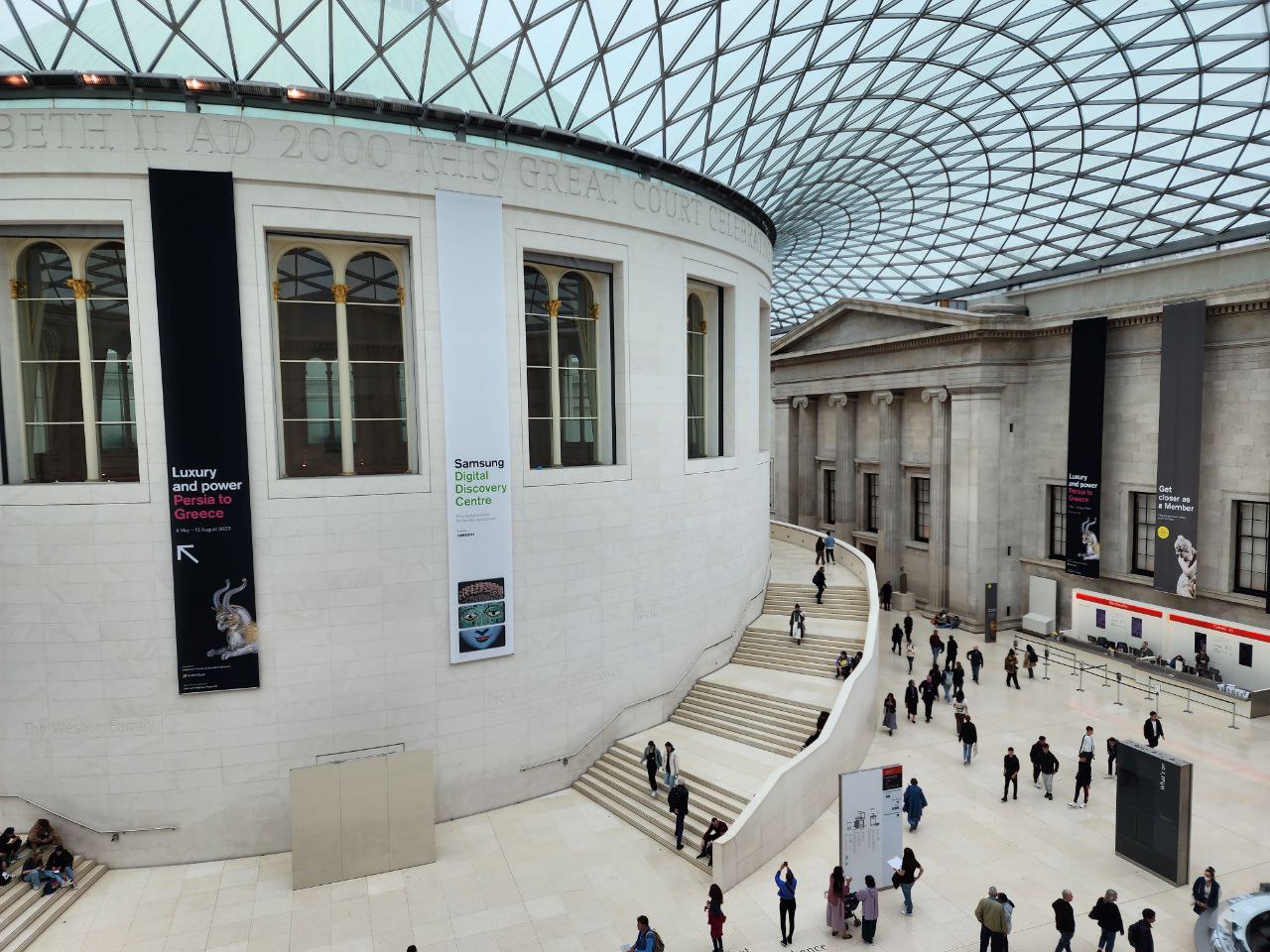
Photo Credit: Beat of Hawaii at The British Museum, London, 2023.
Get Breaking Hawaii Travel News






I heard the movie oversimplified and exagerated the racism of the white people im the movie. Is this trur?
Also, this is a for-profit movie. So if they wanted to pay what it costs to film in Hawaii, they could have. They chose to shoot elsewhere to save money.
I hope this will be a traveling exhibit – it sounds amazing.
I have a ticket for this in Feb, looking forward to it!
It’s great to see that Chief of War is building interest and curiosity in native Hawaiian culture, but isn’t it a sad statement that 80% of production for that show was done in New Zealand, not Hawaii, due to Hawaii government policies and economic issues?
What a wonderful story from BOH. I’ve studied, read, as well as visited all the historical and sacred places I could during my many visits to the Hawaiian Islands. It’s truly one of the most fascinating histories to be discovered. I only wish I could be in London to visit the exhibition – especially since I don’t feel the same “love” of history in Hawaii anymore. Both tourists and locals alike don’t seem to be interested. So sad.
Thank you for the memories!