

On March 10, a Big Island volcano day turned into a Big Island travel mess. This was Episode 43 in Kilauea’s eruption cycle since December 23, 2024. Flights got pulled into it, too. Hawaiian canceled multiple Honolulu-Hilo round trips and diverted others to Kona, as you see in the lead photo from FlightAware. Southwest canceled Hilo flights as well as the FAA and Hawaii DOT suspended Hilo operations. The obvious concern was related to potential wind-driven volcanic ash damage to airliner engines.
Episode 43 hit everything at once.
Reader Kim C. told us she was on Hawaiian flight 1072 when it got diverted to Kona. She said, “As an act of God, Hawaiian Airlines offered zip to passengers.” Kim’s friend had a Hilo-Honolulu flight the next morning for a medical appointment. It was canceled. When she looked at replacement flights later, the cheapest fare was $400.
A lot of visitors think of Kilauea as just a park story. This week’s situation showed that it can quickly become a story about transportation for visitors and residents.
Park summit areas and key visitor zones shut down at Hawaii Volcanoes National Park. Highway 11 through the park was closed because tephra on the road made conditions dangerous and covered lane markings. Visitors were evacuated from the summit area. An evacuation shelter opened in Pahala. If your day was planned around the volcano park, your day was done.
This was not some freak one-time event.
Episode 43 was described as comparable in size to Episodes 41 and 42. There was nothing unprecedented to interrupt travel plans. It just had to erupt hard enough, with the wind sending tephra and ash headed in the wrong direction.
The lava stayed within the crater, so that was not the issue. But the fallout still spread far enough to shut down access and interfere with flights. The volcano does not have to become a neighborhood emergency to ruin a trip. It can stay summit-focused and still wreck the practical side of a Big Island itinerary.
This cuts both ways for visitors.
Kilauea has now done this 43 times since December 2024, and every indication is that it will do it again. When we went a couple of months ago to try to catch the eruption, we were so close and yet missed it by just two days. We made the effort to stay in the park, dealt with how hard it was to get a room, and still landed in the dead space between episodes.
Staying near the volcano is not something most people can just pull off at the last minute when activity picks up. Rooms are limited; the better ones go early, and even when you do get in, you may end up with what’s left rather than what you actually want. Flexibility runs into sold-out rooms, bad timing, and a volcano that does not care.
When an episode does hit, the roads turn into something beyond what they already are. Traffic inside the park on a normal non-eruption day already runs LA-style gridlock. During an active episode, it gets much worse, with some visitors abandoning their cars entirely. Park officials and Volcano House staff confirmed that.
Reader John W., who lives nearby, offered a local workaround: there are four legal entrances to the park off Highway 11, all on the left as you head away from Hilo toward South Point, all accessible by bicycle or e-bike with no lines, no fees, and no ID required. One entrance on the Hilo side leads directly to the Devastation Trail viewpoint. Three others past the main entrance connect to various overlooks along Crater Rim Drive. Flashlights, he said, are essential.
You can spend the money, book the flights, get the room, make the drive, and miss the eruption by a few hours or a few days. Or you can hit the wrong day and find the road closed, the summit entirely shut down, and your Hilo flight canceled or diverted.
This is now part of volcano trip planning.
Even when monitoring can narrow the likely window timing for the next episode, you still cannot know whether your trip will land in a gap as ours did, during a good viewing window, or on a day when the whole thing shuts down around you. The latest episode ended the same evening it began, but the cycle is still ongoing. It is paused again, but not over.
If Hawaii Volcanoes National Park is central to the trip, backup time is smart, backup plans are even smarter, and assuming everything will work normally is clearly not. This is no longer a stable attraction with occasional interruptions. It is an attraction inside an active volcanic eruption cycle that can miss you by two days or hit you in one morning.
What about trip insurance coverage?
Travel insurance sounds like the answer, but it has its own limits here. Cancel For Any Reason coverage is the broader approach, but it usually has to be purchased within about two weeks of your initial trip payment, and it typically reimburses only 50% to 75% of your nonrefundable costs. Another problem is timing.
USGS had already published a forecast window well before Episode 43 began, so travelers should not assume a policy bought after that would treat the eruption risk as unexpected. And because Episode 43 itself lasted only about 9 hours, some disruption-related benefits may not work as travelers expect. Read the fine print on trip insurance for this before you count on it.
The truth for visitors.
Kilauea does not need to get bigger each time to keep causing problems. It only needs another strong burst at the wrong time, and with the wind pushing things the wrong direction.
That is the challenging part of this. It is already hard to book near the park. It was already hard to time a trip around an eruption that starts and stops intermittently. Now, visitors also have to account for the fact that a strong episode can close park areas, shut down roads, and even disrupt flights without compensation, while never turning into the kind of disaster most people picture.
If you build a Big Island itinerary around Kilauea now, you are not just hoping to see lava. You are now gambling on timing, access, and wind. That is a different trip than a lot of people still think they are planning, even us.
Lead Photo Credit: Image courtesy FlightAware.
Get Breaking Hawaii Travel News
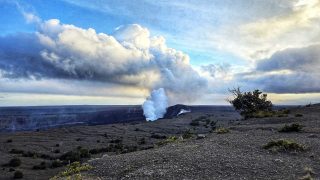

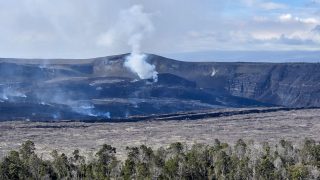

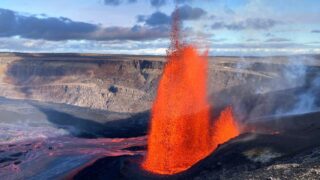
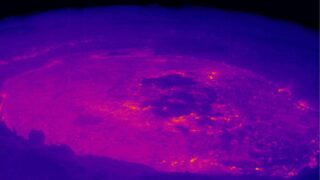
I visited the park on January 28, a few days after Episode 41, and there were no traffic or parking hassles at all. First we popped into Volcano House, then we drove to the Devastation Trail parking lot to walk the closed part of Crater Rim Drive to the overlook (crunch crunch crunch). The wind was nearly calm, so unfortunately the crater was filling up with steam and smoke. Still well worth the visit though. On our way out we stopped at Volcano House again, around sunset, and that time we did have to park across the street.
Thanks for your reporting. As stated, I live nearby (the eruption is 2 miles from my house “as the crow flies”). The tephra fallout yesterday (March 10) was as bad as the January 24 eruption this year, closing the Park, and the Highway, again. Every other one of the latest 40+ eruptions have been “ok” because usually the tradewinds are blowing all the mess away from the Hilo direction. So it’s only when “Kona winds” (from the south) are blowing, and the volcano is going off at the same time, does it become a real mess: showering the Park’s populated places, nearby residential areas, & miles of Hwy 11 with up to an inch deep, or more, of the volcanic rock, called tephra. At least it’s very light-weight and crumbles easily, making for soft landings on plants and homes. Locals here are seriously ready for all this drama to be over and done with.
The Park Service got Old Faithful down to a schedule you can set your watch by. Kilauea should be a piece of cake. Get to it!
We were in the park during an earlier eruption and the crowding alone was enough to make us rethink ever doing it again. It was just nuts. Add road closures and now flight issues and I would tell first-time visitors not to make Kilauea the centerpiece of the whole trip. Fabulous if it works out though, that’s for sure.
Truth is it’s something bigger than the volcano. Hawaii trips are now so expensive and so tightly planned that even a disruption that sounds minor can wreck the experience. At the volcano, that seems to be amplified.
We stayed at Volcano House and loved being there, but we knew already it was like we were gambling. And we didn’t win. Since the volcano was quiet, we overpaid. If it had gone active, we would have been thrilled. There was no easy version of it.
Getting diverted to Kona instead of Hilo may not sound like a big deal to people who do not know the island, but that drive is no joke after a long travel day with luggage, kids, dark roads, etc.
We are no longer trying to build a Big Island trip around the volcano. We will go if it works out, but I am not jumping through hoops, reserving expensive rooms and structuring the whole trip around something that can miss us by hours or days or shut down the same morning we arrive. Would love to see it, but honestly can’t figure a way.
USGS.gov has very accurate predictions, within 72 hours of each of the 40+ next eruptions. Then 1-2 hours before the massive lava fountaining, there are preliminary activities of increased tremors, “deflationary tilt”, and “precursory eruptions”. So if one is already on the island, anywhere, it’s quite doable to make the drive over to see it, as soon as it starts, because the dramatic fountaining usually lasts several hours. But it has a mind of it’s own, and can start in the middle of the night. During 2025, it was happening about every 1-2 weeks. So far for 2026, it’s about once per month.