

It may sound like a quirky cargo story. While Amazon now moves pineapples to California on dedicated night flights, travelers from Maui, Kauai, and the Big Island might occasionally find themselves scrambling for options if a red-eye goes sideways.
It doesn’t happen every day, but when it does, the lack of backup flights, round-the-clock service, and clear rebooking paths can leave travelers unexpectedly stuck. Especially for those with tight schedules or mainland connections, there’s often little margin for error.
What happens when your only flight home breaks.
Direct red-eye flights or those via connections in Honolulu are one of the main ways to leave neighbor islands for the mainland after 7 p.m. At the same time, from Maui, for example, there are also direct options typically including Alaska to Portland, San Diego, and Seattle; American to Los Angeles and Phoenix; United to Los Angeles and Denver; Delta to Seattle; and additional late flights on Hawaiian and Southwest that connect through Honolulu.
Once those departures encounter any delay or cancellation, options shrink fast. We too have found ourselves scrambling for an alternative when on Maui and our evening flight was seriously delayed and nearly canceled due to a medical situation.
Jeff was in the process of booking another flight at an exorbitant price, which he rarely does, when the problem was resolved. So we know that second chances can be hard to come by. When something goes wrong at Kahului, Lihue, or Kona late in the day, it can be challenging to salvage your air travel plans.
In another instance, editor Rob spent the night sleeping on the floor of the Maui airport with all the other delayed passengers. It was the last flight of the day to the mainland, and there were no buses to transport passengers to hotels. That happened before OGG had a nearby hotel. The airport closed and all passengers were locked in at the gate overnight with security personnel.
There was no food provided; only water and blankets from the plane. When the needed part arrived for the aircraft in the middle of the night, it turned out to be the wrong one, causing additional delay and a next day departure.
Even travelers with paid tickets or upgrades in premium cabins have been left scrambling. One recent Maui visitor learned this the hard way when he reported that a mechanical issue delayed the inbound 777 from Denver by six hours, putting his red-eye connection in jeopardy.
Airline phone support offered little option. He chose to book his interisland flight to Honolulu to catch a different red-eye back. He paid out of pocket to protect his mainland arrival for work the next morning.
Other travelers describe hours-long delays between islands with no guidance from airport staff and few places to rest once things go awry. While rare, it’s not unheard of to see passengers stretched out on benches, waiting for hours to catch a backup connection or rebook the next day.
Don’t think of interisland flights like a safety net. Airlines’ don’t.
It’s easy to assume an airline will reroute you through another Hawaii airport if something goes wrong—but that doesn’t always happen. Even when carriers have agreements with Hawaiian Airlines, it doesn’t mean they’ll automatically cover a last-minute interisland hop. I
n many cases, if your original ticket includes a premium cabin and no equivalent seat is available on the new routing, the airline won’t confirm the change unless you agree to a downgrade. And even then, you may still be left to handle parts of the reroute on your own.
Some travelers purchase a separate ticket to Honolulu to maintain their mainland red-eye option. There’s no guarantee of reimbursement. No promise of miles. And no help if the timing doesn’t line up. When something breaks, it’s often on you to find a way off the island you’re on. We’ve been there, scrambling on our phones to investigate limited options.
Your backup options from neighbor islands are limited.
Some travelers try to mitigate the risk by arriving in Honolulu earlier in the day, where there are more red-eye options to the mainland. But that move comes with its trade-offs. You’ll likely give up your lie-flat seat if you had one, and most visitors don’t have elite-enough status to smooth things over. Even if you manage to grab a seat on a late HNL departure, you’ll still need to pay for a last-minute interisland ticket and hope the timing works out. It’s dicey.
Flying out of Kona or Lihue isn’t much better. These airports have fewer flights, long drives, and no reliable way to transfer between islands after dark unless you’ve pre-arranged it. And even then, the system is just as precarious. Once that last departure cancels, no one’s coming to get you. That’s for sure.
What Amazon’s pineapple flights say about getting off the islands.
Amazon is now flying dedicated cargo planes full of Maui Gold pineapples from Kahului to California—a new deal designed to help local agriculture and make better use of late-night logistics. It’s a clever arrangement, but it also contrasts with something Hawaii visitors might not expect: while cargo can move on flexible schedules, people often can’t.
Most red-eye flights off the neighbor islands run near capacity. When one gets delayed or canceled, there’s rarely a second option, and things back up quickly. Airlines don’t keep backup aircraft or crews on Maui, Kauai, or Kona. So when your red-eye doesn’t fly, it’s not like sending a crate of pineapples tomorrow. It may take a whole lot more effort to get out.
If your schedule is tight, plan for failure.
If your next-day commitments are non-negotiable, there’s a harsh truth. You may not want to rely solely on a red-eye from Maui, Kauai or the Big Island. You may also want to avoid the very last departure of the day. And if you must take that last flight, have an alternative plan in place for what to do if it fails.
Travel insurance might help, but it won’t come in time to save your plans. Airline status helps some, too, but even that didn’t guarantee a full reroute in this case. Most travelers won’t have the leverage or time to figure it out on the fly.
This isn’t about one airline. It’s about how Hawaii air travel works.
It’s baked into how Hawaii’s smaller airports operate after dark. Maui, Kauai, and the Big Island all have limited staffing, fewer gates, and reduced scheduled flights past 8 p.m. If something slips, whether it’s a delay, a maintenance issue, or a late-arriving crew, there’s no backup waiting in the wings.
One frequent visitor from the East Coast was recently stranded at the Lihue Airport after her Delta red-eye to the mainland was canceled due to a mechanical issue. She had already returned her rental car and had no means of leaving the airport.
The airline covered the cost of a hotel for the night, but it was a long wait and then a bus ride away. No food, no luggage, and no clear timeline. Just a long night and challenging next day following a totally unexpected delay, and the realization that once you’re stuck, there’s not much to work with.
Airlines don’t keep spare planes or crews parked on the neighbor islands. If your flight doesn’t land, you may well not get out. And if you didn’t already move to another island earlier in the day, there’s a good chance you’ll be spending the night and trying again the following afternoon.
It’s a fragile system with no margin. Most travelers don’t think about that until it breaks on them. Did you ever experience a cancelled red-eye flight in Hawaii?
Get Breaking Hawaii Travel News




This isn’t anything unique to Hawaii or anywhere else in the US.
US airlines as a whole average 80-85 full every flight, every day.
Now that is an average. Some 100%. Some 65%.
But even at “only” 2/3 full, it can be a challenge to find protection for 100 or 200 people from a canceled flight.
Who is Hawaii catering to. Jeff Bezo’s of amazon with the pineapple exports or the locals? IMO rich billionaires that have ties to the Hawaiian islands. Sounds familiar that Mark Zuckerburg comes to mind.
It also works for people who want to be bumped. Many flights from all the airports in Hawaii are either weight restricted or overbooked. Causing the airlines to constantly look for volunteers. For people who want those bumps, or voluntary denied boarding, Hawaii is one of the best locations to pick easy vouchers.
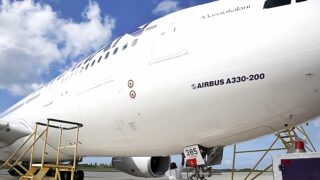
While we never experienced a cancelled red-eye we did have to deal with a flight cancellation/change. We were scheduled to leave OGG for Los Angeles on Hawaiian flight 34 around 1:30 pm. After about 7 hours of delay, many of us were able to board the original A330 that had a problem that prevented ETOPS and fly to HNL and then catch an A321 that got us to LAX as a red-eye. Our Extra Comfort seats were downgraded to regular Economy but we got back. Yes, Hawaiian provided meal $ in OGG and we each got $200 vouchers for future flights.
It is about every airline not based in Hawaii. I have seen crew time out, get sick, and parts issues that, as mentioned, have to be flown from the mainland for every airline not based in Hawaii. Hawaiian is literally the only airline who has backup pilots and parts on the island to reduce these impacts. Not to say they don’t have delays (although they did just regain #1 US on time performance). Went to Japan in January from Honolulu on Hawaiian, friends coming with us took Delta, one day delay due to these issues. If you go to Atlanta, Delta is your friend, Seattle – Alaska, etc. Having backup crew based there and a maintenance facility goes a long way to reducing these impacts. Consider that when booking in any large airport, including Honolulu.
(Do you know where these Maui Gold pineapples go in Calif? I am currently in Sacramento. I had 3 MG pines with me but was over checked bag weight limit, so had to give to neighbors. I vaguely remember sorta one could bring pineapples for free as carryon. You still got a free carryon bag. Or was that just wishful thinking?
Finally chiming in on something. Back in 2004, Northwest had a flight on a 757 that went SEA-OGG-KOA-SEA. The KOA+SEA portion was the red-eye. We were on our first trip to the Big Island (now we’re at 15 & 50 overall to the islands.) The flight was ready to push back when the long range radio failed. Northwest had no agreement with Roberts, so two taxis ended up shuttling all of us into the King Kamehameha Hotel in Kona (which took about six hours) We did get a breakfast & a lunch buffet the next day. We finally departed at 6PM, after the got the part from Honolulu.
One other time on Maui, Alaska taxied us to Kaanapali Beach Hotel for an overnight.
Luckily, my job at the time allowed for personal days from time to time.
Looking forward to our 51st trip to the islands (25 days on Maui) on Sept 23rd.
Unfortunately, I can’t visit Kauai again until I get a kidney transplant. Trying to get dialysis on Kauai as a visitor is nearly impossible.
For me, it was trying to get back to my home in Honolulu, after a visit in San Francisco. It was during the holidays and all flights were full. My flight canceled and nothing was available for a couple of days out. I was very fortunate to have a very nice customer service agent with United helping me to get home. Well, she was able to book me from SFO to YVR to HNL the same day. I always travel with my passport as I arrived that evening in HNL having to go through customs and immigration.
Nice, I hope you enjoyed your trip home on Air Canada! I thought US customs was pre-cleared in YVR though?
It looks like US Customs Preclearance applies only to mainland flights/destinations…