
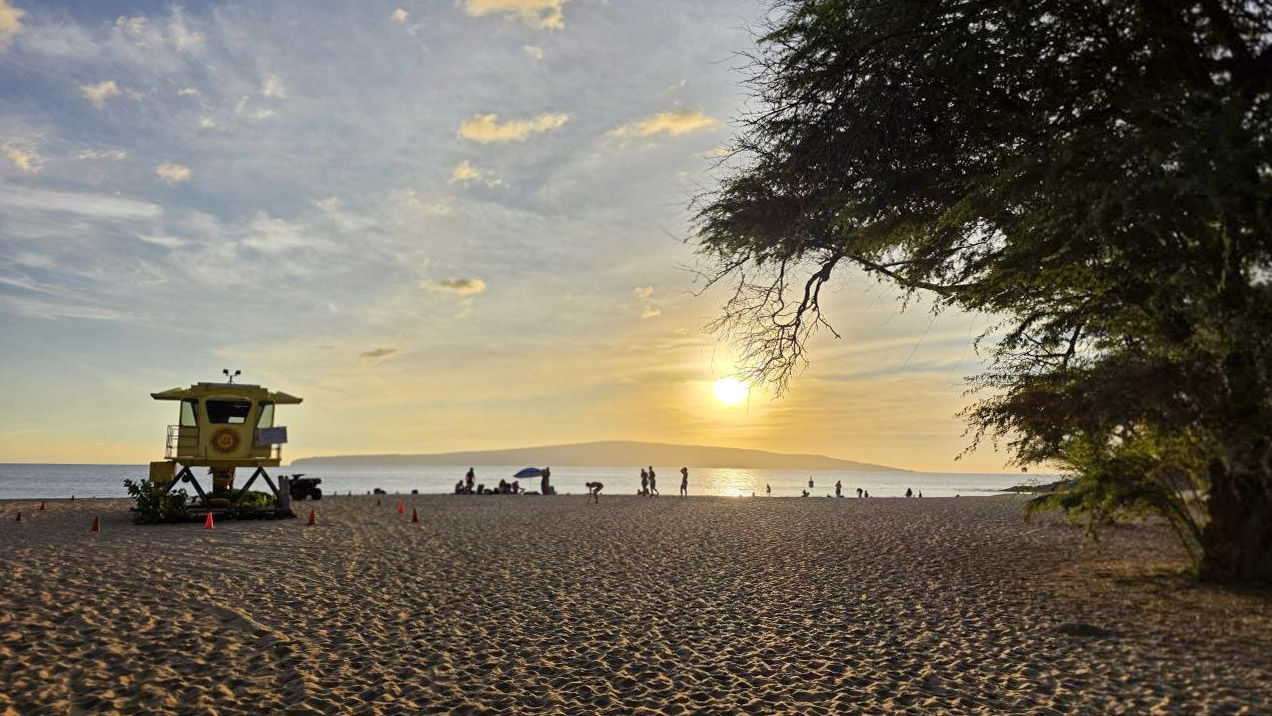
Comfort stations, showers, and parking improvements are what visitors and residents were told are about to happen at much loved Makena State Park. Those Big Beach upgrades were announced on May 22. But upon further review, the filing for the same project says more, including that there will be two parking lot toll booths and three pay stations at the North and South entrances.
Here’s why that changes the story for Maui visitors. The public announcement sounded like a long-overdue upgrade to the bathrooms and showers that everyone wants. But six weeks earlier, the state’s official permit application for the project, filed publicly in legal notices, had already listed toll booths and pay stations. Several Hawaii news outlets reported the bathroom-and-shower version, but the filing announces to Big Beach visitors a sharper story than the one they got.
What the state announced for Makena State Park.
The state described replacing portable toilets with permanent comfort stations, adding outdoor rinse showers, expanding paved parking, improving accessibility, and helping address overflow parking issues that have only gotten worse for years around Makena State Park.
State parks administrator Alan Carpenter framed the project as overdue. He said the current porta-potties and missing showers are no way to serve visitors at a park this size, and called the upgrades long-awaited. That was obvious. Carpenter also said the improvements would have no impact on public access and would simply provide quality infrastructure for those who enjoy Makena. That isn’t quite the case.
The permit filing for the same project lists toll booths and pay stations at the park entrances, infrastructure that absolutely does affect how the public reaches the beach.
What is actually being planned.
The permit application for the project includes pay infrastructure, which the public release left out. The April 10, 2026, filing states that DLNR is seeking approval for “two after-the-fact parking lot toll booths and three pay stations at the North and South entrances of Makena State Park,” along with the comfort stations, outdoor showers, and parking improvements that visitors already heard about. Both items are contained in the same official document. Yet only one made the announcement.
What we still cannot tell from the available documents is how those toll booths and pay stations would be used day-to-day. The state’s release does not explain whether they simply support the fee system already in place, whether they formalize a larger parking-control setup, or whether they could support more structured access that is to come later.
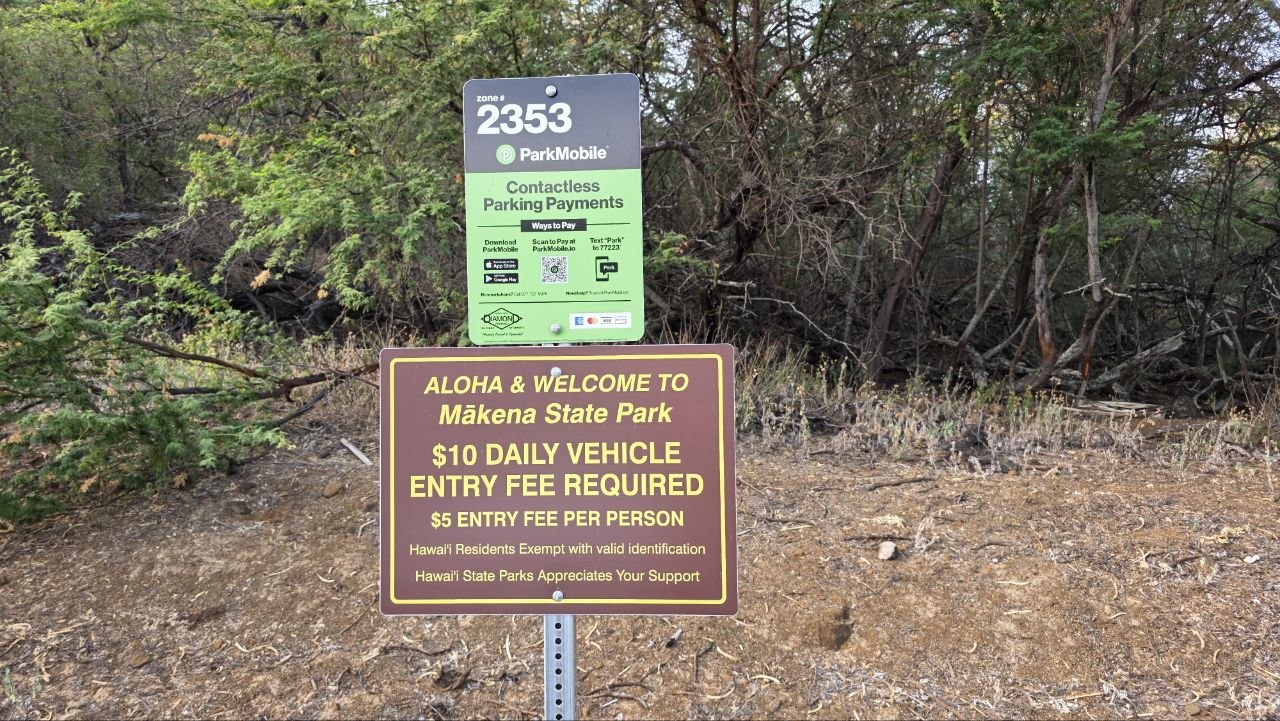
Visitors already pay to park at Makena State Park unless they are Hawaii residents with a valid ID. Non-resident parking fees have been in place since January 2020 at $10 per vehicle plus $5 per person, so this is not a new fee at Makena. What appears new is the scale and permanence of the collection infrastructure being added around the park experience, and that difference is why local reaction around the proposal has become far more intense than a Hawaii beach bathroom-upgrade story would normally generate.
Why residents are reacting so strongly.
The larger concerns became visible after an organized advocacy group calling itself Save Big Beach began distributing flyers about the project on Maui that we received. The flyer is not neutral. It is an opposition document urging residents to testify against the DLNR proposal and framing the project as the start of a much larger access transformation for Makena State Park. The Save Big Beach opposition is not, however, the only Maui resident position. Some community voices publicly support the project, citing improvements they say the Haena reservation system has already delivered for residents on Kauai.
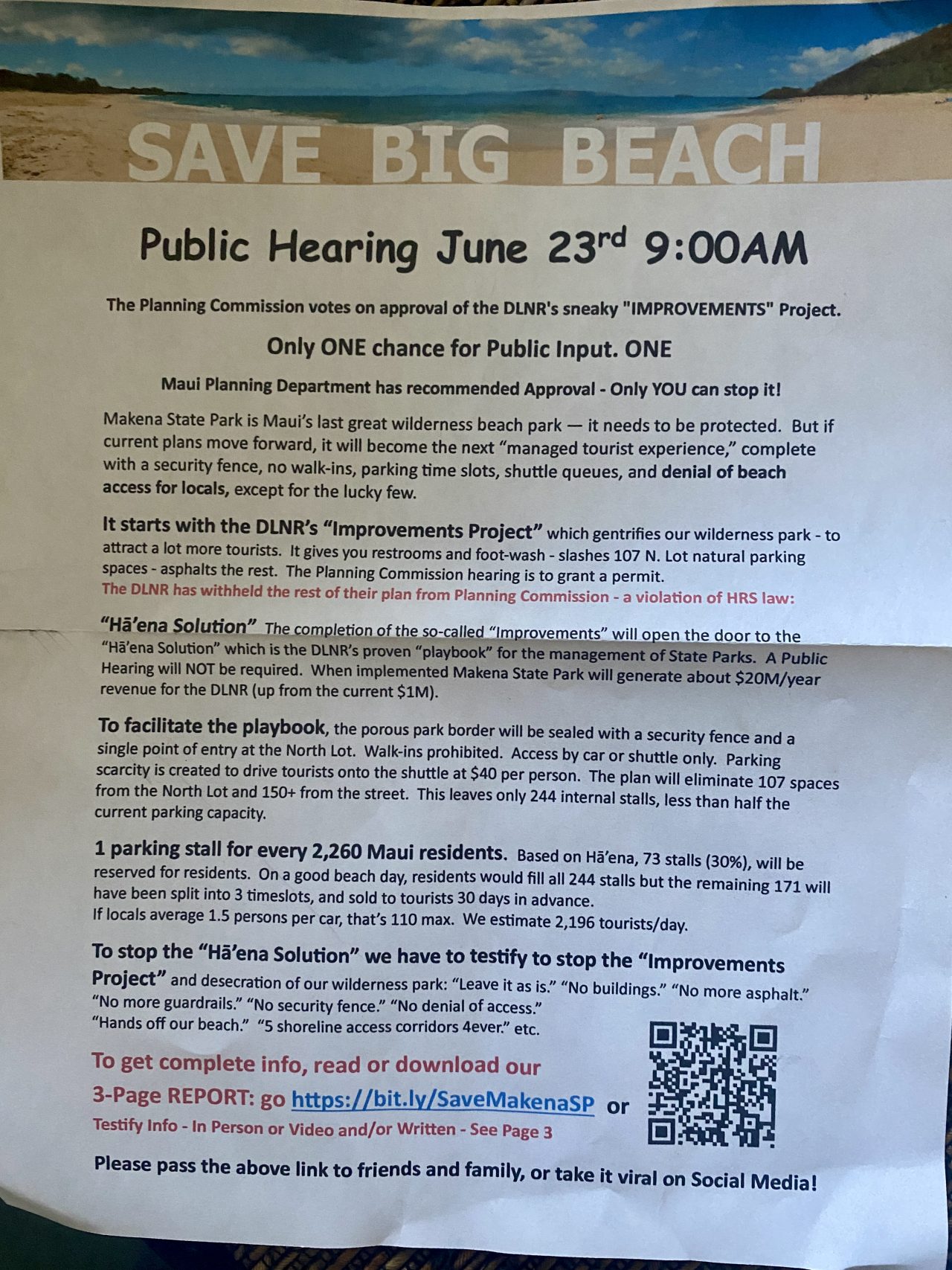
The flyer argues that the project goes well beyond comfort stations and showers and instead represents the early stages of a more controlled reservation-style access system, similar to what now exists at Haena State Park on Kauai. Some of the flyer claims are projections or allegations we cannot independently confirm from the available documents, including estimates of future shuttle pricing, projected annual revenue, and the group’s claim that DLNR withheld plan elements from the Planning Commission in what it characterizes as a violation of Hawaii law.
The flyer’s allegations should be read cautiously. The toll booths and pay stations do appear in the public legal filing, so they are not absent from the public record. The group’s far sharper claim concerns what was emphasized, disclosed, or presented in the planning process itself, compared with what then appeared in the filing and what DLNR later said publicly.
The residents’ concern is not just about bathrooms. It is about what residents believe the physical infrastructure plans could eventually result in, including reduced walk-in beach access, more controlled parking, shuttle dependence, timed-entry reservations, and a park experience that feels far less open than Big Beach has long felt to the myriad people who use it.
Those future projections come from the advocacy group, not from any state document we have seen, but for many Maui residents, the filing language immediately sounded an alarm, in part because Hawaii already has one major state park operating under a far more controlled reservation-access model. And that is Haena State Park on Kauai.
Why Haena keeps coming up.
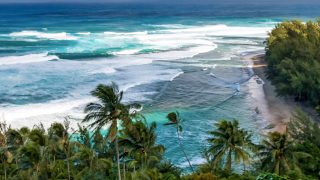
The comparison residents keep making is to Kauai’s Haena State Park, where access changed dramatically after the state adopted a reservation and shuttle model. Visitors who used to drive to the end of the road and hope for parking now face timed entry, advance reservations, limited parking availability, and shuttle options tied to controlled access.
Haena now operates through timed reservation windows, controlled parking allotments, advance-booking requirements, and shuttle-based access management. Roughly 30 parking stalls are reserved for Hawaii residents, while non-resident access is handled through paid reservations or shuttle systems booked in advance.
Visitors who have used Haena know the experience feels very different from the older Hawaii model of simply driving to a beach park and finding a spot. Having said that, we acknowledge that Haena access had stopped working long before the new system was envisioned or implemented. Supporters of what changed at Haena argue that the reservation system was effective in reducing traffic chaos, roadside parking overflow, and overall environmental strain. Critics argue that it changed the spontaneity and openness of visiting the area to the point of making it unworkable for most visitors.
That seems to explain why the Makena filing drew such rapid emotional reactions once residents connected the toll-booth and pay-station language to Hawaii’s pre-existing reservation-access model. At this point, there is no publicly released DLNR operational document confirming Makena will become a Haena-style reservation system, but residents looking at the infrastructure language clearly believe that possibility exists.
Hawaii has been moving toward more structured access.
The broader context here is that Hawaii has been steadily expanding fee-based and managed-access systems across state parks in recent years. BOH covered that shift extensively last November when Hawaii expanded state park visitor fees at four more hotspots as revenue from the system climbed sharply statewide.
As of 2025, Hawaii had moved to 14 fee-based state parks, with dramatically increased state park revenue. Many visitors already experience parts of Hawaii in ways they hadn’t ever considered even five or six years ago, requiring more advanced planning, reservations, new parking controls, more timed access, with overall capacity management becoming increasingly visible at high-demand sites.
Makena itself had been moving in that direction since 2020. The reason this proposal feels bigger to many is because Big Beach has still felt different emotionally for many Maui visitors and residents alike. Even with fees already in place, the area still feels comparatively easy and open once you arrive there, and that feeling is why people reacted so strongly to any sign the access experience may become more structured.
The hearing timeline is still unclear.
The Save Big Beach flyer lists June 23, 2026 at 9:00 a.m. as the Planning Commission hearing date. We have not independently confirmed that date through the Maui Planning Department records before publication. The hearing process is in an active public comment phase.
The Maui visitor question at Big Beach.
The larger issue is not whether Makena should have permanent bathrooms or safer parking infrastructure. Visitors and residents would welcome both, especially anyone who has dealt with the current facilities on a hot beach day. We were at Makena recently, and the porta-potties were exactly what you’d expect after hours in the sun: hot, sticky, and unpleasant in a way that has no place at a Hawaii state park this size. The upgrade part of this project is real and overdue.
The issue is that the actual permit filing includes access-control infrastructure language that most visitors did not see during the project’s public rollout. Big Beach isn’t just another state park stop for many on Maui. It remains one of the island’s defining beach experiences, and people still think of Makena as a place where Maui feels more open and like old Maui than many of its increasingly managed visitor sites.
What ultimately changes under this proposal isn’t clear yet. What is clear is that the public announcement told the bathroom-and-shower version, while the filing also included toll booths and pay stations at the park entrances. And the circulating poster lays out what residents fear comes next, beyond what either the announcement or the filing has spelled out.
Maui visitors and residents planning to go to Big Beach deserve to know more before making any decision. Have you been to Makena recently? And for readers who have used the Haena reservation system on Kauai, did it improve the experience or fundamentally change it for you?
Image © Beat of Hawaii. Beach Big on Maui.
Get Breaking Hawaii Travel News



Politicians are ruining what made Maui so special – free access to all beaches. We used to frolic on the Maui beaches, and then drive in and spend copious money at local businesses afterwards. Now, the government takes all that money, restricts the freedom and timelines of tourists’ vacations and drastically reduces what we have left to spend in the local economy. And surely locals know they aren’t going to see any of the benefit of that money… that’s grift money for untrustworthy politicians and their friends. It’s the theft of money that would have otherwise gone to locals by shifting it to the government. The locals are insane for allowing their government to do this to them. It’ll be sold as “protecting the locals” … giving them more access, preference, etc. They won’t realize the scam until it’s too late and they can’t afford to live there. Make Maui’s beaches free again. It’s what made your island special and kept tourism money in the pockets of locals.
Like in Haena, it will create unintended overcrowding at other Maui beaches. Those residents at other beaches won’t know what hit them.
When you see the math on how much money is created by this you know why the State is doing it. The State wants the money for whatever.
Next you’ll see they want to do a shuttle and make money on that as well. Everyone is chasing the dollar and selling Hawaii’s natural resources is an easy way to do just that.
It may create unintended overcrowding at Big Beach too (if that’s even possible, given the size of the beach). Back when they instituted the time slot reservation/fee at Wai’anapanapa, that beach went from mostly empty to stupidly busy… 100% as a result of that fee system. Wai’anapanapa is spectacular, but it’s not ideal for swimming or hanging out due to the rockiness and heat from the black sand. But, when you charge a family $30+ and give them a 2-hour time slot, they psychologically feel obligated to get their money’s worth out of that. So what would have been a brief 15 minute photo-op visit in the past turns into a full 2-hour window visit now. I’ve visited Wai’anapanapa on multiple occasions when my wife and I were literally the only people there. With the new system in place, it’s always completely full of families sitting on the beach, trying to swim, waiting for their 2 hours to run out. It doesn’t work; it’s only about $$.
so much for all the “the lands and oceans belong to all of us” when you now have to pay to go to any of the beaches. It also seems excessively expensive at $10 a car and then $5 each person inside the car to park anywhere. I feel at least residents of Maui should not have to pay to use any beach on island. Don’t do it Maui!
If it is structured like Haena State Park residents don’t have to pay and don’t need reservations. We are able to visit the park whenever we want.
For now. Wait until your politicians need more money and their affluent mainland friends get tired of seeing locals on the pristine beaches. Restrictions for one group inevitably leads to restrictions on all, controlled by those in power. If this was only about the money for beach upkeep, a simple, one-time, all-encompassing “park fee” or “beach pass” for tourists who wanted to use beaches would be a far more simple solution… and tourists would happily pay that over the nickel-and-dime fees all over the place. The fact that they’re adding a variety of use restrictions is telegraphing their ultimate goal… which doesn’t involve locals using the beaches freely, regardless of what you may hope.
I’m so glad my state and my neighboring state allows any tourist to walk, enter,and enjoy our beaches for free. No reservations, No admission fee’s, No rude locals. At some point Hawaii just seems to inconvenient and way too expensive. People praise the affordability and love our sand, seagulls, and sealions. Here we don’t need the Aloha spirit to attract tourists. People make campfires on the beach, pitch a tent on the beach, play volleyball on the beach. Maybe this is the reason when tourist’s from our area go to Hawaii it’s hard to understand all the fee’s regulations, admission fees, parking fee’s and shuttle only systems that Hawaii requires. I guess when our home is different from your home sometimes situations don’t quite make sense. At some point Hawaii may not seem like a vacation spot compared to our welcoming beach fronts.
IMO Hawaii is treating all the beaches like a paid amusement park attraction. Pay to park,enter and manditory reservations. X amount of space for residents and X amount for tourists that arrive by tour or cars. No walk in’s. What things in Hawaii don’t you now have to Book-Reserve for? If they make shopping at retail stores the next step then my answer is none, nothing. What any part of this experience spells out Vacation?
As a Californian, I was raised with California State Beaches which have always charged… the revenue pays for upkeep. When the parking lot was full, the beach was closed to further visitors for the most part
Those parking on the roadside were ticketed. I think timed entry is a better approach. A yearly pass and a Hawaiian resident special lower fee are a way to let locals enjoy their beaches and also help pay for infrastructure. The reserved local spaces are a good idea. I think of Florida where most of the Beaches are privately owned and cringe. This solution seems like a better way. We have visited Hawaii at least yearly (TS Owner) for the last 20+ years and have been watching it evolve and change. It is our second home and we deeply care for the state’s citizens, culture and history. Change is inevitable, but let’s preserve accessibility for all… jut in a different way.
As a resident of Kauai, I 100% support the Haena reservation system. It was so over run with visitors, they were the only people enjoying the beach. I think tourists forget that people live here and they would like to enjoy Ke’e too. Or maybe no care? It was successful in controlling all the illegally parked cars that turned a two lane road into a one way, making it difficult for rescue vehicles to get past.
My fingers are crossed they implement this same structure at Haena State Park aka Tunnels as we have the exact same issue there.
There is one beach on Kauai that you need reservations, and over a dozen beautiful beaches on the north shore easily accessible. Why all the complaining? Go enjoy another beach. I was on Maui 2 weeks ago. I did try to go to Makena, parking was crazy. All the way to the road. We chose to change plans and found a nice place to snorkel.
I don’t feel the reservation system affects tourism at all. Only makes those who complain seem entitled.
Aloha
Aloha guys, thanks for all…. As far as parking on Maui, everything has changed!! now most all places have scan and pay parking. even some of the furthest out places. as a resident not paying is great, but in Kihei they have only chosen 3 beaches (the most popular tourists beaches!) there is even talk that only locals can use before 10am. Crazy. all that will do is funnel tourists to the local beaches were we swim everyday to park for free. as it is we have to be at the beach before 8 to park. takes the leisure out of the morning for sure. Now Big Beach, one of the last “wild ones” and I hear Honolua is coming at some point. Not the Maui I live here for.
Yes, Makena needs restroom and shower upgrades but I am wary of a reservation system, toll booths and visitor access restrictions. All these proposals tend to ruin the spontaneity of “Hawaiian Time”. When I go to Maui, it is not to engage in an activity packed vacation, it is to regenerate my inner-self. I have found this on Maui more than any other island. Once or twice a week I travel to Makena and I do not face the time-pressure of getting somewhere by a certain time. Once there parking has been troublesome but not so much as to impact my experience with both Big and Little beach; it is my favorite beach. I do not know how reservations or tolls will impact Considering what is going on in Maui (Stay Away unless you are wealthy), I see omens that these improvements are part of the restricting and nickel and diming visitors. Lastly, Little Beach is unofficiallly the nude and gay beach; I cannot help but wonder how these proposal are meant to stifle those communities.
If you plan to stay at a condo that’s an easy walk from one of these pay-to-park beaches, you can still experience the casual spontaneity of beach going. That’s true for Kam I, II and III beaches in Maui. Our own condo unit is literally a one-minute walk from the beach!
We’ve been coming to Maui and Kauai sine 1985. We just returned from a 2 month vacation on Maui. We have spent a lot of money in the state, and watched while it makes things more and more difficult for tourism, the life blood of the state.
Resident only parking, tolls and reservations for beach and park use, etc. fo nothing except make the visitor experience less enjoyable and more expensive. The state and its counties are starting to kill the golden goose; particularly dumb considering tourism is the state’s biggest industry.
We visit Kauai at least once a year and the Haena reservation experience has significantly improved our visits – even though we live in PA and have to get up at 5:00 or 6:00 AM to get our reservations (depending on Daylight Savings Time).
Well I hope Makena doesn’t follow the Haena model, Makena is in my opinion the best beach on Maui, possibly in Hawaii . We visited Haena in ‘23 and the whole procedure of making reservations, using a shuttle, waiting for a return shuttle, pretty much ruined the entire experience to the point where we’ve told people not to go there it’s not worth the trouble. (Or the price! $100 US?? To go to the beach for a couple hours? C’mon!) now if that’s a way to preserve a state park and keep it from being harmed and over used I guess it works, but I sure hope that doesn’t happen at Makena. Yes Makena’s parking and facilities need work, let’s hope it’s done the right way and doesn’t effect the beauty and feeling of the most beautiful beach on Maui