
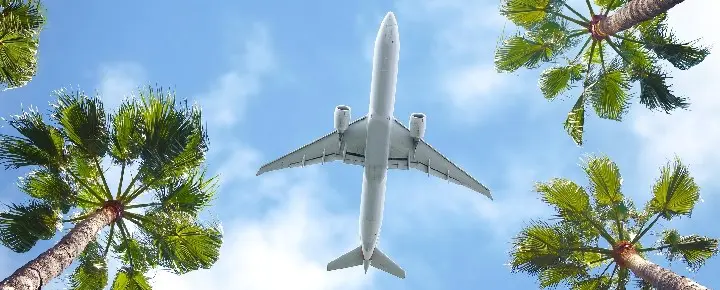
Remember when $99 flights to Hawaii made headlines? Those days are gone. Airlines will not say it outright, but the economics of mainland to Hawaii travel have shifted and cheap fares may be the first casualty. Behind glossy sales banners and email blasts may continue, a new and different reality is setting in. The bargain era of Hawaii flying has stalled, and the reasons explain more about the state of travel than airlines care to admit.
Why are Hawaii fares so high now.
Airlines used to dump capacity into Hawaii and cut fares until planes filled. That was a long-term strategy many knew and loved that simply is not needed anymore. Fewer competitors, far better AI-driven pricing algorithms, capacity in tight control, and reasonably predictable demand mean carriers can hold the line on higher fares. The days of loss-leader pricing to capture market share are largely behind us, and Hawaii fares now reflect that.
Loyalty billions beat cheap fares one hundred fold.
Airlines earn billions every year from loyalty programs and credit card partnerships. Every swipe adds to their bottom line, and that revenue cushion helps them focus on premium customers rather than bargain hunters. On Hawaii routes, loyalty members and credit card holders are more valuable to the airlines than filling planes with the cheapest tickets.
Why budget airline models keep failing in Hawaii.
Budget airline models thrive on short-haul routes, dense seating, and quick turnaround times, where costs remain low. Hawaii breaks that model. Overwater flights require ETOPS, which means extra complexity across the board. In Hawaii a multitude of issues pile costs on top of razor-thin margins. That is why discounters who came here with great aspirations, like Allegiant and Sun Country, then quickly walked away, even while continuing to grow across the mainland.
Allegiant once served Hawaii from gateways including Bellingham, Fresno, Stockton, Eugene, Las Vegas, and Phoenix. Sun Country also flew Hawaii routes from Minneapolis and had service from Portland and Los Angeles. They have the aircraft and infrastructure to fly to Hawaii again if they wanted to, which clearly they do not.
Sales that look better than they are.
Airlines have not stopped advertising sales, but the deals are leaner, shorter, and often not what they appear to be. Back in the day, there wasn’t even a “basic economy” model, which is what most sales are comprised of today.
Case in point is Southwest’s latest Hawaii sale using promo code MILLIONS. The ads shout “up to 50% off,” but when you click through, the lowest Basic fares are actually excluded, blackout dates abound, the prices aren’t cheap, and in many cases, the discount hardly shows up at all.

Travelers are pushed into higher tiers, such as Choice, where prices are significantly steeper. The headline looks like a bargain, but in practice, the deals are thin, brief, and often no better than before the sale. In other words, just marketing.
Southwest is not the cheap Hawaii anchor it entered as.
When Southwest arrived in Hawaii, it promised to bring the same disruption it had delivered on the mainland. Introductory fares as low as $49 signaled a reset, and for a while interisland prices plummeted as Hawaiian was forced to match.
That era is over. Weaker than expected mainland to Hawaii and interisland demand led to sharp schedule cuts. Southwest’s much-advertised sales now leave travelers paying more for fare buckets that look little different from its competitors.
At the same time, activist investors pushed the company to abandon its long-standing models. Southwest once built its brand on simple fares and no upselling. Now it has added new fare classes, packed more tightly configured seats into its planes, and monetized extras like early boarding and extra legroom. The reversal at Southwest is striking.
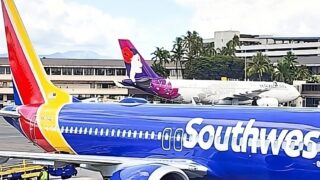
Southwest still has a significant presence in Hawaii, and we noted many of their planes on the ground at HNL recently when we flew them, but it is no longer the fare setter. The airline that once promised to reset island prices has instead joined the rest of the pack, and without a true low-cost anchor the entire market has drifted significantly higher.
Comfort now costs extra.
Another quiet shift is that airlines now design cabins to upsell. Extra-legroom, preferred seating, and priority boarding are treated as core revenue streams, not optional perks. On a five-hour Hawaii flight, that pressure feels stronger. The base fare is less meaningful than it used to be on flights where comfort is more of a priority.
Distance favors the bigger airlines.
Long Hawaii flights highlight the differences between bare-bones fares and premium products. On a two-hour hop, a cramped seat is tolerable. On a five-hour flight to Hawaii, many travelers are willing to pay more for comfort and benefits. Travelers often pick bigger carriers for loyalty perks, lounges, or upgrade chances. That dynamic makes it even harder for once no-frills airlines to compete head-to-head.
Fewer competitors, fewer surprises.
With budget carriers gone, Southwest in retreat, and legacy airlines trimming excess, the chance of stumbling on a mispriced fare has fallen dramatically. Algorithms now keep Hawaii fares within narrow bands, which means far fewer headline-grabbing bargains than travelers once enjoyed.
Rising costs in Hawaii do not go away.
Airlines will not say it, but Hawaii’s high airport fees and personnel costs, longer turnaround times, and limited infrastructure add costs to every trip. Honolulu’s ongoing multi-billion airport modernization program has driven charges even higher, and those fees are passed directly into ticket prices. At the same time, limited gates and slower turns at airports like Kahului and Lihue make the low-cost carrier model even more challenging to pull off. All of these costs are calculated into fares, whether you see them or not.
What this means for Hawaii travelers.
For travelers, the message is blunt: cheap seats are no longer the norm. Rare deals still pop up, and certainly off-season travel costs less, but any semblance of deals disappears fast and often excludes the most desirable offerings.
The best tools left are flexibility and planning. Set price alerts early on Google Flights or Hopper. Consider alternative airports, such as Maui or Kona, which at times may offer better deals than Honolulu or Lihue. Use miles strategically, comparing for peak periods when cash fares soar.
While the current trend points to higher fares, it is of course not set in stone. New competition or an economic downturn could always bring back some bargains. But for now, the odds are against those $99 Hawaii specials returning anytime soon.
The takeaway on cheap Hawaii flights.
Airlines will not spell this out because they do not want to kill the dream. But the reality is clear. The economics of Hawaii flights have shifted; the low-cost model is collapsing all around us, and the islands are where those cracks show most clearly.
Would you pay today’s higher fares to fly to Hawaii, or are you holding out for a deal that may never come back?
Get Breaking Hawaii Travel News




Not surprised, Hawaiian merger and two weeks later flight cost double. Thanks to the US government
The airlines need have flights that work the best for them. They need to make money too. I remember the days when the flight attendants would put on their Hawaiian dress shortly after take off, even in economy. Those days are gone. Covid also change Maui and maybe the other island too. After Covid Maui rolled up the welcome mat, especially for the middle class tourist. Maui is letting us know they don’t want us especially with the Bill 9, eliminating 7000 STRs. Maui needs to look for a real solution to affordable housing. it is not Bill 9
The article really hits the nail on the head about how flying to Hawaii has become so much more expensive and less about deals. Its sad but true – those cheap fares are pretty much gone.
Aloha, having traveled to Hawaii on a budget many times, we found less expensive destinations that cured our travel bug internationally until we came across a very low SWA flight to PHX-HNL one way. Having never visited Molokai, we investigated. Found a beautiful beachfront condo for less than half of what we typically spent on Kauai. Since we don’t require “glitz and glamor” we jumped. Maui hasn’t been seen by us for years, so we jumped. Return from Maui was 7500 SWA points each. So bargains do exist, tho short lived. Mololele airlines should be a hoot! We’ll be just two of nine passengers.
In 2019, and again in 2021 & 22, I would have never imagined i would be flying to Hawaii “On The Cheap” from SLC to HNL. But, that’s exactly what happened when wife and I took advantage of the newly offered $100 SW flights one way and then back home. We racked up a lot of points during those fun trips and then used all those miles for an extra free trip.
Hawaii don’t want the budget, value minded tourist anymore. IMO generally people who look for airline deals look for deals when they arrive and exibit this in their shopping also. Nobody brags when they get ripped off.
We go to Hawaii generally 4-6 times per year on SWA & have had a Companion Pass for around 20 years. Tuesday is when SWA has deals. Just booked next Memorial Weekend trip. What a Bargain! This will likely be our first flight with pre boarding. So far the perks look awesome for SWA VISA/Rewards/Companion Pass Holders. At first we were skeptical of the changes at SWA. Now looking like the deal of a lifetime! So many perks for loyal SWA flyers!!! FYI Pre-Boarders now have assigned seating so they/their families/friends won’t take up the front & overhead baggage compartments!!! This has been a real problem especially on Hawaii flights!
Fly Hawaiian 90% of the time.
Visiting family and friends are priorities, two or three times a year. This has been my reality for 40 years. I like the big planes , the early departure from SF0, using points for upgrades and occasional splurge for 1st class seat’s. Top priority continues to be HAL’s safety record, and the always friendly crews.
I have gone to Maui for 40 years with family. I have now booked Alaska airlines for Phoenix. So much cheaper for the same weather break. Only a 3 hour flight also.
From the middle of the country, fares have always been high. It’s the West Coast that has the huge fluctuations. For the rest of the country, they just stay high.
re: economy seats to / from Hawaii
For a decent flight to the mainland, look for United flights to LAX, SFO, or DEN operated with 777-200 aircraft and check the seat chart for rows 48 – 51 in the tail where the outside rows are doubles rather than triples. Seat pitch is 31” but you get a wide aisle plus open space along the windows. Not a bad ride to the West Coast, plus no premium seat fees. The tail area on the 777-200 is quieter than forward areas and sometimes is not fully packed. Overall, a pleasant experience.
agree with your assessment of SWA, Nothing distinguishes them from all competitors. Customers like me will cease loyalty to SWA and go by budget all things considered.
We used to book last-minute getaways because the fares made it possible. That’s how Hawaii became part of our lives, not just a bucket list. Without that, it turns into a once-a-decade thing. That changes the whole relationship travelers like us have with the islands.
I don’t buy that this is permanent. I’ve seen cycles in this industry for decades. New players come in, old ones overcharge, then a fare war erupts. The question is who has the courage to test Hawaii again, because that’s what it takes.
Let’s be honest. Airlines know they can charge more because people will still come. Hawaii is unique, and that is going to make it more and more expensive. But I do wonder how long that model holds when people start comparing a week in Hawaii to two weeks somewhere else that’s cheaper.
It’s not just about what we pay, it’s about what we feel. There was a time when stepping on a plane to Hawaii was half the joy of the trip. Now it is something i completely dread, and it feels like being squeezed, nickel-and-dimed, and then asked to smile. It’s hard to love that.
I remember very well when Southwest first came in. We were beyond excited. The fanfare, the promises, and yes, the cheap fares. We believed it would be like the mainland all over again. Now look at them, with new fare classes, upsells everywhere, and prices that rival Hawaiian or more. Not what we were sold. Everything has changed.
I said this before and I’ll keep saying it: the welcome mat has been pulled back, and now the flights are just another reminder. The dream of the $99 ticket to Hawaii is gone, and with it somehow went a lot of the aloha. I don’t see families like ours coming back year after year anymore.
I don’t miss Allegiant. We flew them once from Bellingham to Hawaii and swore never again. But I do miss their prices.
Honestly, I’d rather pay more for a better flight than get stuck in the Allegiant days of Hawaii service. I tried it and those planes felt like flying old buses. Glad they are gone.
This isn’t just about these airfares. The whole experience has shifted from bags, to seats, food, and just the entire fiasco that is domestic flying. Airlines don’t compete for the bottom at all anymore, they compete for loyalty points.
I don’t think cheap fares are completely dead. Airlines chase demand, and Hawaii still has some of that. But the question is whether they can ever make enough money at those prices so that they would even bother.
I remember just how many times we could snag $99 to $129 fares to Maui and thought nothing of it. Now I wonder if my grandkids will ever see that again or step foot there.