
Hawaii’s Green Fee began without fanfare on January 1. There was no countdown or press conference, just another charge added to the growing stack of costs visitors already face when they come here.
Late Tuesday night, just hours before enforcement was to begin, a federal appeals court stepped in and halted part of the new law from taking effect. The ruling temporarily blocks Hawaii from enforcing a portion of the Green Fee while the legal fight continues.
This was not a distant or theoretical decision about a future date. It landed after planning assumptions had already been made, with visitors, operators, and the state itself expecting the fee to be active within hours.
For now, that is not the case, and the pause carries immediate consequences. The question is not whether Hawaii can ultimately prevail, but why enforcement was stopped so close to the start line.
Ninth Circuit Court of Appeals steps into Green.
Two judges granted an injunction pending appeal late Tuesday night. That injunction prevents Hawaii from enforcing the portion of the Green Fee that had drawn immediate legal challenges, at least until the appeal is fully heard.
The blocked provisions apply specifically to cruise ship passengers, and that distinction is important. This ruling is narrow in scope, even though the implications feel far broader.
The state attorney general’s office confirmed the ruling and said Hawaii remains confident the law is lawful and will ultimately be upheld on the merits. That outcome is still possible, but this order does not decide the case itself.
What the order accomplishes is to stop enforcement at the exact moment Hawaii planned to begin collecting the money. That timing alone makes the ruling unusually consequential.
Hawaii planned an 11% surcharge on cruise fares.
The surcharge was to be prorated based on the amount of time ships spent docked in Hawaii ports. Counties would have been allowed to add up to another 3%, bringing the total potential charge to 14% on those fares. But at least for now, ship passengers will not be charged this fee.
State projections put the expected revenue from ship passenger fees alone at roughly $100 million per year, a figure cited repeatedly by the state as justification for moving forward. That scale helps explain why the fee became such a flashpoint.
When Beat of Hawaii previously reported the federal government’s description of the fee as a “scheme to extort American citizens and businesses,” the language struck some readers as extreme. The appeals court’s decision to block enforcement just hours before it was set to begin suggests judges found enough constitutional concern to pause it rather than let the fee take effect and sort it out later.
That came on the heels of a federal district court upholding the Green Fee in its first major legal test. We covered that ruling in Hawaii’s Green Fee survives first legal test, and what it means for all visitors, and reader reaction was immediate and strong.
Many questioned where the money would go, how it would be tracked, and why the state was moving forward without clearer answers. Those concerns did not fade simply because the law survived that challenge.
The appeals court order doesn’t resolve those questions. It does signal that enough concern exists to pause enforcement rather than letting the law roll forward untouched.
This halt does not eliminate other Green Fees.
The separate 0.75% increase to the transient accommodations tax applicable to all Hawaii hotels and vacation rentals is not affected by this ruling. That increase took effect on January 1 as scheduled and remains in place.
The distinction between those two provisions is already being misunderstood, and it is likely to continue causing confusion. One part of the Green Fee is paused, while the other is now active and being enforced.
Was is this an unusual intervention?
Courts do not usually intervene at the eleventh hour unless they believe there is a substantial risk of harm or confusion if a law moves forward unchecked. Injunctions pending appeal aren’t automatic and are typically reserved for situations where serious legal questions remain.
In Hawaii’s case, the consequence would have been immediate collection of a new fee from island cruise ship passengers with no clear means of refunds or reversals if the law were later struck down or modified later. That concern has hovered over the Green Fee from the outset, even among readers who said they were not opposed to environmental funding, at least in principle.
Last week’s comments made that clear. The recurring theme was not opposition to conservation fees, but distrust in how the money would be handled.
Readers questioned whether funds would be segregated, whether money would be spent where it was collected, and whether any visible improvement would follow. Those questions continue to linger.
The appeals court order does not address those concerns but acknowledges that the legal foundation and execution of this fee warrant further scrutiny before money changes hands.
From settled to unsettled overnight.
What stands out most is how quickly the situation flipped. One week ago, Hawaii cleared its first legal hurdle, and state leaders spoke confidently about moving forward.
At that point, most believed the fee was settled law, with only technical challenges remaining. Enforcement appeared inevitable.
Days thereafter, enforcement was halted just as it was about to begin. That reversal seems unusual and exposes more than a single visitor fee. It highlights how fragile such a policy can become when implementation races ahead of public trust and clarity, since laws do not exist in isolation.
The Green Fee is to land on visitors’ bills, in reservation systems, and even more importantly, in travelers’ expectations.
What happens to this Green Fee next?
The appeal now moves forward on the merits, a process that could take months. During that time, the blocked portion of the Green Fee cannot be enforced unless the injunction is lifted.
In the meantime, Hawaii’s position has not changed. State officials continue to say the law is lawful and will ultimately be upheld.
Opponents argue the fee crosses legal and constitutional lines and was rushed without adequate safeguards. Those arguments will now be weighed in a longer and more detailed process.
The cruise industry has not commented publicly yet on the ruling. With the order landing on the New Year holiday, operators said they were not in a position to provide immediate statements.
In the meantime, uncertainty remains. Cruise lines are left explaining a fee that was announced, defended, upheld, and then stopped, all within a very short time span.
Visitors are left wondering what will be charged, what will not, and whether future changes could arrive just as unexpectedly. None of that inspires confidence in Hawaii’s moves.
What this Green Fee pause exposes.
This pause is less about environmental policy than about its execution. When a new fee reaches the brink of enforcement without clear answers, it invites scrutiny beyond the legislature and into the courts.
The appeals court stepping in at the last minute made that point clear. Whether Hawaii leverages this window of time to address those unresolved questions may help determine whether the Green Fee ultimately succeeds.
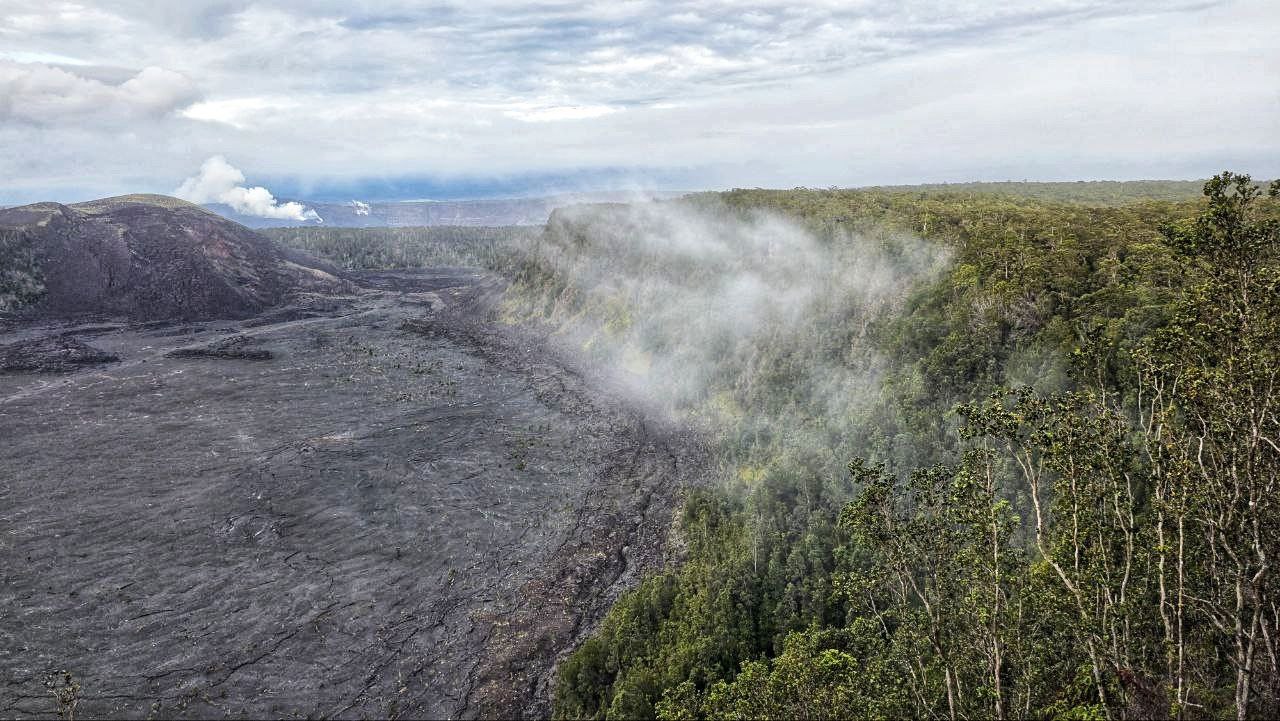
Photo Credit: Beat of Hawaii at Hawaii Volcanoes National Park.
Get Breaking Hawaii Travel News


Everyone who reads this who feels that taxes and other tourist impact fees are spiraling out of control:
Stop coming to Hawaii. Tell the Governor, the Hawaii State Legislature, the counties and the environmental extremists why you hate the spiraling costs to visit this state because of more high taxes and fees.
Sooner or later the visitor industry will die and Hawaii’s economy will go further down the toilet if tax policy like this continues.
Maui and STR stupidity is up next. Grab the popcorn.
I support the idea of funding climate and responsible environmental protection. But rolling things out this way feels sloppy. If the legal foundation isn’t solid, as is starting to appear to be the case, why rush it to the finish line?
Hawaii used to be so easy. We’re visiting Maui later this year and this just adds to the sense that Hawaii travel keeps getting more complicated. Between the new parking rules, new fees, and now court rulings, it’s tiring. The islands are still beautiful, but the process feels heavier than should be.
Honestly, we assumed this would happen. Too many lawsuits, too many moving parts, and too much money involved. The Green Fee may survive long term, but this feels like a possible preview of more bumps ahead.
I don’t even go on cruises, but watching this play out says a lot. Hawaii announces a fee, celebrates it, the courts step in and suddenly it’s on hold, while the state says it will prevail. Visitors aren’t trying to dodge responsibility, they just want clarity.
This is exactly what drives people crazy about planning a Hawaii trip now. We read one thing, and then right before the date things change again. I’m not anti-environment, and this isn’t the biggest deal, but we are on an NCL Hawaii cruise next month. The constant rule shifts make it frustrating to plan with confidence.
Part of what is interesting about this is that the injunction was applied by the 9th Circuit Court of Appeals. That particular Court of Appeal is notorious for supporting anything a more liberal governing body / State,e.g. Hawaii is wishing to impose. For that group to halt anything of Hawaii basically infers something is amiss in the Legislation.
This injunction has little to do with all of the other concerns listed. It has everything to do with the fact that ships on the navigable waters of the United States cannot be taxed by states under federal law.