

Many Hawaii travelers assumed the state’s proposed Green Fee might stall out, shrink, or even disappear entirely. Federal lawyers had called it illegal extortion, as we reported last month, and lawsuits quickly followed. The language around it was unusually sharp, even by Hawaii standards, and that led many visitors to believe this was yet another idea that would not survive first contact with the courts. But that assumption no longer holds.
A federal judge declined to block the Green Fee from taking effect on January 1, 2026, next Thursday. The broader legal fight will continue, but the immediate reality is simple. New visitor fees are now scheduled to be implemented, and travelers planning trips for 2026 are again recalculating. What stands out is not so much the fee itself, but how visitors are reacting to what Hawaii’s fees represent.
Green Fee arrives after years of layered charges that visitors struggle with.
Hawaii accommodation taxes rose to 18% and will be nearly 19% as of next week. Resort fees are still largely unavoidable. We are staying at a Kona hotel now, where the mandatory $25 fee includes a yoga class and two hours of free coffee. Parking fees have also expanded. Rental cars added more surcharges. State park access for visitors has moved behind paywalls at more locations. And for some travelers, especially repeat ones, this latest fee does not feel at all isolated. Instead, it feels cumulative.
That sentiment runs through reader comments. Visitors are not saying they should pay nothing. What they are saying is that they no longer understand what they are paying for, where the money goes, or why each new fee seems to arrive without any visible results. They want the visitor infrastructure to improve in correlation with paying more.
Several readers also pointed out that they are already paying property taxes through timeshares or second homes, only to be charged again through occupancy taxes. Others mentioned booking trips a year in advance only to discover new fees bolted on close to arrival. As Tom wrote, “At some point you are not asking for a fair share anymore, you are just seeing how far you can push.” And for others, the frustration is not about price alone, but rather the unpredictability of it all.
Why the court decision surprised so many visitors.
The judge did not rule that the Green Fee is legal forever. The court declined to stop it from taking effect now, citing long-standing limits on federal court interference in state tax matters. Appeals are expected, and the underlying constitutional questions remain unresolved.
That nuance still matters, but most visitors will not follow the appeals process closely. What they see instead is that Hawaii is moving forward with another visitor fee while the legal debate continues in the background. For many readers, that reinforced an existing concern. Fees seem to arrive first. Safeguards, explanations, and proof of results will come later, if they come at all.
Several commenters said they assumed the federal challenge would at least pause the fee. When that did not happen, it changed how they viewed what might come next.
The trust issue is louder than the tax itself.
Across dozens of comments, a common thread emerged that has little to do with any legal doctrine. Visitors are asking where the money goes and whether anything visibly improves as a result.
Readers repeatedly cited the same examples. Dirty restrooms. Aging parks. Trails falling apart. Infrastructure that looks worse, not better, year after year, without regard to new fees and taxes. Naomi summed it up this way: “If Hawaii wants people to accept something called a Green Fee, the first thing I would expect to see is green fee related results.”
Others compared Hawaii to destinations where public facilities feel better maintained despite lower visible fees. That comparison may not always be fair, but it is real. Perception does drive travel decisions more than spreadsheets ever can. And without visible follow-through, visitor skepticism only hardens.
Visitors are connecting the dots across fees.
What surprised us most when we wrote about this recently was how quickly readers linked this ruling to other visitor charges already scheduled. The Green Fee is not the only change arriving on January 1. The state’s hotel transient accommodations tax also increases by 0.75%, affecting every hotel stay, not just cruise passengers.
That detail matters to readers because it reinforces a broader point. This is not about one narrow category of visitors. It touches nearly everyone who stays overnight in Hawaii.
Several commenters raised the same concern in slightly different ways. But it was the same phrase that kept surfacing in different comments that caught our attention: “Where does this end?” That question is not really about this fee at all. It is about Hawaii’s unspoken visitor trajectory.
What this latest ruling changes and what it does not.
The court decision did not calm emotions in the comments that Beat of Hawaii receives. If anything, it shifts them. Readers who already assumed the fee would be blocked are now grappling with this surprising reality. Hawaii has won the right, at least for now, to move forward with this latest plan.
Some welcomed that outcome. Others saw it as confirmation that visitor voices carry little weight once revenue decisions are made. What almost everyone agreed on is that the burden of proof is on Hawaii.
If Hawaii wants visitors to accept this latest fee as fair and necessary, tangible results will matter more than any legal arguments. Without that, frustration is unlikely to fade on its own.
What Hawaii visitors are watching for next.
January 1 is not just a start date. It is a test. Travelers will be watching how the fee is implemented, how it is explained, and whether Hawaii shows restraint or momentum afterward. They will notice whether infrastructure conditions improve or whether the experience feels unchanged except for the bill they receive.
As reader Kenji put it, “I understand the idea of a Green Fee. What bothers me is the lack of trust.” That sentiment captures where many visitors are landing right now, even before their flight takes off.
Would you accept a new Hawaii visitor fee if you could clearly see what it improved, or has the stacking of charges already changed how you think about returning?
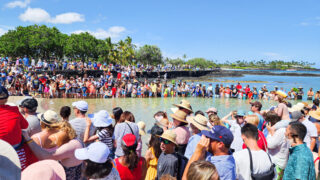
Photo Credit: Beat of Hawaii at Kona on December 26, 2025.
Get Breaking Hawaii Travel News


Why does Beat (and other publications) continue to frame stories about the new green scam’s impacts to “tourists” and “visitors”, when as far as I can tell, the fee is applied to A;; transient occupancy transactions. If this is indeed correct, this means Hawaii residents, already under the constant siege to satisfy the ever growing appetite of state’s coffers, are also paying this additional tax any time they staycation.
Lawmakers didn’t pass a tourist tax, they created an everyone tax. Please stop calling it a tourist/visitor tax!
Saw the below excerpt from the AP 12/31/2025…didn’t yet see it covered in the local press. This is an excerpt (below). Seems the enforcement won’t yet go into effect, as the appeals goes thru the system.
HONOLULU — A federal appeals court ruling on New Year’s Eve blocked Hawaii from enforcing a climate change tourist tax on cruise ships passengers, a levy that was set to go into effect at the start of 2026. The order by two 9th Circuit judges granted both requests for an injunction pending the appeals.
“We remain confident that Act 96 is lawful and will be vindicated when the appeal is heard on the merits,” Toni Schwartz, spokesperson for the Hawaii attorney general’s office, said in an email. The order temporarily halts enforcement of the law on cruise ships while the appeals process moves forward, her email noted.
Perhaps the Ninth Island should start imposing “Green Fees” on Hawaiian visitors…
A judge blocks the ruling and extortion is the subject. Hawaii collects anyway so where does the money go? Into an unknown account or drawer that is stuck in limbo? IMO same senerio as the federal Maui money problem. Money is collected and never spent. IMO consider this Green fee money lost or fallen out of the tourist’s pocket with no outcome of refunds or reimbursement Plain money grab and scam. Keep the tourist confused to become an easier victim.
Another example of Hawaii extortion based on unproven climate scam.
Where does the money go? Who decides what, where and when it is used? What forensic accounting will be done to be sure money does not find it’s way to some uncle’s cousin?
When will there be accountability for people in government?
The “green fee” will largely fund mis managed and incompetent government employees and their ridiculous above market pensions! This isn’t rude, it’s just a fact. 5 years from now Hawaii will not be any “greener”, unless chasing away tourist and their dollars will mitigate “climate change” Value conscious tourist notice when they are gouged, whether or not they can “afford” the exorbitant fees and taxes. Many Hawaii visitors have openly expressed in this forum the fact that they don’t feel welcome here. Raising fees and taxes will set in concrete that feeling. I want to be the first to predict that in 5 years the cruise lines will pull the plug on Hawaii. Same old tax and spend policies, different day in Hawaii!
It is up to Hawaii to decide their tax structure and how it applies to citizens and visitors. Also up to them to determine if their tax structure is effective in meeting its objectives.
The fees and taxes to which I am subjected as a visitor to Hawaii are “bracing” for sure and while taxes are never a delight to pay I understand the relationship between taxes and stable communities and infrastructure.
It is up to me however, as a visitor, to choose if I am inclined to pay the taxes charged by Hawaii. I have the option of going elsewhere if I don’t wish to accept the terms laid down by Hawaii, and I may very well make that choice. Presumably Hawaii calculated attrition as a factor in setting their taxation policy.
KG,
Well said as your comments are right on as you read my thoughts. Wife and I have choices to make if we want to return to Hawaii after 25+ visits we will pay all the fees as love the islands, the people, the scenery and the local food Or we go elsewhere as the world is a big place..
KG,
Well said. But, there’s no way anyone in the government calculated attrition as a factor in taxation policy! The government’s of Hawaii are just setting themselves up for failure. They cannot possibly account for all the money collected or show how the money has improved anything. Is it true that the new Green fee goes into the general fund and not a separate one? I don’t mind paying taxes but I do expect concrete, visible results!! Thanks
Just to add some humor to this additional factor turning off owners and tourists to what I truly believed to be Paradise since I began visiting in 1959, my first thought reading your Hawaii’s Green Fee header was that my golf green fee rates were going up even more.
I’m not sure where this money goes, however I live here and know the upkeep to all this property is immense . For those who comment about dirty parks , restrooms , etc , I’ll say this , in the peaks of tourist season these areas get abused ! Here , locals love their outdoors parks, beaches , etc only to see them abused by some tourists. Locals picnic in our parks every weekend and some weekdays too . When they leave their outings , the parks/restrooms are clean ! I’ve personally see tourists leaving behind their “garbage “ at our
parks . And I’ve seen some of my friends’ condos destroyed by tourists. I’ve literally heard a tourist say “so, I paid for it, and I’m on vacation”. Tourists speed on our small side streets and actually yell and honk at locals. …. So I feel maybe a tax will deter this kind of visitor ; we don’t need them ! Sorry , all the decent ones must pay for these careless / inconsiderate ones !
If the tourists pull out and don’t come due to fees and the feeling of not being welcome, things will really deteriorate for the local Hawaiians. I have been coming to Hawaii often for over 50 years. I always pick up after myself and my family, but many times it is hard to even find trash cans. I think the homeless ruin the bathroom for example. Our hard earned tourist dollars keep the Hawaiian economy going. I honestly think the green fees will just go into the pockets of those in government and not be spent in improvements.
My wife and I are now old but love to visit Hawaii and have a timeshare there. The TAT has always been a pain but the increase will make it worse and the new rules and expected “maintenance fee” increases are making us rethink our future plans. Our latest visit earlier this year included our first visit to Kauai which was beautiful but having to pay to visit the state parks and then experience poor trails and dirty restrooms was an eye opener. These were poor in comparison to many US mainland state parks we have visited. We sincerely doubt the new “Green Fees” will make a difference and wonder why the locals don’t care more about their parks to help take care of them,
We own a month Marriott Timeshare in Kauai. We have visited for over 30 years .
I do Not approve of an additional Green tax. We tourists generate money now.
Many recent increases in everything on Kauai. Please do not scare us away!
We love the island.
Janet
@Janet J: You don’t get to “approve” unless you are a resident who votes here. However, you do have a choice of where to spend your money.
This is definitely a bad look for Hawaii. Pay more to go to Waikiki only to fight your way to the beach through the homeless. Pay more to receive the Hawaian stink eye. No thanks. Been going to Hawaii yearly for nearly thirty years, no more. Went to the Cooks in 2019. Now we go every two years. Bahamas on thealternate years. Now we stop in Hawaii for lunch and then redeye to Raratonga. The locals there still appreciate tourists. It makes no sense to go to Hawaii whenfees are skyrocketing friendlyness is disappearing and been there done that is a problem.
The green fee is total garbage. The money will have zero impact on the global warming craze.
The existing taxes on visitors should have been sufficient to keep parks, restrooms, beaches and trails maintained.
They have failed and more money will not solve the problems the government has created.
Where is the line item budget of where the money will go?
I am a frequent Hawai’i visitor since 2005 and own time share property on Maui. I am currently in Honolulu. I personally am not opposed to a green fee and think it could be good if the fee is clearly shown as such on my folio and the money collected is kept in separate account and used for stated purposes….not just some general fund for who knows what or some politicians pet project. Should be an annual report published of how much was collected and where it was collected and specifically what it was spent on. Money collected should be spent where it was collected. So, If I am paying green fee on Maui, I want it to go to Maui projects.
It’s people that trust the government and continue to vote them in that is the problem. You can’t trust them. Ever. Particularly on green initiatives. Do your part but don’t give politicians money to spend on ridiculous activities which will in no way accomplish anything except enriching those who’s influence has helped enact these ridiculous fees.
I’m still trying to understand the logic of why, as a timeshare owner of multiple deeded timeshare properties, I pay an occupancy fee for using any deeded property property that I own? Do part-time residents, a 2 months, 4 months or even 6 month resident, that have a deed to their property pay an occupancy fee? Does Zuckerberg? What do I receive in return for the money I invest in HI through my property taxes, etc. that isn’t provided to other property owners that live in their properties and do not pay occupancy fees? I know that the HI Supreme Court ruled the occupancy fees for timeshare owners was legal but is it ethical not to charge every property owner the same fee? Oh that’s right, ethics don’t matter to the General Assembly when more dollars are involved. If I had a court-backed scam that good, I could move to HI year-round.
Will this Green Fee affect air tickets purchased after 1/1/26?
I assume someone has figured this out already, but does anyone know what the average visitor pays in total taxes, fees, accommodation charges, etc.? I’m pretty sure that some of that feeling of the “aloha spirit is gone” and “we don’t feel welcome” comes from the fact that before you see anything you’ve already dropped, possibly, hundreds of dollars basically just getting off the airplane. Add to this the knowledge that unless a local stays in a hotel on a neighbor island or rents a car, none of this ever touches them. On the other hand, the dirty beachs, restrooms and unmaintaned trails should have them asking their local officials just where these vast sums of visitor money are going.
This site has multiple articles detailing visitor taxes and fees, including exemplars of total dollar impact on a typical trip. They also run comparisons of other locales vs. Hawaii. Research this site.
So far, and we have been regularly visiting since ’75, I have my doubts that there will be any demonstrable improvement in the infrastructure we utilize. Don’t know where the money will go but it won’t be used to improve my experience.
Another fee that does not specifically state what the money will be used for. As another writer said, there needs to be specific metrics showing how the money is spent and what it will improve and not just dumped into the general fund. Someone needs to audit the state and counties use of the funds. But we all know that will never happen and we will not see any improvements. The law as stated is just too vague.
The only thing these new fees and taxes will contribute to is hawaiis death spiral
Hawaii has become ridiculous for gouging visitors. As cruel as it may sound and I’m sure I’ll hear lot’s of negative comments, but I hope the economy of Hawaii tanks so much that the people who live there will finally wake up and get rid of the clowns who run the islands. It’s going to take thousands of people losing their livelihood to do something. After 22 years of spending thousands every year to vacation there, we are saying no more. New adventure is await!
Bobby B, It’s not just the visitors that are being gouged. Living here for 25 years I have seen the taxes, food, gas everything increase multi fold and yet the parks and bathrooms which are few and far still look like crap. I feel like that is happening here in Hawaii. Nothing will change till the voters wake up and put honest people in office that care about everyone, not just their relatives.
It seems that all of this has risen to the point of not affordable for the common folk as myself for another visit to Hawaii. I was lucky enough last year to be able to visit Maui for 10 days and the only way I was able to visit was getting help with the lodging from a friend. Those that have the wherewithal(and good for them) won’t be affected necessarily but how about those who can barely afford the continuing rising expenses? I guess it all comes down to “Those that got will get, those that don’t will lose”
I love Maui, I pay my timeshare fee’s and my taxes. I shop in your stores, eat in your restaurants. Now you want more fee’s. I don’t hike in your trials, sit on the beach or drive at times that cause traffic. Because of the protest and complaints. Please tell me what happened to the aloha spirit.
Looking at the court documents, the fees are described as needed for “environmental stewardship, climate resilience, and sustainable tourism.”
Is there an agreed-upon definition of what success would look like for these 3 items and how this will be measured?
It’s likely you ask a dozen different people and get a dozen different definitions. Vague goals+ vague outcomes= lack of trust.
To be specific, who is going to steward the environment? how is the climate resilience be maintained or controlled? and as for sustainable tourism, does not look like anyone is trying to sustain tourists….all this mystery money floating around….
Make no mistake this is nothing more than a cash grab by legislators.
It should have been put into a special fund but it went into the general to be spent on legislators favorite projects