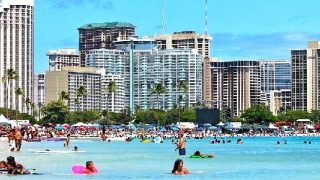

Airlines and hotels are betting that most Hawaii visitors will look for discounts the old way, see none, assume prices are fixed, and purchase. That assumption is exactly what allows the industry to hold the line far longer than it used to.
What has changed is not whether Hawaii gets cheaper, but how and when those price adjustments appear. There are no splashy sales, no obvious markdowns, and no signals that say now is the moment to book a Hawaii vacation. Instead, deals are buried in timing shifts, quiet availability, and pricing moves that happen late and selectively. Travelers who come to understand the new paradigm can still spend far less for the same trip. Those who do not often lock themselves into the highest prices the Hawaii travel market will ever see.
And for visitors willing and able to travel when many families cannot, the same Hawaii trip can cost meaningfully less without sacrificing anything. The beaches do not change, the water stays warm, and the core quintessential Hawaii experience remains intact. In fact, better. The difference is timing, patience, and understanding how the industry now manages pricing.
The mid-August shift that most visitors miss.
This is where the change begins. Mainland schools go back into session, family travel drops sharply, and Hawaii’s peak summer demand finally loosens its grip. Flights that were full every day start showing available seats. Hotels that were sold out weeks in advance have availability. Rental car shortages ease.
What does not happen is the loud price reset that Hawaii visitors have long been accustomed to. August does not arrive with fanfare or advertised deals, whether for Hawaii airfare or accommodations. It shows up subtly through choice. The ability to pick better flights, better rooms, and better dates without fighting crowds is the first signal that the financial part of the equation is changing.
This window exists almost entirely outside most travelers’ awareness because it is clearly not marketed. Most families with school schedules are already back home. Visitors without those constraints often assume summer pricing continues straight through August. That’s easy to believe if you check the airline and accommodation calendars in advance. And that is the entire point. But, in reality, mid-August is when demand weakens, even if pricing has not yet quite caught up. But it will.
How Hawaii’s broader low and shoulder seasons work now.
Mid-August is the most overlooked inflection point, but it is not the only one. September and October extend the same dynamic, often with even lighter crowds and greater flexibility. That’s true right up to Thanksgiving, and again until mid-December. Likewise, May delivers a similar effect on the front end of summer’s peak, after spring break pressure has faded but before Hawaii summer family travel ramps back up.
Hawaii’s low season is not about bad weather or risk. It is about habit. Unlike many mainland beach destinations, Hawaii does not have a weather-driven off season to any large degree. The lower-cost windows exist because people stop traveling, not because conditions here deteriorate.
For travelers who can move outside traditional school vacation calendars, these months consistently offer Hawaii’s best balance of weather, crowd levels, and price. The value comes from timing, not sacrifice.
Why prices do not drop when you think they should.
One of the most important changes in Hawaii travel is when and how prices adjust. Airlines and hotels are no longer quick to discount future inventory, even when demand is clearly softening. Instead, they hold pricing steady as long as possible, especially outside the 90-day booking window.
That behavior shows up when you look at today’s real pricing. Recent searches for LAX to Honolulu, for example, show roundtrip fares in the mid-$400s in basic economy and mid-$500s in regular economy, holding steady from peak July straight through August and beyond. The calendar shifts, demand clearly changes, but the airfare barely moves at all. Why?
Hotels are doing the exact same thing. At Hilton Hawaiian Village, for example, early July room rates (pre-taxes/fees) around $510 per night are still being posted well into the future, even though late August through October dates are already showing rooms closer to $414. The drop is real, but it is too modest to be real so far, and it is not being advertised as a seasonal discount. Those were old moves, not part of the current dance.
So this is deliberate, and both airlines and hotels are actively fishing for higher-paying travelers, even in what is technically low or shoulder season. They wait to see how the advance booking window fills before making any real adjustments at all.
Only when it becomes clear that inventory will not sell at those prices do changes commence, and those changes now tend to happen much closer to departure. The industry is no longer in a hurry to blink, and it even knows how to make money with empty rooms.
Why advance purchases clearly work against you in low season.
This shift in pricing strategy flips one long-standing piece of travel advice on its head. In peak periods, booking early often protects you from rising prices. In low and shoulder seasons, advance purchases almost definitely mean betting in the wrong direction.
When demand is softening, prices are more likely to drift down than up. Prepaying locks you into today’s artificial optimism, not tomorrow’s sagging visitor reality. Travelers who commit to nonrefundable hotel rates or prepaid packages months out are often stuck paying the highest price the market will ever see for those dates. And airfares aren’t very different.
The safer approach in the low and shoulder seasons is to be flexible. Book early only if rates are fully cancellable, then monitor pricing as travel approaches. As inventory pressure builds, rates tend to soften quietly, and those who can cancel and rebook capture the adjustment. Those who prepaid do not.
When it comes to Hawaii airfare, avoiding basic economy lets you rebook later and at least get future travel credit for the difference. Monitoring price fluctuations is key to savings in today’s scenario.
How discounting actually works now.
When pricing does move, it rarely does so through obvious, highly promoted rate cuts. Airlines and hotels learned during the pandemic that advertising big headline sales only trains customers to wait. What replaced them is controlled, selective discounting.
Hotels lean on fourth or fifth night free offers, bundled resort credits, loyalty promotions, and better room category availability rather than lowering base rates. Airlines rely on targeted fare drops, companion pricing, and loyalty offers rather than broad sales. Package providers improve value too, often without changing the headline price at all.
These changes usually appear later than travelers have learned to expect. They often surface within a much shorter booking window once it becomes clear how much demand truly exists. Last minute flexibility is what allows travelers to take advantage of them.
Timing together with practical, on-the-ground choices.
The calendar does a lot of the heavy lifting here, while it is not the only factor. Once timing works in your favor, practical decisions will increase your savings, again without changing the quality of the trip.
Accommodations remain the single biggest expense for Hawaii vacations. Consider splitting a large vacation rental with another couple or family to dramatically change the math, especially during lower demand periods when availability improves.
Food is another area where experienced travelers adjust expectations. Reader Eric explained, “When we do go out to eat, it is almost never for dinner, as restaurants usually charge more at that time. We save a lot that way.” He also noted that staying in condos and using community grills reduced costs while creating opportunities to meet other travelers.
Transportation strategies also evolve when demand eases. One of the most detailed tips came from reader Don C., who wrote, “Don’t rent a car at the airport if you are staying in Waikiki.” He described taking a shuttle into Waikiki, then renting a car only on the days it is actually needed from hotel lobby rental desks, avoiding airport surcharges, overnight parking fees, and paying for a car that sits unused.
Why Oahu offers the most flexibility.
No island is universally cheap, but Oahu consistently offers the most levers for value. The reason is not that Honolulu is inherently less expensive. It is that competition is denser across every category.
Dozens of hotels compete within a small area. Vacation rentals span every price point. Dining and transportation options are abundant. When demand softens, that competition matters. Availability creates choice, and choice eventually forces pricing adjustments, even if they come later than travelers expect.
For visitors prioritizing cost control without sacrificing experience, Oahu provides the most room to maneuver, especially during low and shoulder seasons.
What repeat visitors actually do.
Longtime Hawaii travelers rely less on chasing deals and more on systems that exploit timing. Reader Ted summed it up succinctly: “I book hotel and car rentals way in advance, but not with prepaid rates. I check back every several weeks. Cancel and rebook when rates are lower.”
Others focus on destination-specific efficiencies. Daryl H., writing about Kauai, recommended stopping at Walmart near Lihue Airport immediately after landing and pointed out that plate lunches can easily cover a full meal with leftovers. Cynthia C. described joining Costco specifically for travel, saying her Executive Membership rewards “more than paid for the membership renewal this year and then some.”
What connects these approaches is not extreme frugality. It is patience and an understanding of how pricing actually behaves now.
The real difference between expensive and manageable Hawaii trips.
The gap between a $10,000 Hawaii vacation and a $5,000 one is rarely the destination. It is the calendar, flexibility, and the willingness to wait while the industry tests how much travelers will pay.
Hawaii’s low season does not announce itself. It reveals itself slowly, often later than travelers expect, and usually without advertising. Late August, September, October, and May quietly create space in a system that spends most of the year under pressure.
If you have flexibility, the opportunity is there. The question is whether you are watching closely enough, and staying flexible long enough, to catch it when the industry finally blinks.
Get Breaking Hawaii Travel News