
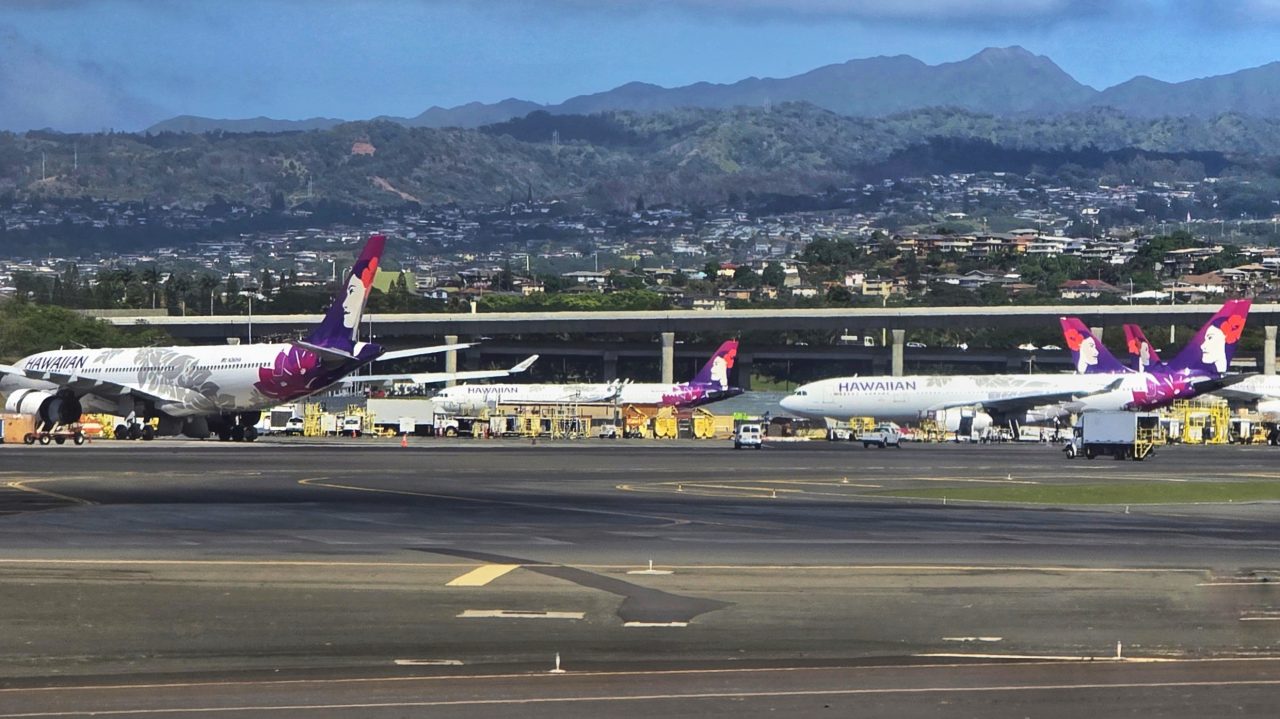
Hawaii travelers just watched one airline era end on April 22. Now, the very next day, a potentially far larger layer of uncertainty just arrived. Alaska, which is just finishing absorbing Hawaiian, told Wall Street it’s losing money, $193 million in the last quarter, and can’t say what the rest of the year will look like.
At the same time, Alaska itself is being discussed as a possible acquisition target. As Hawaii travelers, we’ve barely had time to process one airline change before another question appeared. Who will own Hawaii flying a year from now, and what will a ticket cost by then?
For anyone holding or planning Hawaii travel, the week now looks very different. Hawaiian changed to Alaska, but the larger jolt is that the new structure already doesn’t appear settled. Hawaii flights look more exposed, with the airline behind them, the promises it made to Hawaii, and the ticket price all looking less certain than they did days ago.
We already covered what April 22 meant operationally in Hawaiian Airlines Ends April 22. What Replaces It and what the HA code retirement meant for Hawaiian’s identity in Hawaiian Airlines HA Code To Disappear Forever After 95 Years.
Those were about what comes next for the traveler, whether you are flying in from the mainland, between islands, or trying to figure out which parts of the old system Hawaiian still hold and which do not.
On the Hawaii airfare front, United is already saying fares may need to rise 15% to 20%. Delta says higher fares may remain even after fuel eases. Southwest has stopped forecasting the year entirely. Alaska, notably, told investors that Hawaii bookings had returned to last year’s level on strong fare increases and expects Q2 unit revenues to be up. In other words, Alaska is already describing higher airfares to Hawaii as working. So much appears tangled together for Hawaii travelers who were already trying to absorb a major airline change.
The day after changed the meaning of April 22.
April 22 felt like the main event when it happened. Hawaiian merged into Alaska’s systems as another layer of separation disappeared, and travelers were still evaluating how the combined airline would preserve enough of what they liked about Hawaiian. That seemed like a lot to absorb, especially here in Hawaii, where airline changes are never simple corporate mechanics.
Then, on April 23, the framing changed entirely. The question was no longer only about how Alaska would complete its Hawaiian acquisition. The question today is what happens to Hawaii flights if the airline that just swallowed Hawaiian is itself under financial pressure, has already pulled its forecast, and is being discussed in larger merger/acquisition talks, intimating it may not even be the final owner of this operation. That’s what turned the week into something larger than anyone imagined.
The Alaska purchase of Hawaiian looked like the big story Hawaii travelers would be living with for years. The focus was on branding, loyalty, aircraft strategy, interisland flying, airport experience, and whether Alaska would actually keep the promises it made when it bought a Hawaii airline with a very different history and customer base. Those questions have not gone away, but they are no longer standing alone, and they seem much smaller today.
Hawaii has always had few realistic travel options, limited interisland competition, and dependence on carriers that can change the economics of a trip overnight. That backdrop is familiar to anyone who lives here or flies here often. What is new is being in the midst of this huge change, landing, and then realizing almost immediately that the structure underneath Hawaii flying may still be moving.
Will Alaska be the final answer?
Alaska was supposed to be the answer to Hawaiian’s problems. Travelers were told the airline would preserve a dual-brand strategy, protect important parts of Hawaiian’s identity, keep faith with Hawaii jobs, and build out a combined network that would be better for travelers than the one that previously existed. Whether readers believed all of that or not, the thinking was simple. Hawaiian would be absorbed, Alaska would own the result, and travelers would adapt.
But now that premise looks shakier than it did even days ago. American, as we just learned, explored buying Alaska earlier this year. Those talks stalled, at least for now, and Alaska is reportedly being discussed in broader coordination with American, one world, and its partners.
Washington has signaled openness to more and bigger airline deals, and the industry no longer looks settled at all. That does not mean a deal impacting Hawaii is happening tomorrow, but it does mean Alaska is suddenly being discussed less like a final solution and more like one more piece on an air travel game board that is moving.
For Hawaii travelers, that is not some insider airline debate. Alaska made promises to Hawaii when it bought Hawaiian, and those promises are tied to Alaska. A future owner would not be obligated to care about the same branding, honor the same local commitments, preserve Hawaii employment assumptions, or make the same strategic choices about Hawaii that Alaska made while asking everyone to accept what seemed like the final acquisition. This week now feels larger than a bad quarter or a terrible fuel cost environment.
Higher fares are a big part of the story.
The Hawaii airfare side can’t be ignored, as it is one of the fastest ways for Hawaii travelers to experience greater instability. Flights here are among the longest domestic leisure flights in the country. They are booked well ahead, priced at a premium even ahead of 20% presumed increases, and tied to trips people plan around school and work schedules, anniversaries, family reunions, and budgets that can only be stretched so far.
A 20% increase on a Hawaii trip’s airfare is not a minor add-on. It can be the difference between booking and hesitating, between taking the trip you planned and settling for something else, or between going this year and waiting for an opening sometime in the future.
The promises to Hawaii look less secure.
Many readers already had doubts about what Alaska would actually preserve once the deal was complete. That skepticism was understandable, as promises sound good when regulators are watching, public scrutiny is high, and the buyer is trying to reassure everyone that Hawaii will not be reduced to just another regional route system. Those promises look less sturdy once the entire airline industry starts moving again.
Who controls Hawaii flying, and for how long? Who decides whether Hawaii keeps widebodies on certain routes, what happens to interisland strategy, how much of any identity survives, or whether Hawaii is treated as a distinct market with distinct needs rather than simply another set of leisure routes to be optimized? This week pushed those questions open much wider than anyone ever imagined.
Fleet decisions be damned.
The fleet issues matter, but now they matter differently inside this far bigger picture. The 717 interisland fleet will not last forever. The A321neo fleet’s role remains unsettled. The future of the A330s is still a consideration, especially for Hawaii travelers who notice very clearly when things change here.
We have already been flagging that broader instability in The Next Big Hawaii Air Shakeup Is Already Taking Shape and New Airline Merger Talk Raises Questions For Hawaii Flights. Those pieces now look less like speculation and more like the tip of the iceberg in a pattern Hawaii travelers can now see.
What this means for your next Hawaii trip.
The Hawaii air market looks less settled than it did a week ago, and travelers should take that seriously. Watch whether the fares you are seeing stay high even after fuel headlines fade. And whether this merger and revenue-sharing talk gets louder rather than fading.
This week may well be remembered as the moment readers realized the Alaska-Hawaiian deal was not as big a deal as it seemed. It may become the point where Hawaii flights enter a longer stretch of uncertainty, with the price you pay, the airline you fly, and everything else starting to feel less fixed.
That is a bigger and more unsettling story than airfare alone, and Hawaii travelers are only beginning to think about how many parts of it may touch their next trip.
Get Breaking Hawaii Travel News





Relax. Nobody’s buying Alaska Airlines and Alaska Airlines isn’t buying anybody.
I am having trouble understanding why people are mourning the loss of Hawaiian Airlines. It died years ago making incremental changes to their image and service. Flying Hawaiian airlines in their heyday was a special experience. But, like many other things in life right now, there’s little left of what we once knew.
Although you’re absolutely right about changes that took place over the years, even the latest version of Hawaiian Airlines was quite appealing to many travelers. Majority of my friends from both East and West Coast almost exclusively flew Hawaiian Airlines and everyone loved it. It’s about little stuff and nothing major really. The moment you see that Pualani tail and walk inside to be greeted with popular Hawaiian songs, you feel like you already set a foot on the islands. Mac nuts and decent Pacific rim meals in First class and Honolulu Cookie Company treats for everyone prior to landing were also a nice touch. Frequent flyer program was also more appealing than it is now with Atmos.
Besides, HA became deeply embedded in the minds and hearts of many locals and visitors alike as a symbol of an era and a connection to the spirit of the islands that lasted for so many years.
Alaska is not better in another way. Today I discovered that taking a pet on an inter island flight is now $100 as opposed to $35 with Hawaiian. Had I made my pet reservation just 2 days ago I would have saved $65 per way. Outrageous! This is not in the spirit of Aloha.
Excellent article regarding the uncertainty ahead with the Alaska/Hawaiian merger/acquisition.
Now that the dust is settled things are more complicated than first thought. Alaska just might have bit off more than it can chew, or that bean counters in Seattle could handle. Only time will tell. One thought that most will find bizarre; the one Airline, other than Hawaiian, who is still operating with decades of Hawaiian island (pre-statehood) experience is United. Had United bought HA and integrated the entire Airline into UA, things would be different. UA could eventually solve the inner Island aging equipment question. UA has flown to all the islands for decades, it has the infrastructure to figure out a way to incorporate inner Island travel at the level that HA was providing. Pualani and the HA livery might not have survived, but the financials and job security would be much more stable.
Aloha to all.
What about the jet fuel shortages worldwide BOH? Last minute summer travel cancellations might be imposed by airlines. Europe having only enough jet fuel to last through the first week of may reported by ABC news last night. Isn’t this more important than some silly merger? Guess what no fuel, no tourists, no island to island flights. Then what Hawaii? Is your economy going to crash in one month. No tourists no travel or no Beat of Hawaii. thUnited was mentioned and it will raise all ticket fares 15-20% because no oil traveling through the strait to produce jet fuel and in that aspect they are losing money and can’t absorb the losses. 20 non popular flights discontinued. Which airlines will follow? And When.
This was just a matter of time. Many of us skeptical and apprehensive about the merger now seem to have been justified. I understand it’s all about business and a company’s bottom line but perhaps it didn’t have to end this way?
Ellison and Zuckerberg, both billionaires and owners of substantial assets in Hawai’i could’ve easily purchased Hawaiian Airlines or even Alaska Airlines and save the tradition that so many of us now mourn. If anyone reading this is one of their neighbors, acquaintances or business associates, please reach out to them and present them with the idea. Bring HA and Pualani back.
Aloha,
Warren Buffet said that an airline is a speculation, ie a trade, not an investment. Words to heed. Most billionaires do not own airlines.
Mahalo
Richard Branson Virgin Atlantic
Aloha,
Not a great example. Virgin Atlantic is 49% owned by Delta Airlines. This is a copy and paste from Wikipedia: “Virgin Atlantic reported a profit before tax of £20 million for 2024, marking its return to profitability for the first time since 2016, after a loss of £139 million in 2023. However, in 2025, the airline faced a loss before tax of £205 million, despite achieving an underlying pre-tax profit of £19.7 million.
Mahalo