
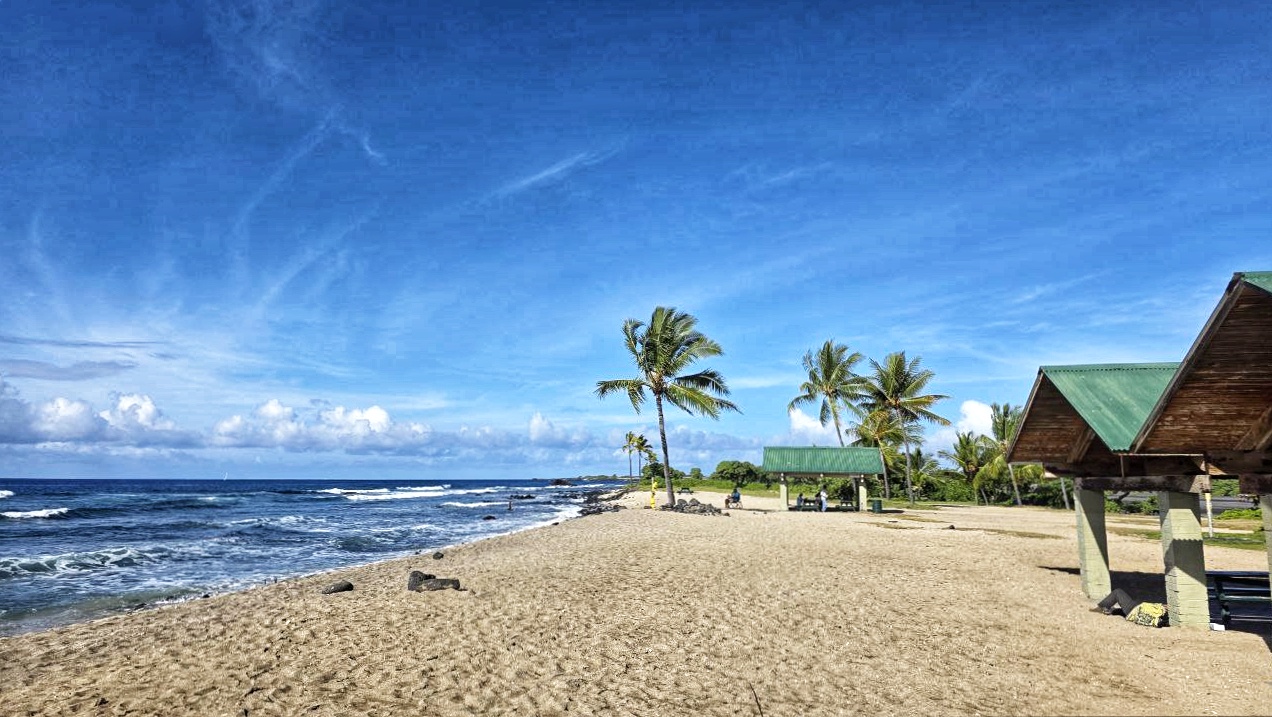
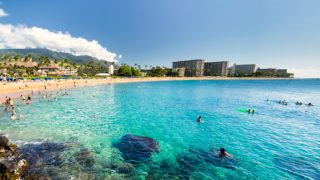
For visitors who have watched Waikiki Beach narrow, harden, and fade year after year, the state has finally put visitor money on the table to try to reverse it. The first allocation is $7 million, earmarked for restoration work at the Halekulani sector, marking the first time green fee dollars have been formally directed at rebuilding Hawaii’s most iconic and most engineered shoreline.
Hawaii welcomes nearly 10 million visitors a year. They pay some of the highest hotel rates and taxes in the country, rent cars at prices that once seemed completely unimaginable, and eat meals that cost twice what they did not that long ago. Billions of dollars flow through the islands annually, mostly tied directly to tourism.
Yet the things Hawaii visitors and residents alike see on the ground tell a different and troubling story. Roads remain deeply potholed and patched. Beach park restrooms are third-world. Public facilities across the state show wear that never quite gets addressed. Service feels thinner than it ever did before, even at our high-end properties. The money keeps coming, but the results never seem to catch up, and in many places appear to be moving backward.
What ten million visitors should produce.
Ten million visitors a year should leave clear marks of success. Infrastructure should look improved or at least maintained, rather than barely holding together. Visitor economy jobs should provide enough stability that workers are not constantly stretched thin, cycling out, or leaving entirely. Hawaii operating at the scale of tourism it does should generate momentum that lifts the places and people who support it.
Instead, what Hawaii visitors encounter feels like a mismatch. High prices signal abundance, but the physical and human systems behind the experience suggest scarcity. The disconnect is obvious enough that both visitors and residents comment on it endlessly without looking at any data or economic theory.
The data behind a familiar feeling.
That sense of imbalance isn’t imagined, of course. A major new report from the University of Hawaii Economic Research Organization, the state’s data arm, has finally put numbers behind what many people have been sensing in Hawaii for years. In real terms, after inflation adjustment, tourism spending in Hawaii peaked decades ago and never meaningfully recovered. Visitor counts kept rising long after that point, but the real economic output tied to those visits did not. More people came. The economy has stayed essentially stuck in place.
The report, titled “Beyond the Price of Paradise: Is Hawaii Being Left Behind?”, reframes decades of assumptions about how our visitor economy works. Hawaii did not fail to attract tourists. It succeeded at that better than almost anywhere else on earth. What it did not do was translate higher visitor volume into any sustained economic growth.
Why Hawaii looks more like the “Rust Belt.”
Once Hawaii’s income, productivity, and GDP are adjusted for the state’s unusually high cost of living, the comparisons become painful. Hawaii does not resemble California, Washington, or other high-cost coastal states that managed to pair high prices with rising incomes. It does not look like a form of premium economy. Instead, UHERO’s analysis sadly places Hawaii alongside parts of Appalachia, the rural South, and the Rust Belt.
Lead author Steven Bond-Smith said Hawaii residents “feel the same sorts of economic stress” as people in former coal-mining regions, rural Southern communities, and Central Valley towns in California. His co-author Carl Bonham warned that if nothing changes, the gap between Hawaii and the rest of the country will get “dramatically worse” over the next 30 years. That is unexpected language not usually associated with a destination welcoming ten million visitors annually.
Working more for less.
What is behind those comparisons is straightforward. Workers in Hawaii earn roughly 20% to 30% less than workers in comparable jobs on the mainland. To make up the difference, many take second or third jobs or work longer hours. Since the early 1990s, Hawaii’s per capita economic growth has, in fact, averaged less than half the national rate.
When purchasing power is adjusted for Hawaii’s local prices, Honolulu ends up grouped with places like Morgantown, West Virginia. Maui’s adjusted economic output is barely more than that of Binghamton, New York. As Bonham put it, “It’s not that our costs are going up faster, it’s that our income isn’t going up as fast.”
How tourism crowded everything else out.
UHERO points to a dynamic economists call Dutch disease. When a single industry dominates an economy, it absorbs labor, capital, and political attention so completely that little else can develop alongside it. That defines Hawaii in a nutshell. Here, tourism has filled that role for decades. Efforts to diversify either stalled, faced heavy resistance, or never reached a viable scale. The state ended up with only one significant economic engine and no meaningful backup.
That engine stayed busy. Flights filled, hotels expanded, and more were built; visitor counts continued to climb. But its real output stopped growing in the early 1990s. The activity continued. The returns, however, did not.
When the tap turns off.
This vulnerability becomes apparent whenever tourism begins to falter. During the Great Recession, Hawaii’s economy fell harder and recovered more slowly than in most other places in the U.S. When travel stopped during COVID, the collapse was even more severe than before. Each crisis exposed the same weakness, and then some. Each recovery returned to the same plateau. Visitor numbers have eventually rebounded, but the underlying structure simply did not change.
The cycle reinforced itself. When times were good, the system appeared to work well enough to avoid major reform. When times were bad, the lack of alternatives became painfully clear.
What “nothing to show for it” actually looks like.
On the ground, “nothing to show for it” is not some abstract idea. Across the state, beach park restrooms at heavily visited sites stay closed or partially functional for long stretches, even as parking lots fill daily. Roads carrying constant rental car and tour van traffic degrade faster than they are repaired, with temporary fixes becoming semi-permanent. Services tied to visitor use operate short-staffed, with limited hours that feel out of sync with the volume that passes through.
Hotels never stop posting new record rates while struggling to staff housekeeping and food service, and the service gaps are visible to guests, even if the reasons behind them are unclear. Workers who make the visitor experience function commute farther, juggle multiple jobs, or accept housing arrangements that would have been unthinkable before. None of this looks like the output of an economy that benefits from 10 million visitors a year. It looks like a system running at full capacity and still quickly falling behind.
What the data now shows.
UHERO’s researchers note what visitors could have easily told them: that Hawaii has always been expensive. That alone does not explain what is happening now. The difference is that wages, productivity, and overall economic growth stopped keeping pace with the cost of living. For decades, the state relied on rising visitor numbers to compensate for a lack of real growth. That worked for a while. Then it stopped. The gap is clear, and it is growing.
The report points to the need for follow-up work on long-term economic development and diversification. Whether that leads to meaningful change remains to be seen. The data already shows that Hawaii did not suddenly become unaffordable. Ten million visitors arrive each year, and the state of the economy meant to support them has barely moved in more than three decades.
What do you see when you visit now that feels out of sync with the volume of people and money flowing through the islands? What can you offer for what should come next?
Get Breaking Hawaii Travel News


Most of the decline in standard of living is due to higher goods costs.
Gemini Says:
“Matson, Inc. (MATX) has experienced a dramatic shift in its operating margins over the last decade, transitioning from a relatively low-margin business to one with significantly higher and more volatile profitability.”
“Long-Term Perspective (30 Years)
Looking back 20–30 years, Matson (previously part of Alexander & Baldwin) was a utility-like shipping service for Hawaii and Guam. During that era, it rarely saw the double-digit operating margins it enjoys today. The modern Matson has transformed into a high-speed “ocean bridge” for e-commerce, which has allowed it to command the higher pricing power reflected in its current 14%+ margins.”
As the cost of all imports increases it flows through the economy making everything else cost more.
You want a better standard of living? End the shipping cartels.
This is an amazing article that every Hawaiian resident should read. We’ve felt this for years and wonder where does the money go. Is HTA lining their pockets? The government, Counties and State, have had many chances to correct this but they always revert to the golden egg instead of diversifying. Too little too late to fix it? I’m afraid so.
I grew up in Hawaii, graduated from Kalani almost 5 decades ago went to the mainland for college and stayed for the jobs. I used to come home every year to visit. No more. Hotels are expensive and routinely tack on resort fees. Parking can be $50 a day. There are tourist taxes for hotels (one of the highest in the world) and even for renting a car at the airport. I grew up on the slopes of Diamond Head and now I have to pay to visit it. Even Zippy’s is super expensive. There is a whole world out there to visit and Hawaii cost way more than most of those places, even Paris, Tokyo and Singapore. It’s sad that Hawaii has become a playground only for the well-to-do.
Stay in an STVR.
We use to find rentals in the newspaper, request a set of photographs to be mailed to us and we returned them along with a check for the rental. No taxes, no big corporation extra fees. Always a friendly welcome from the local owner who got all the money.
More profit is made not to maintain, clean or have to hire bathroom cleanup people etc. Leaving bathrooms dirty costs less if you just let them go to heck. More money don’t solve anything. Bad roads and potholes don’t cost anything to fix if the problem gets ignored forever. Maybe it’s cheaper to just close the road the same as the restroom problems. IMHO Hawaii don’t care because if it involves making it more convenient for the tourist then let it degrade, degrade, especially if tourist’s keep coming. Personally I hate to see construction because of what has happened to all Royal Hawaiian Hotel now the Hilton Hawaiian Village and all the pineapple fields from the 60’s and are now housing or commercial properties.
Back off the self-defeating overregulation and you’ll be surprised how many things “fix” themselves.
Are the hotels profitable? If so, where are the profits going? My guess: to shareholders.
If a larger portion of the profits went to the workers so they could share in the wealth that 10 million visitors bring, perhaps they would not need to hold down 3 jobs and wonder how to pay the rent.
Maybe unions representing the underpaid workers need to push harder.
IMHO, part of the problem is that most of the profits generated by the hotels and airlines leave the islands to increase overall profits and investor returns for the large corporations that own them. The legislature should consider requiring 20-25% of these profits be re-invested in the form of higher wages, benefits, etc.for their employees. That would raise the standards for the service industry workers, pump more $$ into the local economy and demonstrate that the companies recognize the problems many of them are creating with their greed. At some point they may kull the goose that lays the golden egg.
We stopped visiting 15 years ago. Too expensive for families.
Aloha, repealing the Jones Act would reduce costs more than 20% in Hawaii. This would clearly impact the 10 million visitors as well as the 1.5 million residents. Not repealing the Jones Act helps out the shipping company monopoly. One group lobbies Congress and the other one doesn’t. Bummer for residents and visitors alike.
Well, what has Hawaii got to offer for other sources of income? Given the high costs of simply living there just what can be done? Increased Military is just another form of tourism. What can be produced there?
Science is a possible industry. We have some of the best sites in the world for telescopes and stellar observation. Unfortunately it is a touchy topic for people with ancestral claims. But eventually there will have to be a choice: tourism, telescopes, or no money coming in at all. We already receive more than our share of federal monies and military spending is changing. It’s our taxes and regulations that prohibit new business (and strangle existing businesses). Farming (fish and on land) is possible. We have a longer growing season than the mainland. Cattle have always been profitable because barges bring goods too Hawaii but return empty (cheap export rates). Just thinking out loud here.
The problem… Industry requires construction, construction is so hard on the land! To build anything it requires so much destruction!
Telescopes… Who wants to look at Haleakala and see cranes and semis going up and own, besides all the lil tourists pay to go watch the sun rise… If I have learned anything it is this…
Do not hold up the tourists, they call 911 for, Aloha… The same as stopping on a busy highway to let someone make a left turn… Sure that’s Aloha, but the 1000 cars behind you do not see it that way!
With 10 million visitors per year spending at least $400 per day with taxes likely $50 per day….. where does that money go. How much is actually spend on items that visitors use? Parks, restrooms, roads, etc. should be in good shape. How many $$ are spent on these things? What did the Study say? Looks like government corruption is an issue. Do much of these $$ go to things like welfare?
I walk along the Kapa bike path which is a wonderful sunrise activity. I’m always sad that the restrooms are either completely boarded up or totally filthy. Seems like it would be nice to have nice functioning facilities on a great path. I’m from Kansas and get there about once a year.
Well if 10 million visitors are travelling to the islands every year on average and when totalling the average daily cost of holidaying there, multiple billions of dollars are flowing through someone’s bank accounts every year. This really sounds like a problem of corruption vs the issues mentioned in the article.
Visitor taxation rises every year and for visitors to also notice the lack of infrastructure, development, roadways, maintenance, etc what is the threshold before tourism collapses? And if it does, is there then nothing? Taxes can continue to rise until the final straw breaks the camel’s back so to speak but then what?
Where are Billions of dollars going every year if not into the islands development, protection and preservation?
The tourism money staying in Hawaii is through the low wages paid by the airlines, hotels, and rental car agencies. Those same companies executives and shareholders are the main way the bulk of the tourism dollars leave the State.
One change that will benefit Hawaii is that tips will not longer be taxed. And there are lots of service jobs that have tips as a part of their income – often 20%. A $20/ hour tip will increase one’s wage about $3 an hour. So in fact, these workers are getting a wage boost.
I thought they would still have to pay state income tax on tips & overtime?
It has long been believed that there is a strong good ole boy culture in Hawaii and that a lot of money goes to benefit politicians and the wealthy.
We own a business in Hawaii that pays $1.50 above minimum just to start, 100% healthcare coverage, a matching 401K program, educational benefits and generous PTO/sick, yes, we forfeit some profit, but it is worth it. Increased productivity, minimal turnover, happy employees.
This not a criticism of the Ma & Pa businesses that struggle, it is a criticism of big business like the hotels & the politicians who could afford a little less profit.
Perhaps if every innovation and idea wasn’t opposed then, transportation, industry, agricultural and the general cost of living could improve. Hawaiians want it to stay the same, and so it does.
That is an oversimplification. After the 2008 financial collapse(start by watching a couple of the great documentaries out there on that such as thecon dot TV), the TARP was implemented by Wall St. to allow Wall St. to comb through the financial ruins and cherry pick assets from houses to hotels(all at taxpayers’ expense). Off shore ownership of oceanfront resorts in Hawaii rose from 3% to nearly 30%. The artificially low interest rates allowed these corporate owners to thrown billions into upgrades and still have the funds left over to forge a massive coordinated legal and PR attack against private Short Term Vacation Rentals which is monopolizing the tourist market in Hawaii in favor of the ultra wealth and Wall St. Rather than tourists dollars being funneled to small time STVR operators that actually live in Hawaii, the money now goes to Wall St. It’s a recipe for financial debasement of the local population.