

A major airline rethink is now taking place in French Polynesia, which could bring unexpected benefits for Hawaii. Air Tahiti Nui is considering adding Honolulu flights as part of a new strategy that would reposition Hawaii as a critical connection point in place of current Tokyo flights. If that happens, it could open the door to more frequent service and lower competitive airfare costs, benefiting visitors planning two-island vacations as well as families with connections between Hawaii and French Polynesia.
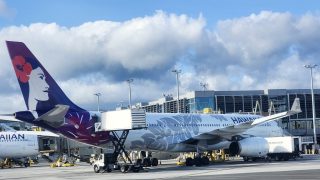
At the same time, Hawaiian Airlines is also expanding its role. The carrier currently flies from Honolulu to Papeete once a week and will add a second weekly A330 flight starting in March 2026. Together, these moves underscore the growing importance of the Tahiti–Hawaii link, which we began covering in depth last year.
The same Air Tahiti Nui strategy report, presented to the airline’s board of directors in July, also recommends painful cuts. Both Tokyo and Seattle may be dropped from its long-haul network, replaced by a smaller set of core gateways where demand is stronger. Hawaii, including Honolulu, has now been added to the shortlist of recommendations.
The report, prepared by Arthur D. Little, one of the world’s oldest and most respected consulting firms, is not yet official airline policy. But the recommendations are clear and likely to be implemented: focus on routes that can succeed, cut losses quickly, and restructure for survival. For Hawaii, that could mean more access to Tahiti and a subtle shift in regional airline dynamics.
It is still too soon to know what comes next. However, the possibility of Hawaii playing a renewed role in South Pacific connectivity, centered on Honolulu, has emerged. That is a shift few in the industry expected.
Tokyo and Seattle are in trouble.
According to the report, the Seattle to Tahiti route alone is responsible for 86 percent of the airline’s projected 2024 losses. The problem is straightforward: the route does not generate sufficient fare revenue to cover the operating costs of a long-haul Dreamliner with extended crew rest and layover requirements.
Tokyo has a different problem. Passenger loads remain stubbornly below 50 percent, and the route is not generating sustainable demand in either direction.
The report recommends ending both services quickly rather than slowly. It describes these routes as structurally unviable.
Honolulu to Tahiti flights are now under consideration.
In a twist, the consulting firm recommends routing Asia-bound passengers through Honolulu instead of Tokyo. They view Honolulu as a more attractive option due to its shorter flight stage length, easier aircraft rotation, and existing connectivity to key Northeast Asian markets. Honolulu also offers a strategic advantage under current overflight restrictions in other countries.
Air Tahiti Nui does not currently serve Honolulu, but the consulting report highlights the city explicitly as a recommended new gateway. It calls for a network that consolidates traffic through core hubs, including Los Angeles, Paris (via LAX), San Francisco, Auckland, Sydney, and Honolulu. These are the cities seen as best positioned to support long-term growth, and they show how Hawaii could be written back into the airline’s future route map.
Hawaii’s place in the Pacific could shift again.
If adopted, which appears highly likely, this plan would mark the first time in years that Honolulu is elevated as a strategic hub for South Pacific travel. The airport has long played a background role in transpacific aviation, but with longer-range aircraft, many carriers have bypassed Hawaii entirely. That may be about to change.
The consultants say Honolulu offers “good connectivity” and “low incremental cost” for routing passengers to and from Asia. They also view it as an existing tourist gateway that aligns better with Tahiti’s premium branding than some mainland options. And it avoids the operational complexity of keeping crews overnight in high-cost cities with limited demand.
All of this remains preliminary. But the inclusion of Honolulu in the preferred route structure plans signals a possible reopening of connections that could benefit travelers across Hawaii, the mainland, and beyond.
What this means for Hawaii travelers.
Hawaiian Airlines is today the only carrier linking Honolulu and Papeete. If Air Tahiti Nui adopts the study’s recommendations, Honolulu could see new nonstop service added for the first time.
The report identified the long-range A321XLR as one possible aircraft for the route, but the existing A321neo could also operate Honolulu–Papeete efficiently. The difference is in passenger experience. While a neo would cover the distance just fine, the XLR may open the door to a new level of comfort, with lie-flat 1×1 business suites that would set a standard well above today’s options.
For travelers, this addition could mean more seats, increased frequency, and potentially lower fares. The Honolulu–Tahiti link has long been limited and expensive. A second airline entering the market, especially if it introduces next-generation comfort, could finally make South Pacific trips more accessible for Hawaii visitors and families with ties across both regions.
The Dreamliner fleet may also change to support this.
Arthur D. Little’s report outlines two scenarios for Air Tahiti Nui’s future fleet. One keeps the current four Dreamliners. The other introduces Airbus aircraft, including the A330-900 and the long-range A321XLR, with the smaller planes intended for markets like Honolulu and Auckland that do not require the capacity of a widebody jet.
For Hawaii, that means any new Honolulu–Papeete flights could be operated by aircraft designed for efficiency on mid-range routes, making them more viable in the long term.
Growth depends on more than just flights.
The report does not shy away from the real challenge. Flights alone will not save the airline or the tourism sector. French Polynesia would need to double its visitor capacity to meet long-term targets. That means more hotels, more cruise berths, more staff, and more infrastructure on the ground.
Consultants estimate that to reach 650,000 annual visitors by 2050, the country would need to open a new hotel or homeported ship roughly every eight months for the next 20 years. That kind of build-out requires political support, financing, and community alignment that go far beyond airline scheduling.
It also runs headlong into the same issues Hawaii is grappling with. More flights mean more visitors, but without matching infrastructure and community buy-in, the pressure on resources can quickly feel unsustainable. Overtourism has already altered the visitor experience across the islands, and French Polynesia risks facing similar debates if growth outpaces capacity.
In other words, Honolulu’s potential new role in the network may be exciting, but it also serves as a reminder of how aviation, tourism policy, and resident sentiment are closely intertwined.
The bottom line for Hawaii.
For now, Hawaii remains in a familiar position: not the first choice, but still a critical option. That may be about to change. If Air Tahiti Nui scales back its Asia ambitions and uses Honolulu as a functional bridge instead of Tokyo, it could return Hawaii to a role it once played proudly as a connector, a gateway, and a stepping stone between regions.
This isn’t guaranteed. The recommendations are just that, while the pressure to act is real. The losses are mounting. And the time for indecision appears to be over for Air Tahiti Nui.
Hawaii may not have asked to be in the Tahiti hot seat. But it may be sitting in it now. What do you think of this possible development for Hawaii?
Lead Photo Credit: Beat of Hawaii on the island of Moorea in French Polynesia – Polynésie française.
Get Breaking Hawaii Travel News





I think McArthur NY, ISP airport should offer to be a partner city to help Hawaiian travel, it may be the last state into the Union but the one everyone wants to go to.
I live on the island of Maui, Hawaii & greatly hope we locals can get affordable promos. that include Maui to Papette packages. I love the sea ferry from Tahiti Nui to Moorea !
I applaud HA for considering Tahiti yet there are serious headwinds for both destinations. Alignment with OneWorld only adds more poorly planned and costly partnerships for both carriers. Tahiti never intends to become a destination like Hawaii (thankfully!) yet the connection of the people of the Pacific is a vitally important one. I suggest that both carriers consider lower cost mainland cities such as DFW, IAH, DEN, MSP as possible seasonal alternatives as feeders are definitely available to support along with logistics.
Go Tahiti. Hawaii the government has lost their way. The Drench are corrupt but much smarter than Hawaii donkeys
Hawaii wants these short interval stops so it can charge another state tarmac takeoff landing charge to all flights. It’s a federal surcharge on all incoming and outgoing flights as well of some state tax imposed. Also people with short layovers would purchase meals inside HNL terminal and Hawaii would collect excise taxes. Keep tourist’s confined to the airport but work on emptying their wallet. No hotel needed, No car rentals, No tourist wandering the islands but all is left is selling food and merchandise.
Excellent article by BOH editors! When Arthur little speaks, Aviation and Airline leaders tend to listen. I think the idea is exciting. HNL-PPT is a natural connection. Sure it won’t be like HNL-SFO or HNL-LAX but HNL is strategically located like no other major International Airport to service all of the South Pacific. Although small, Air Tahiti Nui is a very fine Airline. They fly regularly to Paris and have a partnership with several One World members. Enterprising and entrepreneurial travel advisors can develop exciting exotic itineraries that will enable International
travelers who seek South Pacific Adventure, the opportunity to visit the Hawaiian Islands as well as French Polynesia and other spectacular locations in Oceania. Honolulu Airport is perfectly situated to be a South Pacific crossroads for air travel. Think back to the glory days of the Pan Am clipper!
This is pretty interesting, BOH. Thanks for posting this article. However, I think you may have overstated the importance of Air Tahiti Nui if you are pinning hopes of a revival of HNL’s position as a TPAC hub on them. At SEA, they only operate a few days per week but the route from PPT is about double the length of SEA-HNL, thus requiring the 787 for its range. You are correct that HNL-PPT could be flown with narrowbodies but that would require new planes. And, they are a very small carrier, so how many new weekly flights could they provide? Culturally and historically, Tahiti and Hawai’i are very much linked but I question how much traffic these new flights would generate. I don’t see it as the renaissance you seen to think it would be because volumes would likely be small.
This could be really good! Tahiti is beautiful. But the HNL-PPT cash prices are super high. And it appears that AS has the one-way points prices typically now at 49.5K one-way – that’s double the previous normal price! Sadly, with such high cash and points prices I’m never flying back to Tahiti. Competition from Air Tahiti Nui would be great. Hopefully, Air Tahiti Nui would have saver award that would bring points prices back to reasonable levels.
Good day~ interesting article and a good example of out of the box thinking. Sometimes you need to look regionally, not far over the horizon. I would like to make one comments in regards to seating configurations. They are not tied to the aircraft type, they are tied to the choices that the carrier makes to place on the aircraft. Just because you’re buying an XLR doesn’t mean that that now allows you to do one by one seating. One by one seating can be placed on the current Neos as well. I see this constantly in comments on many other threads besides BOH. Seating arrangements and the comfort, or lack of, is all under the control of the carrier Mahalo.
Tahiti will never add a hotel every 8 months until 2050. Tiny roads around the islands choked with traffic. Workers imported, housing built for them, Tahiti would become Eva Beach. Rarotonga Is just a tiny tourist destination and their industry import most of its workers from the Philippines. They were making $5 per hour.I don’t think Tahitians will accept their paradise to become Waikiki so business can make money.
An odd omission from this article is that Air Tahiti Nui is a oneworld member and therefore an Alaska/Hawaiian partner airline. The Alaska merger seems to be increasing the attractiveness of HNL as a connecting point for alliance members, and increased HNL-PPT service is likely to result in additional non-O/D traffic being routed through the islands. I suppose there’s a chance that could be construed as too pro-Alaska by the readers
Air Tahiti Nui is *not* a oneworld member. It has partnerships with airlines incl. Alaska, but that’s entirely different from alliance membership and even that could well change in the future.