

Hawaii has asked the same question after every crisis: 9/11, the Great Recession, COVID, and most recently Lahaina. Can the islands build an economy that doesn’t rely exclusively on tourism? Each time, the answer seems clear. And each time, little changes. Visitors still pay the bills, and Hawaii’s future remains tied to their dollars.
Today the stakes are higher. Visitor numbers are less certain and swing unevenly across the islands. Some counties are cutting back on short-term rentals while the state now leans on tourists to fund climate programs and basic infrastructure.
At the same time, the loss of international tourists, mainly from Japan, has left a hole the state has yet to fill. The call to move beyond tourism has reached beaches, ballots, and community hearings.
Yet the foundation of Hawaii’s economy has not shifted. It still depends on outside dollars that land each day with visitors, then fly out again just as quickly on the next departure.
After sugar collapsed, tourism tightened its grip.
When plantation agriculture ended, it was not because the land could no longer grow cane or pineapples. It was because these crops could be produced overseas at far lower cost. By the time the mills shut down, tourism was already Hawaii’s economic driver, and their closure only cemented its place as the state’s unrivaled industry.
In the decades since, visitor dollars have been the only consistent engine to keep the lights on. Tourism today accounts for nearly one quarter of Hawaii’s GDP (arguably more), and supports more than 200,000 jobs. Other industries exist, from construction to military spending to government jobs, but none rival the size or sway of tourism. It touches everyone and everything in Hawaii, and that imbalance is again under growing scrutiny.
One longtime reader compared the state’s economic behavior to poor financial planning: “Hawaii is the equivalent of a star athlete getting his first big contract and never learning a single thing about money management. We run around and buy a bunch of gold chains…and end up losing it all.”
Another wrote, “We should work to diversify our business climate. This tourism stuff merely relegates our children to relatively low-paying careers as servers, bellmen or bartenders if they wish to remain in their home.”
Tourism fatigue: Hawaii residents insist on change.
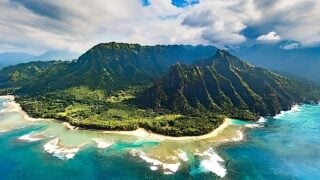
Sentiment on the islands has shifted. Tourism fatigue is no longer whispered. It shows up in legislation, community meetings, and everyday conversations. It is also visible in how worn out the islands themselves feel, from Tunnels Beach on Kauai to Hanauma Bay on Oahu.
One reader wrote, “Our state has relied almost exclusively on tourism as the foundation of our prosperity. This lack of diversification has left our economy vulnerable and our community exposed to risks that could be avoided with a more forward-thinking approach.” The same is true for Hawaii’s fragile and remote environment.
One frequent BOH commenter did not hold back: “Hawaii politicians are in the pockets of big tourism. They will take Hawaii down before ever promoting a diversified economy. “My sense is that there is an undercurrent of resentment toward tourism as the environment suffers irreparable damage, locals are crowded off the beaches, and tourists stay in illegal short-term rentals, causing rental prices to rise beyond the typical local family’s means.”
It is also likely that if Hawaii were not so dependent on tourism, there would be less resentment toward it.
Others pointed to food insecurity and supply chain vulnerability as deeper symptoms of a tourism-reliant structure: “We should be demanding policies that rebuild local agriculture and food security. Paradise shouldn’t mean dependence on a warehouse store.”
The problem is clear. The solution is much less so.
Diversification is easy to say but hard to deliver. Land is expensive. Labor is costly. Regulations are complex. Energy prices sit at the top in the nation. And the islands are far from major markets. Past efforts have not inspired confidence. Hawaii tried high-tech hubs on Kauai, Maui, and Oahu in the early 2000s, but the projects never gained traction due to high costs, limited infrastructure and other problems.
Still, ideas surface. Several readers pointed to Hawaii’s strategic location, suggesting it could serve as a Pacific trade or tech hub if energy, housing, and permitting systems were not so completely upside down.
Another shared, “Hawaii could take large-scale hydroponics lessons from the Netherlands to feed a large population with minimal land use.” Others mentioned aquaculture as another underdeveloped sector.
Some are skeptical about big industrial visions. “What value do we provide exactly?” asked one reader. “We’d be just as expensive if not more, and developers probably aren’t as competent or plentiful as their mainland counterparts.”
One commenter put it bluntly: “We make economic diversification very difficult through barriers and overregulation. Just try to start a business in this state. It’s almost impossible. We are a one-trick pony, and we are beating that horse to death.”
Is it too late for Hawaii to diversify?
It is not just about economics. For many readers, it is about quality of life and future choices. One wrote, “We made it difficult to diversify. Kept what could have been a huge industry out when we blocked Lingle’s ferry system. Hawaii could be providing so much more in food products to the world, but farmers struggle just to be recognized as viable.”
Another resident shared, “It actually feels like the state of Hawaii is being held hostage by the need to have tourists. How can that possibly promote a happy and fulfilling existence for the residents and the visitors?”
John W., a longtime Beat of Hawaii commenter, has made the point often: “The reason the state needs to diversify is to create a wider range of jobs for the people who live here and to create a livable situation for everyone. Trying to pump as many tourists here as cheaply as possible destroys the quality of life for everyone.”
And yet, not everyone sees diversification as realistic. Another asked, “Diversify to what? We always hear this comment without specifics. Labor costs are too high, the workforce isn’t trained, and we lack natural resources. No matter how much you want a diversified economy, economics isn’t going to allow it.”
What readers are telling us.
From hundreds of comments across dozens of articles, specific themes stand out again and again. Diversification is not a luxury. It is urgent. Most residents are not asking for tourism to disappear, only for it to become one piece of a more balanced economy. Trust in the government’s ability to lead this change remains thin, and locals say they want fewer platitudes and more real, scalable ideas.
One reader put the frustration into words that perfectly captured the tension: “Tourism is low-hanging fruit and oh so tempting, but in the long run, it gives everyone a bellyache when you have too much.”
The Beat of Hawaii community is wide-ranging, from the travel trade to visitors to kamaaina, former residents, and Hawaii insiders. Yet the message threading through their voices is aligned. Hawaii’s economic model may not be broken, but it is brittle. And when the next shock hits, the islands will either have more than one leg to stand on, or none at all.
Can Hawaii realistically diversify, or will tourism always rule? What industries do you think Hawaii should focus on, and what barriers need to be addressed? Share your thoughts below.
Get Breaking Hawaii Travel News



I am all for the Natives. Hawaiian homelands should be reserved for Hawaiian homes for the Native Hawaiians. So why is it that big-time developers can come in and get approval to build sky-scraper hotels with a 65-year lease on Hawaiian homeland? Someone obviously is going to benefit from that deal.
Hawaii must remember it is part of USA. USA has been successful because of specialization. You specialize in something and excel in that field. Hawaii is worried that their young won’t be able to live in Hawaii if they want nice job or nice income. But why they have to? It’s the same with any small town in mid-west, young people leave for having bigger aspirations. People imigrate all the time for something better or different. Hawaii has the benefit that many mainland people also dream of one day moving there. Hawaiians have to stop being closed minded, realize they are part of usa, at the same time a diversified economy happens organically as any communist/socialist country can show, governments can not push an industry on their citizens. The only way to diversify is remove regulations and wait to see what develops naturally by people. Also, catering to fewer rich tourists just competes with other exotic locations, so forget repeat visitors
Local anti tourist attitude, costs & especially taxes are making Hawaii uncompetitive with other travel destinations; especially for the young. Often it’s less expensive to fly to other international destinations. The hotels & restaurants are newer, nicer & less expensive. VHR’s aren’t artificially restricted. Housing for locals isn’t a problem because it isn’t impossible to build. The locals want & appreciate you visiting while being friendly. They are looking for investment & many are business friendly for foreign nationals. Without a serious attitude change by local Hawaiian voters, resulting in political change, Hawaii is in real trouble, especially if trying to diversify to other business because the rich political class controlling Hawaii for decades don’t want it. Everyone knows the days of locals living off the tourists is slowly coming to an end if something doesn’t change. Hopefully the young Hawaii voters stop being victims, realize this & vote for real change. Aloha!
looks like people of Hawaii need new leadership.
I’m sorry. But just look at the politicians who run the island. They coun’t operate a variety store let alone create diverse industries
Live in Oahu for the past few years/ travelled here for 40 years. It is tragic that the city, county and state governments did not promote other industries more aggressively.
Instead they wanted less visitors but higher spending per visitor. Well they now have less visitors but now spending is down.
Read here that Hawaii has no resources. Hawaii has a ton of natural resources and can advocate for high tech changes or labor from local, mainland or Asia sources to produce higher paying jobs for residents not to mention building more affordable housing for youth to keep them here.
Hawaii needs advocacy and it needs vision from leaders. There is no reason that Hawaii cannot build solar farms and geothermal plant to increase energy output at lower costs to businesses and residents which leads to more high tech.
Invest in high tech projects in robotics/AI to lead development at U-H and other companies/attract students to stay to build the future. Or lose the future to others.
The ideas you provided are good but much too generalized. That has been the common denominator styled response.
Another responded…
“Diversify to what? We always hear this comment without specifics. Labor costs are too high, the workforce isn’t trained, and we lack natural resources. No matter how much you want a diversified economy, economics isn’t going to allow it.”
Opposite ends but again no mention if anything other than the status quo is “possible. ” Presumably that was the intent?
Yeah, this is no place for high-level suggestions! We all know planning never starts from “generalized ideas” – but with a fully funded and detailed plan. Yes, high labor costs mean there are no options – proven since no country with high labor costs exists today. Untrained workers? Give up – game over ! And when I hear those crazies saying the good weather and quality of life and stability should be considered a natural resource too – hogwash. Sure, we could ask ourselves how a “generalized idea” might work, and perhaps contribute – but…nope.
Lots of sarcasm here – would love to hear instead your “generalized” ideas that haven’t already been well-funded and churned to death by experts for decades.
My idea is simple – hire/elect/get some leader willing to assemble a team of experts to work on generating potential solutions. This isn’t something “solved” in a public chat. Multiple Scandinavian countries did this, China effectively did this, and historically even the United States did this. There is an existing successful path to follow. We ignore history at our peril.
I lived in Hawaii back in the early 1970’s.
I have visited over 25 times since I left.
It is a great place to visit, but it has too many tourist. I have learned where to go to find empty beaches. I hurt when I hear from old friends that thier kids leave their home to find real jobs. I do hope some how this issue can be figured out. I am 75 years old,I will be making my last trip to the best place to vacation this coming Christmas.
I’ve seen Disney Cruise Lines come to Hilo. How about a “rain forest” Disney theme park, too? Of course Casinos are great for bringing in extra tax dollars. The Native Hawaiians could operate them on their land the same way the Native Americans do on the mainland. My husband’s tribe in Michigan’s sparsely populated Upper Peninsula has pulled in lots of revenue to benefit the tribe’s housing & community, plus offers employment at their casino, hotel, & cafe.
Yes it’s expensive, yes, it’s going to get more expensive. When the pricing gets to the point people don’t come.. Then the the prices will go down. Until then. What the market can bear! Capitalism in action. Unless you want to live in New York.
Best Regards
The word diversification gets used a lot, but diversification to what?
I find the workforce on the big island to be particularly frustrating to work with and believe me I have tried. A lot of people just don’t seem that interested in education or even wanting to work. The vibe towards hard work seems to be lacking in many.
Diversification means having an educated workforce who are willing to work hard to compete with the mainland, who probably can do the same thing faster and cheaper.
I understand the wanting to balance tourism, but until the government can come up with a viable plan to diversify to and the people are really committed to it, if it was me, I would not kill that golden goose called tourism so fast.
Hawaii is definitely going to have less crowding issues in the future. The high prices and tourist resentment has not gone unnoticed. Fiji and the Maldives is less expensive and more hospitable.
Los Angeles to Fiji is 13-15 hours of travel time. Maldives requires 24 hours of travel time (according to the ROME TO RIO website). Traveling to those places also requires a passport which less than half of Americans possess.
Hawaii is 5+ hours of travel time. It is highly unlikely that Fiji or Maldives will replace Hawaii as a favorite travel destination for most vacationers.
For me- Hawaii is 8.5-9 hours. I always buy first class so a 13-20 hour flight to the Maldives or Fiji isn’t a deterrent. Most people that have the resources to go to Hawaii have passports and the means to travel to other destinations that are more hospitable, well maintained, and less expensive. Hawaiians are fixing to get what they ask for- less tourists, less money, and less crowds. Also I just read on BOH that international travelers will now have to get a $250 visa to travel to Hawaii in addition to the $185 visa that the US charges. So $435 per person to visit Hawaii. So much for international tourists.
I am curious as to where you would be flying from?
Denver, for example, is about 9 hours from Hawaii. But flying from Denver to the Maldives is 28 hours and requires stopovers. Denver to Fiji is 20-22 hours and requires at least one stopover.
I doubt that anyone would go to those places just to avoid Hawaii. They are simply too far, and from my own experience, Fiji is not superior in any way. Maldives is not among the 100+ countries I’ve visited, so no comment.
Good news! International travelers from Europe, Australia, Canada, and Japan are exempt from the new visa fee you cited.
Aloha!
Hawaii sits atop a limitless energy reserve…geothermal..which could be supplying massive electrical power at below market rates Electrical power for power hungry data centers, aluminum refinement and hydrogen production.
And ..it’s barely below the surface geologically speaking with abundant fresh water available.
Hawaii has abundant sunshine and wind for power generation, yet those sources only supply a small percentage of power in the state.
Quote from AI: Breakdown by Source (2024 Data)
Solar: Generated about 9.5% of the state’s total electricity.
Wind: Generated about 6% of the state’s total electricity.
Other sources claim as high as 35%. The State goal is to be 100% renewable by 2045, and geothermal is mentioned as one possible source. I’m not sure why it should take this long?
Hawaii leaders often promise economic diversification, but tourism and the military remain the anchors of our economy. Together they generate nearly half of Hawaii’s jobs, and most other sectors simply support the workers tied to these two pillars. That is not weakness, it is interdependence. Geography makes large-scale alternatives unrealistic. We are isolated, land and energy costs are among the highest in the nation, and almost everything must be shipped in. Competing with larger markets is not feasible. The real challenge is that government overregulation and failed initiatives, from tech hubs to ferries, have wasted energy chasing dreams instead of managing the system we actually have. The smarter path is to accept that tourism and the military will always drive the economy, then manage them in ways that protect communities, support small businesses, and strengthen resilience with renewable energy, agriculture, and ocean science.
As citizens and federal taxpayers, American tourists have the right to visit Hawaii. The state benefits from our tax dollars. I must accept the tourists that come to my East Coast beach town. I can’t claim the public lands as my own and I am not rude to visitors even though some bring trash, noise, and bad behavior. I have been to Kauai many times and am always respectful. Unfortunately, the last time I visited Kauai I was treated rudely on multiple occasions simply for existing. It’s not a good experience having a cashier scowl at your friendly face at a checkout, having a local scowl at you when you are quietly enjoying a hike, having a local look on with enjoyment when their aggressive dogs threaten you on a public beach. It’s been 5 years since I last visited Kauai. So I guess the people of Kauai have achieved their goal. I can no longer freely visit Ke’e or the Napali Coast and really can’t bring myself to return to the place I once loved anyway. Aloha.
Even if Hawaii has incredibly favorable tax laws, which it doesn’t and never will, why would I open a business there? It’s too far away from major markets. 6 hours to the West Coast, at least 9 to East Asia, and a small local market on top of that. Any non tourism related business just makes no sense. Hawaii needs to accept it’s economic reality.
I have a question concerning tourist overusing infrastructure…
How come in FL we have 145 million tourists a year, and our beach parks, facilities, bathrooms all look great compared to HI?
It’s your govt and counties who aren’t keeping up, not tourists destroying your infrastructure.
Hawaii is an entitlement state where a majority, not all, of the native population show little interest in the work it would take to diversify the islands economy.
If the state of Hawaii wants to buy my timeshares from my family, we’ll quit traveling to Hawaii. One group of tourists re-routed to where our tourism dollars are still wanted. Just throwing that out there, with what Hawaii spends to discourage tourism, they could fund a timeshare buyback.
One other idea, these timeshares could be converted into residential housing. Many have full kitchens, washer and dryers, dishwashers…..
What magic do you use to “convert” something that is owned by someone else? This word “convert” is rampant these days and is a nonsense word in this context.
A government can attempt to encourage, forbid, fine, and otherwise curtail a certain use, but that only suppresses the use. Such actions do nothing to “convert” to another use.
Pat, I think you must have missed my first message, I talked about the state buying the timeshares, and the second post, implied that they could convert the timeshares they bought into residential housing. So if the state bought them, they could convey the ownership to unhoused locals.
Yes, see my follow-up below. Sorry I misunderstood.
No actually they cannot….
Out of those 7000 STR’s, how many are studio or 1 bedrooms w/ one parking stall, high maintenance fees, and no room for a washer or dryer?
Take a guess if the County of Maui assessed that question before blindly passing the STR law.
Also, who here has confidence that many of the Council members have the economic intelligence or background to realize what the ramifications of their vote are?
Ah, I see now that you probably meant “conversion” is an idea if the government purchases the timeshares. Yes, the government would be totally within its rights to convert whatever it owns.
IMO Hawaii diversity not a chance. Longboard Hawaiian beer bottled in Chicago Illinois. Real Hawaii Sugar in the Raw. Packaged and distributed out of New York, New York. Sorry Hawaii only relies on tourism. More jobs and more work mean less time at the beach for all the unemployed and those who qualify for state assistance.
I guess the TAT and state excise (sales) tax covers that.
I don’t think the fall of agriculture can totally be separated from tourism. Tourism provided jobs that were an alternative to the agricultural jobs. Tourism fueled the ability to raise the minimum wage above what agriculture could afford.
Hawaii needs to begin public service announcements encouraging locals to show aloha again by being friendly and welcoming to tourists. Tourism is our biggest source of revenue generation and that is Not going to change. The alternative is a state full of unemployed people.
The Maui mayor’s idiotic plan to convert short-term rentals to Local housing is unworkable and will drive down tax revenues. It has already driven down the value of the Minatoya List properties.
I recently ordered Maui Jim sunglasses on line. Although Maui Jim maintains presence on Maui, the operations center is in Peoria, Illinois. Good for Peoria! But how could an Hawaiian icon get away from Maui, Hawaii? Sure there are some logistical considerations. However, if any business could be cultivated and expanded on Maui, it is sunglass operations. If Hawaii can’t get this done, it can’t do anything but serve as a center for a government supported, helpless population.
I was disappointed to find out Kona Beer is made in Portland unless you buy it on the islands.
Anheuser-Busch bought Kona Brewing in 2020 and built a new brewery and canning facility in Kona. It is across the street from the Kona Brewing Restaurant, my favorite places to eat in Kona.
All of the keg beer was made there but we even got their canned, mainland beer here in Hawaii. I haven’t checked lately, so we may be getting locally canned beer now.
Maui Jim uses an outside provider to manufacture its sunglasses. It would not be cost-effective to build a manufacturing plant here in Maui. The are only a handful of companies in the whole world which manufacture glasses/sunglasses, and all of the brands use them. Luxottica, for example makes glasses for 21 name brands, and owns many of the brands now.
Maui Jim live here on Maui. I see him occasionally.
I visit 6 mo a year. So not native.
Please explain the dependence on imported food. There is abundant land for food crops. There are plenty of fish. What about hogs? I need it ex0lained to me.
Yep. And imported eggs on Kauai while chickens run amuck.
The big item lacking is the food processing industry. It’s simply gone from Hawaii. No packing plants, no butcher shops.
Something that no one wants to talk about is that it is very difficult to get illegal immigrants into Hawaii. That’s the only way the continental US can compete with foreign agriculture. The farms and food processing is all done by undocumented migrants who will work long hours under tough conditions for minimum wage and no benefits,
You can’t legislate a diverse economy. Countless countries have tried.
Either there is opportunity, or there isn’t. One day, through technological advances, new opportunities may appear on the islands., but it can’t be forced.
Mining is out, can’t even build a telescope there anymore without public outcry.
Agriculture is out, you did that already.
Manufacturing is out, have to import raw materials and export finished products. Too expensive.
Fishing might work, as long as you’re okay with the environmental damage that follows. You probably aren’t.
Tech is finicky, they’re here today gone tomorrow. Nothing to rely on.
That pretty much leaves tourism for now.
Such pessimism! All of the successful countries that I know did legislate a diverse economy. Look at China – arguably leading the world right now because of investments in education, research, & emerging industries. Or Scandinavia, where they consciously chose to emphasize robotics and biotech a few decades ago when they saw it as the future. Really, the failing countries are those which failed to legislate diversity. In the US, we failed to stop the greedy from outsourcing everything in the name of greater profit.
Are you comparing a State with 1 million residents with China, the (second) most populous country on earth? With a government that has substantially more power than any democratically elected leadership.
China had immense numbers of cheap labor to become the manufacturing hub of the world. It also suffered environmental challenges and Hawaii surely would not want to pay that price
I’m comparing places creating policies to diversify their economy with places which don’t. China created a plan and then used their resources – money, people, land, time, etc to change their position from the bottom to the top. The thing about a plan is that it is possible to choose trade-offs. A plan, right? They chose theirs. Scandinavia also provides full tuition to any resident to study anywhere in the world, and asks them to come back someday to contribute knowledge to compete in the world market. Part of their plan. Our plan? We just roll over, play dead, and make excuses.
I’m old and jaded. When young, I though Machiavelli was a psychopath. In college psych class, I learned that millions of people have little to no empathy – often well hidden. Working, I consistently saw that distorted facts and measured cruelty win – just as Machiavelli said. “Lost” sugar & pineapple business? Somebody saw them and took them. It didn’t “just happen”. When businesses diversify they either take existing business, move into growing areas, or invent new areas. That requires conscious effort, and, if we want to win, most likely aspects of Machiavellianism.
Solar and wind projects, desalination plants, legalize marijuana then grow it and sell it, and casinos. Both pot and casinos owned only by Hawaiians.
Great comment! I’ve often thought that utilities should be locally run by the community – it should be a requirement of being a state/city/county. I wish there were free on-line classes for anybody who wants such a job or to be involved with building/maintaining such infrastructure. Local expertise, local jobs, and self-sufficiency – what a concept!
Kauai did just that. When the other islands had the investor class buy out each islands’ utilities, Kauai said nope and went with a customer owned utility.
They have the lowest power rates in the state. They also have the highest renewable power rates of anywhere in the world.
Nothing is stopping the other islands from joining in other than political will.
Haha, that was a comical post
Casinos? Even more tourists coming to Hawaii.
Pot? Again, more tourists coming to get high… plus there is the issue of Federal laws – jeopardizing exports to other states.
In the end, these industries would be dominated by a small group of connected people and not the population at large.
Renewable energy- how many long-term jobs can it sustain?
Why not even try to think about whether an idea might be workable? Right now the big, big, money in casinos is for online gambling. I did consulting, and taught some of those guys specialized coding for their systems. Billions. Nothing magic. Or maybe remember that back in the old days the casinos were often floating casinos. How could such vacations be tailored to minimally impact the islands? And ownership is legally structured – and Hawaii is a state which can pass laws. Please stop discouraging those who are trying to accomplish good things for Hawaii.
As a resident of a state that legalized pot, trust me – you don’t want to legalize pot. The promised revenue stream never materializes as grey market transactions are used to avoid the tax burden.
The problems with rampant use *DO* materialize in the form of increased rates of crime and homelessness.
Yes, as you say, legalized pot competes with the local the guy down the street selling pot. Tough business. But I think the real goal should be outreach. Many of the pot smokers I’ve known were “surviving” and, in a functional society, would have benefited from improved social programs. Scandinavia physically co-located free heroin centers with social programs – seems like some variation of that idea might benefit society.
It’s presumptuous of us to think we know how to diversify Hawaii’s economy. Economists have already published several large studies on the topic.
The most prominent study, after several hundred pages of discussion and statistics, declared “Fishing” as the most viable industry to diversify Hawaii’s economy. The projected inflows from “Fishing” don’t even begin to touch the wealth currently received from tourism.
Hawaii is the most remote archipelago on the planet, making most endeavors other than tourism a no-go for those aspiring to set up shop here. Shipping, manufacturing manpower, etc. are simply cheaper and easier to achieve elsewhere.
Hawaii is very lucky it’s a lovely part of the world and can benefit from tourism. A reasonable amount of tourism should be appreciated and celebrated.
We complain our government is in bed with tourism. Who can blame them, really? It is the only logical and viable way to bring prosperity to the islands and its people.
I think you’re giving up a bit too easily. After a lifetime in business, I’ve learned that free market doesn’t really exist, barriers to entry are constructed to offset natural barriers to entry, supply chains are built and far from neutral, & pricing is determined by raw power. Economics is called the “dismal science” for a reason. For example, Hawaiians are the limited supply of local workers – yet they don’t get the big money. Customer control can win. Supply chain control can win. Negotiated pricing can win. Backroom deals are routine and well hidden by offshore payments. My life lesson? Supply and demand is used as an excuse by the clueless losers.
Commenting on my own comment :). You know, I’ve written strategy and positioning papers for at least six different CEO’s. A couple of those were Fortune 50’s. Re-reading my above comment…That comment would have immediately gotten their attention and the planning would start. Straw man papers, generating ideas, meetings, perhaps some consultants, more analysis of each idea, etc. But here, no upvotes and no response. My conclusion? Hawaii needs somebody who understands a comment like mine and has the political capital to implement things. This may be the one real problem.
…and Hawaii overall continues to “shoot themselves in the foot” regarding the cash cow of tourism/tourists…vistitors are down, spending is essentially flat, the government is corrupt and loyal returning tourists are questioning whether they even want to come back…
Hawaii was so nice for our honeymoon.
We had a great time.
We’ve been there a handful of times.
Currently, we’ll go another direction.
High cost plus controversy isnt worth it.
What a shame.
During the pandemic there was some discussion about diversifying HI’s economy. I recall some people suggesting high tech or aerospace – really? HI does not have a labor force that can support such industries and I dou,bt it ever will. What HI needs to do is tourism better specialty agriculture and special commercial fishing. I had a commercial fishing client based in New Zealand who provided fish to US restaurants. A fish caught there would be in a Chicago restaurant in two days.
Now why cant this happen in HI?
john g
It seems that the article is somewhat dismissive of other spending to make a point when it stated: “Other industries exist, from construction to military spending to government jobs, but none rival the size or sway of tourism.”. Federal government spending (that which has little to do with tourism), especially military and defense spending contribute as much is dollar terms as does tourism. While military spending is hiding in plain sight, tourism is making the most noise insofar as it is the most widespread. Economic diversification has been talked about forever, but much like a lot of things in government, it is easier to do nothing or take the low road of taxing the golden goose of tourism. Hawaii has already driven away billions of dollars in federal/military spending. It seems that they are intent on doing the same for the sake of their perceived “aina” ethos.
Eggs shouldn’t be $9 a dozen. That is insane. Agriculture seems the best option.
The only thing I can think of is lack of creativity? Raising chickens on the island and having eggs that can cost of fraction of $9/dozen sounds like a cash cow. Why isn’t there some entrepreneur that sees the market? A lot of items should be grown locally to sustain the island and it’s tourists. Same with power, a lot more solar and windmills should be able to reduce electric rates, but for some reason no one wants to take on the challenge. Claiming it’s the government’s problem is just an excuse.
Speaking of sugar, mass agriculture is a non-starter, but I wonder if Hawai’i could do a lot more to brand and sell its products as “luxury agriculture” to shift economic dependence on tourism. I think of Napa Valley, which obviously gets a lot of money from tourism, but that money is dwarfed by the money it makes selling wine worldwide. Not sure how practical that is for coffee (although Kona coffee already has a name for itself, and Ka’u Coffee is making strides), chocolate, pineapple, macadamia nuts, beef, etc.
Same Problem – Issue / Different Day
This discussion has been going on since I was in high school, 1971 -1973.
Typical of local government…….”No Worries” “Bum Bye” we’ll take care of it. SMH!!
Start by electing politicians who understand and promote business. Hawaii for years has been number 49 or 50 out of 50 for the worst state to do business due to regulations etc. until that attitude changes nothing ever will. Invent businesses to start be located in Hawaii, not penalize them for doing so.
Hawai’i could easily be the gateway from the US to AsiaPac region in shipping, finance, renewable energy and really become a high tech hub.
With remote work being so easy and prevalent now, start to capitalize on it.
I think I would have agreed with you a few years ago about being able to make Hawaii into the gateway between Asia and US, but the reality is that our location is offset in times from both (a confusing 2 or 3 hours from the west coast, 5 or 6 hours from the east coast, and a similarly inconvenient number of hours from Asia, etc.). Yeah, getting to the west coast or Japan doesn’t take 10+ hours, but it’s still effectively using up one day to travel due to the time shift. So, in general, there isn’t really any additional benefit to being situated in Hawaii in travel between the two regions.
But, the biggest thing against Hawaii being a high tech hub is that there is nowhere near uniquely strong enough local talent to lure companies here. California’s education system produces top talent that feeds right into tech companies. We do not have anything that is close to rivaling the UC+CSU system at the moment.
Does Hawaii have a local workforce to support high tech, finance etc? Or will these workers have to be imported and will drive up prices for housing etc for everyone else? Where will the current 1 million people work?
What is the unique advantage of Hawaii to position it as the natural gateway to Asia? Airlines needed HNL as a stopover point decades ago. Now thet simply fly non-stop from the West Coast. Being in the middle geographically doesn’t mean you are better connected.