
After our September article about Hawaii restaurant fees generated 100 reader comments, someone identifying as “Stay Home” sent us an extraordinary email. The anonymous sender accused us of publishing “anti-tipping [expletive]” filled with “fallacy, half-truths and whining,” then told us to “go [expletive] yourself” and “cook for yourself, clean for yourself. Stay home.”
We found no factual errors, and we don’t know who sent it or whether they have any connection to the restaurant industry; their identity was camouflaged. It was a shocking and remarkable response to questions about what people are being charged when they eat out in Hawaii.
Now new restaurant tipping data adds a surprising twist to the discussion. Despite payment screens suggesting gratuities as high as 25% and 30%, Hawaii customers who leave card or digital tips are averaging considerably less, and those averages have now edged down rather than up.
A regular commenter, Bill D., recently asked us a question that gets right to the heart of the issue: “How did 10% ever go to 18/20/25/30%?”
We’ve wondered about it too, especially after seeing payment screens suggest gratuities as high as 30% on purchases that involved little more than picking something up off a shelf.
What Hawaii customers actually leave.
Restaurant payment company Toast just released its second-quarter 2026 tipping figures. Across Hawaii’s full-service restaurants using its system, the average tip was 18.8%, compared with 19.1% nationally. Quick-service restaurants in Hawaii averaged 15.4%, compared with 15.8% nationally.
The results don’t show a sudden collapse in tipping generosity. Hawaii’s full-service average was a close 19.0% in the first quarter, while quick-service customers averaged 15.7%. Nationally, full-service tipping has remained remarkably stable, between 19.1% and 19.4% over the past two years.
Toast’s published data covers restaurants using its payment platform, and the reported tipping percentages reflect transactions where customers added a card or digital tip. Those averages exclude cash tips and transactions without tips. The company also doesn’t report on what suggested percentages appeared on customers’ screens.
Still, the data provides a good reality check. Suggested gratuities of 25% and 30% differ sharply from the amounts customers who tip actually leave, and a higher number on a screen doesn’t mean people have accepted it as the new standard.
We’ve encountered the 25% and 30% requests ourselves.
In our 2023 investigation of escalating Hawaii tipping, Jeff described walking into a Kauai coffee shop, taking a bag of whole-bean coffee off the shelf and bringing it to the cashier. The Square payment screen offered tipping options reaching 25%. There was no table service, no drink preparation, and no additional assistance with the purchase.
Rob had a similar experience to what we described in our 2024 follow-up about Hawaii tipping. He purchased a bag of coffee beans and an espresso, then encountered a suggested tip reaching 30% on the combined transaction. The percentage applied to the packaged coffee and the drink someone had prepared.
We’re happy to recognize good service, and we’ve tipped generously when we’ve received it. But seeing the same tipping percentages for packaged merchandise and table service doesn’t make much sense to us. Nor is it always clear who receives the money when customers add a tip to a retail purchase.
It’s worth separating the employee handing over the coffee from the payment system asking for 30%. Businesses generally configure the suggested percentages, and the person serving the customer may have no say in those settings. Yet that employee stands across the counter as the screen turns around, just as the customer is asked to decide whether to leave a substantial gratuity.
Digital payment systems have made it easy to request tips on transactions where customers previously might have encountered only a tip jar, if anything at all. The percentages are presented as choices, but choosing a smaller amount or declining altogether can feel awkward when someone is waiting for you to finish paying and what you are about to eat or drink is literally on the line.
Hawaii’s wage rules aren’t what many visitors believe.
The regular commenter whose question prompted this article also raised an important point: different states and countries have different rules for tipped employees. A visitor arriving from a state where servers can receive a cash wage of just $2.13 an hour may have a very different understanding of tipping from someone accustomed to the wage structure in California, Washington, or Hawaii.
Hawaii’s minimum wage increased to $16 an hour on January 1, 2026. Under the state’s tip-credit rules, eligible tipped employees must receive at least $14.75 directly from their employer, and the full $1.25 credit is permitted only when combined wages and tips reach at least $23 an hour. Other states have substantially different requirements, including some that require employers to pay the full minimum wage before tips.
That doesn’t make $16 an hour a comfortable living in Hawaii. Restaurant employees face the same extraordinary housing, food, and transportation costs as everyone else, and gratuities can be essential to their income. A skilled server working a busy restaurant may earn considerably more through tips, while someone working limited hours at a quieter establishment may have a very different financial experience.
The wage difference also doesn’t mean visitors should automatically tip less in Hawaii. Customers bring their own expectations and customs, and some are perfectly comfortable leaving 20% or more for attentive service. But the amount on a payment screen says nothing about the employee’s actual compensation or whether the tip is shared with others.
Hawaii restaurant businesses also have considerable labor expenses beyond hourly wages. Rising operating costs are a real problem, even when customers don’t agree with how those costs show up on their checks.
Where tipping percentages go from here.
The customary American restaurant tip has changed considerably over generations. Ten percent was once familiar, 15% became a widely accepted benchmark years ago, and 18% to 20% eventually became common for table service. Digital payment systems have added the ability to present much higher suggestions across a wide range of transactions.
Those percentages also apply to bills that have already become more expensive, sometimes with kitchen surcharges and other fees added. On a $200 restaurant check, a 15% tip is $30, while 20% is $40, 25% is $50, and 30% is $60. That’s a substantial difference before taxes or other restaurant charges.
For visitors eating out regularly during a Hawaii vacation, the amounts can add up quickly. The question isn’t necessarily whether someone should tip generously for excellent service, but whether the highest suggested amounts should become expectations regardless of the transaction or the service received.
That earlier discussion drew strong reactions from readers. Longtime commenter Jack wrote that “the tipping and billing surcharges annihilate interest,” while others defended additional compensation for restaurant employees and questioned why menus didn’t include those costs.
Toast’s latest figures add another perspective to the debate. Among customers who leave electronic tips, Hawaii’s averages remain much closer to the familiar 15% to 20% range than to the highest suggestions we’ve encountered. The data doesn’t tell us whether more people are declining to tip altogether, whether particular restaurants see different behavior, or why customers choose a certain amount.
The anonymous email told us to stay home rather than question tipping practices, but comments on our previous article show how many different opinions there are about what customers should reasonably be expected to pay.
When a Hawaii restaurant or coffee shop suggests a 25% or 30% tip, what do you actually leave? And do those requests change where you eat or how often you dine out?
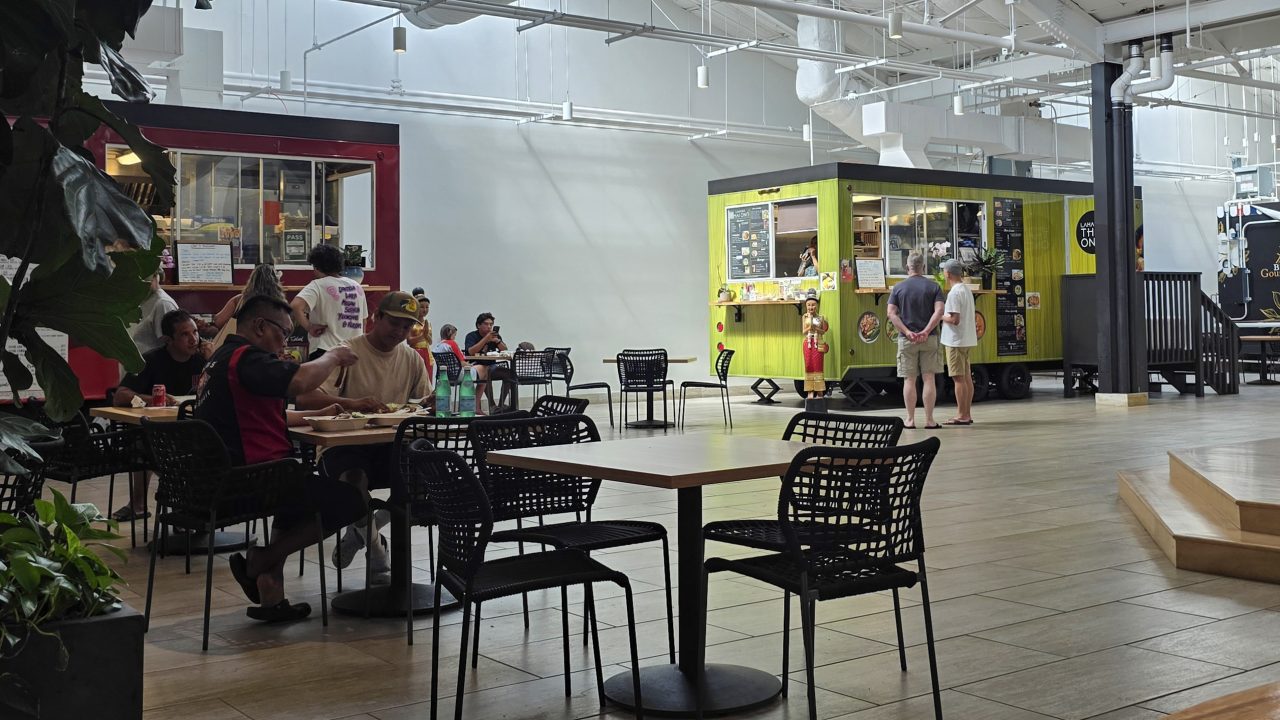
Photo Credit: © Beat of Hawaii at Lahaina Cannery Mall, Maui.
By Rob and Jeff, Beat of Hawaii.
Some of Hawaii’s most meaningful parts are the ones visitors walk right past without knowing they are there. We’ve spent nearly 20 years finding them firsthand for BOH as full-time Hawaii residents reporting on travel, culture, and island life, and telling you what they mean for your trip. Join us →
Get Breaking Hawaii Travel News