
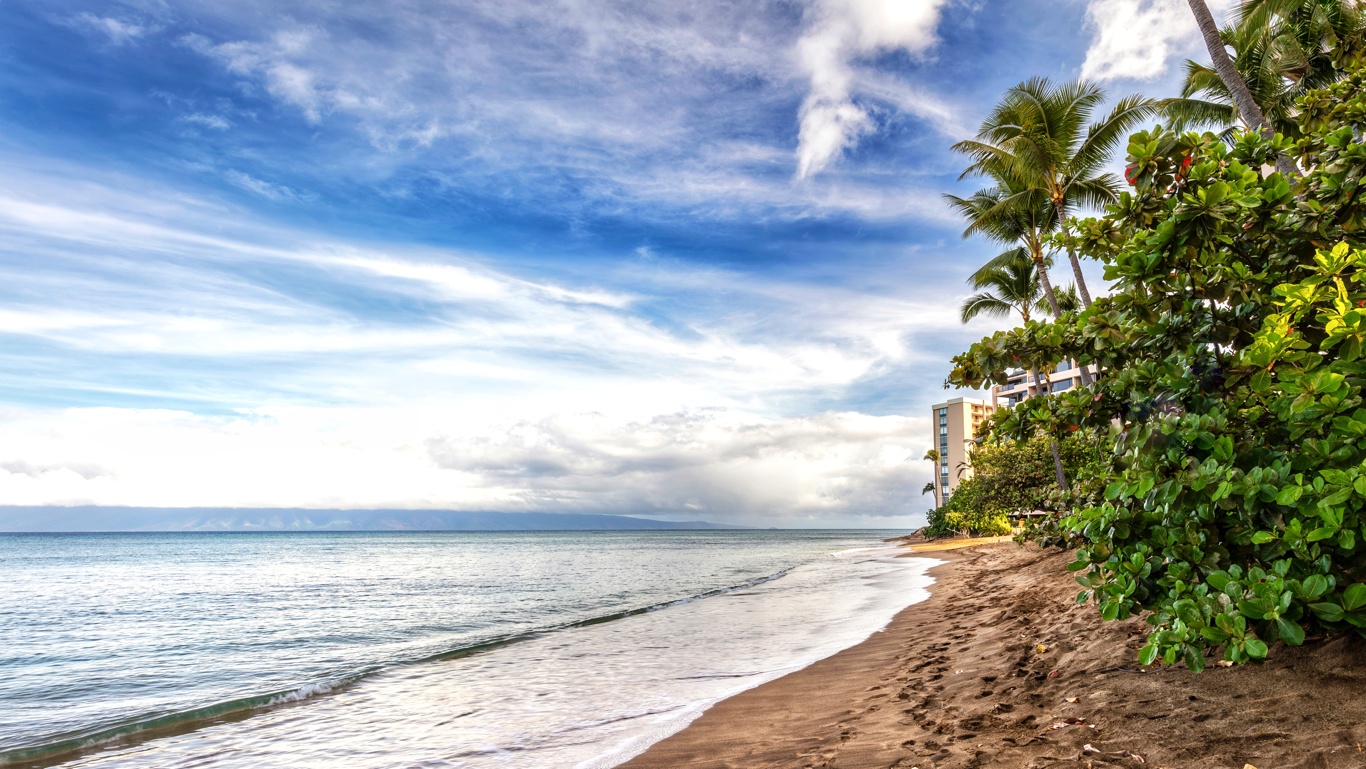
Three related bills moving through the legislature could reshape the assumption that Hawaii beaches will always be there. Lawmakers are considering reopening the door to prevent shoreline hardening (seawalls) placed on private property in erosion hotspots from Maui to Oahu. The state’s coastal administrator says doing that on sandy beaches can result in permanent loss.
Property owners say the alternative is watching buildings collapse into the ocean. Visitors were not in the hearing rooms, but the beaches they fly thousands of miles to see definitely are. Two House measures, HB 1846 and HB 2205, were heard together this week, while a companion proposal is already advancing in the Senate. The language sounds procedural while the outcome is anything but.
The shift from ban to regulated hardening.
For years, Hawaii has operated under a general prohibition on new private shoreline hardening on sandy beaches. Seawalls, revetments, and groins have largely been off the table for oceanfront condos and homes unless they qualified under previous exemptions. The policy was clear, albeit not always popular. Once you armor a beach, you usually sacrifice sand in front of it over time because the ocean keeps moving while the wall does not.
HB 1846 would establish regional shoreline mitigation districts. Those are intended to streamline review and permitting for protective projects in erosion zones. HB 2205 would replace the broad ban with a policy allowing limited, regulated shoreline hardening under defined conditions. Both were deferred in committee, but leadership signaled they could return this session quickly after revisions. A companion bill in the Senate keeps the issue alive regardless of what happens in the House.
Supporters argue the current framework is simply stuck and leaves property owners in limbo while erosion accelerates. Opponents argue that once hardening is normalized, even under regulation, it becomes difficult to stop its spread. That is the fault line.
Kahana Beach on Maui is the test case.
If you have walked the shoreline in Kahana on Maui’s west side anytime in the past decade, you have seen the future of this debate. Nine condominium associations and one residential parcel have been battling severe erosion there for twenty years. The sand has become narrow, the dunes have collapsed, and emergency sandbags have been stacked along the shoreline to buy time. Now even those sandbags are deteriorating. They are not attractive, nor are they intended to be permanent. They are also what stands between buildings and the open ocean.
The property owners formed a steering committee in 2017, hired coastal engineers, and published a draft environmental impact statement in 2021 proposing sand nourishment paired with a groin field to hold the sand in place. That plan stalled when Maui County declined to accept liability for owning the proposed groins. Permits for temporary measures have since expired. The stopgap protections are wearing out while the shoreline simply continues to retreat.
Visitors who stay nearby or walk that stretch of beach are already seeing unmanaged erosion that will not stop. The shoreline access has become awkward. Sand has given way to exposed rock, debris, and bags. The view is still Maui, but there’s no doubt the experience is changing.
We have covered erosion tension before in Kahana and along other vulnerable Hawaii coastlines, and readers split into familiar camps. Some argue that managed retreat is the only sustainable answer. Others point out that retreat sounds simple until it is your building, your retirement, and your insurance coverage that’s at risk. What rarely gets figured out is what happens to the public beach based on either outcome.
The North Shore warning.
On Oahu’s North Shore, testimony came from a homeowner who said his family has lost nearly 40 feet of sand dune over the past decade. His home now sits only feet from the ocean. Even if funding and permits materialized immediately, he said, the house might not survive long enough to finish construction. He has already spent years navigating the process. He estimates another decade before any permanent solution could be built.
Michael Cain, administrator of the Office of Conservation and Coastal Lands, testified against both House bills. When you harden sandy beaches, he told lawmakers, you risk losing them permanently. Hawaii has already lost too many. If we harden the North Shore, he said, we lose the North Shore.
That position is grounded in long-established coastal science. When a wall holds the shoreline in place, wave energy often strips sand in front of it over time. The public beach narrows. In some cases, it disappears at high tide.
Waikiki is the example everyone knows.
Cain pointed to Waikiki as the cautionary example. Waikiki was built directly on its beach. Over decades, erosion and shoreline modification left it dependent on continuous, expensive sand nourishment to maintain a recreational shoreline. The beach that millions photograph each year is managed and replenished. Without that effort, significant sections would not resemble what visitors expect.
We have written before about Waikiki’s nourishment cycle and the long-term maintenance obligation that comes with building too close to the ocean. Once you commit to stabilization, you often commit to paying for it indefinitely. That may be workable in the state’s primary visitor hub. It is far less certain in smaller communities with fewer resources.
The hearing also exposed an uncomfortable distinction. The state has approved hardening to protect public highways and infrastructure, including projects that officials acknowledge can cause nearby beach loss. Lawmakers pressed Cain on that point. Why can the state harden shorelines for roads while private property owners face a near categorical ban?
Cain acknowledged the tension and argued that the state acts in a broader public interest. Supporters of the bills counter that private owners in places like Kahana are already spending heavily to manage erosion affecting not just their buildings but the public shoreline in front of them. They argue that the current system leaves them bearing the risk the state avoids in its own projects.
For visitors, the implications are straightforward even if the policy is not.
If hardening expands, more shorelines may become fixed in place, leading to long-term narrowing or loss of the sandy beach in front of them. If hardening remains restricted, more oceanfront structures may face demolition, emergency measures, or prolonged legal fights that leave shorelines in limbo.
Beaches in Hawaii are not static backdrops. Some are nourished. Some are retreating. Some are held in place temporarily while larger decisions stall. The idea that every beach will always look the same is not guaranteed.
The House bills were deferred, not dismissed. Lawmakers signaled revisions are coming. The Senate companion measure keeps the issue in the spotlight. Sea level rise projections and intensifying winter surf seasons are not trending in a direction that eases the conflict.
At its core, this is a choice about which loss the state is willing to formalize. Is it the loss of private structures built too close to a shifting shoreline, or is it the gradual loss of public sandy beaches in front of hardened coastlines?
Visitors may not vote on that choice, but they will experience its outcome. If the beach in front of your favorite Hawaii stay was shrinking, would you accept a seawall to save the building if it meant the sand could eventually vanish, or would you choose retreat and risk losing the structure instead?
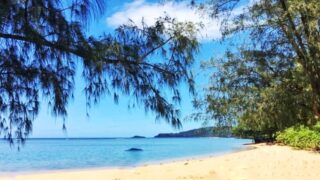
Lead Photo: Kahana Beach on West Maui.
Get Breaking Hawaii Travel News

The Hawaiian Islands are sinking(fact) and therefore sea level only appears to be rising.
I met a traveller from an antique land
Who said: Two vast and trunkless legs of stone
Stand in the desart.[d] Near them, on the sand,
Half sunk, a shattered visage lies, whose frown,
And wrinkled lip, and sneer of cold command,
Tell that its sculptor well those passions read
Which yet survive, stamped on these lifeless things,
The hand that mocked them and the heart that fed:
And on the pedestal these words appear:
“My name is Ozymandias, King of Kings:
Look on my works, ye Mighty, and despair!”
No thing beside remains. Round the decay
Of that colossal wreck, boundless and bare
The lone and level sands stretch far away.
— Percy Shelley,
The Columbia River that is the border between Washington State and Oregon, has a shipping lane from the mouth of the Columbia eastward. Yearlong dredging of the shifting sands is required to keep the shipping lane open.
Could Hawaii use this example to replenish beaches in need of sand? There is a seemingly endless supply of sand at the bottom of the Pacific Ocean.
Dredge it up.
The county in the past has put large lava boulders in front of certain areas in Maui where the highway was endangered of being undermined by waves – looks good and non invasive – plus is works . For what ever reason they are against this now and would prefer that the building’s just collapse into the ocean – utter nonsense.
Let the owners of the units protect their property – they are the ones paying for it.
In the end wouldn’t it be cheaper and easier just to have the county/state buy out the buildings and tear them down leaving room for the natural development of the beach to continue. The cost of mitigating these conditions in any other fashion is enormous and continuing into perpetuity.
There needs to be an engineering solution and also agreement to bring in sand to maintain the beach area . Doing nothing is a bad choice ! If beach is gone there won’t be anything to walk along plus presenting danger/ damage to buildings . Doesn’t seem like a question of preservation of beach if zero solutions are enacted ?!
Looks like we have Pele destroying to build more land and Namaka taking back what was hers. And man gets in the way because “we” know better.
We had a timeshare at the Sands of Kahana for about 10 years. Each year we returned, the beach got smaller until waves were breaking right on the seawall. I sold it as soon as I understood what was happening. Now, I see it happening in Kaanapali. Nothing seems to last forever.
As shorelines disappear it enables the state to dictate what beaches tourists are allowed to go and charge accordingly. As condo’s become unsafe it let’s the state determine where people reside and control population. Seawalls stop this process and reverses this process. IMO the state of Hawaii really wants to control where and how tourists are distributed. Funnel tourists to the places where reservations, fee’s required and let the other options erode away. Planned for making money.
Time to condemn and reclaim.
Any place else in the world it is easy to replenish sand with dredges or by moving sand with equipment. Hawaii can’t even move sand? Elections have consequences.
I feel like homeowner’s assumed the risk when purchasing oceanfront homes. While I sympathize with their plight, I think protecting the beaches from erosion is more important.
Aloha,
I hate to be the life of the party, but what happens when the shoreline condo buildings fall into the ocean? Asking for a friend…
Mahalo
In Southern California people with cliff top homes have built sea walls to protect their homes from falling into the ocean. The sea walls only protect the base of the cliffs and, yes, the beachs are disappearing there too, but now the sand stone bluffs are collapsing from the top with heavy rain. All this is just a long way of saying, in the end nature will win out, so no matter what Hawaii decides the end result is already pre-ordained, just look to the northwest islands of the state if you want proof.
After traveling from Boston to Maui yearly for 38 years we’ve certainly seen the tremendous changes with erosion and loss of beach. So darn sad ….With the very high cost of hotels, taxes and food now our next time there will probably be our last….Thanks for the beautiful culture and memories Maui .
I understand the dilemma but anytime sand is involved these things can happen. These buildings shouldn’t take the beaches away from everyone. We all want to enjoy the beaches. Even if they do build walls, eventually these will be taken out also. Mother nature will always win in the long run. It is a shame.
Nobody has a good solution as far as I can tell. Hardening risks losing beaches. Doing nothing risks losing the condos.
I don’t think visitors understand how fragile some of these beaches already are. You walk them at one time and they look normal. Then you come back and half of it has disappeared. Not sure any wall will fix that long term.
We stayed in Kahana recently and the sandbags were already falling apart. It looked temporary but permanent at the same time.
This feels like protecting condos first and public space second. I understand homeowners are scared, but once you harden the shoreline, the sand usually loses anyway. Visitors aren’t in the discussion, but we’re the ones who pay to show up expecting a beach.
A fundamental cause of beach loss is the change of erosion deposits from high above. Beaches are made by natural augmentation from aggregate that fall from higher elevation to the coastline. Highways and irrigation improvements alter the deposits. The article does not present augmentation as a solution. Yet, augmentation is a good choice. Plans for augmentation at Kahana and Kaanapali have been killed by the State. Thus, beach erosion and augmentation is a political problem, not an inherent problem.
I’ve walked that stretch in Kahana and it’s already barely a beach at high tide. If the choice is between losing condos or losing the sand entirely, that’s a tough choice. Also visitors don’t fly 2,500 miles to look at a seawall.
Not really a tough choice – let the $180 million dollar complex fall in the water that was built over 40 years ago and then charge the unit holders to get it out of the water or build a hardened sea wall and lose a beach.
If you are a renter, get a unit where ever you like as it’s all price driven if you want a beach.