
A family of four on a typical one-week Hawaii vacation is now spending nearly $1,000 more on the ground than the same family spent just last summer. Daily visitor spending jumped from about $259 per person to nearly $293, up 13.2% in a single year. That’s the kind of increase hotels, restaurants, and activity operators would typically be celebrating.
A jump like that should show up in fuller hotels, livelier restaurants, and activities selling out well in advance. So spending is up. The businesses providing the vacation, however, aren’t describing it that way. The question is what is going on.
The spending numbers suggest a very different summer in Hawaii.
The latest figures from the Hawaii Department of Business, Economic Development and Tourism show visitors spending substantially more in the past year. We looked at the other half of this change in Your Hawaii Trip Just Lost Another Day. What Did You Give Up? This time, we’re not asking why visitors are staying fewer days. We’re asking what happened to the additional money they reportedly spend during each vacation day.
The businesses actually providing the vacation don’t recognize the increase.
Normally, a 13.2% jump in daily visitor spending would suggest a remarkably strong month in Hawaii travel. Hotel rooms would be commanding higher rates, restaurants would be serving more customers, and visitors would be filling activities. But that isn’t what much of the industry says is happening.
Where the additional spend may actually be landing.
Over the past year, we have repeatedly documented Hawaii vacation costs appearing in places that do not necessarily add another experience to the trip.
We have reported on a new $130 beach club fee, rising parking costs in Kona, new visitor fees at the popular ‘Opaeka‘a Falls, and rental car taxes and fees that can add substantially to the advertised rate. Readers have also described resort fees, higher food prices, reservation charges, taxes, and other costs that can be difficult to avoid once a Hawaii vacation is underway.
Could those charges account for part of the additional $34 a day per person? Are higher room rates, lodging taxes, resort fees, parking, rental cars, gasoline, food prices, service charges, attraction fees, and reservation costs consuming more of the daily budget than most visitors even realize?
There is another possibility. Some vacation costs do not change much whether a trip lasts seven days or eight. When those costs are spread across fewer days, the daily spending figure can rise even if the visitor is not spending much more overall.
Those are questions, not conclusions. The state’s preliminary figures show that visitors spent more each day, and nothing more.
Spending more is not the same as getting more.
A visitor who pays another $20 for parking, $12 more for lunch, and a few extra bucks in taxes has spent considerably more that day without adding anything to the vacation. That does not mean it’s happening statewide, but it shows how daily spending can rise without the vacation getting any bigger.
The cost of the whole trip is changing the Hawaii vacation itself.
Visitors facing higher Hawaii vacation prices may be compensating simply by removing days from the trip. That could help explain why stays are getting shorter, but it still does not reveal where the money is going.
A similar vacation budget spread across one less day would produce a higher daily average without representing a comparable increase in total spending. That may explain part of the 13.2% jump. It still leaves this question unanswered: which costs are taking a larger share, and who is receiving the money?
We have heard from many readers who are already changing how they travel, including cooking more meals, reducing restaurant visits, skipping activities, avoiding rental cars when possible, and choosing accommodations without added parking or resort fees. Those choices helped shape The Hawaii Vacation : Refuse To Give Up. Now we would like to understand the other side of that calculation and what happens to the money visitors are still spending.
On your most recent Hawaii trip, where did you notice the biggest price increases? Did you feel you experienced more for the extra money, or were you mostly paying more for the same vacation?
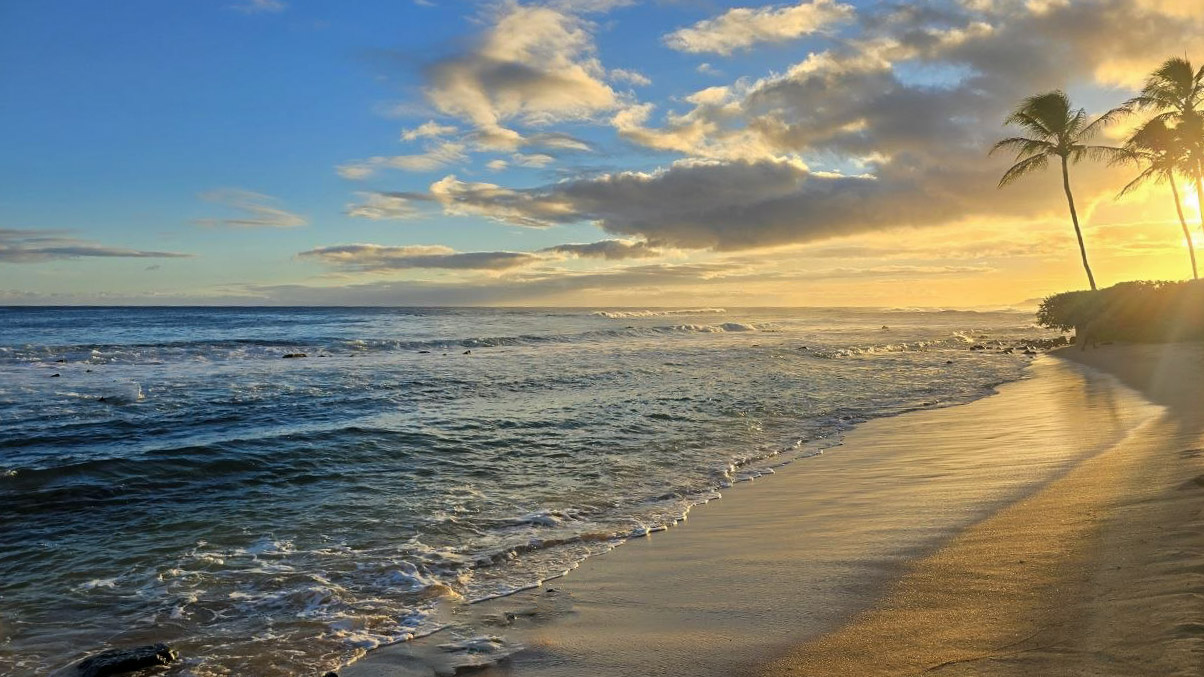
Lead Photo Credit: © Beat of Hawaii at Poipu Beach, Kauai.
By Rob and Jeff, Beat of Hawaii.
Some of the most meaningful parts of Hawaii are the ones visitors walk right past without knowing they are there. We’ve spent nearly 20 years finding them firsthand for BOH as full-time Hawaii residents reporting on travel, culture, and island life, and telling you what they mean for your trip. Join us →
Get Breaking Hawaii Travel News


Been visiting several times over the past 40 years. Over that period price increases have been mostly incremental. The last 5 years they’ve accelerated. Our $3k/wk trip is now $5k/wk. Same experience, now more
You list has it covered pretty well.
“Are higher room rates, lodging taxes, resort fees, parking, rental cars, gasoline, food prices, service charges, attraction fees, and reservation costs consuming more of the daily budget than most visitors even realize?”
Fees, fees and more fees. Everyone has their hand out. Dining out has gone Way up. Not on your list are drinks. They’re insane, hovering around $20 per drink in many places.
And:
The Transient Accommodations Tax (TAT) in Hawaii increased by 0.75% effective January 1, 2026, raising the statewide rate from 10.25% to 11%. This change, known as the “Green Fee” (Act 96), was implemented to generate approximately $100 million annually for climate resilience, environmental protection, and hazard mitigation.
1. Environmental Stewardship
2. Climate and Hazard Resilience
3. Sustainable Tourism
Funds here aim to mitigate the impacts of tourism on local communities and improve the visitor experience.
Key Projects: Visitor education, stewardship programs, and destination management.
Recent Allocations: While initially focused on community stewardship, the Legislature recently added controversial items such as a $7.1 million Food and Product Innovation Network, a $350,000 sports and signature events study, and even a $250,000 cattle slaughterhouse, sparking debate about the definition of “sustainable tourism.”
My first trip to Kauai was in 1960 as an eleven year old boy. My parents built one of the first homes at Princeville during a time everybody was going to Maui. Princeville offered free golf for life to anyone who bought a lot and built a home. They took them up on it and played free for the three months they spent here every year until they became too old. During my honeymoon my wife and I hiked the Kalalau trail into the first waterfall. We pulled up to the trailhead with no cars in lot, hiked all the way in and out without seeing one person. We got permission to hike a half mile through a cane field into Polihale beach. The only road ended at the cane field. There were three hotels on the entire island. We wandered the beach at Hyaena and picked up enough pukka (Ni’ihau) shells in less than an hour to make us each a necklace. It saddens me to see Kauai today.
Please explain. Does this 13.5 percent increase involve included infants, kids under 2 that may admit for free. I think some hotels waive or don’t charge for children under 12. In all these cases are they still counted in the average spending numbers of all visitors. If they are the spending for the average adult would be way higher. Is Hawaii sugar coating the numbers or are adults really spending twice as much per day? Or not many children visit Hawaii anymore. Are all these numbers just calculated from trackable debit or credit card purchases? IMO it’s pretty scary how Hawaii knows and keeps track of all visitors bank or credit card authorizations and the frequency and dollar amounts. It must track all cards issued out of the state of Hawaii for them to generate these figures.
do thes
Where is that 12$ lunch?
We were shocked at how much it costs to park around the big island. 10 min. stop at Rainbow Falls….$35. Hapuna Beach $30. The list goes on.
Good afternoon! I definitely agree inflation on costs and small hidden fees like higher taxes are becoming more common on our vacations and at times a tad shocking, but I can say that about a trip to the grocery store at home, holy cow when did a bottle of coffee creamer become $8! That said this year we actually added a day to our annual trip to Hawaii, 13 instead of 12, that barely blipped the total cost. Yeah to using hotel loyalty discounts booked a full year in advance. We also used airline points on 75% of our airfare (booked over 6 months in advance, before fuel costs skyrocketed, yikes) we used that savings and splurged on an oceanfront room upgrade. Our trip will look more expensive on paper but out of pocket is staying the same. I am thinking it’s time to increase the tips to housekeeping staff, if costs are going up for visitors they must be explosive for residents!
Food costs were much higher this year. I spent 7 nights on the Big Island. Yes gas was higher, but I live in California so I expected that, (I made sure I got a compact car). I couldn’t believe what a burger meal costs in Kona. I was lucky to have breakfast, resort and parking fees included in my Costco Travel bundle at my hotel, so I did splurge on some really nice dinners. I skipped lunch and hotel drinks. We always buy stuff to make our own cocktails at the grocery stores, but even that was up considerably. The biggest ripoff was the Luau at the Hilton W, the show was ok, but I could have gotten the same quality “Hawaiian” food at a local dive or food truck.
We just stayed one day less than usual for the first time. We simply couldn’t justify another night. We also ate out less and did fewer activities. Still had a great time overall, and this was the only way we could make it work.
We skipped restaurants more than ever and bought groceries instead. I imagine we’re not the only family doing that.
I’ve been going to Hawaii my entire life for vacation and lived there for three yrs 06-09. I returned for my 50th and stayed 2 wks three islands. It was a vacation dreams are made of. Hawaii has always been my favorite place. Now 10 yrs later now retired I find it impossible to afford to go to Hawaii again. It makes me so sad. I love the food, culture, Aloha. I pray I’m able to visit one more time before I pass
I concur that food was our biggest surprise in terms of higher cost. We expected restaurants to be expensive, but even grabbing the most basic casual lunch seemed to cost far more than we remembered from a couple of years ago. Packing food for outings became our go to. It’s okay, but we all used to enjoy going out to lunch more often than we did this time. And that isn’t good news for restaurants either.
We definitely spent more this year in June, but I don’t think we actually did more. By the end of the trip we were saying no to things we wouldn’t have thought twice about just a year or two ago. This is more than inflation to me.
I just returned from my yearly trip, this time to Kona. Dinners out were more expensive as was any food. Rental cars were more expensive. So actually everything was more expensive. Of course airfare was pricey. Gas was comparable to California. I love Hawaii and go every year because I have a timeshare and hope I can continue to go.
Just got back from Kauai. For me it was all food costs, whether it was the higher prices at the grocery stores or increases at the restaurants. Just paid over $30 for our favorite oxtail soup. Especially in Poipu where the grocery stores are small and limited.
Hard to control resort fees and parking cost is a real issue in places like kona and many others.
Being unable to know the real daily room cost at time of reservation is also a difficulty for most people with family on a budget.
The State should be able to mediate with hotels statewide the resorts fees in order to avoid complication in the near term.
It is interesting that the officials in Hawaii don’t seem to understand that these additional fees on fees will come back and bite them in the long term.
All of the above. The “extra” costs of a vacation in Hawaii seem likely to be just the “normal” cost of living increase everyone is seeing. Higher energy cost affects everything and it takes energy to get anything to Hawaii. The figures you quote seem just about right for normal cost of living increases.