
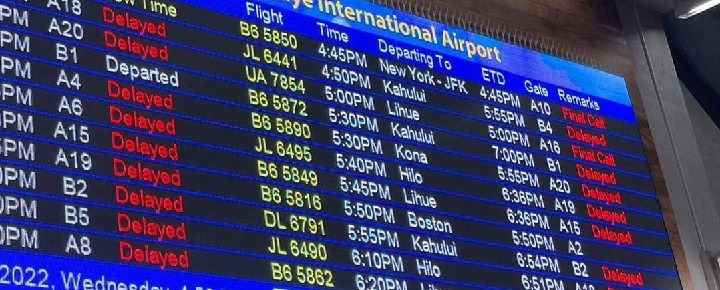
Hawaiian Airlines just expanded its winter schedule with more flights to Los Angeles, Seattle, and Sydney, plus a new Dreamliner route to Tokyo. On the surface, it appears to be welcome news. However, behind the seasonal uptick lies something much larger and more permanent.
This isn’t just about holiday demand. It’s about how Hawaiian is being reshaped. Alaska Airlines stated early in the merger process that it would bring “route discipline” to Hawaiian, which, regardless of one’s opinion, was necessary to make Hawaiian work after the company narrowly avoided bankruptcy.
We’re now watching that process unfold. The winter schedule reflects a company optimizing for cost and efficiency, more so than reach or identity. It’s a sign of where things are necessarily headed.
Seasonal boost, strategic shift: What’s really being added.
The most significant additions this winter are domestic. Hawaiian will operate a fifth daily A321neo narrow-body flight between Los Angeles and Honolulu during two brief travel windows: Thanksgiving, from November 21 to December 1, and the end-of-year holidays, between December 19 and January 6. That’s a predictable response to holiday season peaks, not unlike those of prior years.
Seattle to Honolulu gets a widebody swap on one of its daily flights, bringing Hawaiian’s total to four per day through mid-April.
Alaska continues to operate two additional flights on the same route, bringing the combined daily service between the carriers to a total of six. It’s a lot of capacity on a route that now functions as a joint stronghold.
Meanwhile, Hawaiian will temporarily boost service between Honolulu and Sydney to daily from December 18 through January 31. That aligns with Australia’s summer school break and is also a textbook Hawaiian seasonal play, but one with limited importance for most Hawaii visitors.
And finally, there’s the new Seattle to Tokyo Narita route on the 787-9 Dreamliner, running from early January through mid-April. It features the latest lie-flat Leihoku Suites and upgraded in-flight amenities. But just like before, this Dreamliner launch bypasses Hawaii entirely.
This isn’t expansion. It’s optimization.
These additions might be spun as growth, but they’re not. Each one is tied to a fixed travel season. None reflects long-term route development. What they reflect instead is allocation: moving equipment and flight time to optimize short-term revenue. That’s exactly what Alaska promised investors it would do.
Hawaiian’s past, until 2018, was built exclusively on widebody service. The Hawaii bellwether connected Hawaii to major cities with aircraft capable of delivering a high-quality product.
Alaska’s present leans hard on the A321neo, which Hawaiian started flying just seven years ago. Beat of Hawaii editors flew the plane when it was new, and it was clear then that it would become a game-changer, enabling them to reach more neighbor islands and smaller markets on the West Coast. For those of us who flew their wide-body planes for decades, it was a shocker to have a tight, single-aisle plane across the Pacific.
The A321neo, like the Alaska 737 fleet, provides a lower-cost, narrow-body jet that’s easier to fill, cheaper to operate, and is now being fine-tuned to operate under Alaska’s capable and optimized scheduling model.
Unless a route can justify the expense of a widebody, it won’t get one. That’s true across all the airlines serving Hawaii. Alaska’s purchase of Hawaiian didn’t change that. If anything, it clarified it further.
Seattle rises while Hawaii watches.
The decision to operate Dreamliners from Seattle to Tokyo, rather than from Honolulu, speaks volumes. It reflects a shift in where strategic value and opportunity live. Seattle is Alaska’s home and increasingly the center of gravity for long-haul expansion.
It’s not just about one route. It’s more about network philosophy. Alaska can use Hawaiian’s brand, infrastructure, and aircraft to serve its broader goals. That doesn’t mean abandoning Hawaii, but it does mean Hawaii is no longer the hub of its own airline.
What was once a Honolulu-centered international carrier is starting to resemble a brand deployed tactically, when and where it suits the parent company.
The route discipline playbook in action.
What we’re seeing here is a live demonstration of Alaska’s route discipline philosophy. That phrase sounded generic when AS executives first used it. Now it’s showing up in aircraft swaps and schedule design.
Widebodies are expensive. Unless a flight can sustain them long-term with premium fares and cargo revenue, the A321neo and the B737 Max are the obvious go-tos. That’s the model that has long worked for Alaska. And Hawaiian is now part of that equation.
There’s a reason we’re not seeing Dreamliners launching from Hawaii to Europe, or longer-haul mainland cities that Hawaiian once flew to (such as Orlando and Austin, for example). The return on those isn’t strong enough under the current framework. If it is, they will return.
What travelers should take from this.
For now, these holiday flights may offer better availability and some short-term upgrades. But they shouldn’t be confused with long-term expansion. The pattern is clear. Dreamliners and A330 wide-bodies are being used selectively. Narrow-body planes are a great choice unless there’s a compelling reason not to use them.
If you’re a traveler who remembers a time not that long ago when Hawaiian Airlines meant all widebodies to all West Coast cities and faraway places, including JFK and the South Pacific, this may feel like a different airline. And it clearly is. The changes are subtle, but consistent. They were needed to survive.
Hawaiian is being reshaped not just operationally but philosophically. The winter schedule is just the latest clue. What comes next may depend less on what Hawaii visitors think they need and more on what fits Alaska’s financially savvy playbook.
We welcome your comments on today’s post!
Get Breaking Hawaii Travel News



The reality is Hawaiian bought Way to many A330s for the size of it’s market. Just for comparison Air New Zealand has 25 wide-bodies, while Hawaiian has 28. New Zealand has a population of 5 million, whereas Hawaii has 1.5. They’ve been to large for years now, realistically Alaska will probably keep between 5-10 wide-bodies in Honolulu for Asia, AusNZ, and East Coast flights. Everything on the West Coast except Seattle will be transferred to Barrow bodies. That includes Phoenix and Vegas.
IMO I see airlines selectively choosing time frames for specific customers. Flight xxx first class only. Economy flight xxx redeye only. Economy plus flight xxx. This will seriously control what type of tourist visits Hawaii and the class in which is welcomed. IMO you already see it in the lesser cost flights or entry level pricing being redeye only.
I’ve mentioned before, Hawaii is not — not — a major hub for anything. Not passengers. Not tourists. Most definitely not commerce and commercial shipping. No hubs. Nothing, really.
Hawaii airport passenger counts are small by global standards. Last year, Honolulu serviced 21 million passengers. Not even in the top 100 globally. Last year: Atlanta, 108 million passengers; Dallas, 87 million; Heathrow and Tokyo, 85 million. Scores more airports handled more passengers than all of Hawaii combined.
But that’s not all. Hawaii is a big fat zero when it comes to commercial shipping by air. Zero industry other than tourists. No manufacturing. No significant shipping. Will never be a hub or even a layover for major commercial shippers like FedEx, DHL, UPS, Emirates Skycargo.
Appears Hawaii is getting the appropriate planes to service its tiny market.
And yet a whole lot of the Powers That Be have spent the last 2-3 years dumping on people from the mainland, demanding they stay out and telling them they aren’t welcome.
One thing to keep in mind is that smaller aircraft (i.e. A321NEO, 737MAX8 and 737MAX9) can be used to enter a new/under utilized market and grow that market. When that occurs a wide body aircraft (i.e. A330 or 787) can be used as a replacement.
I hope that in the coming months, your site will show things like the well needed cabin upgrades to the A330 aircraft planned over the next few years.
re: Hawaiian wide body routes.
Watch for the PHX route to downsize to A321 equipment. Just a matter of time. American already has done so on that route.
Maybe I’m the odd one out, but it seems like I’ve had better on-time performance and friendlier crews on the A321neos than the widebodies recently. I’m okay with these changes if it means they stay in the air.
Feels like they’re managing the brand like the spreadsheet that was needed. Meanwhile, we’re the ones feeling the inevitable cuts. Hawaii has finally reached the end of the premium airline era.
Clearly it doesn’t matter and that is just what had to happen. And people say it’s just planes and routes, but it’s more than that to me. It’s identity. It’s trust. It’s home.
We flew the A330 for years, as much as possible and it always felt like Hawaii started in the sky. Last month on an A321neo—tight, noisy, and not a drop of Aloha.
Our family used to plan trips around those big planes. The change to smaller ones has totally changed the experience for us. But it seems to just be the way of the airlines and Hawaiian just was late to the party.
They can add all the winter flights they want. But if I can’t get a decent seat without paying triple what I used to, what’s the point?
I remember when flying Hawaiian felt like the vacation had already started. Not so much anymore. Staying hopeful for the future.