
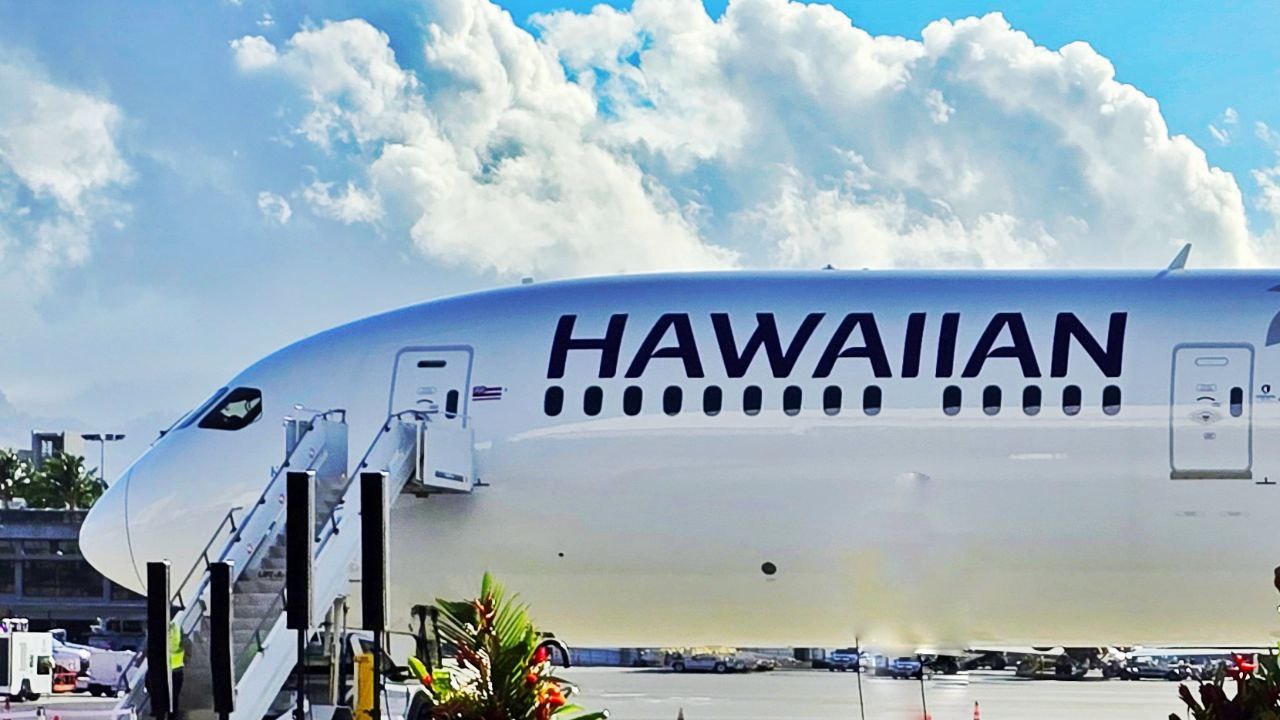
Hawaiian Airlines once had a bold vision: reinvent the passenger experience with unique charm, premium cabins, in-flight tech, and international growth—all from its Honolulu hub.
It was the first U.S. airline to launch next-generation Adient lie-flat suites on the Boeing Dreamliner. It led the industry on inflight Wi-Fi with a deal to bring free, high-speed Starlink onboard flights, both trans-Pacific and internationally. It even undertook a risky and expensive overhaul of its entire reservation system, hoping to modernize everything behind the scenes.
For a while, it looked like Hawaiian was building the future of flying. Then, piece by piece, that vision fell apart.
When the vision came undone.
International demand collapsed during COVID and has never truly returned. Domestic travel, however, was quick to re-surge. Currency pressure, a sluggish Japanese recovery, and leadership missteps have left Hawaiian’s global strategy in tatters. Under Alaska Airlines, the path forward has shifted dramatically and become more narrowly defined.
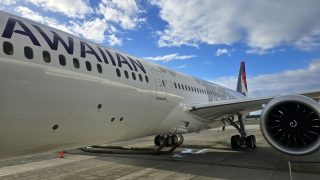
Hawaiian’s Dreamliners are no longer central to its network. Instead, they’re being redeployed from Hawaii to Seattle to support Alaska’s planned major international expansion including Europe. Today it’s being rumored that the first flights using Hawaiian planes may be from Seattle to Rome starting next year.
Closer to home, Hawaiian will now focus on a combination of refurbished A330 widebodies, A321neo aircraft, and, eventually, Boeing 737 MAX planes to serve its core Hawaii routes.
Meanwhile, the premium Leihōkū Suites Hawaiian introduced—though first flown by Qatar due to Hawaiian’s delays and financial constraints—are now appearing on aircraft operated by its larger U.S. rivals.
The very seat it helped launch, developed by Adient Acsent, has just been adopted by United this week as Polaris Studio, gaining visibility just as Hawaiian scales back its own island deployment. While the Leihōkū Suites could conceivably still appear on Hawaiian’s A330s in the future, no such precise retrofit plan has been announced.
Dreamliner pulled from international route.
Last weekend, Hawaiian filed a schedule change for its planned Seattle–Seoul Dreamliner route. The Boeing 787 9, its most advanced aircraft, will no longer be the plane that flies that route in October. Instead, the older A330-200 will return to service for reasons not yet explained.
The Dreamliner had been slated to expand out of Seattle following earlier cuts from mainland-to-Hawaii service. But this latest walk-back confirms that more shifts are still underway, and the Dreamliner—once billed as Hawaiian’s long-haul flagship—is, at least for now, waiting to find its place. The airline plans to continue flying it, mainly from Seattle, not from Hawaii.
The reservation disaster they’ll finally be able to walk away from.
In 2023, Hawaiian switched its entire passenger service/reservation system (PSS) from Sabre to Amadeus. The change was meant to modernize everything from bookings to seat maps to loyalty integration. Instead, it triggered one of the worst customer experiences in the airline’s history, shaking the company to its very core.
Readers were blunt. One said the app never works when it’s needed. Another noted that rebooking a short interisland flight took longer than the flight itself. Others gave up, switching airlines entirely.
The problems weren’t just temporary. They stretched across years, from garbled online bookings to foreign call centers that couldn’t resolve fundamental issues to an app that, even now, doesn’t always correctly reflect reservations.
Even after the Alaska deal was announced, Hawaiian said it couldn’t move away from Amadeus until 2026. But now, the airline has confirmed that it will migrate back to Sabre when the change happens, aligning with Alaska’s platform.
Hawaiian is also ending booking surcharges and making its flights fully accessible again to travel agents—something it had restricted in recent years. That move and the return to Sabre mark a full retreat from several strategies it once fiercely defended.
For some, this feels like long-overdue relief. For others, it’s just another costly reversal in a failed business pattern that became all too familiar.
The tech win no one saw coming.
While much of Hawaiian’s recent story has been defined by retreat, there’s one area where it didn’t just lead—it changed the entire industry. Hawaiian was the first major airline to commit to Starlink, SpaceX’s satellite internet service, and the first to bring it live onboard widebody aircraft.
What followed was a ripple effect across the globe. After Hawaiian’s announcement, United and other global carriers began revisiting their in-flight connectivity strategies. For the first time, free high-speed Wi-Fi was not just a marketing line—it actually worked as well as what most people expect at home.
Last to the airline Wi-Fi party, Hawaiian quietly leapfrogged every other U.S. airline with a technology decision that reshaped passenger expectations. And unlike many of its other forward-looking moves, this one paid off immediately. Travelers praised the consistency, speed, and ease of logging on, without logging into anything. It just simply worked.
Unfortunately, Starlink didn’t save Hawaiian’s broader vision. But it did once again prove the airline could still lead.
Good ideas. Bad timing. Worse management.
What went wrong? Part of it was timing. Before COVID upended international travel, Hawaiian leaned hard into Asia-Pacific markets, including Japan and South Korea. Currency headwinds and other economic factors only made things worse. That key Asia-Pacific revenue stream has never fully recovered.
Hawaiian was also late in recognizing that narrow-body aircraft are essential to surviving in Hawaii’s trans-Pacific market. The airline only began operating narrow-body planes seven years ago, long after competitors had optimized their fleets. It’s especially ironic given that Alaska Airlines made its mark flying narrow-body jets to and from Hawaii.
And while Hawaiian was busy investing in international growth and new tech, a domestic giant was quietly stealing market share. Southwest Airlines, known for shaking up every market it enters, did exactly that in Hawaii. It moved aggressively onto Hawaiian’s core mainland routes—then undercut them again interisland. The competition forced Hawaiian to respond, but by then, its dominance had already started slipping.
But it wasn’t just bad luck. Much of Hawaiian’s earlier success came under CEO Mark Dunkerley, who left in 2018 after a decade of profitability, growth, and bold expansion into Asia. His tenure followed the airline’s recovery from bankruptcy and positioned Hawaiian as a carrier that punched far above its weight and geography.
What followed under successor Peter Ingram was a mix of external disruption and internal missteps: the failed Amadeus transition, a Dreamliner rollout slowed by multiple constraints, and a long-haul strategy that never recovered from the pandemic.
From technical meltdowns to disconnected loyalty programs, the Hawaiian experience degraded. Some travelers fled. Others have held out hope that Alaska would fix it. But each step forward has come with the quiet abandonment of something Hawaiian once proudly built.
What Hawaii travelers lose when innovation leaves.
The A330s replacing Dreamliners are still comfortable, and the return to Sabre will likely bring relief for many passengers and enhancements across the reservation platform. Some readers speculated that Hawaiian’s failed system transition wasn’t about the platform itself—used successfully by many other airlines—but about money and execution. Whatever the cause, the damage lingered.
Flying Hawaiian still offers what many travelers value most: a familiar island feel, crews with Hawaii roots, and a unique sense of place at 35,000 feet. But the boldness that once defined the airline has shifted. If innovation lives anywhere now, it’s in Seattle at parent Alaska Airlines’ headquarters.
The airline that once aggressively expanded into Asia, introduced in-flight tech before the majors, and rolled out new lie-flat suites ahead of its peers is now more cautious and less distinct. Some longtime travelers say it no longer feels like the airline they knew. Others are simply waiting for Alaska to finish what it started.
The most cutting-edge ideas Hawaiian championed—aloha, Adient business suites, Starlink Wi-Fi, and more—may still thrive, just not under its name.
A different kind of exit for Hawaiian.
Hawaiian Airlines was never the biggest airline, but has always been a small niche player. It took chances that made it matter in the industry. In the years before COVID, it had to run a tight ship, but continued with memorable service and branding, and still reached high in a brutally competitive domestic airline market.
Now, it’s stepping aside. Alaska and other carriers are scaling up the innovations introduced by Hawaiian. The tools it spent years installing are being removed. The risks it took, both good and bad, are being re-engineered.
In the end, Hawaiian may fly on. But the airline that once tried to build the future of flying? That one is gone.
What’s your take? Did Hawaiian lose its edge—or is it adapting wisely under Alaska?
Get Breaking Hawaii Travel News


It honestly feels like we are watching the death of Hawaiian right now.
Never could wrap my head around that HA ‘aloha’ on their intra-island fares after AQ’s demise …. Conceptually it’s nice to have a ‘home grown’ airline, but romantic fantasy unfortunately doesn’t pay the bills….And, admittedly, I’d be very sad to see ‘Pualani’ disappear from gracing those tails….
We’ll miss it when it’s gone. Hawaiian competed by offering more to customers – overall a more pleasant experience for 5-6 hours onboard. Now that it’s just another part of Alaska Airlines there’s not much reason to look forward to flying on Hawaiian.
It’s called karma and it came about after Hawai’ian ruthlessly drove Royal Hawaiian and Aloha airlines out of business.
Starlink is indeed excellent. A big shout out to Elon Musk!!
The nail that was placed in the coffin was the day that Peter Ingram took over the company. This man is a puppet. He did not deserve that position of CEO. I pray that he is not managing another single company.
He ran the airline into the ground and got a 13 million dollar payout.
A sad ending to a once very special airline. In the post Covid era HA’s missteps with the reservation system and horrible customer service from an inefficient Phillipines based call center, along with a disappointing decline in inflight service, were the final nails in the coffin.
The old Hawaiian Airlines will be missed.
re: Hawaiian brand on flights to Europe.
Alaska can’t be a serious player over the North Atlantic with what many will say is an airplane with a “Hula Girl” on the tail. Plain and simple – it won’t work for marketing in the Northwest US market nor the European market. A new livery for the fleet is a must, and Alaska probably knows it. But they are waiting for that all important Single Operating Certificate. After that, fasten your seatbelts….
Well, atleast Ingram stood shoulder to shoulder with Ige to support all the shutdowns and mandates…
Hawaii lost its airline… better luck next time.
Very well put.
Alaska will ruin Hawaiin just like it did Virgin, and we the paying customers will suffer from it. The 787’s are such great planes and now that they will not be available at LAX it ruins the whole trip. Alaska is such a mediocre airline at best.
Really, All US airlines are mediocre at best !
I booked the 787 out of LAX, and now see the flight is a bus. I canceled it, along with all the other extra travel arrangements, since I don’t live in LA.
The biggest mistake was transitioning from Sabre to Amadeus. It has created endless issues in ticketing. This caused a huge financial burden to Hawaiian Airlines. They could have used that money to take care of their employees.
By the way this article is making Hawaiian Airlines sound like it’s gone. I believe it’s here to stay, no matter what. Hawaiian Airlines is not just an airline. It is our culture and the people that are actually from Hawaii that makes it Hawaiian.
Over the next 3-5 years interisland service will drastically change… I can almost guarantee more of a Southwest model of fly the 737 planes in, do some interisland, fly out… at the very least, it will switch to a 737 Hawaii based service, same number of seats between islands, fewer flights. The 321 is too cumbersome to do the flying for the most part.
It usually takes years to start up a new aircraft platform. Besides the actual aircraft order, there is also the task of manuals, training programs etc… Alaska has not made a single move to start any of that multi year process… they do however have 737’s ready to go.
The only thing that will be left of Hawaiian is the few West Coast to Hawaii flights in an airplane painted in Hawaiian colors, and interisland. Which will really be Alaska 737’s maybe with Hawaii based Flight attendants to keep it looking authentic.
They may keep a few Hawaii-international routes, but most will transition to Seattle.
Honestly, they should’ve just focused on what they do best and grow that: mainland and interisland Hawaii. The expansion into intl never made sense to me and seems like it helped put them on the brink of disaster.
They should’ve done my niche routes rather than compete on East Asia, taking American tourists to places like Kiritimati, Majuro, Chuuk, Tonga, etc… That should’ve been their vision to be “Polynesia’s” airline.
The reservation system switch was brutal. And it never fully recovered. I’ve wasted hours on rebookings because of it. I don’t care what system they use—just make it work. How could they leave it broken for so long?
Like many in the Pacific Northwest, I have been a dedicated Alaska fan for decades. They seem to care more about passengers than other mainland airlines (not quite perfect at times however). Their software for booking and preboarding beat everyone else’s for ages and is very dependable (and has been adaptable over time without any significant problems with their changes). I have flown Hawaii once-it was great, their flight attendants were wonderful and the airline had perfected the Hawaiian vibe beautifully. Would have used them more if they had been price and benefits competitive from WA.
Starlink was a game changer—I’ll give them that. But really nothing else has kept up in terms of improvement or innovation.
I flew the new Dreamliner and the seat was incredible, but the experience overall was full of glitches. I had reservation system problems and the food was very much worse than on prior trips.
Hawaiian used to feel like a breath of fresh air every time I boarded. Over the just couple of years however I just feel lost in the shuffle. It just isn’t the same.
I’m so glad and lucky to have experienced first class[RT]on HALs B787 last Aug. It was an unforgettable experience.
Our last trip to Hawaii 2 weeks. Starlink for the movie section didn’t work at all. Don’t know if it was my Android phone or something else