
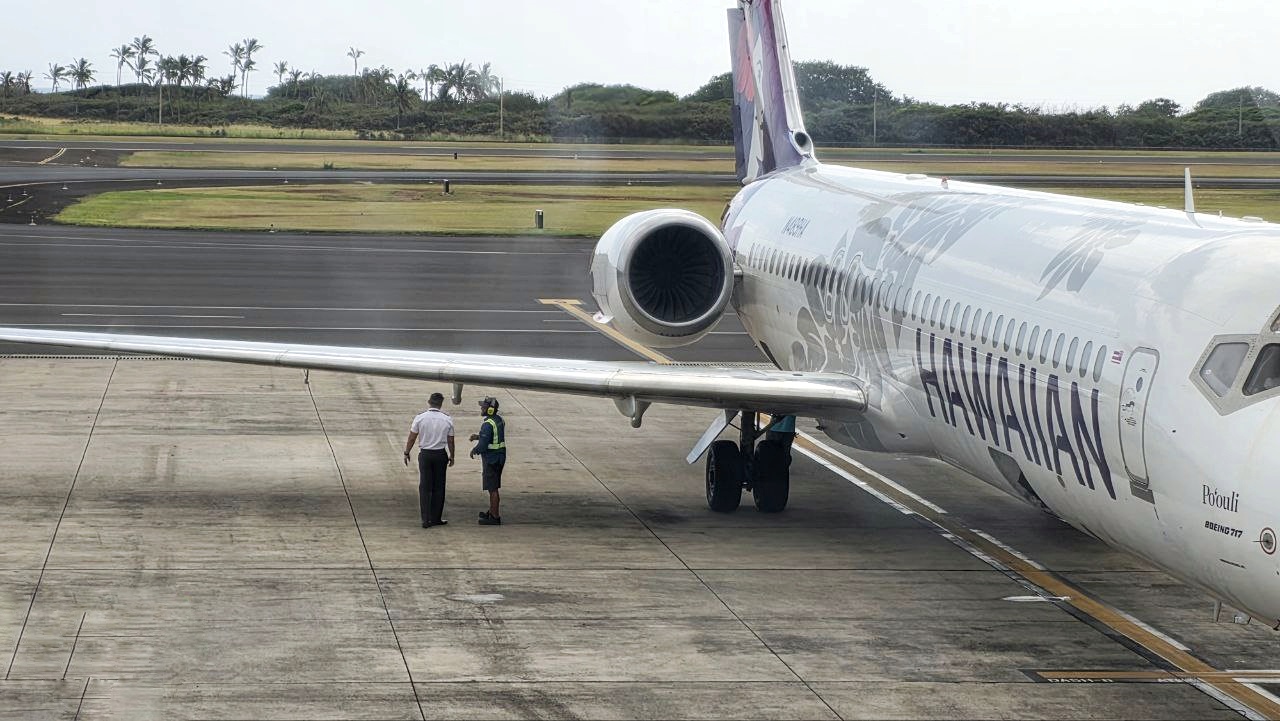
We flew interisland twice this week, and both flights were barely half full. The 717 cabins felt their age, and the silence around what comes next grew louder as we talked about the latest final FAA airworthiness directive afterward. For an airline now under Alaska’s ownership, and for readers already booking 2026 trips, that silence has become part of the story. It leaves us pondering what is happening inside this transition that travelers are not yet being told.
The Hawaiian 717 Final FAA Airworthiness Directive is now in effect.
The agency issued a binding mandate last week requiring repetitive inspections of the upper lock link assembly for cracking on all Boeing 717 aircraft used for interisland service. Hawaiian is uniquely exposed because its 717s operate at a utilization level no other carrier comes close to. These aircraft often fly up to fourteen segments a day across the islands.
After nearly a quarter-century of this pattern, the fleet has accumulated takeoff and landing cycles far exceeding those seen in long-haul or mainland operations. Those cycles are precisely what drive the inspection thresholds in the FAA’s finalized airworthiness directive, which requires inspections every 4,800 flight cycles and immediate replacement if cracks are found.
In practical terms, Hawaiian will reach each required inspection interval far sooner than carriers using the aircraft on longer, less frequent segments, such as Delta. That compresses maintenance windows and increases pressure on a fleet that is both aging and deeply utilized. No one is predicting any near-term reliability problems or grounding events, but moving from a projected compliance path to a federally mandated one adds real strain to the backbone of Hawaii’s interisland operation. That pressure will underlie 2026 scheduling even before passengers see any visible changes.
The aircraft itself is not the concern, but the silence is. Hawaiian has said publicly that the 717 remains central for now, yet has not provided the kind of forward visibility other carriers offer well before major fleet transitions. In normal circumstances that might remain a quiet back-office question. In the middle of an ownership change, with a clearly aging fleet and a binding FAA directive, it becomes something travelers deserve to understand as they plan the years ahead.

The A330 retrofit silence that no longer makes sense.
Airlines normally announce cabin retrofit programs far in advance of the work ever beginning. It is a multi-year undertaking, and advance notice allows travelers to understand what they are buying. We have been told by employees that there have been seating layout presentations at Hawaiian’s Honolulu offices. Hawaiian’s A330 cabins are visibly dated even though the aircraft remain reliable workhorses on routes to and from the islands.
The upcoming A330 retrofit is the long-awaited Hawaiian Airlines fleet update many of you keep asking about. While executives have said the changes will roll out over the next few years, Alaska has not committed to a specific start date. Industry publications have speculated that the first retrofitted aircraft could appear by 2026, but that timeline has not been confirmed by the airline.
When travelers have to rely on third-party projections rather than official guidance, the transparency problem speaks for itself. We outlined just what the significant changes planned could mean for seat counts, upgrades, and of course the long-awaited addition of premium economy in our earlier report, Hawaiian’s A330 overhaul could drop 60 economy seats.
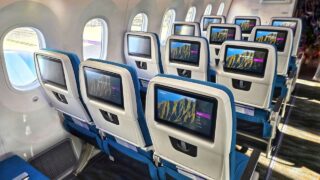
The A330 seats and finishes show their mileage even as many still largely enjoy these planes, which feature 2-4-2 economy seating that is becoming rare. We enjoy the extra legroom economy more than any other seats. What stands out is not that retrofits take time. It is that no specific timeline has been announced.
Alaska has now owned Hawaiian long enough that a clear plan must exist, even if execution is staged across several years. Without a retrofit roadmap, travelers booking premium cabin seats for 2026 and beyond do not yet know whether they will fly on the current product or something that could look entirely different.
This becomes especially challenging for readers who use miles or companion certificates since the value depends heavily on which seats and configurations appear on their chosen dates. We remember how Hawaiian years ago promoted its then-new A330 lie-flat product and how clear the rollout timeline was. Nothing comparable exists today. The absence of information is now a real booking factor, and many of you have asked whether to hold off on 2026 premium cabin purchases until Alaska provides clarity, including about the planned premium economy cabin. At this point, the question feels reasonable.
What this means for your 2026 Hawaii bookings.
When airlines do not say what comes next, travelers have to make decisions without the information that normally shapes these purchases. Seat counts may change, which affects upgrades and award availability. Schedules may adjust as fleets transition, which matters for anyone stringing together multiple flight itineraries.
The absence of a retrofit timeline makes it difficult to know whether a premium fare buys the product you want. When one of our neighbors asked whether he should plan a 2026 anniversary trip in the A330 cabin as it exists today or wait to see what is announced, we could not give him a definitive answer.
None of this means travelers should worry about any disruption. Hawaiian continues to operate reliable service and quality maintenance. What it means is that Alaska has not provided the level of fleet transparency that Hawaii travelers typically receive during major changes. For an airline that has just completed a multi-billion dollar acquisition and inherited a network that is essential to the state, that silence now carries real planning consequences.

The A321neo signal that slipped out.
Aviation Week reported this week that Alaska is reconsidering the long-term place of Hawaiian’s A321neo fleet within the combined operation. These aircraft are relatively young and fuel efficient, but they exist in a subfleet of only eighteen, compared with Alaska’s large fleet of nearly 250 Boeing 737s. Airlines often hesitate to support small fleets indefinitely because training, maintenance, planning, provisioning, and parts inventories scale more poorly when the numbers are low. Hawaiian’s A321neos are also owned outright, which changes the economics but does not change the strategic question Alaska now has to answer: whether this narrowbody serves the future network, or whether a different aircraft type, likely 737 MAX, eventually replaces it.
This matters directly for travelers flying the thinner West Coast routes that the A321neo was perfectly designed to serve. Flights from up and down the west coast to all the Hawaiian Islands rely on this aircraft, and any shift in fleet philosophy, even if not immediate, could change aircraft assignments, seat counts, and long-term schedule patterns. In the near term, nothing changes for day-to-day flying, but for those already thinking about future Hawaii trips, the signals matter. These routes have historically been sensitive to aircraft type.
We have seen this story unfold before. Fleet transitions rarely happen overnight, but they always create planning questions. The difference here is that this one surfaced before Alaska shared any public roadmap. Many of you have already asked whether the A321neo fleet flights you are booking now will look the same by the time you travel. The only honest answer is that the fleet appears to be in a long-term transitional posture until Alaska confirms its strategy.
This follows the Dreamliner decision we reported earlier, where Hawaiian’s 787 fleet was absorbed into Alaska.
The questions that deserve answers.
No one is asking for a competitive strategy. Passengers are asking for the clarity that allows them to make informed choices. What is the A330 retrofit timeline? What is the future of the A321neo fleet? What is the interisland aircraft plan once the 717 moves into its final service window? These are straightforward questions with real booking impacts for 2026 and beyond.
We will continue to watch closely and share what we learn.
© BOH lead photo: Hawaiian workers checking 717 aircraft wing.
Get Breaking Hawaii Travel News



When booking a flight to Lihue HI on the HAL site, how do we make sure it’s an Hawaiian plane and not flying on Alaska?
I honestly think Alaska is getting more than they bargained for with buying Hawaiian. The leadership team of Alaska has absolutely no experience when it comes to running a long haul intercontinental airline, and they fired everyone who did at Hawaiian. Not to mention Seattle is a very competitive market and why would I fly Alaska to Seoul over Korean Air who offers a Far better experience? I wouldn’t be surprised if Alaska starts losing money as the economy worsens.
You can only book 331 days in advance, about 11 months, so you don’t have to worry about 2026 “and beyond.”
I just want a stable/reliable inter-island ferry system run by the state, as many other states like Washington do. Now That would be Real competition for the airlines!!
There’s an interesting video of out there somewhere about why interisland ferries haven’t worked in Hawaii.
Among the many reasons is that unlike Washington State’s system which is in deep financial straights, the nature of the open ocean they have to cross means they have to have a much more complicated and expensive boat and safety systems than does Washington State that only goes inland.
Also, the water between Maui and the Big Island can be quite choppy and not really an experience tourists are looking for.
Yes, I’ve seen the video too and it does a good job of explaining the complications.
Only Maui county could do transits that are in protectes water. Any other island route is wide open Pacific right away.
The distances are far greater too.
I’ve seen/heard the objections to ferries in Hawaii and don’t buy them. The “it’s too hard” argument can be overcome. Just look at some of the open ocean ferries in Alaska or Europe for great examples. I’d also love it if a Washington State ferry could be tested in approximately our ocean conditions – they are wonderful! Ride one sometime! Cars, big trucks, everyone up there uses them. Then the idea that infrastructure projects always have to make money doesn’t “hold water” either. Do all of our road improvements/builds make money? Bridges? Certainly, not, but we do them, as it is in government’s interest to invest in infrastructure to benefit all residents and promote economic growth/stability. But instead all we do is focus on Hawaiian/Alaska Airlines endlessly and ad nauseam as it is seen as the only way to travel. Yuck!
To bad Hawaiian had to sell to Alaska. I have not seen anything positive about the merger. I have been a loyal Hawaiian customer for 40 years. I lived in Hawaii for 23 of those years. I am sick to have to end this relationship.
The positive part of it was that Hawaiian didn’t go bankrupt and out of business.
Alaska has done a poor job overall on the transition. Lousy communication, poor service from both Hawaiian and Alaska and their stock price is struggling. Hopefully they get it together soon.
Hopefully BOH editors will ask those questions directly to Alaska and get a response. Please let us know if you do. Kind of scary that it is silient on Alaska’s end when we were told they would be transparent with us regarding Hawaiian airlines and the merger. Oh well…
I have just booked a trip to Honolulu for mid January. I was appalled that I could not select a seat until I paid in full for the ticket. I don’t think any other airline in the skies requires this to choose a seat. If I can not see a seat or know the aircraft for a flight I will not be booking Hawaiian again.
I had the same problem a moth ago when attempting to purchase tickets for our trip from LA to Maui in March. I thought I would need to call Hawaiian directly to ensure desired seat selection, but a few days later I was able to get our assigned seats when purchasing on the Hawaiian web site. Not sure what changed, but there’s no way the wife and I are going to buy now and get seated later. We’ve always preferred the A330 with the 2-4-2 seating configuration so we can be all by ourselves.
I’ll reserve my comments for Hawaiians interisland fleet. I haven’t had to fly interisland for years until last week. For many years I’ve been able to fly right into Lihue from the mainland. But a flight cancellation meant a reroute through HNL. I swear the plane was the same one I flew in the 70’s on my first trip to Kauai. Sure, it could be just cosmetic but it did make me question how much more that aircraft could handle.
Believe me, although they appear similar, those 717,s were built about 30 years after your trip. It’s the best suited aircraft for interisland.
I’m sorry, but we should not be surprised by this activity for the Islands. When two competitors are allowed to combine, there goes the competition. Now we have a situation of one airline dictating what they are going to do with the aircraft, as long as it is legal. Now, we the consumer have very little to say about what is going on or happening for island flights. Shame on the FTC for allowing this to happen in the first place. Shame on the consumer for not recognizing the potential of price fixing with the lack of competition.
Think of it this way:
Alaska Airlines didn’t buy Hawaiian Airlines.
Hawaiian Airlines continued to lose 100’s of millions of dollars so that in late 2026 or early 2027 they went bankrupt.
The only asset worth buying was the 787’s. Nobody wanted the 717’s and the interisland business because it’s a money loser.
Nobody wanted the A321’s because nobody needs them.
As the only surviving airline, Southwest could finally break 50% load factor and start making money, but only if they were the only airline.
That would have been the alternative.
The problem inter island is there is no replacement for the B717’s. It us a superb aircraft ideal for interisland routes. The Airbus RJ the A220 is cramped inside and Hawaiian have been burned by Airbus too often. The 737max is looking to longer haul more pax which leaves the Embraer RJ’s which are too small.
Aloha. My wife and I are the lucky ones. We’re both 5’5″ and can fit all the seats. I actually prefer the last row with the last 2 seats on an aircraft. Not concerned about getting off first. If island hoppers are not full, would it make sense to use a smaller, newer, more efficient aircraft? Mahalo.
I am no 717 expert but who knows, maybe Alaska is wanting Embraer to re-engine and offer a: Rolls-Royce BR715 core engine instead of the Pratt & Whitney PW1900G’s as used upon the ultra stretched E2-195 airframe inter-island.
Lots of commonality with other Alaska Air Group equipment at Horizon and possibly lots of commonality with 717 engines too due to Hawaiian’s use of this engine equipment type. Operating small fleets with no commonality makes zero sense for an airline that determines to make money for its shareholders, and continued livelihoods for its employees.