
Hawaii’s hotel taxes now hover around 19% once you add the state transient accommodations tax, the county surcharge, and the general excise tax. And that is layered on top of the room rate. The latest increase, branded as the Hawaii Green Fee, pushed that total higher again beginning January 1. It was not presented as just another tax increase.
Visitors were told the Green Fee would protect beaches, restore shorelines, and help Hawaii respond to erosion and climate pressure. The message was clear enough: if you come here, you will help preserve what you came to see in Hawaii.
Six weeks later, the first round of spending tied to that tax increase is out, and nearly one-third of the initial $42.2 million allocation is headed to Waikiki and Ala Moana. The projects are being labeled under the Green Fee umbrella, but the funding for this first round is coming from general state borrowing rather than directly from the new tax collections.
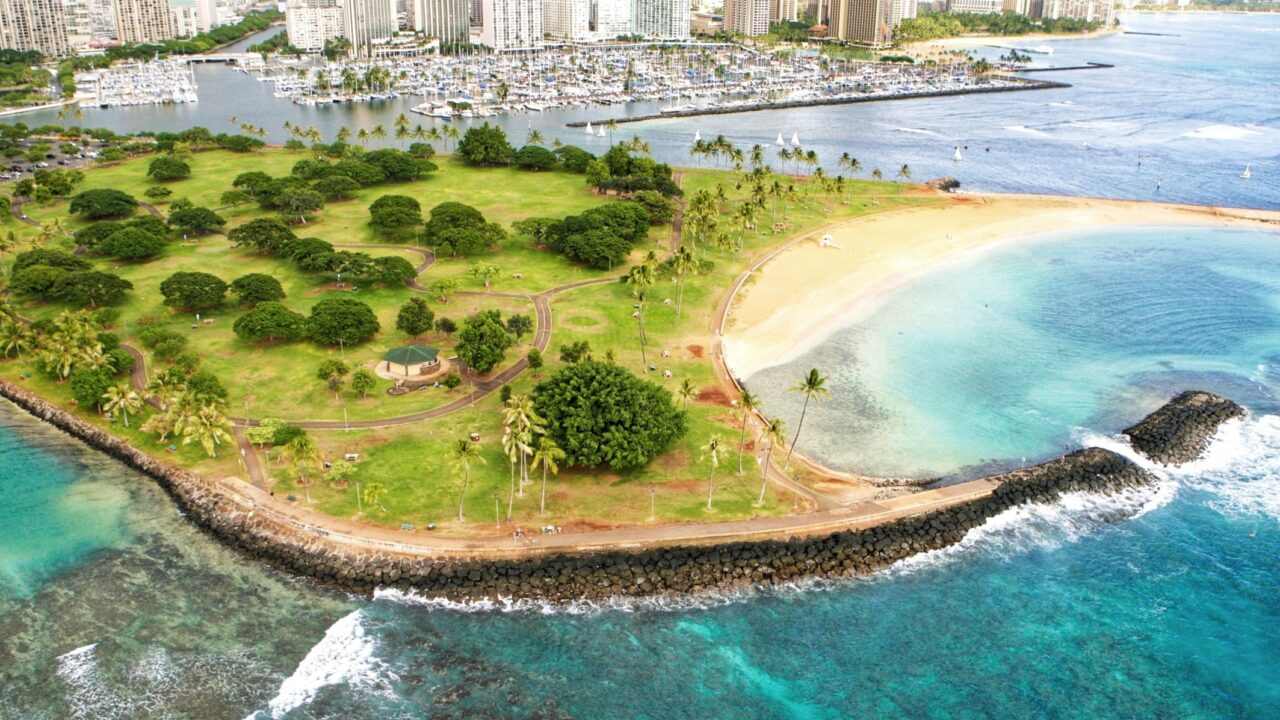
The largest single project is $7 million for groin stabilization and sand nourishment along the Halekulani Hotel front, and the second-largest is $6.8 million for beach nourishment at Ala Moana. Together, that’s $14 million directed toward two Honolulu shorelines that already receive regular maintenance and are the highest political priority.
Nobody disputes Waikiki’s importance to Hawaii. It is the economic driver of Hawaii tourism, and its beach exists today only because the state keeps replenishing it. Sand is pumped or barged in, and structures are reinforced. That cycle has been ongoing for many years.
What stands out in this first Green Fee list is not that Waikiki was included, but that places under visible erosion pressure right now are not part of the funding, even as visitors are already paying the higher tax and the state is financing these projects through general borrowing.
Earlier this week, we reported in Hawaii Visitors Losing Beaches To Save Beachfront Condos that Kahana has been battling shoreline loss for two decades, and that a North Shore homeowner testified he has lost roughly forty feet of beach dune in ten years. Emergency sandbags in West Maui are falling apart, permits have expired, and the shoreline continues to narrow while the ocean keeps advancing. Those communities also showed up at the Capitol asking for help, yet they don’t appear anywhere in this first funding list.
The mechanics behind the money.
The way this is being funded makes the story even murkier. Visitors are now paying the higher tax. The assumption most people would reasonably make is that those extra dollars are sitting in a dedicated pot and flowing straight into beach projects. That is not how this first round is being handled. The $42 million being announced for this fiscal year is being financed through general obligation bonds, which are backed by the state’s general fund, not by a separate Green Fee account.
The Green Fee discussion in the above video begins approximately 1:23:00.
When the question was asked, are these actually Green Fee dollars paying for these projects, the answer was no. The projects are being financed the same way other large state projects are financed, through borrowing backed by the state’s general fund. The “Green Fee” label attached to them right now is more about branding than anything.
What that means in practical terms is this: Visitors are already paying the higher tax at checkout. The beach projects being announced this year are being paid through general state borrowing. Over time, that borrowing is repaid with interest. The same dollar doesn’t move from your hotel bill to a stretch of sand.
State officials argue the total amount being spent aligns with what the Green Fee is projected to bring in. While that may be true, it’s harder to explain why the first visible projects require borrowing from the general fund while the visitor tax increase is already flowing in.
From a visitor standpoint, the promise was to pay more so that the beaches get protected. The first allocation reinforces Waikiki, and the funding structure has shifted to general state borrowing rather than a direct link between the fee and the repair.
The revenue picture is shifting like beach sand.
The projected annual revenue of roughly $87 million also assumed cruise ships would be subject to the tax for the first time. But at the last moment, the Ninth Circuit issued an injunction blocking that cruise ship portion while a legal challenge proceeds.
The hotel and vacation rental tax increase still applies, but the cruise ship revenue stream is currently frozen. That means the Green Fee pot is already smaller before the first project even breaks ground, and if collections come in below projections, Hawaii will need to reconcile how much can be spent.
Visitors see a lodging tax burden approaching 19% and were told the increase would protect beaches under threat. The first significant Green Fee allocation reinforces Waikiki and Ala Moana, while the beaches experiencing active shoreline collapse are absent from the list.
Waikiki will continue to be maintained because that has always been true. The question is how quickly and how aggressively the Green Fee will reach beaches outside Honolulu, where erosion is immediate. Yesterday, we covered the fight over whether to allow shoreline hardening back onto Hawaii’s sandy beaches. Today, the focus turned to who pays for the alternative and where that money actually goes.
If the Green Fee is supposed to protect the beaches that visitors come to see, should the first projects be in Waikiki, which already receives constant support and maintenance, or in places like Kahana and the North Shore, where erosion is actively threatening the visitor experience with no help in sight?
We welcome your comments.
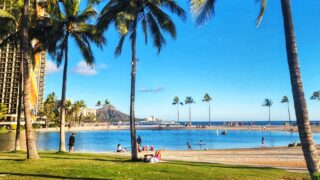
Lead Photo: Magic Island at Ala Moana Beach Park, Oahu.
Get Breaking Hawaii Travel News

If any of this revenue makes it to the outer islands I will be shocked. Smaller dollar amounts applied to smaller areas could have a large impact but will we see it?
Follow the money people; you will not be pleased to discover who is getting paid! Money is Politics and Politics is Money all over again; nothing ever changes and never has. My family was in this position and it was a known fact!
How about fix up the bathrooms at the popular beaches in kona. One has been closed for 20 years and the other one at old airport beach has burned down. Every beach except magic sands beach has decapitated buildings and looks like a absolute. We pay taxes and nothing is done with the beaches for visitors. I believe travel is down because of it. Nobody wants to use a building with rusted out roofs.
In his (Mr. Gomes) article mentioned there would sand remediation at Lanikai Beach. How and why can this be done?
Tax money went to pay for wind turbines at North Shore, the look is disgusting; while junk vehicles are scattered all over the island, Kamehameha hwy from H1 to Wahiwaw needs repaving. Clean up the eye sore of unused vehicles on private property. Create a state funded move to rid the island of vehicles not being used, clean up the Island.
Follow the money and see where it leads and who will pocket it. Beaches with regular maintenance and yet with the biggest problems. Replenishment never works. Nature will always prevail. Companies with those contracts will have a neverending flow of monies because this will never be solved. Those companies will end up lobbying for more while greasing their political connections. Just take a look at what is going on now.
Those who arrive on Kauai also pay the tax. Our beaches are experiencing serious erosion, have been for decades. Does the state help? No. So as usual, the government continues to work against tourism with withering visitor taxes, and lies about where that cash will be spent. Exactly where Is this “green tax” money going if not to its stated purpose? And the outer islands also face erosion. What of our beaches’ fate?
Why does Beat continue to frame its coverage on green taxes as impacting visitors???? It is a tax on Everyone, residents included. Please stop using the word “visitors”
They are pricing their state out of the tourist industry. Look at the numbers of tourists which is declining year by year.
Cleanining, landscaping, and keeping the restrooms safe and open to the public at Ala Moana beach are immediate issues. Then figure out how to keep the beach something Honolulu can be proud of, for a change!
More than likely 3 yrs down the line another tax, to clean it.
Your point is well taken.
However, as a longtime resident of South Texas, and a regular visitor to Hawaii for 60 years, and a Princeville Timeshare owner for 30, I can tell you that Corpus Christi is very nice, but it definitely doesn’t compare to Waikiki or any other Hawaiian beach location.
Same goes for Mexico.
Aloha
We’ve just returned to Aus after our ninth visit to Hawaii, and while we love Hawaii, the expense is becoming too much. Accommodation taxes @ 20 %. F&B + +, plus 20% tip expected. It’ going to make us think twice!!!
I agree with you. While so many people depend upon the tourists. They don’t seem to be showing much appreciation to the visitors. Natives complain they can’t afford to stay here already. Pretty soon no one will be able to visit or stay the costs sure
I thought I had seen a lot of corruption in my life, but Hawaii takes the cake. It’s almost like Nothing connected with government on any island is honest. Why do Hawaii’s citizens tolerate this?? If these things happened elsewhere, these crooks would all be in prison. You can’t make this stuff up!!
This is all simple deflection: We are all smart enough to know Mother Nature, and we are all smart enough to know that any intervention is a deflection to pay the corrupt. The best answer is to Vote. Most of the responders here do not have the right to vote on the islander but are smart enough to see the corruption. Wish us all the best of luck
Just returned from Honolulu, where I was Thrilled to see the beach off of Fort DeRussy looking more like it did when I was a kid, (sixties and seventies), with the sand near the Outrigger having been reclaimed by the ocean. I was finally able to show my husband the sea wall and rock steps down to the water. Countless dreamy Sunday afternoons were spent there, climbing down those steps and swimming out to the floating sunbathing and diving platforms. Back then you couldn’t walk on the beach all of the way from Hilton Hawaiian Village to Kapiolani Park, and I was stunned when we arrived one year and saw the tons of sand they’d dumped into the area to make a beach. Every morning there was water and sand on the walkway from the high tide, and workers labored to sweep it all back to the “beach” area. It all seemed so futile, and foolish. Halekulani built their pool, restaurant, and bar area as close to the water as they could. What did they think would happen over time?
Has BOH been to Poipu lately? We’re here now and the erosion in this area is significant. Mitigation efforts are ongoing, but a lot more needs to be done.
Aloha Rob,
Are you referring to the beach in front of Sheraton and/or Brenneke’s?
Mahalo
They also fail to mention Waikiki was never beaches. It purely exists due to civil engineering. That whole basin was wetlands. It isn’t sea level rise. Nature Always reverts back to homeostasis over time. Man made changes only maintain if they are maintained.
You’re right, Jimbo. Wetlands and taro plantation all along Waikiki.
And how much are the hotels – the primary beneficiaries of Waikiki beach sand – kicking in again?
Oh that’s right – Zero!
Wait. Borrow and I repeat borrow money and back it up by the general fund. When you borrow money you always have to pay interest on the money borrowed. Of the green fee money collected why does the state have to borrow anything? They collect it immediately from tourists everyday and IMO this might be the reason it is called groin Stabilization. IMO money wasted and nothing gained. This just proves how this Green Fee is nothing more than a way to collect extra tourists funds and lining the pockets of those who run the operation.
This is just a another Hawaiian Government scam, Kahana bay isn’t going to see a penny until we owners pay again to do the work covered by this tax increase, keep electing the same and you get the same.
Agree completely, well said and so very true!
Aloha
“The largest single project is $7 million for groin stabilization …”
Must have been a heck of a groin pull …
LOL Big Time Bruddah’
More like pulling the tax payers leg. Whats new?
Waikiki and Ala Moana are the right priorities. Many visitors who occupy the thousands of hotel rooms in Waikiki and choose not to rent cars or fly to neighbor islands never see these other beaches. And Ala Moana Beach Park, if I’m not mistaken, is the most visited beach in the state, mostly locals. It makes perfect sense to me to prioritize these beaches.
Anyone considering how long the Golden Goose is going to put up with this? Beaches are beaches…..and Mexico is a lot closer and less expensive. Heck…so is Corpus Christie!
Corpus Christie (sic) … ???
Is that anywhere near Corpus Christi (sic), TX … ???
I oppose building any seawalls. Ocean rise is going to happen. Taxpayers should not have to pay to save hotels and condos from the rising ocean. Hotels on Maui have already lost patios and some buildings can no longer be occupied. No one forced hotels and condos to build so close to the ocean. Stuff happens. Deal with it. Don’t expect taxpayers to bail you out.
Tearing out structures used by the public that are falling into the ocean on the other hand is a valid use of taxpayer money.
Beach erosion is not caused by rising ocean. It is caused by waves, currents and diversion of natural nourishment from high elevation erosion. We can’t duplicate the natural nourishment pattern, but we can, and should, augment the sand as it washes away.
Well, this explains it well. It is all about deep pockets, and no one can fill the pockets like the big hotel industry. The passing of the brown paper bags is alive and well. The other brown paper bag is the true cost of the project. In reality, it should be 1-2 mil, but the county/state will accept the bid at 500% higher. The typical 3 key bidders for the job will always be in sync. Kinda like the train that cost millions over budget.
Agree here with Jane 100%. If true bids with Transparent costs were shown to the actual community that is paying for this, the millions would recede like those shorelines! My heart feels for the condo owners and residents that aren’t directly on the beach and their fees that are passed on to guests are so high that guests are now beaching it elsewhere. And let’s not get us started on the Fire Recovery Concert donations! Over $650 million was raised in philanthropic donations for Maui wildfire recovery as of early 2025, with major contributions including nearly $189 million for the Hawaii Community Foundation’s Maui Strong Fund and over $100 million expected from the 2025 FireAid benefit concerts. Additional, significant funds include $60 million from the People’s Fund of Maui and over $30 million via GoFundMe.
It’s now up to the Hawaiian people to get better representation from new government officials that actually care about their future!
I’m a full-time resident of Kauai for years. Kauai sends a gazillion dollars each year to the Black Hole in Honolulu called the State Government. In response under the current Billion dollar plus State Budget, Kauai County receives one half of one percent ( you read that right: 0.5% ). That tells you all you need to know and explains a lot. Aloha
That’s absolutely disgusting. Kauai is getting shafted big time.
Hawaii’s state government needs a complete house cleaning from top to bottom. This is incompetence and no accountability on steroids!