
The private jet crash in Maine late last month was a human tragedy. Six people were killed when the private jet, en route to France, flipped during takeoff in snowy conditions at Bangor International Airport. Families lost parents, partners, colleagues, and friends. When we first heard about the crash, we had no idea there was a strong connection to Hawaii.
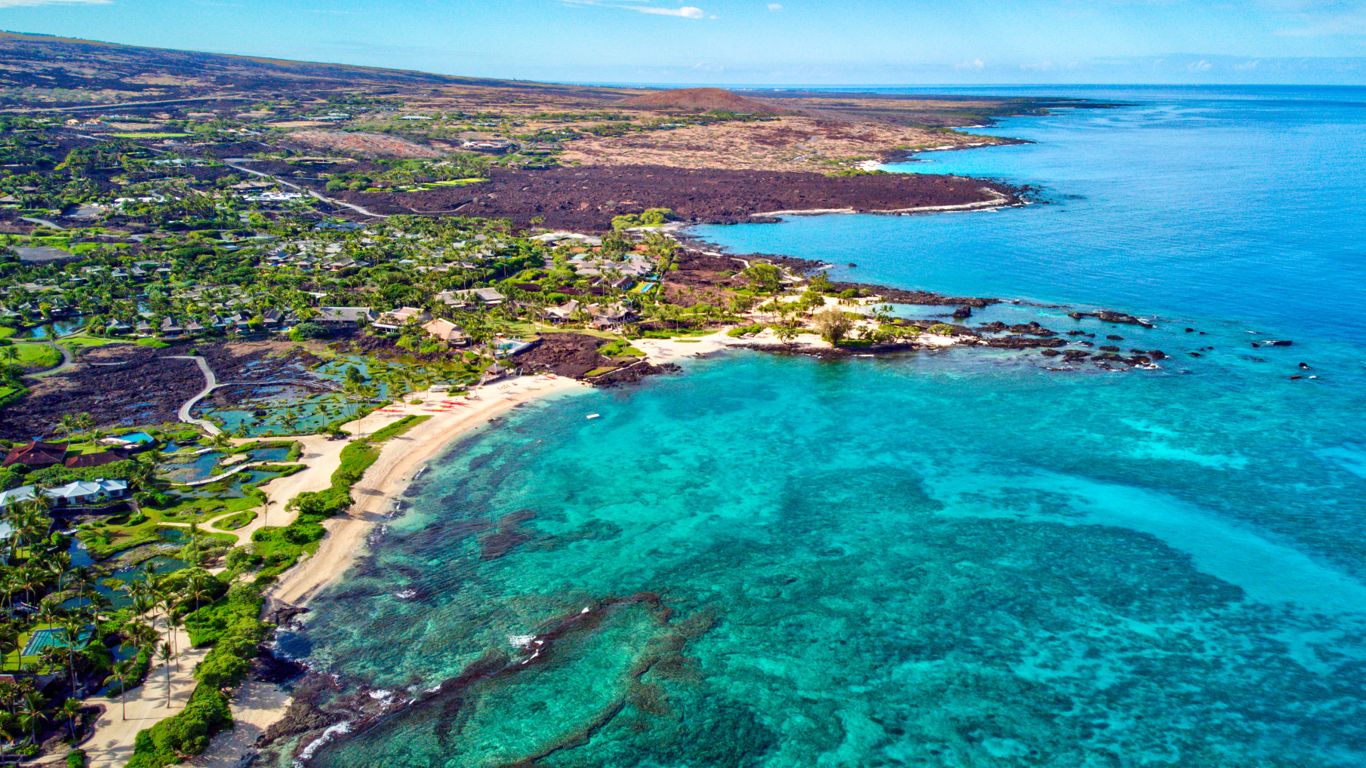
Two of the victims were working at Kukio Golf and Beach Club on the Big Island, one of the state’s most exclusive private resort communities, and a place that sits at the very top of Hawaii’s ultra-luxury hierarchy. Anyone remotely familiar with the islands’ high-end visitor economy knows exactly what Kukio represents.
That detail does not turn this into a Hawaii related crash story. It turns it into something else. It offers a clear look at where Hawaii now sits in the global luxury travel economy and what role the islands increasingly play within that space.
Hawaii has become a global training ground.
Nick Mastrascusa served as executive chef and food and beverage director at Kukio, overseeing operations inside one of Hawaii’s most rarefied hospitality environments. Shelby Kuyawa worked there as assistant food and beverage director after working at Four Seasons Vail and other high-end properties. Both had built careers inside the kind of places Hawaii points to when it talks about its future, places used as proof that the islands can compete at the highest levels of global luxury travel.
They were not flying to France for leisure. They were traveling on business for a concierge travel firm catering to ultra-high-net-worth clients, the kind who pay $15,000 to $30,000 or more per night and expect every detail to be right. According to family, the trip involved looking for a property to develop in France’s Champagne region, signaling not just a new destination but a long-term investment being built elsewhere.
What matters is how that trip came to be. Reporting indicates both were recruited directly from Kukio by the founders of that concierge firm. This was not talent drifting away on its own or casually looking for a change of scenery. This was Hawaii-trained hospitality being actively pulled out of the islands.
Excellence Hawaii produces.
For decades, Hawaii sold itself as a destination. Over time, it has also become something else, a training ground for people working in luxury hospitality under real pressure, with year-round demand and little margin for error.
High-end property guests arrive primed by marketing that hypes not just island beauty, but perfection. Staff are trained to deliver experiences that are personal, seamless, and effortless, all while navigating real-world issues including staffing shortages, housing pressure, and rising costs that make everyday life in Hawaii harder.
That pressure cooker environment produces people who can operate at the highest level, including chefs, sommeliers, managers, and experience designers who know how to meet demanding expectations without cracking under strain. It also produces resumes that travel very well globally. What Hawaii does not reliably offer any longer is a reason for those people to stay.
Housing costs continue to outpace wages by wide margins.
Mid-tier hospitality roles have been reduced as ownership structures shifted away from local control, and advancement opportunities get slim unless someone is willing to leave the islands entirely, even after years of working at the top of the islands’ market.
As a result, talent moves, sometimes that’s to the mainland, and other times it’s abroad. Increasingly they go into concierge-style travel firms that are not anchored to any single place and may have little incentive to invest long-term in just one destination. Those firms do not need Hawaii itself but rather the people Hawaii trained.
The concierge model.
Concierge travel is one of the fastest-growing segments in luxury tourism. It promises customization, access, and smooth execution across destinations, with high-end clients as the constant and locations being entirely interchangeable.
This reflects the argument Hawaii increasingly makes to justify higher fees, higher prices, and its pivot away from volume tourism, with fewer visitors spending more, sold as the path to better outcomes. The difference is that, in addition, concierge travel is portable, not Hawaii-based. It follows money vs. geography, and when Hawaii trains talent for this paradigm, it contributes to an economy that still passes through the islands but is never rooted here.
Who really benefits from the luxury shift.
Hawaii’s visitor numbers have fluctuated since the pandemic, but visitor spending has surged. Recent data shows record spending is being achieved with fewer arrivals, a result that has been celebrated as proof Hawaii’s strategy is working.
High-end hospitality requires exceptional labor to succeed, and when that labor cannot afford to live where it works, as is the case here, it becomes transient. For many, Hawaii becomes a resume line instead of a permanent home. And the middle tier of island travel continues to erode, with mid-priced restaurants closing, service becoming less even, and operating hours shrinking. Hawaii’s regular visitor experience can feel less reliable and more fragmented, while the industry splits between ultra-luxury at the top and strain everywhere below.
This is an uncomfortable reality.
There is a reason this incident gives Hawaii pause. It sits at the intersection of tragedy and structural reality. Hawaii was not related to this crash, but Hawaii is part of the system that shaped the careers of the people on that plane. That system is under scrutiny, especially as the state continues to double down on a luxury-first future, even as the travel workforce that sustains it continues to be less rooted.
What this says about Hawaii travel’s future.
If Hawaii wants to remain more than a training ground, it will need to address what it offers the people who make our visitor economy possible. That includes housing, long career pathways that do not end in burnout or departure, and an honest assessment of what kind of tourism economy can actually sustain a workforce in the long run.
For visitors, the takeaway is subtler but still real. The Hawaii experience tourists encounter is shaped by people whose careers may not be deeply anchored here, a reality that can still produce good results while being fragile. This does not argue either for or against luxury travel. It simply shows where Hawaii now finds itself.
Sometimes a tragedy far from Hawaii briefly illuminates something much closer to home.
Get Breaking Hawaii Travel News




The rich get richer and the poor get poorer. Follow The Money.