

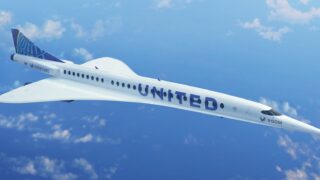
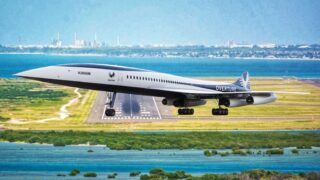
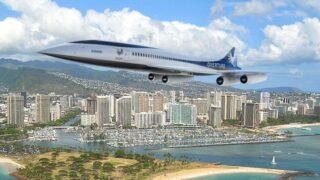
Imagine flying from LAX to Hawaii in just three hours. That’s the promise Boom Supersonic keeps dangling. With live engine tests underway on the Overture, the dream moved closer to the runway. But not everyone’s buying it.
Skeptics say it’s a billionaire fantasy. The plane hasn’t flown, and the engine isn’t certified. FAA approvals could take years—if they happen at all. Even longtime backers are raising eyebrows, with the company’s CEO calling for the TSA to be abolished.
Still, there’s momentum. Boom is betting on new air travel: faster, greener, smaller, and more exclusive. And Hawaii may become more central to that vision than anyone expected.
Why Hawaii could be first.
Boom’s route maps have mostly emphasized transatlantic flights. But when considering where the Overture can legally operate at supersonic speeds—over water, not land—Hawaii suddenly becomes one of the most realistic early markets.
Flights between the U.S. West Coast and Hawaii meet several strategic needs: long stretches over the ocean, demand from premium leisure travelers, no speed limitation, and no overland restrictions like those that apply to domestic routes.
Supersonic flight over land remains banned in the United States. Until or unless that changes, Boom needs oceanic corridors—and the Pacific is wide open. That makes Hawaii a uniquely viable option, even if it isn’t the company’s original target.
Engine testing moves the vision forward.
Boom’s new Colorado Air and Space Port test site is upgrading to support the current engine development phase. These are no longer simulations. The company is now running live trials with real hardware, including core components of the Symphony engine.
Symphony will run exclusively on sustainable aviation fuel, which Boom says is essential to its long-term strategy. That detail could play especially well in Hawaii, where tourism officials have doubled down on green messaging, cultural responsibility, and environmental protections.
Boom’s TSA comment draws fire.
While engineers were firing up the engine, Boom’s CEO stirred a different reaction. In a recent interview, Blake Scholl said, “We don’t need the TSA.” His comment was part of a broader critique of airport security and a call for private solutions to serve high-speed, premium travelers better.
The backlash was immediate. Some travelers said they welcomed the idea of streamlined screening. Others called the remark reckless, especially from a startup still working through the FAA’s regulatory pipeline. In Hawaii, where airports like HNL and KOA already struggle with crowding, Scholl’s comment tapped into real frustrations. But for Boom, the timing may have added unnecessary political baggage.
Hawaii keeps coming up in discussions.
Boom says its first commercial flights could launch as early as 2029. United and American Airlines have placed orders, but no routes to Hawaii have been formally announced.
Even so, Hawaii keeps appearing in Boom’s ecosystem. It’s shown up in earlier marketing maps, investor briefings focused on overwater corridors, and performance metrics that match West Coast–Hawaii distances almost perfectly.
A flight from Los Angeles to Honolulu could take around three hours. San Francisco to Maui would be only slightly longer. Because these routes are nearly 100 percent over water, they avoid the legal issues tied to mainland supersonic travel.
A changing Hawaii air market.
The Hawaii travel landscape could look very different when Boom’s jet is certified and ready to fly. Hawaiian Airlines is in the process of being absorbed into Alaska. Southwest is pulling back on several routes. Widebody service is shrinking. Long-haul comfort is being redefined.
This opens up a potential lane for Boom. If Alaska continues exploring widebody flying and long-distance markets—something it’s already doing with Europe—then Hawaii could become part of a premium strategy later on. With fewer seats and higher fares, Boom’s aircraft could be a natural fit for routes that need yield, not volume.
What readers have said.
Our earlier Boom coverage brought in a broad mix of reader perspectives. One traveler, Chris, told us he’d gladly pay double if it meant reaching Maui in three hours, adding that the flight was always the worst part of the trip. Another, Maya, said she doubted this would ever become a real option for average travelers and saw it as something designed for CEOs and influencers.
This story resonates because of the tension between hopeful innovation and real-world skepticism. The future of Hawaii travel may be faster, more expensive, and more divisive than ever.
Hawaii’s environmental edge.
Symphony is designed to run exclusively on sustainable aviation fuel, and Boom has pledged to meet net-zero carbon targets. That emphasis could play well in Hawaii, where eco-conscious travel is becoming part of the state’s identity.
Hawaii is actively reshaping its marketing between green fees, restricted access to natural sites, and visitor education efforts. If Boom is looking for destinations that align with its sustainability messaging, the islands check several boxes.
What could still go wrong?
Boom’s progress is real, but the challenges remain substantial. The Overture jet hasn’t flown. The Symphony engine isn’t certified. FAA approvals for supersonic commercial service are still multiple years away. Public sentiment is mixed, and the overland flight ban is still in place, with no clear timeline for reversal.
Environmental groups and noise critics remain vocal, and some lawmakers have been reluctant to support supersonic travel even under the promise of new technology. While Boom’s approach is very different from the Concorde era, the path forward is anything but smooth.
Would you fly Boom to Hawaii?
Would you pay more to cut your Hawaii flight time in half? Or are you waiting to see if this is just another airline fantasy?
Tell us in the comments. Your perspective helps shape what we cover next.
Get Breaking Hawaii Travel News

Boom is the Elio Motors of aerospace. Nothing but aggressive marketing and perpetual fundraising.
Boom was a fantasy in the first place, but once they admitted the aircraft needed more than two engines, the project became laughable. Concorde will forever remain the only wing and tube fuselage SST.
Hawaii is not a viable market for such flights. Just look at the planes that airlines currently use for flights: UA’s premium-heavy 767 is nowhere to be found, while the A-model 772 with a massive economy cabin dominates the routes. United has shown no interest in building a Polaris lounge in HNL either.
I think Boom is pulling another fast one here. They just acquired this test facility less than a month ago, there isn’t any engine testing going on there yet. There is however preliminary preparation starting at the site in Colorado Springs. Nobody believes that Boom and StandardAero have designed and built a clean sheet working engine core the size necessary to power the Symphony in a year, experts think this is more of Scholl’s fantasy PR.
2029 is more fantasy for entry into service for an aircraft that as of yet has a supposed engine core nobody has seen except for the CEO, no prototype aircraft and not a single prototype system for that aircraft even built. Once they have a certified engine which will take at least 3 years from the time the engine is built, tested and ready for certification you are looking at six years until a prototype could fly, but there isn’t a prototype. Boom also needs lots more money to even complete engine development much less build a prototype.
The engines will be the Achilles Heal. Even if that is solved, it will most likely not make economic sense to have an aircraft on the airline roster with such route limitations. IF, it comes to fruition it will most likely be a very limited private jet version of the technology IMO
Well golly-gee! Shades of ‘the old days’, when the ‘common folk’ (we’ll, not quite, but comparatively) took ‘the big white boat’ (Matson) and about a week later arrived in HI. The rich and famous flew on the PanAm Boeing 314 seaplane and got there the same day, more or less. If the Boom project ever gets ‘off the ground’ (literally!), they might be able to help the folks further east of LAX by flying subsonic over land, then peddle-to-the-metal supersonic once over the ocean. No more 8-10 hour flights to lotus land. Something to consider.
A concept aircraft that hasn’t yet lifted off a runway, an engine that doesn’t have certification, and a CEO who just put his foot in his mouth and caused a political kerfuffle. Not a good look or a good start. Don’t hold your breath on this one.
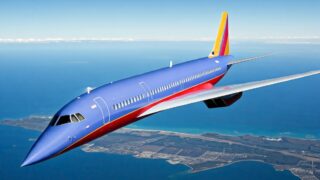
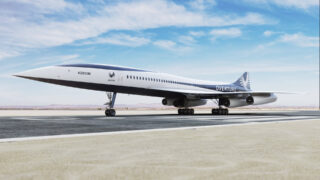
The renderings of the Boom Supersonic aircraft tend to make a 737 look widebodied… so it’s either going to be cramped or it will be very expensive, to make up for the lower passenger load. Or both.
All that to save 2 hours or so on a normally 5 1/2 hour flight to Hawaii?
Indeed, the Concorde had a very narrow fuselage and, of course, the fare was very high… this would appeal to a very specfic, ‘niche’ market….
Twice the speed twice the fuel consumption? The less fuel the better efficiency in weight? How does this factor in on extra time it takes to circle an airport or diversion situation or any other emergency situation as far as running out of fuel? I thought it said it consumed regular jet fuel right. I fear the six Million Dollar Man Introduction. We have breakup, repeat breakup being called.