
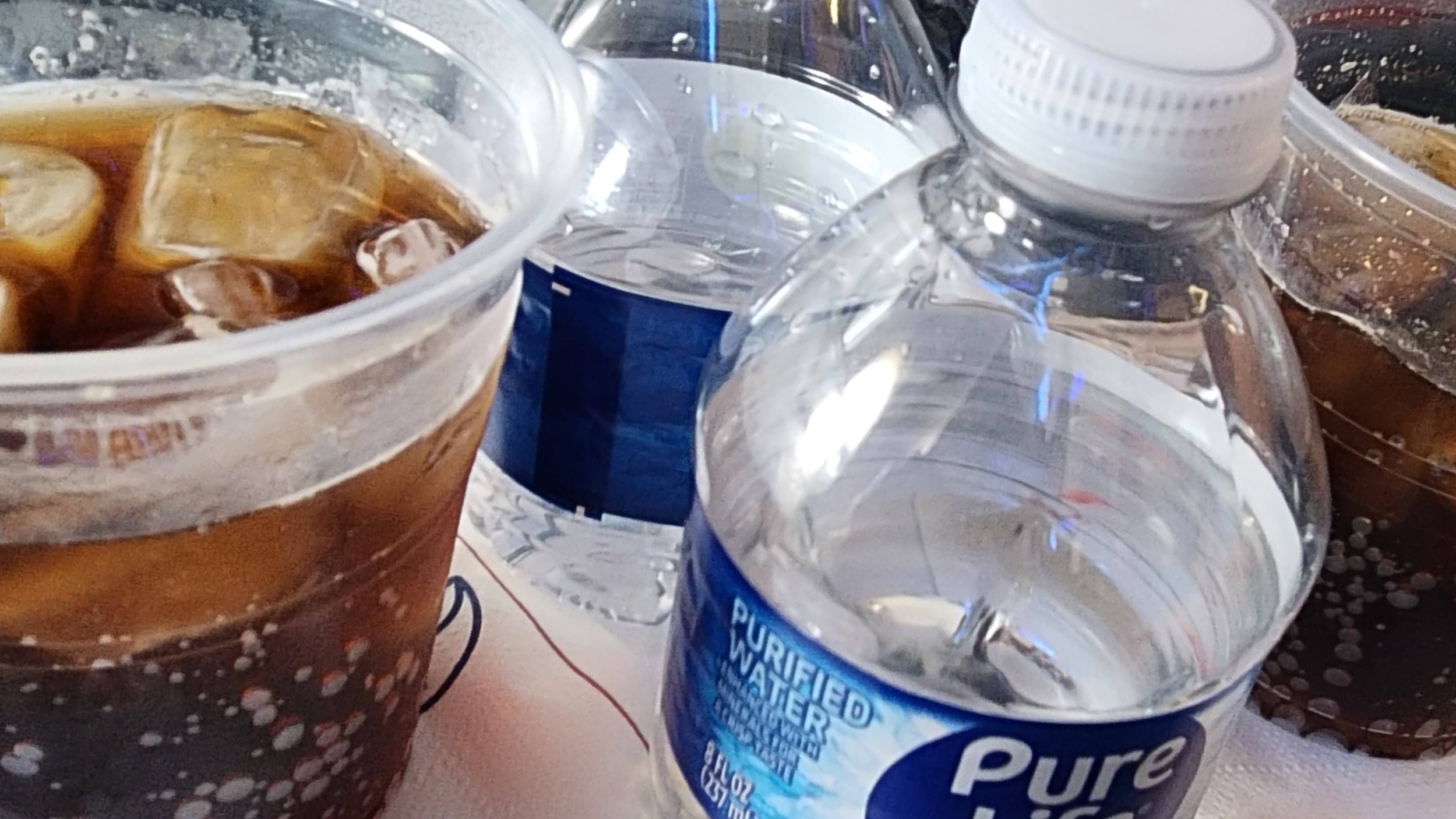
If this were a one-hour hop, perhaps nobody would care. You would crack a can, or sip whatever bottled water they handed you, wash your hands out of habit, and be off the plane before giving any of it a second thought.
Hawaii flights are not that. They are five hours from the West Coast on a good day, longer from the Midwest, and up to 11 hours in the air from the East Coast. That means multiple drink services, bathroom trips, coffee or tea refills, kids asking for drinks again, and galley water getting used over and over. On flights this long, onboard water stops being just theoretical.
A new study just put grades on exactly that. Every major U.S. airline was evaluated on the safety and quality of its onboard water systems, and the carriers flying you to Hawaii landed everywhere from A to D. Some did very well, while others did not. And some Hawaii regulars ended up right in the middle.
This is not something to panic about. But it is a practical note. The grades are out, and if you fly to Hawaii, you are on these planes long enough that they actually matter more than most.
The Hawaii flight scorecard.
Here is the spread for Hawaii travelers to note. Delta sits at the very top with an A grade, while American brings up the rear with a D. That is the full range among the airlines carrying people across the Pacific right now.
Delta earned its A with a perfect 5.00 score. Alaska came in with a B at 3.85, followed by Southwest in C ranking at 3.30, just ahead of Hawaiian, which was 3.15. United followed with a lower C at 2.70. And American finished with a D at 1.75.
That is not a ranking for anything other than water systems onboard aircraft. The takeaway from this is not that one airline is safe and another is dangerous. There is meaningful variation, and most Hawaii flyers are spending long hours on flights whose airlines landed right in the middle.
The Alaska and Hawaiian wrinkle.
This is where it gets interesting for Hawaii. Alaska Airlines earned a B grade and, notably, recorded zero E. coli violations during the study period. Hawaiian Airlines earned a C grade. By April, these two airlines will be operating as one company.
What does that mean for onboard water systems? Alaska has a stronger record in this area. Hawaiian is not at the bottom, but it is clearly not leading the pack either. As operations and maintenance standards are aligned, it is reasonable to ask whether Hawaiian aircraft will eventually be brought up to Alaska’s water-handling standards, or even beyond.
Alaska’s zero E. coli violations did not happen by accident. Hawaiian’s C grade did not either. Which standard wins is worth noting when you are spending six hours in the air.
Why Hawaii flights are different.
Most domestic airline water discussions are built around shorter domestic flights. Ninety minutes in the air does not stress a water system, and passengers have fewer requirements. Hawaii flights do.
Coffee and tea on these flights are not symbolic. People drink more of them. Bathroom sinks get used again and again. All of that draws from the same onboard water systems evaluated in this study.
On a short hop, you could reasonably shrug this off and frankly stay seated, avoiding onboard water entirely. On a long overwater flight, it becomes part of the experience whether you choose to think about it or not.

What Hawaii flyers should actually do.
Given how long Hawaii flights are, the simplest and most prudent approach is to avoid anything that relies on onboard holding tank water, including coffee, tea, and lavatory sinks.
If this bothers you, the workaround is simple and has always been there. Stick to bottled water and canned drinks. Skip coffee and tea made on board. Use hand sanitizer instead of relying on the lavatory sink, which is exactly what the study authors recommend.
If it does not bother you, you are in good company. Millions of passengers will continue flying these routes, drinking the coffee, and never think twice. We have done that for decades on Hawaii flights and, to our knowledge, have never had an issue. Yet we are still taking notice and you may want to as well.
What the study actually measured.
The grades come from a 2026 study by the Center for Food as Medicine and Longevity. The research was based on a three-year window, from October 2022 through September 2025, with data tied to the EPA’s Aircraft Drinking Water Rule.
There was no guesswork or passenger surveys. The data is based instead on airline compliance records, testing results, and documented violations. Airlines were evaluated on the presence of coliform bacteria, E. coli detections, contamination incidents, and the number of violations that occurred per aircraft.
Lower grades were driven by repeated issues, positive test results, and patterns suggesting systemic problems rather than one-off issues.
The water being evaluated is not related to bottled water. It is only the onboard water systems that supply galley coffee and tea, and bathroom sinks.
What the study does not cover.
It did not imply that you would get sick if you drank airline coffee or washed your hands in the lavatory. Millions of people do this every year without any known incident. The grades reflect how often problems were found during testing and aircraft inspections over the study period.
Several airlines, including AA, have pushed back on the study methodology, claiming that the scoring does not fully reflect improvements made or differences in fleet size and testing frequency. That is worth noting. It does not mean the results are without meaning, but it does add further context.
Ice quality on aircraft is generally not related to the airline water system and is brought in and served from bags.
Another data point on Hawaii flights.
This study adds one more thing travelers may want to consider on long flights, especially to places like Hawaii, where you are on the plane long enough for these details to add up.
It does not inform passengers which airline to book with. It does let us all know how the airline we are booking has performed in terms of something likely to be used multiple times on a Hawaii flight.
For most travelers, this will be a footnote. For others, it may change what they choose when the cart comes down the aisle or when they head to the lavatory.
Either way, the water grades are out. If you are flying to Hawaii, does it matter to you where each airline stands?
Get Breaking Hawaii Travel News


If water is boiled, isn’t it safer?
“Use hand sanitizer instead of relying on the lavatory sink”,
This is a joke right?
Note to self- Never, ever shake hands!
And where does the water go when someone washes their hand or hands after using the toilet? What about Hepatitis? Germs going down the sink to be recirculated back through the same spicket? I wonder does the toilet water ever get recirculated also in an isolated system through some filter? I hate to think of it if it didn’t.
The toilet systems are completely separate from the potable water system and have their own holding tanks. They also often use chemicals. In any case you will never be drinking filtered toilet water on a plane.
Also, there are a few airlines that have switched to boxed water, rather than using plastic water bottles. Less plastic waste, and less microplastics in your water. I encourage Alaska / Hawaiian to adopt this practice.
Alaska has already adopted this practice, and that boxed water tastes Awful- stale, warm, and leaves a bad taste in your mouth. I much prefer bringing my own large water bottle with me and filling up with water at my departure airport. Or, bottled water on board. I refuse to drink the boxed water anymore, it tastes unhealthy.
a better research would be the ice used on flights
are they safe from contaminants ??
What about onboard ice? Where does that come from? Canned drinks are generally not refrigerated, so ice is necessary to make them enjoyable. (We are Hawaiian Airlines regulars, flying out of Northern California.) I usually fill a water bottle at a water fountain once past TSA, but also enjoy a soda and/or a cocktail onboard during the 5-hour flight. I always carry a small bottle of hand sanitizer, but hadn’t thought twice about also using the sinks in the heads.
The water on the plane is one thing. What about the ice that gets added to your drinks? Most of the ice is brought on board from.. who knows where?
The ice on a flight from California comes from a reputable mainland company. The ice on flights out of Hawaii probably comes from Hawaii, like in a drink you enjoyed in Hawaii.