

Imagine being on a flight over the Pacific, only to find out your plane can’t proceed with its journey because ATC is down. That’s precisely what happened to plane loads of passengers on Saturday when a critical air traffic control failure left aircraft circling near Hawaii and returning to the mainland.
The disruption stemmed from a malfunction at the Oakland Air Route Traffic Control Center, which manages one of the world’s largest stretches of international airspace. The failure halted planes in flight and prevented others from even entering Pacific airspace. Though the system was restored within an hour, the cascading effects rippled through Hawaii’s flight network, causing delays and diversions throughout the day.
Why flights were stranded mid-air or turned back.
The Oakland ATC Center controls flights over the Pacific, where aircraft rely on its satellite tracking and pilot reporting. The system that manages this traffic, Advanced Technologies and Oceanic Procedures, suddenly went offline, leaving controllers unable to direct flights across oceanic airspace safely.
At least five flights that had just departed Hawaii were forced into holding patterns over the ocean while awaiting clearance. Hawaiian Airlines, Alaska Airlines, Delta Air Lines, and United Airlines were affected. Pilots had to circle near Hawaii but could not proceed further across the Pacific.
Meanwhile, flights departing from the mainland were stopped before entering Pacific airspace. Flights from major West Coast cities, including San Francisco, were forced to turn back. The United left San Francisco for Lihue Kauai but had to return after circling with no clearance to continue.
The FAA confirmed that the system failure caused the chaos. While the issue was resolved in just over an hour, the backlog of grounded planes and rerouted flights lasted well into the evening.
Why this was a bigger issue than a typical flight delay.
Most flight delays happen at airports, where passengers wait at the gate. This was different. Planes were already in the air, some partway to Hawaii, when the system failure meant they couldn’t proceed or had to turn around.
Unlike flights over land, where radar continuously tracks aircraft, transpacific flights depend on satellite communications and pilots’ periodic updates. The ATC system automates this process, allowing controllers to manage flights with precision. Traditional radar surveillance depends on ground-based systems, which are ineffective over vast ocean expanses between the mainland and Hawaii. To address this, systems like ATOP integrate satellite communication data, allowing for effective monitoring and control of aircraft in trans-Pacific airspace.
When the system suddenly went offline, air traffic controllers lost the ability to monitor and guide aircraft safely. Pilots had only two options: hold steady over the ocean or return to the nearest airport without clear instructions about the problem’s resolution.
This underscored the occasional fragility of transpacific air travel for Hawaii-bound travelers. Even a brief ATC outage can cause major disruptions for flights crossing vast oceanic distances.
The passenger experience.
The situation was as frustrating and confusing for those onboard affected flights.
Passengers expecting a routine journey circled over the open ocean or suddenly returned to where they started. Some stared out the window, seeing nothing but the endless Pacific, wondering if they’d even reach Hawaii that day.
On United Flight 344, passengers had been in the air for nearly two hours before the aircraft had to turn around and land back at San Francisco International Airport. Other flights spent extended time airborne, forcing pilots to recalculate fuel reserves and adjust flight plans mid-journey.
The first sign of trouble came from vague airline updates citing air traffic control issues. Pilots and flight crews tried to reassure passengers, but with limited information, many travelers were left with more questions than answers.
Could this happen again?
The ATC system that failed has been in use since 2004 and is generally considered very reliable, but like many aging air traffic control systems, it is also not immune to failures.
While rare, this event raises concerns about whether the FAA’s modernization efforts are keeping pace with growing transpacific flight demands to and from Hawaii.
The FAA plans to upgrade key air traffic control infrastructure, but funding and delays have slowed progress. Although backup procedures exist, this incident proved that even a short system failure can create widespread flight disruptions.
Since this is considered one of the largest stretches of airspace in the world, international flights in the Pacific may have also been impacted. At the same time, the immediate effect was most visible for Hawaii travelers.
While failures like this don’t happen often, this event reminds us that even what we think of as routine flights can experience unexpected disruptions.
We welcome your comments.
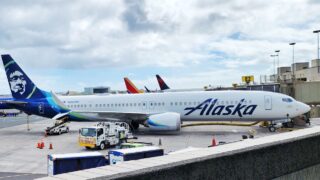
Photo Credit – Beat of Hawaii flying over Oahu.
Get Breaking Hawaii Travel News





One suspects that Elon Musk’s DOGE seizure of the FAA computer systems may have had something to do with this.
I retired 20 years ago after flying the “highways and byways” of the Pacific and Asia for a major US airline in the 25 years post-USN flying ….
In all those years, do you know how many times we got shut down or “stranded” as a result of ATC “failure” .. ?? And we won’t blur the count by including the 2-week shutdown due to the September 11, 2001 attacks.
Go ahead … take a guess … I’ll wait … O.K. time’s up:
Zero would be the right answer …
Something is not working “right” today …
There should be a backup system somewhere? Hawaii would be a good spot!
Aging ATC systems are the culprit, says the article ??
I retired 20 years ago after flying the “highways and byways” of the Pacific and Asia for a major US airline in the 25 years post-USN flying ….
In all those years, do you know how many times we got shut down or “stranded” as a result of ATC “failure” .. ?? And we won’t blur the count by including that 2-week shutdown due to the September 11, 2001 attacks.
Go ahead … take a guess … I’ll wait … O.K. time’s up:
Zero would be the right answer …
Something is not working “right” today …
There should be a backup system somewhere? Hawaii would be a good spot!
As I understand it, there is a backup system. It’s in Alaska. However, I suspect it takes a while to switch over to it. Old systems like this don’t typically run active/active. So when one site goes down, it takes some time to bring it up on the backup site.
Ehhhh … methinks there’s already too many problems with “Paradise” …
Instead, how ’bout Johnston Atoll … Midway Island … Wake Island … even Kwajalein Atoll ??
All in good proximity to TransPac routes … cheaper by far … aviation and comm facilities already in place … limited distractions … no traffic … no crime … gov’t subsidized living quarters … we “own” all of those locations … Great R&R possibilities if you like the “tropical outdoors” … and they all have good weather and RX/TX capabilities basically 24/07/365 …
6 month (?) tax-free tours … ???
What’s not to love … ?? (smiles)
It’s amazing how we can find billions for Ukraine and other arsine pet projects, but we can’t find the money to upgrade the FAA!!!
25+ years since a system update? Maybe instead of sending $20 billion to Iraq so they can watch The Muppet show, we could use that money for these types of updates. Musk has said he can do it faster and cheaper than the Gov’t. Given his success with his space program, I trust he is correct. Make Aviation Great Again! (MAGA)
Had the entire airspace been filled with MAGA supporters, I’d say you get what you deserve. However, it wasn’t and it affected everyone in the air. I’ll probably get flamed for making this political but this is what happens when a majority of the electorate thought that this choice was going to make things better for the everyday person and their personal economics. Prepare for more of this.
Totally agree, many of the commentators here are MAGA’s for sure (Make America Greedy Again). I’m still waiting for those egg prices to drop!!
I think we will need to get used too this as FAA staff gets axed and monies get not spent.
Super… Just Super… Can I remind folks that only several decades ago, within living memory, airliners navigated the route to Hawaii without any of this? They used heading, time. speed. distance, winds and if required, star fixes to calculate positions, large areas of the Pacific were dead zones due to lack of communications… Yet they still made it to their destinations virtually every time. We’ve lost all of that and are now at the mercy of the machines….
Yup, and they were Way fewer flying over the pacific, and they were Much slower. So your comparison is apples to oranges.
a better use of the Muskrat + minions would have been updating the various antiquated computer systems from the 50s, 60, 70s…
I was thinking the same but maybe airlines pilots don’t practice that procedure as much as general aviation.
Aloha !! You must be joking, yes? You make funny …yes ?? (smiling now) …
We “practiced it” (among a 1000 other aviation related things) each and every flight … every day, week, month, year, and decade we were flying … through 10,000’s of aircraft flight hours, simulator checks, and ground school training …
I believe it’s called “professional Airmanship” ???
It’s a technology as old as using Cobol for processing unemployment benefits in California. This is exactly why Trump wants to audit the FAA so their equipment can be upgraded.
BTW don’t you think your exaggeration of the number of employees is over the top? The FAA is an old bloated bureaucracy that needs to overhauled and whoever is going to be doing that work needs to have a good accounting of what employees they have.
Prior to the recent terminations, the Federal Aviation Administration (FAA) was experiencing significant staffing shortages, particularly among air traffic controllers. The agency was approximately 3,500 controllers short of its target staffing levels, operating with about 10% fewer controllers than in 2012. 
In addition to these shortages, the FAA had several hundred open positions across various departments. However, specific data on the exact number of open positions immediately before the recent terminations is not readily available. The recent layoffs, which affected several hundred employees, have exacerbated these staffing challenges, particularly in roles that support air traffic control and safety operations. 
These staffing issues have raised concerns about the FAA’s capacity to maintain air safety and efficiency, especially in the wake of recent incidents and the ongoing need for modernization and training within the agency.
While no ATC controllers were discharged, those who were are maintainers of the equipment for used for ATC. I wonder if an equipment failure caused this & the people charged with maintenance of that equipment were discharged by DOGE recently?
I retired from FAA several years ago. As I recall, the backup for Oakland ARTCC ATOP failure is to switch to Anchorage Center, at least for NOPAC routes. Failing that, the next backup is increasing distance in trail, and restricted altitude changes. The aircraft also talk to each other on 123.45Mhz, and they all have TCAS and ADS-B. It’s strange that they would turn flights back. There’s more to this story.
I was thinking the same but maybe airlines pilots don’t practice that procedure as much as general aviation.
What you said: all true in my experience, Ken …
And thanks to your and your Compadres for keepin’ us “Jet Jockeys” and our passengers and crews safe up there on the NOPAC all those crossings and all those years …
BZ (USN-speak for “Well Done”) Brother …
Slashing FAA’s budget, and firing 1/2 their staff isn’t going to help speed up this sorely needed modernization. ATC isn’t the only system at FAA that needs modernization. I think it would be fair to say that a Lot of their systems are aging out.
The FAA has a bloated department of approximately 50,000 people. 400 paper pushers have been laid off, (.008%). A far cry from 1/2 of staff.
Your point is very well made … but the math is off by a factor of 100 … it’s 0.8% of the FAA workforce. (400/50000 equals 0.008, which equals 0.8% … says me, the retired engineer who still has to double-check my own percentage calculations after all these years!)
What makes you say it is bloated? Do you have some figures from a reliable source to back that up? I know, for example, that for ATC’s they currently have 3500 open positions and are working at staffing levels that are 10% below their 2012 level. I wouldn’t call that bloated. Sorry, I just don’t think that going in with a wrecking ball, and then finding out that “oops, we fired people we actually need”, and then trying to hire them back is a way to run any organization much less a government agency that is so important to the safety of the flying public. Besides, doing an audit is usually done with auditors, not wet behind the ears hackers that have no clue how things work.
We can track missiles, ships, balloons, read license plates and put satellites in orbit for high speed internet – yet, we can’t get ATS or their tech on redundancy in 2025!?
Seriously.
We can, the technology exists. What’s missing is the will, and the budget/people to do it.
I was on United 334 to DC. The pilot let us know we were in a holding pattern. We did not know exactly what the issue was just that there was an issue for the planes that left HI. The pilot later updated us that we had lost 45 minutes and apologized for the delay. We continued on the flight and arrived safely the next morning at 8 a.m. instead of 7 a.m.
According to various sources, UA 344 goes from HNL to IAD. It does not originate at SFO, nor is it scheduled to land there. I suspect there is a typo there. The afternoon flight from LIH to SFO is UA 1112 (which my wife and I have ridden, most recently earlier this month).
Hi Ghery.
Thanks for the correction. It’s been fixed.
Aloha.
400 FAA employees have been laid off including ATCs
at a time when the FAA says we have a shortage of about
2,000 Air Traffic Controllers. Gee, I wonder why we’re having problems?
No ATC’s have been laid off. This appears to be a problem with system hardware anyway.
Don’t you just love people who make knee jerk comments and don’t even know what they’re talking about anyway?
Right?!? It’s actually 3,500 ATCS short, and who knows if they now have the budget to hire them after the Musk budget cuts to the agency. In the meantime, current ATC’s are working double shifts, 6 day work weeks, etc. Burnout is a serious issue among ATCs and getting those positions filled is critical.