

For months, Maui leaders have told residents and visitors alike that the county’s future depends on breaking free from its reliance on short-term rentals. About 2,000 short-term rentals are slated to be eliminated first on West Maui, with county officials saying those units will be converted (“returned”) to long-term housing. Longer-term projections still suggest thousands more units could eventually shift.
Yet at the same time, two different hotel projects in Kihei are moving ahead, both tied to the area once known as the Kihei Research and Technology Park. So what’s the real plan here, Maui? Visitors and residents alike are left scratching their heads.
This appears to be business as usual for tourism, while housing relief remains slow.
Two new Maui hotel proposals march forward.
The first project comes from Regency Namakua, which owns a 2.68-acre vacant parcel at 1355 N. Nihau Street. This parcel is one of the few remaining lots under the original tech park zoning, dating back to the late 1980s, rather than the 2016 update that created today’s Maui Research and Technology Park, also branded as Lipoa. Because of that, Regency must obtain a Use Determination from the Maui Planning Commission to clarify whether a hotel is indeed a permitted use.
For now, the company has presented only illustrative drawings of a 142-room Hilton Suites hotel, emphasizing that these are not a finalized plan. Even so, the proposal drew skepticism from commissioners, who questioned how a business-only hotel plan could realistically be enforced in practice.
Separately, the master developer of the park, Lipoa Investments, is moving forward with its plans for another dual-branded Hilton hotel, totaling about 220 rooms. Unlike Regency, Lipoa does not need Planning Commission approval because its parcel lies entirely within the 2016 zoning that explicitly allows hotels.
Plans call for two four-story hotel buildings, along with a market, cafe, pool deck, and fitness center, with an opening targeted for late 2026.
Between these two projects, as many as 362 additional hotel rooms could be coming to Kihei at a time when Maui hotels remain among the most expensive in the state. For travelers, that could mean more inland hotel choices in the years ahead.
Tech park’s original vision.
The irony of the current debate is rooted in the park’s founding mission. When local leaders first conceived the Kihei Research and Technology Park in the late 1980s, they envisioned it as a means to diversify Maui’s economy, shifting away from its reliance on tourism and agriculture, by attracting high-tech research.
The U.S. Air Force’s High Performance Computing Center, the Pacific Disaster Center, and Kihei Charter School eventually became anchors. The original zoning rules from 1989 carved out space for research, offices, light manufacturing, and even allowed for a small inn to accommodate visitors of the research and technology park.
That limited visitor allowance became the opening that Regency Namakua now seeks to leverage, decades later, for a hotel that could potentially serve both park workers and tourists.
One longtime Maui educator who followed the tech park’s creation observed that it is ironic to see a project intended to diversify the economy now being eyed instead for another hotel.
Maui’s vacation rental ban and rising frustration.
These hotel plans are arriving at the most politically charged moment possible. Maui wants to eliminate about 2,000 short-term rentals at the outset, with broader plans that could eventually affect more than 6,000 units, all framed as a way to return housing to residents.
At the very same time, hotel projects in Kihei are moving ahead. A BOH reader captured the mixed message by asking how eliminating thousands of vacation rentals while advancing hotel projects could reduce the pressure of tourism on Maui.
The result feels to many to be mixed messaging. Officials promote the STR ban as a housing solution, yet developers continue to pursue projects that expand the visitor inventory instead of the housing inventory that is most needed.
For visitors, the result could be fewer vacation rental choices while bringing no relief from hotel prices, which remain among the highest in the U.S.
Tourism still rules Maui.
The developers behind both projects emphasize that their intent is not to add to Maui’s already crowded resort scene, but to support businesses and workers in the tech park. Regency Namakua has framed its vision as more of a business-style property, closer to what travelers might find in mainland office parks, rather than another Maui beachfront destination resort.
Even so, price points may make such distinctions meaningless. With Maui hotel rates already among the highest anywhere, any new rooms are likely to be quickly absorbed by visitors, regardless of the original intent. For those planning a Maui trip, this could mean more inland hotels becoming part of the lodging mix, offering prices not far lower than those closer to the beach.
Maui’s tug-of-war: housing or hotels.
The Maui Planning Commission has not yet decided on Regency Namakua’s request, but the debate itself reflects the larger mixed messages that are part of shaping the island’s future. If the STR ban succeeds in removing thousands of vacation units, pressure will grow to replace those lost visitor accommodations somewhere else. Hotels, even those located inland in a technology park, could be partly where that demand shifts.
At the same time, the promise of new long-term housing remains distant. Lipoa’s master plan for the area includes more than 120 single-family homes, scheduled to start in 2026; yet, critics argue that the pace and scale cannot keep up with the urgency of Maui’s housing crisis. For visitors, the result could be fewer vacation rental choices while bringing no real relief from hotel prices that remain among the highest in the U.S.
What it means for Hawaii visitors.
For Hawaii travelers, the debate reveals just how entwined the visitor industry remains with every planning decision. Even spaces that began with hopes for diversification, like the Kihei tech park, can ultimately come back to hotel development. Visitors arriving in Maui in the coming years are likely to find more inland hotel options, possibly at lower prices than beachfront resorts, but still part of the same limited supply that drives rates higher.
For Maui residents, the frustration is evident. They are being told that STRs must go to protect housing, while at the same time, new hotels are greenlit. A BOH reader captured the mixed message by asking how eliminating thousands of vacation rentals while advancing hotel projects could reduce the pressure of tourism.
The mixed message at the very heart of Maui’s planning is unlikely to go away anytime soon. If anything, the simultaneous plan to eliminate about 2,000 STRs at the outset, with thousands more possible later, alongside the next approval of hundreds of hotel rooms will ensure that tension between housing, vacation rentals, and hotels remains one of the island’s defining issues.
Would you stay in a Maui hotel inland from the beach if it meant a somewhat lower price? Or do you think these projects miss the point of the proposed rental ban? Please share your thoughts below.
The full Planning Commission staff report is available below for those who wish to review the complete county document.
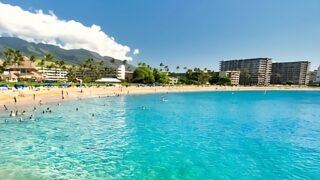
Beat of Hawaii image at Kihei Maui.
Get Breaking Hawaii Travel News





From a tourist that has visited Maui every year for 30 days or more since 1980 it looks like water is very important. 500 gallons a day for private residents make absolutely no sense. Stop all construction of new houses and hotels. ALL not just special interests. Rebuild in Laguna and new crops to take place of sugar cane will break the back of water reserves. Stop new projects all together. Aloha my friends 🌺🌸
My Wife and I are frequent visitors to Maui (our son lives in Haiku) and we always stayed at the Maui Coast in Kihei. I am a proponent to eliminate STR’s for the sake of residents finding a home to live in. I have first hand knowledge of the housing crisis on Maui as my son was part of that. He was lucky enough to find affordable housing (apartment) in Haiku. He used to live in Lahaina, Kihei, Olowalu (on the beach) after the Lahaina disaster. He jumped from place to place. It was extraordinarily heartbreaking. Question is if STR’s are eliminated and become long term…how much will rent be for these units? Will the locals be able to afford them? Will already expensive hotel room rates increase even more for visitors? Will inland hotels become expensive because of demand? Seems like a “Catch 22” brewing.
My heart lies with the housing of locals. Even if it means fewer visits by us. We travel from Pennsylvania…not a short trip.
They are trying to stop STR because they need more homes for the locals. My question would be why are apartment building not being built instead of hotels. after all. we need more homes not hotels. Let turn that land into apartment builds and get more homes built
The purposed building of two hotels in the Tech Park will not ease Maui’s number one problem of “affordable housing”. Tourism is already hurting from the standpoint of prices for lodging, food, transportation and recreation. By passing the STR issue you are eliminating that which is affordable for families. You are making travel to Mexico, Costa Rice, etc. a better travel option. The bottom line is — how many of the existing hotels at any time have full occupancy? There isn’t a need for more hotel rooms no matter where they are located. You are destroying Maui and it’s economy and making it less and less an “aloha” destination.
Why two more hotels and take away short term vacation rentals? Most visitors to Maui or other Hawaiian islands prefer a vacation rental with one, two or three bedrooms and a kitchen to a sterile hotel room away from the coast. lf it is a housing issue you are trying to solve, more hotels is not the solution. If it is the high rate of tourism you are trying to avoid, more hotels is not the solution. Have you determined how many owners of STRs are willing to rent long term? It would be good to have that assessment. The situation has become very political, and does not help the economy of Kihei or West Maui. The long term effects of STR bans hurt the local businesses. Please reconsider the STR ban and more hotels.
If the County wants STR’s for housing,why don’t they just buy them out,then they can do what they want with them.
Because that would cost money. It’s much cheaper just to legislate and tax STR’s out of business
Removing the short term rentals: helps the hotels, higher prices for hotel rooms. Less tourists, less people eating out and less families doing excursions. We are traveling to Maui this September as we have for the past 10 years. We will be there for 11 days and plan it being our last maui trip. We will go to Europe or closer islands to us. We live in Atlanta and the airlines have cut so many flights it will now take 2 days to get home, unless we want to fly a red eye flight, which we don’t like. This year we will stop in Vegas on the way back.
Locals will not be able to afford the ridiculous hoa bills. 1800 a month just in fees? Give me a break. Follow the money! How many commissioners have received money from the hotel industry? We will enjoy our last trip here and say good bye to the islands. The year of the fires we went to Spain and Portugal. We will plan other locations. Maui you have told visitors were not welcomed. The difference in welcoming is very noticeable.
No inland stays for me. My dream view is of Ocean. For the price of Hawiian travel, inland is not an option.
The move to take vacation rentals off the market was never about supporting housing. It was always about supporting the hotel owners who fund the county and state politicians’ campaigns
Thank you for the sanity. And for speaking it so succinctly.
The bill to reduce STRs is deeply flawed and the impacts receive little if any press. Additionally, Maui’s elected officials never address it in their discussions about STR eliminations. UHERO, Hawaii’s research organization completed a study concluding that passage of this bill will, among other things:
Reduce visitor spending by $900M annually
Cost 1900 jobs
Reduce tax revenue by roughly $75M annually
None of these impacts are discussed my Maui’s council. There is no plan to replace the lost revenue even as demand for services soars due to increased unemployment.
One can only conclude that the Maui Council is:
1. Oblivious
2. Clueless
3. In the pocket of the hotel lobby
4. All of the above
Passage of this bill will be disastrous for Maui and will exacerbate the existing problems without solving any of them. The affordable housing issue has been decades in the making and the Hawaiian government has largely ignored it for as many years.
Add 5. Maui wants to reduce STRs and tourism in general, and is willing to tolerate lack of business and loss of residents in order to obtain a better “balance”. I’ve heard some casual discussion about things being much better at the other end, after they have worked through all the carnage.
I am very sad for those in Maui who depend on tourism. They are the people we have enjoyed and appreciated during our numerous visits to the islands of Hawaii. It sounds like the changes the Maui government has in motion will affect them negatively. We will be visiting Maui in November and then again next July. At this point, looking forward, they will probably be our last visits to Maui. We’ll visit Kauai and the Big Island in the years we have left to travel.
We would stop coming to Maui if we couldn’t stay on the beach. Wouldn’t stay inland no matter the price. We stay in Kiehi because it is less crowded, please don’t ruin it.
To everyone who thinks STRs will be completely phased out entirely, they won’t be. This is just for the Minatoya list. Existing zoning and properties that have gone through the STR permit process will remain.
For the Tech Park, Business-only hotel can be easily regulated by requiring companies that need accommodation space for a business visitor to register with the hotel. Any guests would only be able to book a room at the hotel if they are sponsored by a company. Registration would be restricted to Tech Park businesses, State, County, and Federal workers on official business. Businesses and government workers abusing this for personal travel would be sanctioned and their ability to use the hotel would be suspended and could be subject to fines. This hotel would not be listed among the Hotel Booking sites and would have to book directly with the hotel itself. If the intent is to truly keep this as short term workforce accommodations, this is not that hard to figure out.