
Hawaii may be on the verge of a dining shift that will impact visitors, even if only a small number of restaurants ever receive global recognition. A bill moving through the Legislature and supported by the head of Hawaii tourism would open the door for the Michelin Guide to operate in Hawaii for the first time. If that happens, the impact will not be evenly distributed across the islands, and it may not work the way many travelers expect.
For visitors, Michelin can work as a shortcut. It influences where people book reservations, how they allocate limited vacation time and money, and which meals become the centerpiece of a Hawaii vacation. When Michelin enters a destination, it does more than rate restaurants. It influences dining behavior and reshapes expectations before a traveler ever lands.
A bill that could raise Hawaii foodcation expectations.
Senate Bill 2072 passed its first reading on January 26 and had a public hearing today before the Senate Committee on Economic Development and Tourism, where DBEDT Director Jimmy Tokioka testified in strong support. The committee deferred the measure, though it can still advance this session.
If ultimately approved, the law would take effect July 1. The bill authorizes the state to enter into a contract to bring the Michelin Guide to Hawaii, but does not specify the cost or duration of that agreement.
That expense omission is noted because other destinations have paid substantial sums to secure Michelin coverage. Florida committed more than $1.5M, Atlanta reportedly paid about $1M, while Texas cities collectively spent roughly $2.7M. These were not just symbolic gestures.
They were deliberate investments aimed at reshaping how visitors perceive those places. And to a large degree, that strategy has worked. Florida now has 31 Michelin-starred restaurants, and Orlando used its Michelin partnership specifically to shed its long-standing reputation as America’s chain restaurant capital. Texas reached 18 starred restaurants across Houston, Dallas, Austin, and San Antonio in just its second year, spanning 140 total recognized establishments and 33 cuisine types. Both states drew new culinary talent and international dining attention in the process.
The Hawaii Tourism Authority also supports the bill and views Michelin as a way to elevate the visitor dining experience and attract more high-spending travelers.
DBEDT’s testimony cited the rise of “foodcations” as evidence that more travelers are planning trips specifically around dining, and argued that Michelin recognition would help Hawaii better compete for those visitors.
That support comes as visitors are already navigating rising costs across accommodations, restaurants, rentals, resort fees, and other layered charges that now define Hawaii travel.
Hawaii has had its own fine dining award program since 1984
Long before Michelin entered the conversation, Hawaii has rewarded its own restaurants through the Hale ʻAina Awards, launched by Honolulu Magazine in 1984. The awards are voted on by readers and industry participants across multiple categories and islands, reflecting both visitor enthusiasm as well as sustained local support.
Recent Hale ʻAina winners include Mama’s Fish House as Best Maui Restaurant and Giovedì as Best New Restaurant, alongside dozens of other honorees spanning fine dining, neighborhood favorites, and casual standouts. The awards reflect a broader view of Hawaii’s food culture than Michelin’s star system, recognizing excellence across styles rather than focusing narrowly on tasting-menu precision.
What Michelin actually rewards.
Michelin stars are not awarded for popularity, ocean views, or cultural importance, three things Hawaii restaurants rely on heavily. They are based on food quality, technical execution, consistency, and the chef’s point of view. Service and setting are officially separate considerations, but they also shape the experience inspectors encounter. Some of Hawaii’s most celebrated restaurants are beloved for where and what they are and represent, not necessarily for the kind of precision Michelin seeks to measure within that framework.
In practice, Michelin strongly favors restaurants built around tasting menus, precision, and tightly controlled kitchens. In the U.S., the average one-star tasting menu now runs about $165 per person pre-tax, pre-tip, and pre-drinks, while two-star experiences average closer to $256. Those numbers reflect the added staffing, costs, and labor that Michelin-level dining implies. Apply that filter to Hawaii, and the list of restaurants that could realistically compete quickly gets short.
A thin and uneven contender list.
Hawaii has exceptional food, but few restaurants operate in a way that aligns with Michelin’s model. The realistic contenders are concentrated almost entirely on Oahu, where population density, staffing availability, and year-round demand make fine-dining operations more viable. Honolulu already carries the majority of the islands’ high-end dining, and Michelin recognition would amplify that imbalance.
Beyond Honolulu, the field drops off quickly. Individual restaurants on other islands may compete, but the overall field thins considerably as fewer restaurants realistically fit Michelin’s criteria. This is not a judgment on quality or creativity. It reflects how narrowly Michelin chooses to measure excellence, and how Hawaii’s strengths do not always align with that lens.
Where Hawaii’s food culture and Michelin diverge.
Hawaii’s culinary identity runs deep and wide, from plate lunches, poke, and shave ice to legitimate fine dining at places that have earned national recognition. But the everyday food culture that most visitors connect with leans casual, affordable, and rooted in local history, migration, and place. That is not what Michelin is designed to reward. Its framework favors a narrower expression of excellence, one that exists in Hawaii but certainly does not define it. That mismatch is why expectations around Michelin in Hawaii need to be realistic from the start.
Why Bib Gourmand may matter more.
If Michelin does come to Hawaii, its Bib Gourmand category may matter more to visitors than stars. Bib Gourmand recognizes restaurants that offer high-quality food at more accessible prices, without the tasting-menu structure that star ratings often reward.
In Florida, 44 restaurants carry the Bib Gourmand designation, compared to 31 with stars, and both lists are equally important guides for visitors. For a state where the most memorable meals are often a $20 plate lunch or a poke bowl from a roadside counter, Bib Gourmand is the part of the Michelin system that could actually reflect how visitors experience Hawaii food.
Why Florida is not a clear comparison.
While Florida now has dozens of Michelin-recognized restaurants, it also has structural advantages that Hawaii lacks. It has larger cities, larger labor pools, lower operating costs, and easier supply chains, all of which make Michelin-style dining more sustainable. Hawaii’s geographic isolation, high costs, and staffing problems impose limits that no rating system can impact.
What visitors can realistically expect.
For visitors, the most likely outcome is not a dramatic transformation of Hawaii’s dining scene, but rather a shift in attention. A small number of restaurants may become harder to book, prices at the top end may continue to rise, and Oahu’s role as the dining hub will certainly strengthen.
Most Hawaii visitors will still eat the same way they always have, guided by curiosity rather than stars. Michelin will not redefine Hawaii food culture, but it may influence which restaurants get amplified, including through Bib Gourmand, and which remain invisible to star-chasing travelers.
If Michelin arrives, will it actually help visitors find better meals in Hawaii, or will it simply raise prices or spotlight a narrow slice of dining while most of what makes eating here special remains off the guide entirely?
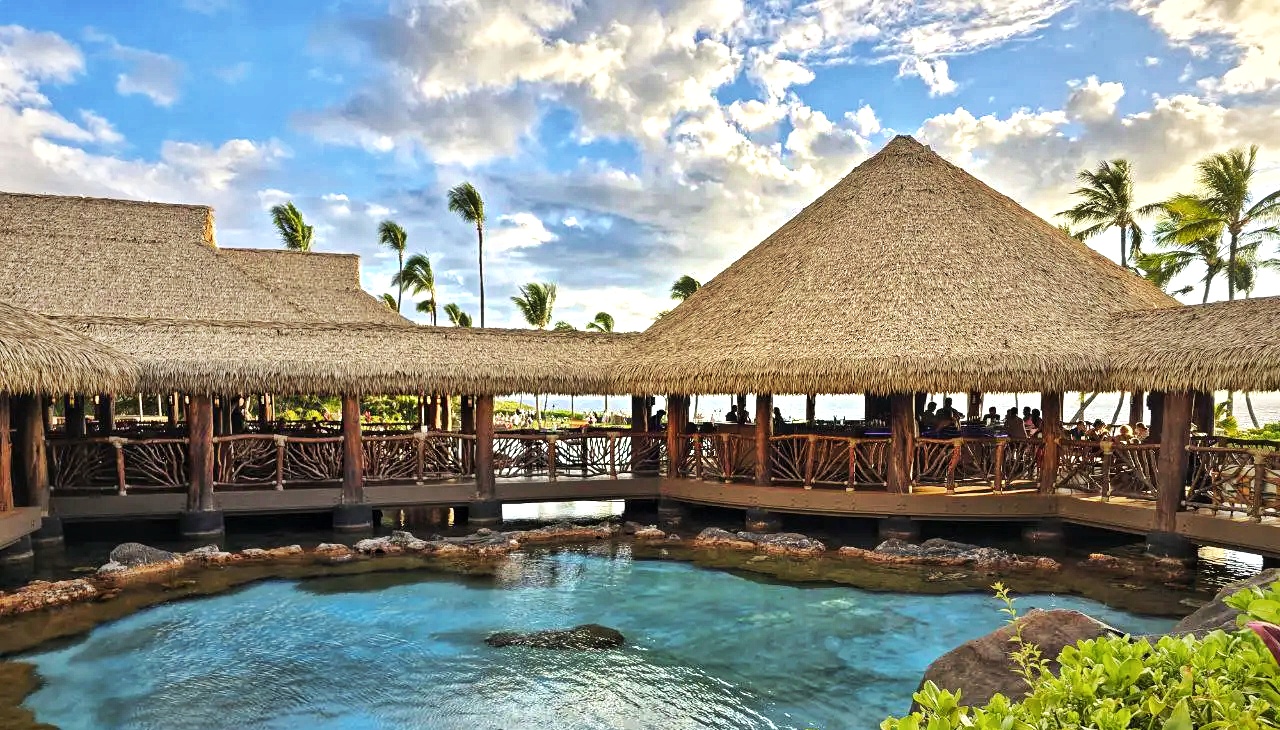
Photo Credit: © Beat of Hawaii at Humuhumunukunukuāpuaʻa, Grand Wailea.
Get Breaking Hawaii Travel News




Another example of wasted tourism dollars. As the article points out, only a few high end restaurants that are already difficult to get a reservation for will be eligible for a Star. Why are we spending millions of dollars to advertise these already successful restaurants? I’d rather see money spent on rest stop facilities & removal of broken down or abandoned vehicles. Foodies already know where the good restaurants are