
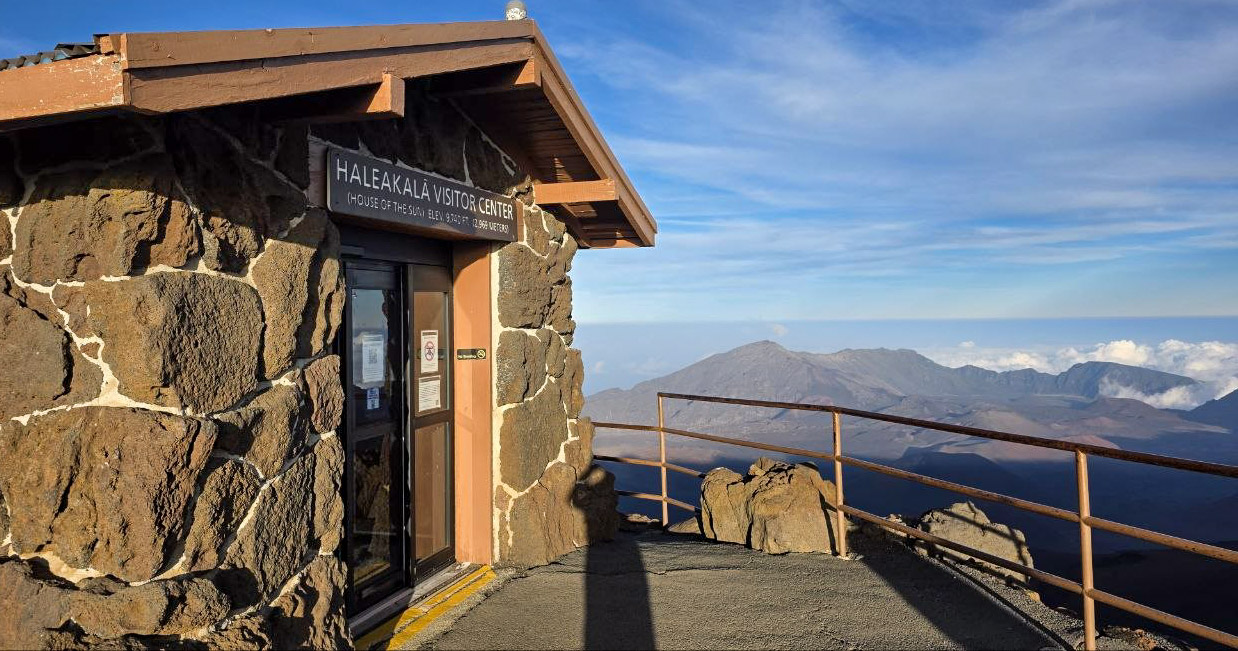
Haleakala’s summit visitor center reopened May 21, three months after closing and six weeks past the original April 10 target date. The reopen comes amid constraints we have been tracking since December, when rangers told us they turned away more than 120 vehicles in a single afternoon. The visitor center is back. The bigger problem at the summit has not changed.
For many Maui visitors, the Haleakala sunrise reservation is one of the biggest moments of the trip. That’s been the case for decades. People wake up in the middle of the night, drive the long, winding road uphill in the dark, bundle against near-freezing temperatures, and wait above the clouds for sunrise. We’ve done it ourselves.
Sunset visitors, who have been coming in far greater numbers since sunrise, have largely become off-limits due to advanced reservations and now face a different version of the same problem: no reservation system protecting their access, and rangers turning vehicles away at the entrance station without advance notice.
Over the past months, a major part of the Haleakala experience was missing during one of Maui’s busiest visitor periods, adding to a parking shortfall, a water infrastructure project, and a three-hour-early sunset warning issued by the National Park Service in January.
The Haleakala Visitor Center at nearly 10,000 feet elevation closed in February for a temporary repairs and improvements project. At the time, park officials projected an April 10 reopening date. That date came and went while visitors kept arriving. The building has now reopened, at least partially, but the version visitors are getting this summer will not be the fully restored summit facility many remember from past Maui trips.
The closure never shut down Haleakala access itself. The summit road stayed open. Parking remained available, though reduced due to the water infrastructure project that began on January 12. Sunrise reservations continued normally. Those visitors could still reach the crater overlook areas before dawn. What closed was visitor center operations attached to one of Hawaii’s best-known and most loved travel experiences.
What actually reopened on May 21, and what didn’t.
The National Park Service announced that the Haleakala Visitor Center reopened on May 21 following a lengthy closure, but the reopening came with limitations many visitors may not have realized. Only portions of the building are operating. Park officials say the reopened facility includes temporary exhibits, visitor information, and retail merchandise while ongoing renovation work continues behind the scenes. At nearly 10,000 feet the visitor center serves a much larger role than travelers expect from the modest building.
The building serves as a shelter from intense wind, cold temperatures, and shifting summit weather that still catches Maui visitors off guard year-round. Families use it to warm up. Visitors regroup there after long drives from distant resort areas across the island. Others stop in for questions, maps, souvenirs, or a brief escape from the cold. This summer, visitors are returning to a summit facility that, while reopened, remains partially under construction.
The April 10 reopening came and went.
When the closure began in February, the National Park Service projected the work would be completed by April 10. That timeline covered spring break and Easter travel, when Haleakala sunrise demand surges and reservations become especially competitive. April 10 arrived without any announcement of reopening. The building remained closed while sunrise visitors kept showing up every morning for one of Hawaii’s most iconic and difficult to achieve experiences. The eventual May 21 reopen pushed the project out roughly six weeks.
Construction delays are not unusual in Hawaii, particularly at remote, weather-exposed locations like the Haleakala summit. But for many Maui visitors, this is not another sightseeing stop on a Maui vacation. It is the centerpiece of the trip. Many visitors did not realize the summit visitor center was closed until they arrived in darkness at the parking area.
Sunrise at 10,000 feet without any indoor space.
Visitors who have only seen Haleakala in photographs underestimate what the summit feels like before sunrise. The crater scenery looks volcanic and otherworldly, but the climate feels closer to winter mountain conditions than tropical Hawaii. Temperatures near sunrise fall into the 30s and 40s, and wind exposure makes conditions feel even colder. That is where the visitor center plays a big role in the experience.
What visitors paid for during the three-month gap.
Visitors planning months ahead paid the same entrance fees, competed for the same sunrise reservations, and arrived to a summit missing one of its core facilities. Most did not know until they arrived at the very cold parking area before dawn.
How the partial reopen compares to a finished building.
The May 21 reopening restores part of the building, not all of it. Visitors this summer will find temporary facilities where the fully restored visitor center once stood, with repairs and renovations continuing behind the scenes. At nearly 10,000 feet before sunrise, the full visitor center experience will continue to be missed.
This sits atop constraints we have been reporting on for months.
The visitor center closure was not a single disruption. It came alongside a parking reduction that began January 12 for a water infrastructure project the Park Service said would run several months, with sources now telling us it may run longer. It also came with the January 16 Park Service alert warning visitors to arrive three hours before sunset and acknowledging that vehicles are turned away once capacity is reached.
This came after our December visit, documented firsthand, during which rangers told us they had turned away more than 120 vehicles in a single afternoon. We covered each of those steps as they unfolded. The visitor center closure became the fourth layer in five months.
Reader comments on those earlier pieces ran in one direction. Visitors and Maui residents alike pointed to a pattern of overlapping visitation constraints announced with little lead time. Several called it incompetence. Several said it signals that they believe visitors are not welcome. Whatever the framing, the cumulative effect on a Maui trip planned six months in advance has been the same.
What Maui-bound travelers should expect through summer.
Visitors planning Haleakala sunrise trips through the summer should assume the summit experience is open but not fully restored. Sunrise reservations continue normally, the crater views remain unchanged and spectacular, and rangers and summit access remain in place. The visitor center itself will remain only partially reopened until the work is completed.
Perhaps most importantly, parking remains reduced from the water project. And sunset visitors still face the three-hour-early warning.
Travelers should continue preparing for summit conditions more seriously than they would for other Maui destinations. Warm layers still count, even in summer. Wind protection still counts. Visitors may spend more time outdoors than expected, depending on crowd levels and the extent of interior access available during the ongoing work.
For first-time visitors, the biggest mistake is assuming Haleakala is anything like visiting a Maui beach just because both happen on the same island. The summit is in a completely different climate from what most travelers encounter anywhere else during their trip.
Did you book a Haleakala sunrise between February and May and find out only at the summit parking lot that the visitor center was closed? Or have the overlapping parking, sunset, and visitor center constraints changed how you would plan a Maui summit trip?
Lead Photo: © Beat of Hawaii at Haleakala Visitor Center
Get Breaking Hawaii Travel News



To be fair, the visitors center hasn’t been open before Sunrise for years now. When they shut down during covid, it never reopened during those early hours due to staff shortages.
The incompetence of Maui leadership shows up again.
They give you a date and do not fulfill it. Then they boast it is open but it’s is not complete.
Have you seen any progress on the overpass in Kihei for the school? Ofcourse not. Even though it is state mandated.
How hard is it to put the electronic signback up at hana hwy and Haleakala 36/ 37 interchange?
Just say Summit is full for sunset or sunrise.
They took it down years ago.
How hard is it to actually get work done in time they told to the public months in advance?
The incompetence is mind boggling.
But so typical here in Maui.
As a resident I can tell you they will give you a date and then it will be years past said date before its completed on every major project.
These people would all be fired on the mainland.
Another example:
Go to Lahaina and let me know how many bussiness are open again on Front Street and by the harbor?
Its again, laughable incompetence.
Red tape excuses…
Sounds like it can just be summed up in 2 words, “island time” !
… aloha, 🙂
We have the same issue at Kokee State Park. People have little concept of what a change in elevation means. Maybe a weather link? Companies driving people up there should let their customers know what is needed. Seems like there are financial opportunities to sell sweatshirts and hot beverages, providing there are restrooms. The Haleakala NP seems to have forgotten who their customers are.
Does the “white knuckle” drive up the NPS Haleakala Road, sans road shoulders & guide rails, bother anyone else? I’ve driven it on three occasions, each several years apart; and it doesn’t seem to be getting any less intimidating! Maybe I’m just getting old !!!
Please clarify “three-hour-early warning” – is that:
1. a radio broadcast message three hours before sunrise about park’s status
2. a sign posted at the top indicating that the site is open
3. a sign posted at the top indicating that the parking lot is full
4. a warning sign posted at the “park” entrance near the top of the volcano
5. a warning sign that sunrise or sunset have been cancelled
6. ??????????????????????????????????
I wonder what would happen if there were penalties for late completion of construction projects?
And don’t say the delays are unavoidable – if they’re happening every time, they should be able to be figured in.