

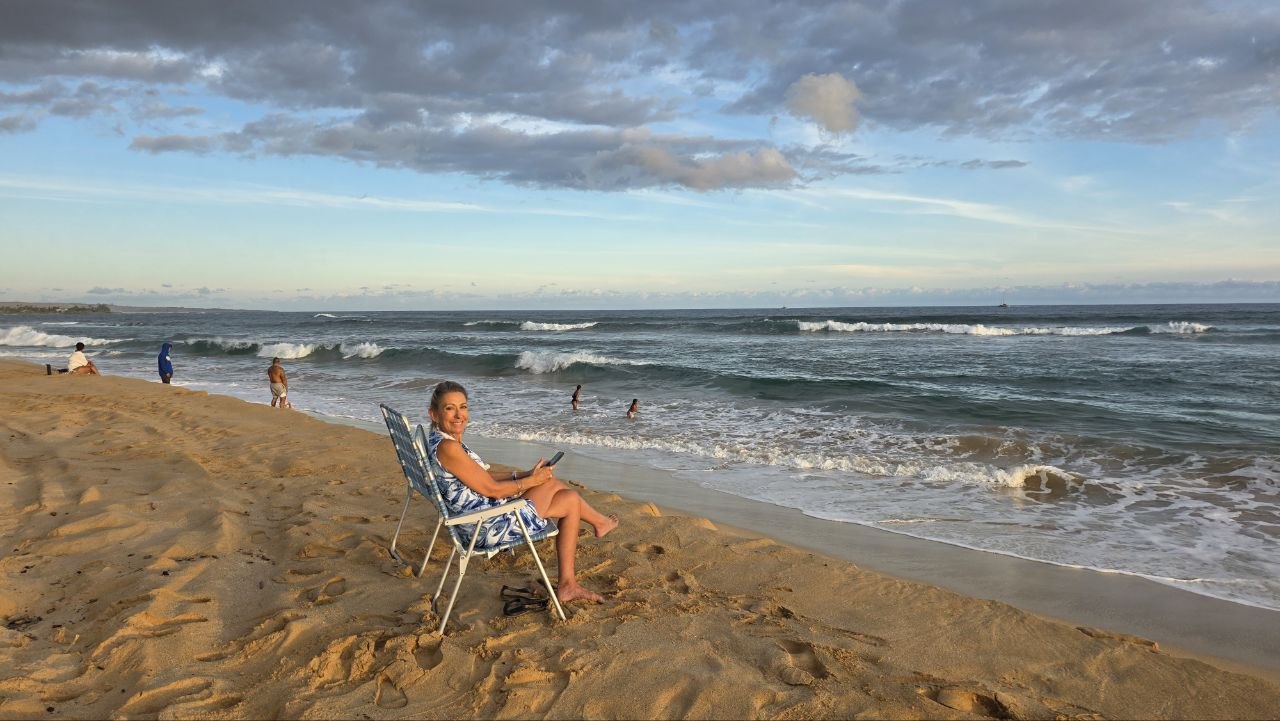
Kekaha Beach on Kauai has never felt like a place that changes very much. It is one of those forever Kauai beaches, especially at sunset, when locals and visitors find their own place along the wide stretch of soft sand or gather near the picnic tables at MacArthur Park, also known as Kekaha Beach Park. There are restrooms, showers, BBQs, a lifeguard tower, and plenty of room to spread out, and even when trucks are driving along the beach, the scene, at least to us, still feels like a step back in time.
Jeff hangs out there regularly and often sits on one of the sand dunes to watch the sun go down. On a clear evening, Ni’ihau sits across the water on the horizon, and the entire setting feels like the epitome of Kauai’s sleepy West Side.
News of a reported 15-foot tiger shark there immediately caught our attention. Sharks are not unheard of in Hawaii waters or even here at Kekaha, but a sighting of one this large naturally raises another question: if a shark was just seen offshore, why are Hawaii’s warning signs often removed by the following afternoon? The answer is more specific and nuanced than many visitors ever realize.
Kekaha’s 15-foot shark wasn’t the whole story.
According to a preliminary report from the Kauai Ocean Safety Bureau, officials spotted a 15-foot tiger shark in waters off Kekaha Beach on August 3. The County of Kauai advised against swimming and other ocean activities, while officials posted warning signs and began monitoring the area.
The county said the warning signs would be removed during the afternoon of August 4 if there were no additional sightings. That may sound surprisingly fast after a shark of that surprising size was seen, but the response that follows a report like this is something most visitors rarely hear about.
Some understandably wonder if a shark warning means the beach has suddenly become dangerous and should remain under warning until officials know the shark is really gone. That is not, however, quite how Hawaii’s ocean safety system is designed to work.
What happens after a Hawaii shark is spotted.
When a credible shark sighting is reported, Ocean Safety’s immediate priority is to alert people already in the water and anyone arriving at the beach. Warning signs are posted while lifeguards and other officials monitor the area for further sightings or unusual activity.
Hawaii’s standard shark-warning protocol has generally been to leave signs in place until around noon the following day, after county or state personnel have surveyed the water for any additional shark presence. Counties can extend that period when another sighting, changing conditions, or other circumstances warrant it.
The timing of this Kekaha announcement followed that same pattern, although the county described removal during the following afternoon rather than promising a precise time. The signs were to remain in place while officials continued monitoring, with removal dependent on there being no further sightings. We haven’t headed out this afternoon to see if they are gone.
The warning therefore does not simply expire after a predetermined number of hours. Officials are responding to a known sighting, watching for evidence of continued activity (we’ve heard of none), and then deciding whether the temporary warning should remain.
When Hawaii shark warning signs come down.
Removing a shark warning does not mean officials are declaring the ocean safe, nor does it mean they are guaranteeing that no sharks remain anywhere nearby. No one could make that promise in Hawaii or anywhere else people enter the ocean. Instead, officials are ending a temporary advisory after monitoring has found no further shark activity.
Visitors may interpret the removal of the signs as an official all-clear, while others may see the original sighting as evidence that the beach will remain unusually dangerous for days. Neither interpretation is exactly what the warning system is intended to convey.
Kekaha has drawn attention for shark incidents before. We looked at the longer history and conditions surrounding this stretch of shoreline in our 2024 report on why this sleepy Kauai beach became a shark attack hotspot. This latest sighting adds to that history, but it does not change what the warning signs themselves are intended to accomplish.
What a Hawaii shark warning can mean for your beach day.
People who live in Hawaii learn to respect ocean warnings without treating every one of them as a reason for panic. At the same time, ignoring a posted warning because the water looks calm or because other people are already swimming may defeat the purpose.
For visitors, the practical response is to read the warning, understand why it was posted, and let that information help guide decisions for that day. After the signs come down, ordinary ocean judgment still applies, including paying attention to lifeguards, visibility, currents, and water conditions.
The County of Kauai directs beachgoers to speak with a county lifeguard (and there is one at Kekaha), call the Ocean Safety Bureau at 808-241-4984, or check current Kauai beach and ocean conditions before entering the water. Those resources are useful because conditions can change long after a news article about the original sighting has been published.
For anyone standing at Kekaha and wondering what to do, the sign provides information for a decision directly in front of them. When that sign comes down, it merely means officials found no further evidence that the temporary warning needed to continue.
Photo Credits: © Beat of Hawaii at Kekaha Beach, Kauai.
By Rob and Jeff, Beat of Hawaii.
Some of the most meaningful parts of Hawaii are the ones visitors walk right past without knowing they are there. We’ve spent nearly 20 years finding them firsthand for BOH as full-time Hawaii residents reporting on travel, culture, and island life, and telling you what they mean for your trip. Join us →
Get Breaking Hawaii Travel News




I’ve lived in Hawaii long enough to know sightings happen frequently. Awareness is important, panic isn’t. The size of this one did get my attention.
I’m happy there’s a lifeguard right there. We always check conditions before getting in anyway, but it’s good to remember sharks belong there whether we see them or not.
We were at Kekaha just a few weeks ago when we stopped on the way back from Kokee. It was lovely. This just reminded me to respect the ocean every single time.
Tiger sharks, like almost all shark species are nomadic, not territorial. There’s usually no need to keep signs posted for more than 24 hours. Just because one was “spotted” doesn’t mean they haven’t been there all along. It’s their ocean, not ours.