
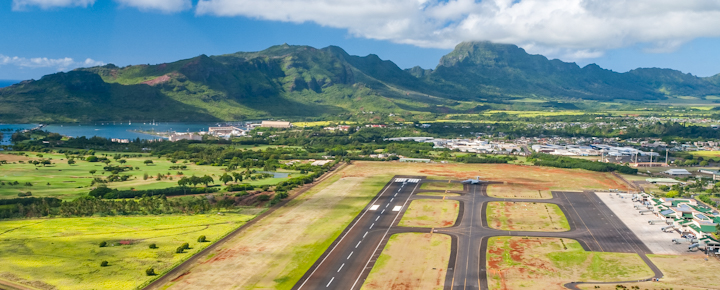
Flights may have resumed across Hawaii, but the situation is anything but smooth. By 9 a.m. on Wednesday, more than 150 flights had already been delayed or canceled statewide, based on real-time data from FlightAware. That included dozens of disruptions at Honolulu, Maui, Kona, Hilo, and Lihue airports, and came hours before the day’s peak travel began.
The chaos follows Tuesday’s tsunami alert, which forced a virtual stop in Hawaii air traffic and pushed aircraft and crews out of position.
While mainstream media headlines declared that flights were back to normal today, the data and the passengers still waiting tell a different story.
Honolulu leads in cancellations and delays.
Honolulu’s Daniel K. Inouye International Airport (HNL) was hit hardest in the early morning hours. According to FlightAware, 26 cancellations and 57 delays had been recorded by 9 a.m.
United Airlines canceled 17 percent of its schedule, while Southwest delayed 19 percent of its flights. Hawaiian Airlines reported 5 cancellations and 16 delays. Alaska canceled a quarter of its flights to Honolulu. American and Delta also reported operational snags.
Although flights had begun resuming overnight, the level of disruption suggested a long and uneven recovery from yesterday.
Maui and Big Island flights remain turbulent.
Kahului Airport (OGG) on Maui reported 11 cancellations and 22 delays before 9 am as well. United and Alaska each canceled over 25 percent of their flights. Hawaiian, Southwest, and American Airlines also experienced delays.
On the Big Island, Kona’s Ellison Onizuka International Airport (KOA) saw 5 cancellations and 18 delays this morning. Alaska Airlines delayed more than half its flights out of Kona, while Southwest delayed over a third. Even Hilo International Airport (ITO), typically quieter, is having a better day, with 1 cancellation and 5 delays.
Each of these disruptions appeared connected to mainland aircraft being out of position and crew schedules knocked off track by Tuesday’s islandwide shutdown.
Kauai feels the ripple, too.
At Lihue Airport (LIH) on Kauai, three cancellations and nine delays had already been recorded by 9:00 a.m. Alaska Airlines delayed over a third of its morning schedule. Hawaiian Airlines and Southwest were also affected.
Even smaller and commuter-focused airports, such as Lanai and Molokai, reported delays and cancellations, suggesting that the tsunami’s travel impact extended across the entire island chain. While the visitor volume at these airports is lower, the effects are still meaningful, especially for residents and those connecting through interisland routes.
Mainland delays ripple into Hawaii.
Flight disruptions weren’t limited to the islands. By 9 am, major West Coast gateways, including Seattle, Los Angeles, San Francisco, Phoenix, and Denver, were already showing delays or cancellations on flights bound for Hawaii.
Seattle-Tacoma International (SEA), where Alaska Airlines is based, had delays on 37 percent of early Hawaii flights. Los Angeles (LAX) and San Francisco (SFO) each reported multiple inbound and outbound disruptions, while Phoenix (PHX) and Denver (DEN) faced delays of 50 percent or more on Hawaii-connected routes. San Diego, Oakland, San Jose, Sacramento, and Portland also showed smaller but measurable impacts.
These mainland delays added to the pressure on Hawaii’s morning departures. In many cases, aircraft had not made it back from the islands in time for scheduled turnarounds, extending the effects of Tuesday’s shutdown into today’s operations.
Airline messaging does not match FlightAware data.
This morning, several news outlets reported that airlines had resumed regular service. KOMO News quoted Alaska Airlines as saying flights had returned to normal. The Seattle Times published a similar headline.
But the data from FlightAware and reports from travelers inside Hawaii airports that we are receiving paint a different picture. Flight reassignments, lines, and gate crowding were widespread across Honolulu, Maui, and the other islands.
While flights are resuming, the overall system has not yet fully recovered. That will take some time.
What travelers should expect next.
Even with flights in the air again, operations are anything but smooth. Aircraft are still out of position. Crews are still playing catch-up. Delays are still occurring at every major island airport.
If you’re flying today or tomorrow, please assume your flight may be subject to change. Hawaiian, Alaska, Southwest, and United are all posting new delays and gate shifts throughout the day. Use the airline app, keep alerts on, and do not assume your flight will go out on time, even if it’s currently listed as on schedule.
Bottom line for Hawaii visitors.
While the immediate tsunami threat has passed, its travel impact is still unfolding. Early data today make it clear that airlines and airports are still recovering, and travelers should not assume entirely smooth operations, even if flights are no longer grounded.
For background on how this all started, see our earlier report: Hawaii travel meltdown as tsunami alert empties beaches and grounds flights.
While the immediate tsunami threat has passed, its travel impact is still unfolding. Early data today make it clear that airlines and airports are still recovering, and travelers should not assume entirely smooth operations, even if flights are no longer grounded.
Get Breaking Hawaii Travel News

It’s like a non stop carosel front door. People scheduled to arrive while in the same day people are scheduled to leave. When the weather steps in it throws a wrench in the whole system. Delays, rescheduling, and havoc. Traveling to an island has it’s risks and unfortunately this is the chance to risk when you book. Reservations made months ahead to be destroyed in a matter of hours. What a way to finish or start a Hawaii vacation. Those departing do you really think they were picky about only getting a first class comfy seat? IMO I seriously doubt it. Maybe this is why economy, affordable airfare is still available. Emergencies.
I’m expecting lots of comments, blaming the incompetent and corrupt Hawaiian state government, the unfriendly locals, and of course, the “lack of Aloha spirit.“