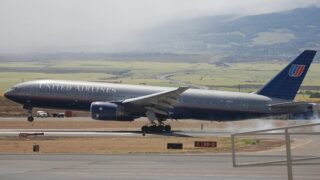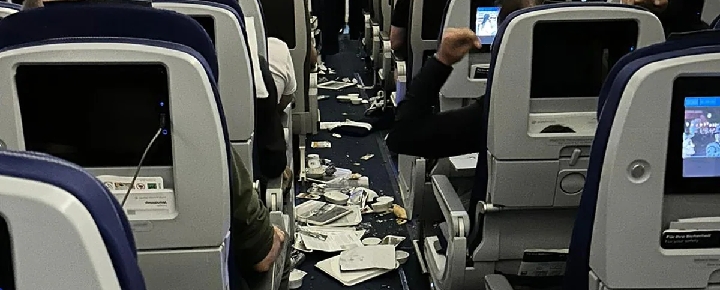
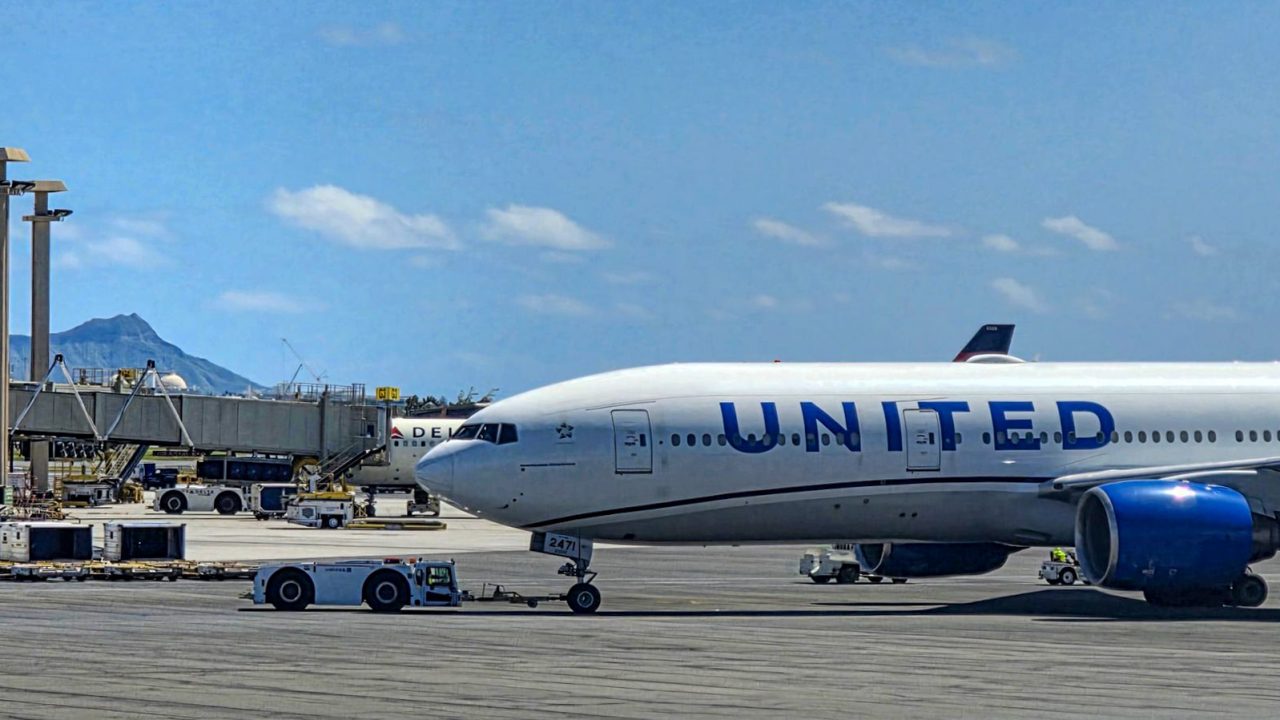
Passengers flying from Honolulu to Los Angeles Wednesday evening were at the tail end of their flight when their Boeing 777 suddenly lurched, leaving four flight attendants injured. One was hospitalized, while three others needed medical attention after landing. None of the 190 passengers have been reported injured.
United Flight 1157 was descending through about 25,000 feet, just 22 minutes out from LAX, when the turbulence struck. Passengers described a sudden falling sensation, people yelling, and a frightening few seconds aboard an otherwise routine Hawaii flight.
Passengers describe what happened aboard the Hawaii flight.
Marly Wadlington was watching a movie when the aircraft suddenly dropped, and passengers began yelling, she told ABC7 Los Angeles. Another passenger, Coral Pena, recalled hearing a loud bang and feeling as though the aircraft was falling. One passenger said they saw a flight attendant with blood on her head and leg.
The pilot told air traffic control the turbulence lasted about five seconds and felt like wake turbulence, which is disturbed air left behind by another nearby aircraft. According to The Aviation Herald, available flight tracking data showed no other aircraft nearby. The cause remains unknown, and the passengers’ sensation of falling doesn’t establish how much altitude, if any, was lost.
The Boeing 777-200, registration N769UA, landed safely on runway 24R. The crew had requested medical assistance at the gate, and passengers subsequently waited at least 30 minutes for a gate, with the injured flight attendants still aboard, according to other news reports.
Four injured flight attendants out of ten crew members.
What caught our attention was that four of the ten crew members needed medical attention, yet the 190 passengers escaped injury. The FAA’s turbulence injury statistics show how often cabin crews bear the brunt of these encounters. Of 23 serious turbulence injuries reported on U.S. commercial flights in 2024, 20 involved crew members and just three involved passengers.
Passengers can remain buckled into their seats, but flight attendants spend much of a flight standing, serving passengers, and working in the cabin. We’ve written before about efforts to get flight attendants seated earlier during descent. United introduced a policy requiring them to be seated by 10,000 feet, but Wednesday’s encounter occurred much higher, with the plane still at about 25,000 feet.
We have not heard what the attendants were doing when the turbulence struck or whether they had any warning. The FAA figures also count only injuries that meet federal serious-injury definitions, and Wednesday’s injuries have not yet been classified under those standards.
We’ve seen serious turbulence on Hawaii flights before.
In June 2024, we covered another United Boeing 777 turbulence incident on a Maui-bound flight that caused oxygen masks to deploy. The aircraft subsequently underwent inspection. The December 2022 Hawaiian Airlines Flight 35 encounter was far more serious, injuring dozens and leading to an NTSB investigation into decisions involving hazardous weather.
Wednesday’s encounter lasted only seconds, yet four flight attendants needed medical attention, including one who went to the hospital.
Have you experienced sudden turbulence on a Hawaii flight, particularly an encounter that caught the cabin crew off guard? We’d be interested in hearing what happened.
Lead Photo: © Beat of Hawaii at HNL.
By Rob and Jeff, Beat of Hawaii.
Some of Hawaii’s most meaningful parts are the ones visitors walk right past without knowing they are there. We’ve spent nearly 20 years finding them firsthand for BOH as full-time Hawaii residents reporting on travel, culture, and island life, and telling you what they mean for your trip. Join us →
Get Breaking Hawaii Travel News