
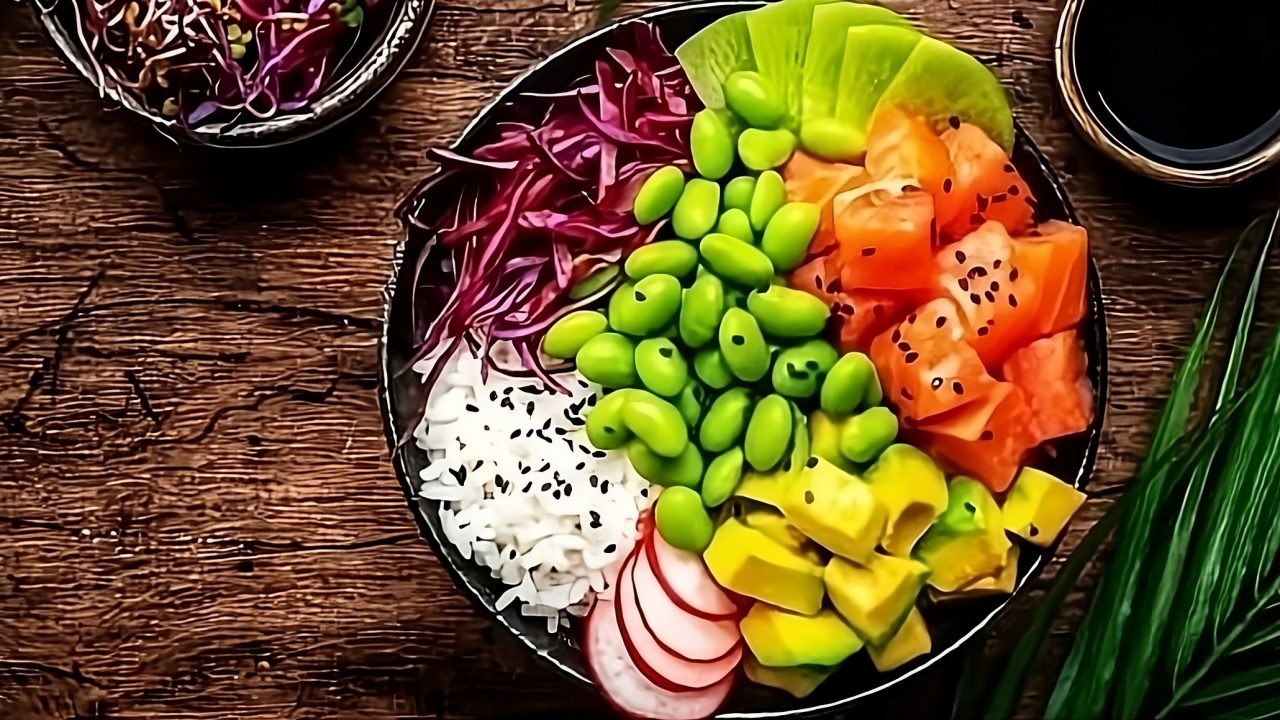
A poke bowl in Hawaii carries an unspoken assumption before anyone takes the first bite. The color looks fresh, the setting feels local, and the word ahi does a lot of creative work on the menu.
That assumption is not always wrong, but it is not safe either. A meaningful share of the ahi moving through Hawaii markets and menus is frozen, imported foreign tuna, and most diners have had no easy way to know which fish they were eating.
Grocery shoppers will see what diners still won’t.
Beginning July 1, 2026, Act 238 requires covered retail establishments selling raw processed ahi to label the country where the ahi was landed. Hawaii buyers will get country-of-origin information on poke and sashimi at the point of sale for the first time.
That means many grocery fish counters and retail places where residents and visitors buy poke, sashimi, and sushi will have to disclose their origin. It is a useful change, especially at counters where local and imported ahi may sit side by side in the same case.
The restaurant plate is still the unknown blind spot.
The law does not reach some of the most important places where visitors are likely to eat ahi. Restaurants and food service establishments remain outside the labeling requirement, which means the seared ahi plate, the restaurant poke bowl, and the appetizer sushi order may still arrive without any country-of-origin disclosure.
The label will definitely help at the retail counter, but it does not tell you what is on the plate once you’re at a sit down restaurant preparing to eat. Hawaii restaurants are where visitors are most likely to be served imported ahi, and they are exactly where the new rule does not touch.
Why poke escaped labeling until now.
Federal country-of-origin rules already applied to raw seafood, but prepared products were treated differently. Once ahi was cut, cubed, sliced, minced, or combined with other ingredients, products such as poke, sushi, and sashimi fell outside the disclosure that most shoppers may already have assumed existed.
Hawaii is closing that loophole, at least at some now-covered retail counters, but it is leaving the restaurant version wide open. That is a huge loophole and the difference between ahi and fresh Hawaii ahi.
Surprise: the brightest red ahi may not be the freshest.
The brightest, most uniform red ahi in the case is often not the freshest local fish. Imported ahi is frequently treated with carbon monoxide gas. That’s used to hold that bright red color and appearance as the fish ages, so the too-vivid, perfectly red that many visitors read as freshness can actually be a warning sign, while genuinely fresh local ahi looks deeper, less uniform, arguably less intense red, and may be the actual piece that was landed right here.
The price and specific words still tell you a lot.
Imported ahi is sometimes labeled as previously frozen and priced well below fresh local fish. That price gap can be one of the cleanest clues, especially when the fish looks almost too red and too perfect to be real.
None of this means imported ahi is automatically bad, nor does it mean restaurants or markets are doing something wrong. It means Hawaii has a real local fishery, and imported tuna moves through the same market. Buyers, however, especially unsuspecting ones, deserve to know which one they are paying for.
The counter tells you more than the sign.
At a covered retail counter, look for new labels starting now, and look for where the ahi is actually from. Then check whether it says fresh or previously frozen, compare prices, and be cautious if it is too cheap or if the color is bright, flat, and perfectly uniform. We routinely see genuinely local ahi alongside previously frozen imports in the very same case, and the gap is usually the fastest read at the counter. You can buy whichever you prefer, but you should at least know what you’re getting.
How to find local ahi now.
At restaurants, there will be no labeling to help. The only real tool is to ask where the ahi is from, and when in doubt, buy locally caught fish from a counter that says so plainly.
Have you ever asked where the fish in your Hawaii poke or ahi dish came from, or did you simply assume it was local?
By Rob and Jeff, Beat of Hawaii.
Some of the most meaningful parts of Hawaii are the ones visitors walk right past without knowing they are there. We’ve spent nearly 20 years finding them firsthand for BOH as full-time Hawaii residents reporting on travel, culture, and island life, and telling you what they mean for your trip. Join us →
Get Breaking Hawaii Travel News






Important article. Fish in restaurants, especially sushi, is a minefield. Not only in Hawaii, but all over the planet. In Los Angeles, one study found 47% of fish at sushi restaurants was mislabeled.
I’d bet strong money a significant portion of all fish sold at Hawaii restaurants is both imported and previously frozen. There is no way, absolutely no way, Hawaii has enough fishing boats and coastal fish to supply every retail eatery with fresh Hawaii fish. In fact, I bet a huge percentage of fish is frozen, from foreign waters, and there is a lot of naming shenanigans going on.
In a world where we are eating, mostly fish contaminated with Fukushima runoff, none of it is very healthy.
I would also add that previously frozen fish is perfectly good and actually safer with less hazards like parasites.
Very true. Shame that one day, we will need to use a Geiger counter before consuming our food…haha!
I worked in an authentic Japanese restaurant 40 years ago. All seafood was shipped in frozen. Customers thought they were getting fresh sushi and sashimi. Little did they know, it was freshly defrosted seafood. And I assume it still works the same way these days no matter where you eat it, except maybe in Japan.
Yes, freshly defrosted is better than fresh from the ocean, for safety and other reasons. I ate fresh breakfast sushi at Tsukiji Fish Market in the 90’s. Watched the chef carve the fresh caught tuna (it was a whole tuna) and make our sushi. The tuna flesh was warm and still twitching (pretty certain that wasn’t my imagination).