
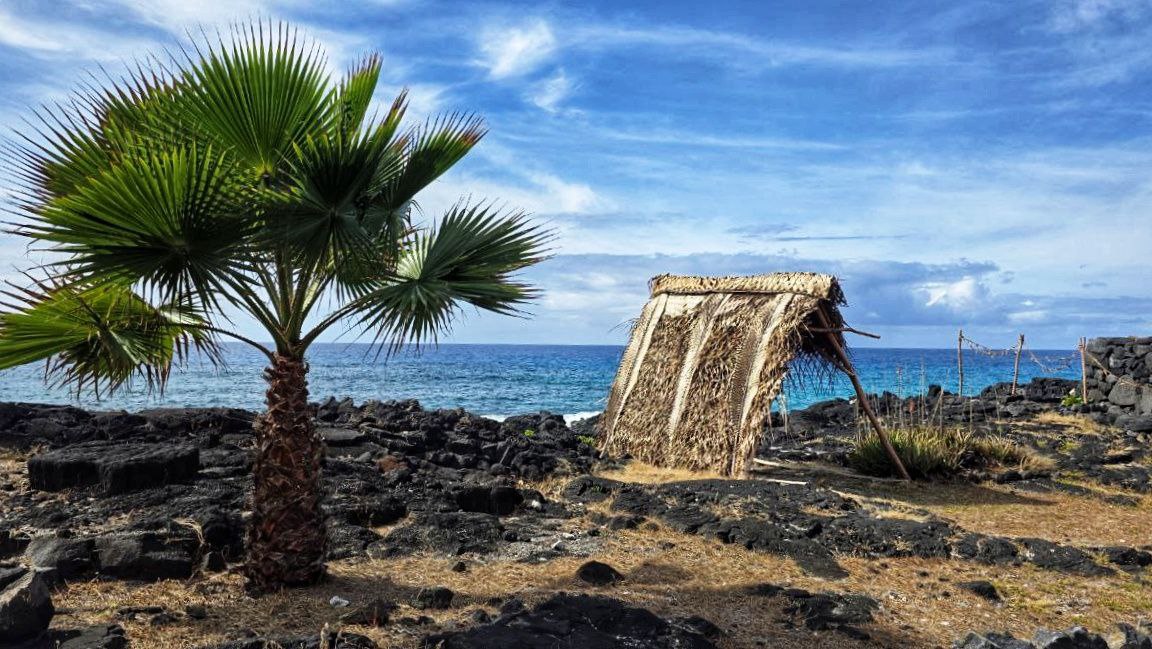
We just got back from the Big Island last night, and one strange thing wasn’t the flight, the long drives, Kilauea volcano, or even the intense holiday crowds we’re going to tell you all about. It was how several conversations stopped cold when people tried to explain where they were, where we had been, or which island they were talking about.
Earlier this month, the state officially changed the Big island’s name to Hawaii, a quiet administrative decision that didn’t come with much public explanation. We didn’t expect it to show up in everyday conversations, but it did.
Someone asked where we were staying or how long we’d been visiting, and we said, “Do you mean here on the Big Island?” There was a pause, followed by what seemed to be between a correction and a question. “Well, we heard it’s just Hawaii now,” one person said to Rob, unsure whether they were explaining something or asking for confirmation.
That same hesitation showed up in places where the old name isn’t informal at all. We stopped at Big Island Coffee Roasters in Hilo, then headed over to Big Island Candies, two businesses that have carried that name for decades and aren’t about to change it. Standing in line, it was hard not to notice how normal the name most people use still felt there, even as people around us stumbled over what they were supposed to call the island itself.
That led to another pause. Not Oahu. Not Maui. The island everyone has always called the Big Island, except now that shorthand suddenly feels oddly unofficial in a way it never did before. Those who asked seemed quite unsure how they were supposed to say it out loud, or whether they would be corrected.
People knew what they meant, but they were no longer confident in the words they chose, and those conversations slowed in a way that felt oddly unnecessary and slightly bizarre.
What “Big Island” actually solved.
Big Island was never intended to be an elegant term. And it was never official. It was not even linguistically precise. It was useful.
In a place where “Hawaii” already means too many things at the same time, Big Island did one job exceptionally well. It removed ambiguity without forcing further explanation.
Before this, you didn’t have to clarify whether you meant the state of Hawaii or the Island of Hawaii. You didn’t have to stop mid-sentence and reset. You didn’t even wonder if the person on the other end knew what you meant. That is why it likely stuck.
Hawaii can mean so many things, from the state, the island, a vacation, or a vague idea of somewhere warm and far away. Big Island cut through all of that instantly.
How this became official without necessarily becoming practical.
The Hawaii Board on Geographic Names, an administrative body tasked with standardizing place names for official state use, voted on December 10 to change the name to Hawaii. This wasn’t any legislation and it wasn’t a public campaign. It was a technical decision that slipped into Hawaii’s records largely unnoticed, except by the news media. On paper, what was the Island of Hawaii is now officially Hawaii.
In practice, the state and the island now share the same name, and every travel system will have to decide how to handle that.
The search problem.
For most travelers, a search for Hawaii doesn’t start with precision. It begins with a broad intention. Visitors type “Hawaii” and expect Google to help narrow it all down. And until now, both search and booking websites have done that work by forcing a second decision. Which island. Which airport.
Big Island was one of the clearest forks in that travel planning road. It served to prevent mistakes before they even happened.
Now the same word officially points to two different places simultaneously. “Hawaii” can mean the state or the island, and any software sitting in between has to guess which one visitors want.
Some platforms will default to Oahu. Others may force extra clicks. While some will ignore the change entirely and keep using Big Island because it still makes sense to users, even if it didn’t to the state. Unfortunately, it feels anything but seamless to the person trying to book a Hawaii vacation.
Timing makes the situation worse.
State records on this can change quickly. Federal databases may take longer. Adoption by the official U.S. Board on Geographic Names can take months. Private companies in the Hawaii travel industry will update when it suits them, or when enough travelers complain. So for a while, everything may technically work, but nothing will quite line up.
A map might say Hawaii, while a travel booking engine still says Big Island or Island is Hawaii. One itinerary confirmation might list Hawaii while another’s email references B.I. An airline app could show one thing, even though a hotel confirmation shows another.
Travelers experience this not as a single, obvious issue but as unnecessary hesitation. A pause. A recalibration. A moment of wondering whether the right box was checked.
“We’re going to Hawaii” doesn’t mean much any more.
That phrase has always been vague, but it used to invite an easy follow-up. Oahu. Maui. Big Island. Kauai. Now the clarification takes a bit longer; Hawaii, the state, or Hawaii, the island of Hawaii?
Repeat visitors will quickly manage this. They say “Kona” or “Hilo” anyway without thinking. They adjust.
First-time visitors don’t have that instinct so readily. They rely more on labels and defaults to guide them.
Quiet stuff that breaks.
Maps won’t update cleanly. Google and Apple are balancing between official names and both user behavior and historical usage.
One version may appear in search. Another could show up in booking. A third lingers in prior saved locations or older visitor content.
The same is true for signage, visitor materials, and car rental instructions, to name a few. These systems were built on assumptions that no longer hold, yet performed flawlessly for years. Big Island was, in fact, one of those assumptions even as Island of Hawaii was the name.
This gap won’t close quickly.
Nothing here is to say that the island shouldn’t be called Hawaii. The issue is about what happens when a decision made inside one official system collides with dozens of others that depend on this geographical understanding and visitor shortcuts.
For now, most people, including us, will keep saying it as we’ve always done. And that’s to say Big Island. The official name will live in documents. The unofficial one is likely to do the work it’s always done.
The real question isn’t what the island should be called. We all know that. It’s how long gaps will exist and which systems ends up adapting.
But when a first-time visitor books a flight to Hawaii, thinking they’re headed to Kona, and lands in Honolulu, this stops being write so funny.
What’s your feeling about the name change from Island of Hawaii to Hawaii?
Photo Credit: Beat of Hawaii on Kona coastline.
Get Breaking Hawaii Travel News






I was born in Washington, but in the D.C., not in the State of Washington. Maybe, they should have changed it to
B. I. of Hawaii. Or how about the island’s original name of Moku o Keawe or Island of Keawe (Keawe for short, like Maui, instead of Island of Maui)? That, IMO, is the most respectful and nonconfusing name of all.
What a waste of time. Changing the name to Hawaii, which really doesn’t make any sense because the state is Hawaii was a dumb idea..
How about legalizing recreational marijuana which most people want here but three people who vote for certain rules don’t want it so we’re still sitting here like fools. Hawaii Needs money flowing into the state. and legalizing weed would be beneficial!! Just a lot of incompetency all around. PS People will continue say the “Big Island”.
This new name is meaningless… if you know you know.
If you hang out in touristy areas…. you get what you get.
Truly, this article is a bunch of hooey. It’s just geographical official designation for mapmakers. It has nothing to do with real life.
I enjoy your articles and usually find them to be informative and accurate. This one however is not living up to your usual standard. The designation was changed by the Hawaiʻi Board on Geographic Names from Hawai’i Island (not the Big Island as your article states)to just Hawai’i so the naming would be in line with the other islands for “official” purposes. As you are aware each island has a unique nickname of which our island is known as the “Big Island”. I am not necessarily in favor of their change but I understand why they did it. It has not caused any more confusion than already existed as it relates to the name of our Island. LOL
Mark P
You can say “The Big Island of Hawaii” as usual and there will be no confusion.
Official name changed from “Island of Hawaii” to just “Hawaii”. Cutting out the extra words that specified the island vs the entire state. Only an issue where the official name must be used. Big Island is still Big Island, the unofficial but more common way to refer to the island.
This might help – we’ve always used ‘ in Hawaii …’; when referring to the whole state and ‘on Hawaii …’ when referring to the Big Island.
Call it whatever you want but to me it will forever be the Gulf of Mexico and the Big Island. Aloha.🌺