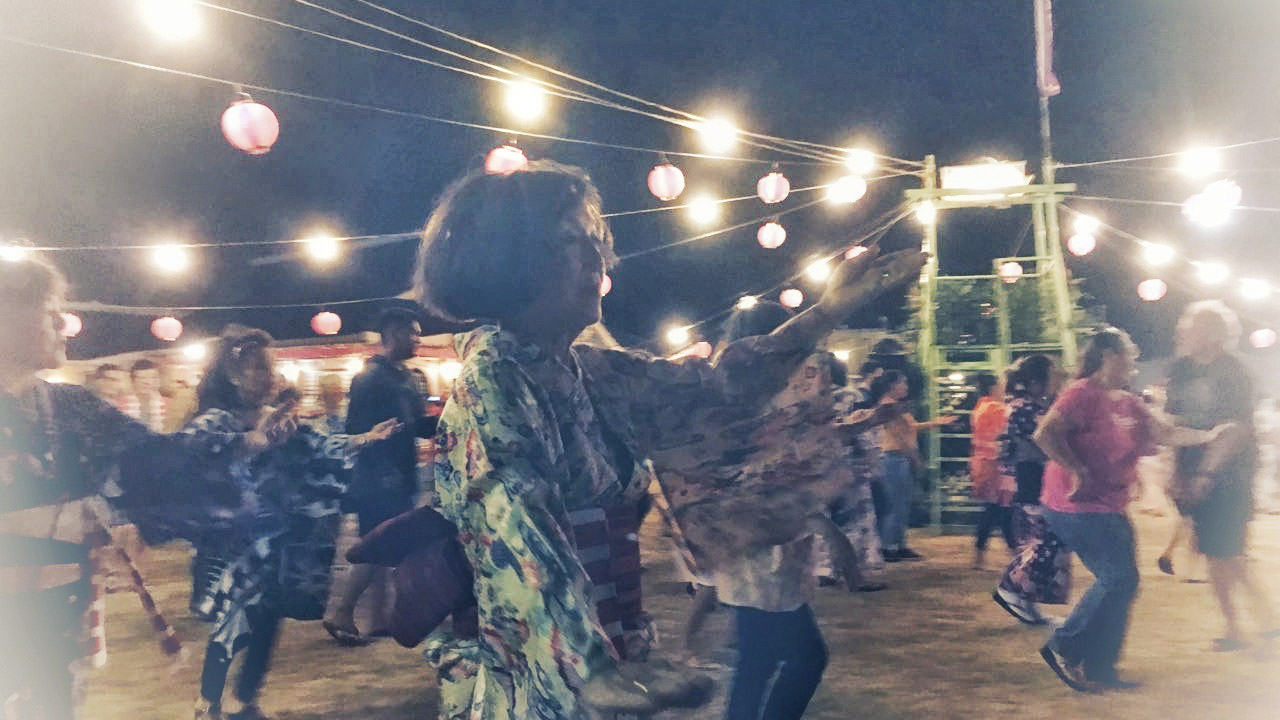
Every summer in Hawaii, the taiko starts, the lanterns go up, and people begin circling the yagura as they have for generations here. Most visitors have no idea what they are seeing.
Somewhere in that circle, someone may be dancing during Hatsubon, the first Bon Dance season after a loved one has died. They may be remembering a parent, spouse, grandparent, sibling, or friend. The circle is open to all of them, and to you. How special this is can feel hidden; it is the part many visitors never see.
And at the same time, most Hawaii visitors spend thousands of dollars looking for authentic experiences. One of the deepest ones happens to be free, occurs after sunset, and has been unfolding on these temple grounds across the islands for more than 140 years.
Why Bon Dance feels so different.
We have been attending Bon Dances on Kauai for many years. What stays with us is not the performance, because it is not really a performance in any traditional sense. What stays with us is both the camaraderie and the feeling that everything around you exists for reasons far older and deeper than tourism.
Bon Dance comes from Japanese Buddhist tradition and honors ancestors and loved ones who have died. It has been part of Hawaii seemingly forever, carried through plantation-era communities, temple life, and generations of local families.
Bon Dance is different. It is not performed for visitors, promoted to visitors, or built around visitors in any way, yet anyone, including visitors, is welcome to join. You do not need to be Buddhist, Japanese, local, or experienced. You can stand back and watch or step into the circle and follow along as best you can.
The part visitors often miss.
From a distance, Bon Dance can look like a community gathering with food, music, and dancing. But once you understand what is happening, the circle changes. Those are not only dancers moving around the yagura. Many are carrying someone with them.
This is most true during Hatsubon, when families remember those who died in the past year. We have always felt this is the heart of Bon Dance, and the part visitors are least likely to catch unless someone tells them.
The lanterns and memorial tags are not decorations. Each one carries a name, and people who still miss that person.
Bon Dance feels different from so many Hawaii experiences built for visitors. It is not here because visitors need something to do. It is here because the community gathers to remember its own.
Food, memory, and community.
Food booths are a big part of Bon Dance, and you’ll notice by the lines. For many people, they are reason enough to arrive early. Ask regular attendees what they look forward to, and the conversation quickly turns to favorite temples, favorite dishes, and what might sell out first. For us, Hanapepe always brings the flying saucer to mind.
We usually bring folding chairs, find a place along the edge, get something to eat, and watch the evening unfold. That is part of the charm. You do not have to know exactly what to do when you arrive. You can just ease into it.
The food lines, by the way, are also where the generations mix. Visitors, residents, temple members, returning families, children, and kupuna all end up shoulder to shoulder, and everyone belongs.
Why this is part of the Hawaii that’s hardest to find now.
Hawaii has changed in countless ways over the years, especially for visitors seeking authentic cultural experiences that were not built for them. Bon Dance belongs in the same rare category as authentic hula, mele, and community music series visitors often miss while instead booking luaus and resort entertainment. These are not commercial performances dressed up as culture. They are living community gatherings that visitors may be lucky enough to attend.
Here you just show up, support the temple if you wish, then eat, watch, listen, and maybe even dance. It is all reachable. Sometimes the deepest thing happening on the island that night may also be the easiest one to drive right by.
Statewide Hawaii Bon Dance schedule.
Bon Dance season runs on every island through the summer, with Oahu hosting the most by far. If you are on another island, you can find your nearest weekend through the Japanese Cultural Center of Hawaii or the Hawaii Council of Jodo Missions, both of which list dances statewide. As always, confirm the date and time with the temple before you go.
If you have never gone.
You are in for unique island culture, equal parts celebration and remembrance. These are living community gatherings where people honor those who are gone by dancing, eating, and coming together.
If you have ever wandered into a Bon Dance, tell us which temple and what stayed with you. If you never have, find the weekend closest to you before the season ends.
Lead Photo Credit: © Beat of Hawaii at Bon Dance on Kauai.
By Rob and Jeff, Beat of Hawaii.
Some of the most meaningful parts of Hawaii are the ones visitors walk right past without knowing they are there. We’ve spent nearly 20 years finding them firsthand for BOH as full-time Hawaii residents reporting on travel, culture, and island life, and telling you what they mean for your trip. Join us →
Get Breaking Hawaii Travel News