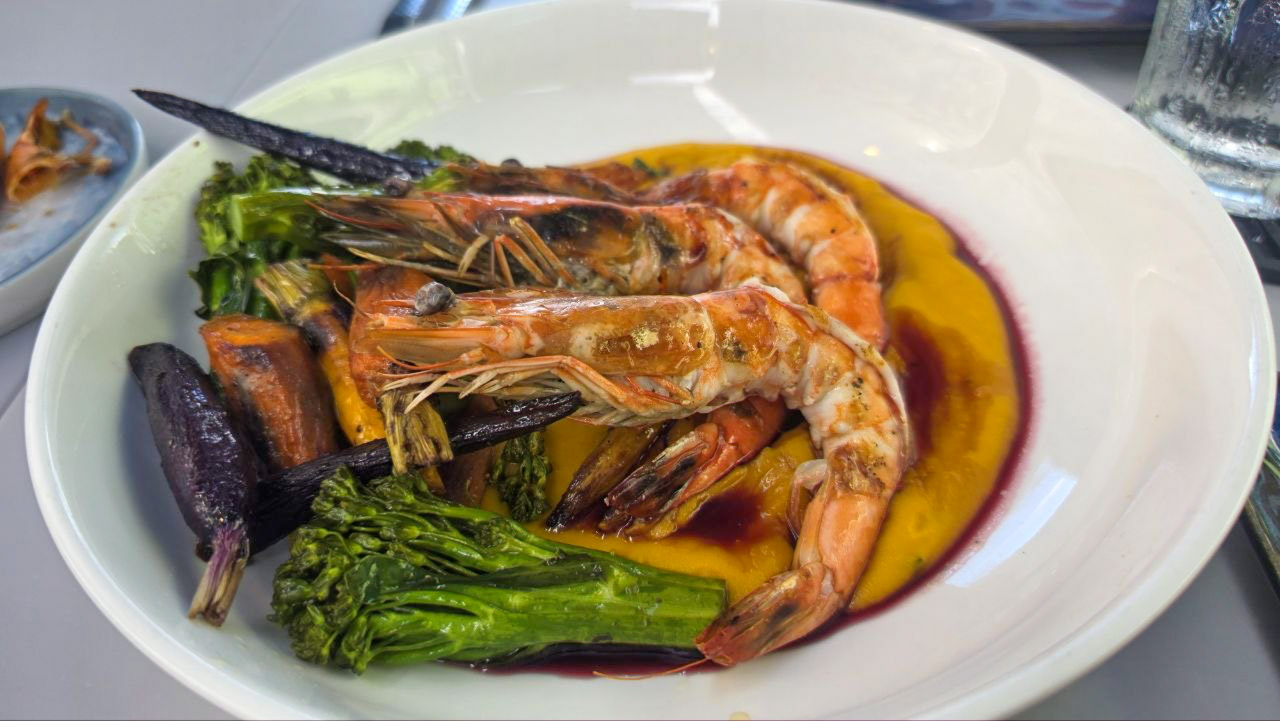
Kauai Shrimp will permanently close its Kekaha farming operation on October 31 after Hurricane Lowell caused extensive damage. Aloun Farms says rebuilding is too costly, ending a nearly 30-year run on West Kauai. Its 40 grow-out ponds were largely out of sight to most visitors, but the shrimp weren’t. They sold them at Costco across Hawaii and distributed them to restaurants, putting something grown in those Kekaha ponds onto plates far beyond Kauai.
We encountered Kauai Shrimp ourselves just last month on Maui. When Rob ordered what he thought would be a fish of the day during our Mala Ocean Tavern happy hour and dinner, the surprise that arrived instead was Kauai Shrimp. We had no reason then to think the farm that produced them would soon be closing and this would be our last time enjoying it.
Parent company Aloun Farms says staffing will be reduced in phases as the operation winds down. Aloun hopes to relocate affected employees elsewhere within the farming company where possible, but says rebuilding the Kekaha operation simply no longer makes financial sense.
Currently, their website has not been updated to reflect the upcoming closure, and their farm tours remain available to book beyond October.
The operation was much bigger than it looked.
The Kekaha operation had 40 one-acre grow-out ponds and eight smaller nursery ponds. Young shrimp spent five to seven weeks in the nurseries before moving into the larger ponds for roughly another 12 weeks, and a single grow-out pond could hold about 7,000 pounds.
Once harvested, the shrimp traveled about 15 minutes to the processing facility in Hanapepe, where they could be packed and shipped fresh or frozen the same day. Costco was an important part of that distribution chain, selling fresh Kauai Shrimp by the pound and in frozen two-pound packages. We’ve written about it before as one of the local seafood products you come across while shopping for groceries in Hawaii.
Kauai Shrimp grew out of the end of sugar.
The operation dates to the late 1990s, as Kekaha’s sugar era was ending and West Kauai looked for other agricultural uses for former plantation land. Warm weather and water made shrimp farming one of the alternatives that took hold there.
The business had already survived problems that were serious enough to end many agricultural operations. A white spot virus outbreak in 2004 killed millions of shrimp, and the original Ceatech business subsequently went through bankruptcy. Sunrise Capital acquired the assets and restarted the operation, which faced another white spot outbreak and quarantine in 2008.
By 2024, Sunrise was ready to concentrate on its separate shrimp genetics and breeding operation while Aloun Farms wanted the part of the business that raised shrimp for food. At the time, state records described Kauai Shrimp as Hawaii’s largest shrimp farm and put employment at about 30 full-time island residents.
Aloun bought it to produce more food in Hawaii.
The 2024 transaction included the food-shrimp farming operation, equipment, facilities, inventory, and Kauai Shrimp business, while Sunrise retained its separate Kona Bay breeding operation. The purchase price was $1.4 million, according to documents that were submitted to the state.
Records described Aloun as better positioned to develop the operation because its business already centered on food production and distribution. Continuing Kauai Shrimp was tied directly to producing more food locally and reducing Hawaii’s dependence on imports, while the purchase agreement called for retaining almost all of the existing employees with their jobs and benefits.
The transfer became complicated over state leases and additional costs, with Sunrise warning that failure to complete it could jeopardize the shrimp operation and more than 30 jobs. Aloun ultimately completed the acquisition, less than two years before deciding the storm-damaged operation simply couldn’t be rebuilt economically.
Keeping shrimp alive depended on keeping the island’s power source.
Hurricane Lowell knocked out electricity at the farm in early September with approximately 120,000 pounds of shrimp still in the ponds. Those ponds require continuous aeration to maintain oxygen in the water, and Aloun warned at the time that the shrimp could begin dying after about 48 hours without it.
Workers scrambled to bring generators onto the property while trying to keep about 20 of the 40 ponds operating. The storm also damaged the farm’s office, mechanic shop, electrical systems, and other equipment, which turned the immediate effort to keep the shrimp alive into a much larger problem for the entire operation. We haven’t found out exactly what ultimately happened to all 120,000 pounds of shrimp, so we’re not assuming they were lost.
Federal agricultural disaster programs became available on Kauai after Hurricane Lowell, including assistance for damaged farmland, infrastructure, and farm-raised fish losses. We don’t know whether Kauai Shrimp applied for or received any of that assistance, or what insurance coverage it had, and Aloun hasn’t publicly connected either one to its decision to close.
What happens to the Kekaha ponds now?
Aloun’s October 31 closure applies to the operation that raised shrimp for food. Sunrise retained the separate breeding and genetics business nearby. Much of the aquaculture operation is also on state agricultural land under leases and other agreements. Aloun’s decision to leave doesn’t determine what ultimately happens to that land, and we haven’t yet heard whether another operator might use the ponds for aquaculture in the future.
Lead Photo Credit: © Beat of Hawaii eating Kauai Shrimp.
By Rob and Jeff, Beat of Hawaii.
Some of the most meaningful parts of Hawaii are the ones visitors walk right past without knowing they are there. We’ve spent nearly 20 years finding them firsthand for BOH as full-time Hawaii residents reporting on travel, culture, and island life, and telling you what they mean for your trip. Join us →
Get Breaking Hawaii Travel News