

One airline is expanding its Hawaii service from several different mainland points, and the pattern is hard to miss. New York gets more Honolulu flying. Detroit gets more Honolulu flying. Minneapolis gets a new Maui route. Boston gets Honolulu back. Atlanta gets even more Hawaii capacity in peak season. Kona gets more help from Salt Lake City and Los Angeles. Delta Air Lines is suddenly expanding its presence in Hawaii across the East Coast, the Midwest, the Mountain West, and its giant Atlanta hub.
Hawaiian dropped Boston. Then Delta picked it up. And that is just one piece of a Hawaii expansion that now touches Honolulu, Kahului, Kona, New York, Detroit, Minneapolis, Atlanta, Salt Lake City, and Los Angeles. For Hawaii travelers, that equates to more seats, more competition, and in some cases a direct replacement for the service Hawaiian used to provide.
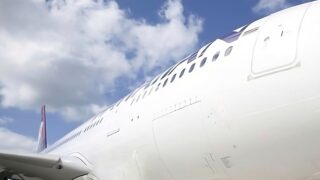
When Hawaiian ended Boston-Honolulu in November 2025, Delta decided to bring it back on December 19, 2026, using an Airbus A330-300. Travelers get the route back, but not the airline that used to clearly define it. Delta is also strengthening other Hawaii routes simultaneously: JFK-Honolulu goes daily next week, Detroit-Honolulu goes daily in November, Minneapolis-Kahului launches on December 19, Atlanta-Honolulu gets a second flight three times weekly starting January 4, 2027, Salt Lake City-Kona is moved up, and Los Angeles-Kona will now get daily widebody service.
Delta’s Hawaii push is bigger than one route.
For travelers, that can mean easier one-stop options, better schedule choices, more wide-body service, and greater fare pressure on routes where choices have been more limited. Delta is deciding that Hawaii deserves more of its long-haul attention.
Airlines add this much longer-haul Hawaii flying because they think demand is there and they can fill seats at fares that still work for them and their customers. Delta clearly thinks so. The story around Hawaii flights lately has been cuts, pullbacks, loyalty changes, and uncertainty. This goes the other way.
Boston is back, but Hawaiian is not.
Boston-Honolulu is the cleanest hook because it carries more significance than a normal schedule update. Hawaiian dropped the route in November 2025. Delta brings it back on December 19, 2026, and it again becomes the longest domestic route in the U.S.
Travelers in Boston who wanted nonstop service to Hawaii lost it, and now they get it back from a mainland airline. Hawaiian built much of its identity around long-haul flights from the mainland to Hawaii, and Boston helped symbolize how far that reach could extend. Losing the route was unfortunate. Watching Delta revive it is worse. Travelers who just want the nonstop will be glad to see the return. Travelers who cared that a Hawaii-centric airline operated one of the country’s most ambitious domestic routes are looking at something very different now.
Boston, like New York, is a route that puts airline products under a microscope. You are not talking about a quick West Coast hop. On an almost twelve-hour domestic flight, travelers care about seat comfort, cabin layout, premium upsell value, and how tired they will feel by the time they land. BOH editors have flown the East Coast to Hawaii many times and confirm it is a hard flight, under the best of circumstances.
New York shows the tradeoff more clearly.
JFK-Honolulu is the most immediate head-to-head example because both airlines already serve it. Hawaiian operates the route year-round with daily flights on its A330-200. Delta has been flying it with its 767-300ER five times weekly before increasing it to daily.
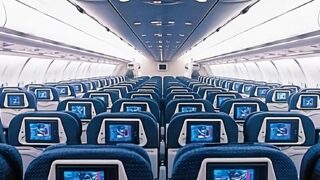
The comparison is this. Hawaiian’s A330-200 has 278 seats, including 18 first class, 68 Extra Comfort economy, and 192 economy. Delta’s 767-300ER has 216 seats, including 26 Delta One, 18 Premium Select (premium economy), 21 Comfort economy, and 151 Main Cabin economy seats.
Delta gives premium travelers direct-aisle access in business class, even though its 767 cabins have drawn much criticism for their age and overall feel. Hawaiian offers travelers a Hawaii-centric carrier experience and is the airline many BOH readers still associate most closely with the islands, but its A330 business/first cabin retains the older six-across setup. Hawaiian’s planned refresh is still not due to start until 2028.
Neither option is perfect. One gives you a stronger premium seat concept on an older aircraft. The other gives you Hawaiian’s onboard identity, but not yet the upgraded cabin many travelers have been waiting for. On JFK-Honolulu, travelers are not choosing between clearly better and clearly worse. They are choosing which compromise they can best live with.
Daily service sounds great, and sometimes it is, but on a route this long, aircraft age, cabin density, and seat layout are not minor details. They are the experience.
Delta is not trying to replace Hawaiian.
Hawaiian is still the de facto standard for Hawaii, and the Alaska acquisition is still reshaping the map in ways that are not yet revealed. But Delta’s Hawaii expansion hits at a moment when Hawaiian has already ceded some ground on long-haul mainland routes that once looked central to its very core. Boston was not just another mainland city. It represented a kind of reach and ambition that once helped set Hawaiian apart from carriers whose Hawaii service was just another branch of a huge mainland network. When that route disappeared from Hawaiian and returned at Delta, it answered some questions.
Delta’s return does give Boston travelers a route most assumed was gone for good. That is good news if your main concern is simply getting to Hawaii nonstop, and different if you care who now controls more of the important long-haul Hawaii links.
Hawaiian’s long-haul flying gave it a certain claim over the emotional side of Hawaii travel. It was never just another airline reaching the islands. That gets weaker when the branding and some of its marquee routes slip into other hands.
More seats help price controls.
The obvious upside here is competition. More flights can mean more pricing pressure, more schedule options, and fewer situations where travelers feel trapped into whatever product happens to be left. That is especially relevant for East Coast and Midwest travelers, who do not have the same range of choices West Coast flyers usually do. And we see that in particular on the JFK-Honolulu route, where there is distinct daily competition.
Hawaii visitors still need to look closely at aircraft, seat maps, and cabin layouts. A new Hawaii flight can still mean an old onboard experience. Some of Delta’s A330-300s date to the mid-2000s, and the fleet carries varying weight ratings and range capability depending on subvariant. Delta’s 767-300ERs on Hawaii routes have also taken plenty of criticism. Hawaiian’s fleet also has its issues. It’s interesting to note that both of these aircraft feature two-across seating on both sides, with Hawaiian having a center row of 4 seats and Delta having 3.
Hawaii travelers care about more than whether a flight exists. On a ten-plus-hour domestic route, they care what seat they are stuck in, whether there is a center seat or not, if the cabin feels tired, and whether a premium cabin is worth paying for. More seats do help, but they do not fix everything.
Delta sees an opening and is moving in.
Some travelers still care deeply about flying Hawaiian on long routes. Others care more about schedule, fare, and lie-flats with aisle access. Price still rules most bookings. Schedules too. Airline identity comes later for many travelers, especially when routes are long, expensive, and limited. Delta does not need to recreate Hawaiian’s feel. It just needs the route, the aircraft, and offerings, and enough demand.
Travelers will welcome more competition.
But they should not kid themselves about what is happening. Delta is not just adding Hawaii. It is moving into markets where they perceive other airlines are stepping back or showing weakness.
Are you more likely to book Delta to Hawaii now that it is adding these routes?
Get Breaking Hawaii Travel News




Welcome to DL in their expansion but they must improve their statewide landslide comforts .. specifically their Sky Clubs. They have invested heavily in mainland Sky Clubs and opened new Delta One Clubs. They overlook HNL with a very dated and not disability friendly Sky Clubs. I urge readers to join me in applying pressure to equalize the flying experience for DL paying customers.. invest in the HNL Sky Clubs and open in OGG and KOA. Another solution is for DL to collaborate with other Sky team airlines to open a HNL Sky team lounge. This will solve a problem for the tiny and aging KAL Morning Calm lounge.
Unless another airline offers cheaper, non-stop, daytime flights from Maui to my preferred destinations, I will stick with Hawaiian. Fortunately, I am happy with Hawaiian overall.