
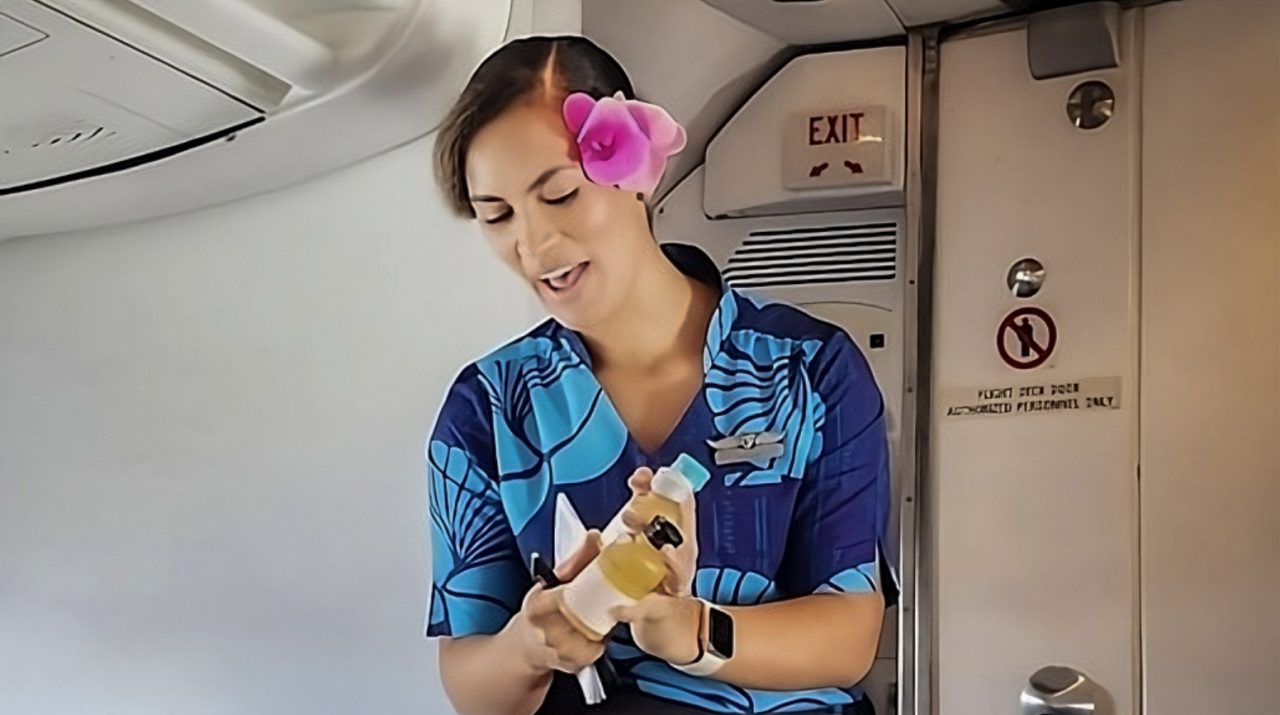
You know the feeling if you have flown Hawaiian often enough. The greeting sounds different, the pace is different, and even before the aircraft pushes back, the cabin can still feel like the first step into Hawaii rather than just another boarding process.
We have heard readers describe that feeling for years and years. Some remember Hawaiian language greetings on certain flights. Others talk about crew members who made visitors feel like guests and residents feel like they were already on the way home. Aircraft, seats, and even airline ownership can change, but the cabin feeling travelers associate with Hawaiian has always come from the people working the aisle.
Now that feeling lives within a much larger merger fight. Alaska Air Group has three flight attendant groups all under one union, all looking toward the richest contract in the system, and Hawaiian’s crews are being folded into a process that could decide whether the island cabin experience survives or gets standardized.
The cabin feeling you only get on Hawaiian.
For decades, Hawaiian’s flight attendants built a service style that differed from that of the mainland carriers flying the same routes. Residents heading home heard it in a greeting that came in Hawaiian on some flights, and visitors felt it in a welcome that treated them as guests rather than seat numbers. Seats and schedules matched what other carriers offered, yet the cabin did not, and the crew working the aisle was the real reason.
That is the part of the merger story most travelers will understand. They may not follow how airline seniority lists, bargaining units, or contract dates work, but they know when a flight feels like Hawaiian. That identity is what now gets decided as Hawaiian folds into a far larger system.
Three crews, one union, all with eyes on one prize.
One union, AFA-CWA, now represents flight attendants at Alaska, Hawaiian, and Horizon. They are separate bargaining units with separate contracts and separate seniority lists, not three different unions competing from the outside. The same union umbrella now covers all three groups, but each group is still working under its own deal.
Hawaiian and Alaska flight attendants are moving toward a Joint Collective Bargaining Agreement, a combined contract expected to take at least two more years. Until that agreement is negotiated and ratified, Hawaiian and Alaska flight attendants keep operating under their existing agreements, seniority systems, and work rules, and the aircraft they fly stay divided along current lines.
Getting two groups with very different contracts onto one list is the hard part, and it is where Hawaiian’s crews have the most to lose. The Alaska contract is the prize everyone can now see, but the path to that contract runs through pay gaps, seniority integration, and the question of how much Hawaiian remains Hawaiian even after the work rules start to merge.
That gap that is what’s driving the tension.
Alaska flight attendants won raises of roughly 18.6% to more than 28%, depending on seniority, along with first-ever boarding pay. Hawaiian’s extension delivered 6% this year, followed by 3% in both 2026 and 2027. That big difference is now the comparison point that hangs over the combined contract process.
Seniority is the other big concern. A Seniority Merger Integration Committee is reconciling date-of-hire lists, and that process can determine schedules, routes, vacation choices, and long-term career standing. Some long-tenured Hawaiian crew members could be disadvantaged against Alaska hires with earlier dates, even after building careers around the islands and the airline’s distinct service model. Roughly 10,000 seniority verification letters were sent across both carriers in 2025 as the process progressed.
But the first visible crack in the broader Alaska Air Group labor picture appeared on the mainland recently. Horizon, Alaska’s Pacific Northwest regional feeder, flies Embraer E175 aircraft and does not currently fly Hawaii routes, but its 650 flight attendants voted roughly 99.8% to authorize a strike, with a 94% turnout, while pushing to match the Alaska deal. A strike is not imminent, since the National Mediation Board would first have to declare a deadlock and start a 30-day cooling-off period, and Alaska has said the process could take months or even years. Still, the vote shows that peace in its labor groups is under pressure.
For Hawaiian crews, that pressure centers on questions closest to home: pay that now trails Alaska’s, and a seniority list that could reset careers built over decades of flying to, from, and within the islands. The combined contract is widely expected to lift Hawaiian pay and benefits from a low base, which is part of why crews are watching the Alaska deal so closely. The fear is less about whether the contract improves and more about what ends up getting traded to get there.
Both sides of the bargaining table.
Management points to Hawaiian’s record of reaching agreements with its unions and says guests will not be impacted. That is the company’s position as the merger work continues and as Hawaiian’s flight attendants remain under their current agreement until the combined contract process is complete.
Crews see a different set of issues. They see a pay scale now behind Alaska’s new deal, while many expect the combined contract to ultimately raise pay and benefits, since the Alaska acquisition is such a visible benchmark. What they cannot yet see is where they will land on the newly merged seniority list, or whether the service culture they built at Hawaiian will still have a place within a larger mainland-based system built for efficiency and scale.
Neither side disputes that a combined contract is the goal. The fight is over the terms and the timeline, and for travelers, it extends beyond contract language into the cabin they actually fly.
What it means for the cabin you fly.
The merger will eventually sort out all the issues, including pay, rules, and seniority, the details that mean the most to the people who fly us to and from Hawaii for a living. Travelers will read the outcome somewhere else, in the cabin, in whether the greeting, welcome, and service still feel like Hawaiian.
That is why, for us, this isn’t only about a union process or a mainland strike vote. Horizon is just a warning signal; Alaska’s contract is the new benchmark, and Hawaiian’s crews are the group whose work has long carried something more visible to Hawaii travelers.
The Hawaiian cabin experience was built person by person, flight by flight, over decades. Now the question is whether that can survive the merger. Three crews are chasing one contract, and Hawaiian’s flight attendants are trying to enter that future without losing the part of the airline travelers still recognize most.
What has the Hawaiian cabin experience meant to you over the years? Have you noticed any changes since the merger, or does it still feel like the Hawaiian you remember?
Photo Credit: © Beat of Hawaii on Hawaiian Airlines.
By Rob and Jeff, Beat of Hawaii.
Some of the most meaningful parts of Hawaii are the ones visitors walk right past without knowing they are there. We’ve spent nearly 20 years finding them firsthand for BOH as full-time Hawaii residents reporting on travel, culture, and island life, and telling you what they mean for your trip. Join us →
Get Breaking Hawaii Travel News



It will be interesting to see how AS handles intra-island flying from both an equipment perspective & flight crews. I could easily see them assigning Horizon’s E175’s & crews there at their lower pay scales than AS mainline. Although I don’t know how that aircraft would perform technically/operationally in that environment & punishing schedules.
Also interesting with all the realignment ( SEA using ‘former’ HA crews for international flying ) how the former HNL based crews handle the logistics.
Quite a crappy commute !
Flight Attendants: If you do not like the contract. Safeway is hiring…..
Legacy Hawaiian Airlines flight attendants are the absolute very best in the U.S. aviation industry. While other airlines flight attendants treat their position as “just a job,” the Hawaiian flight attendants look at what they do as “taking care of family and friends.” That is a huge difference in employee attitudes, safety, service, and overall guest satisfaction. Unfortunately the new owners of Hawaiian Airlines have failed miserably to see and understand that fact. The Hawaiian employees are treated as that, employees, only to be seen and not listened to, or respected. Regardless, the legacy Hawaiian flight attendants still have the true “Aloha Spirit” that is not found on any other airline anywhere in the world. Pualani lives on.
The “new” owners of HA saved their bacon. If they didn’t buy them, they’d now be in the Chapter 7 file, as Spirit is now.
Flying on Hawaiian is all about that local feeling going or coming home . The small things they do in a personal way, plus you going to know someone on a flight they know .The infight crew have to keep the same Aloha spirit.Only locals can provide because we grew up and were taught local traditions.Only time will tell if service remains the same.
We have only only fly Hawaiian Airlines to Hawaii. We live in Montana so we have to fly to Seattle or Las Vegas with a possible overnight stay in order to fly Hawaiian. We have done this 1-2 times a year for the past 20 years because we love their cabin service. Alaska Airlines we have never been loyal to and worried they would ruin Hawaiian.
Hawaiian Airlines died in 2019, the last year it made a profit. Alaska Airlines just bought the carcass.